Best Piano For Home Studio: Top Picks For Producers
The best piano for a home studio combines weighted keys, realistic sound, quiet practice, and easy computer connection.
You may know the feeling: your room is small, your keyboard sits on a wobbly stand, and every recording session starts with cable clutter. A good home studio piano should feel natural under your fingers while fitting your space and workflow. I reviewed the listed piano, studio desks, stands, and bench to see how each one helps build a better setup. The UISCOM is the only complete digital piano here. The other products support the piano with useful furniture and stability upgrades.
UISCOM 88-Key Weighted Digital Piano

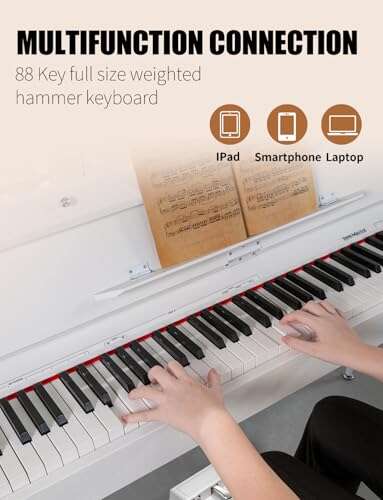
The UISCOM 88-Key Weighted Digital Piano is the strongest match for anyone searching for the best piano for home studio use. Its full 88-key layout gives you the same note range as a traditional piano. The progressive hammer-action design aims to make the lower keys feel heavier and the higher keys feel lighter. That change in resistance can help beginners build better finger control.
The wooden desk-style body also makes this model more useful in a small room. It can serve as a piano, writing desk, or vanity, so it does not need to stay in a dedicated music room. MIDI support lets you connect it to a computer, tablet, or recording setup. I especially like this combination because it supports practice, songwriting, and basic home recording without forcing you to buy several separate pieces.
Pros:
- Full 88-key range for serious piano practice
- Weighted action supports more natural finger technique
- Progressive hammer feel adds useful key response
- MIDI connection suits computer-based music production
- Desk and vanity design saves space in smaller rooms
- White finish can brighten a home studio
Cons:
- Desk-style construction may be less portable than a folding keyboard
- White surfaces can show dust and marks more easily
- Beginners may need time to adjust to weighted keys
My Recommendation
I recommend the UISCOM to beginners, casual players, songwriters, and home producers who want one central instrument. It is the best piano for home studio buyers who need full-size keys but cannot spare space for a traditional upright. The weighted action gives practice more purpose than a light, basic keyboard. MIDI also gives you room to grow when you start using virtual instruments or a digital audio workstation.
This piano offers the most direct path to a useful home setup. You can place a laptop nearby, connect MIDI, and begin creating without a large furniture upgrade. Check the current Amazon listing for included accessories, sound features, and availability before ordering.
| Best for | Why |
|---|---|
| Beginner piano students | Weighted 88-key action supports proper practice habits. |
| Small home studios | The desk and vanity design adds more use without extra furniture. |
| Songwriters and producers | MIDI makes computer recording and virtual instruments easier. |
Zreephy 63-Inch Music Studio Desk

The Zreephy Music Studio Desk is a practical partner for a digital piano and a computer-based recording space. Its 63-inch width gives you room for a monitor, speakers, interface, and other studio tools. A dedicated keyboard tray helps move the piano below the main work surface. That layout can reduce arm strain when you switch between playing and editing.
This is not a piano, so it cannot replace the UISCOM or another 88-key instrument. Instead, it helps turn a plain room into a more focused workstation. The wooden top and black frame create a simple look that fits many bedrooms, offices, and spare rooms. I would consider it for users who want a clean setup for piano practice, recording, mixing, and general computer work.
Pros:
- 63-inch width provides useful workspace
- Dedicated keyboard tray keeps the piano within reach
- Supports a monitor, speakers, and recording gear
- Studio design helps reduce desk clutter
- Black finish suits modern home studios
- Can serve as both music and office furniture
Cons:
- It does not include a piano or keyboard
- A wide desk needs more floor space
- Assembly may take time and careful alignment
My Recommendation
The Zreephy is best for a producer who already owns a piano and needs a complete workstation around it. It makes sense for users who record vocals, edit tracks, or use several pieces of hardware. If you are building the best piano for home studio environment rather than buying only an instrument, this desk adds strong value. The tray also keeps the playing surface at a more useful height than placing a keyboard on top of a deep desk.
I would choose this desk for a fixed home studio. It is less suited to someone who moves gear often or has limited floor space. Review the desk dimensions and keyboard tray measurements carefully before purchase, especially if you plan to use a full 88-key piano.
| Best for | Why |
|---|---|
| Computer-based producers | The wide surface holds a monitor, speakers, and studio tools. |
| Dual-use rooms | It works as both a music workstation and office desk. |
| Full-size keyboard owners | The separate tray keeps the piano accessible without taking the top space. |
Pddolw Adjustable Piano Studio Desk

The Pddolw Music Studio Desk focuses on comfort and setup control. Its height-adjustable keyboard tray can fit many 61-key and 88-key instruments. That matters because keyboard height affects wrist angle, shoulder tension, and playing comfort. The desk also includes cable management features and a footrest bar for a more organized work area.
I see this desk as a good option for musicians who spend long sessions switching between keys and a computer. Cable control helps keep audio, USB, power, and pedal wires from becoming a tangled pile. The footrest may also make seated work feel more relaxed. Still, you should measure your piano before ordering, since key depth and body width vary between models.
Pros:
- Height-adjustable tray supports a more personal playing position
- Works with many 61-key and 88-key keyboards
- Cable management keeps the workstation cleaner
- Footrest bar adds comfort during long sessions
- Combines piano space with a computer work area
- Useful for recording, practice, and music editing
Cons:
- Keyboard and computer equipment are sold separately
- Tray measurements should be checked before purchase
- Adjustable parts may require careful assembly
My Recommendation
The Pddolw is best for home producers who care about ergonomics. I would point it toward users who practice for an hour or more, edit tracks at the same desk, or share a studio with another person. Its adjustable tray gives it an advantage over fixed furniture. For many buyers, the best piano for home studio is only as useful as the desk that places it at the right height.
This desk offers a sensible balance between music furniture and office furniture. It is a strong choice for a growing setup, but it is not necessary if you already have a stable table and a comfortable stand. Measure the keyboard, pedals, chair, and available room as one complete system.
| Best for | Why |
|---|---|
| Long practice sessions | Adjustable height and a footrest can improve comfort. |
| Organized producers | Cable management helps keep wires under control. |
| 61- and 88-key users | The tray is designed around common keyboard sizes. |
LYYL 88-Key Music Producer Desk

The LYYL Music Studio Desk is built around a full 88-key keyboard. Its keyboard tray uses a height adjustment bracket, which can help you set the piano at a better level for your chair and posture. The black design has a clean, professional look. It also gives a producer a dedicated place for a computer and basic studio accessories.
A desk made for 88 keys can be a better fit than a generic computer desk. Full-size digital pianos often need more width and depth than compact MIDI controllers. The LYYL design recognizes that need and keeps the keyboard below the main surface. I would still inspect the piano’s body depth and weight before buying, since the tray must support the entire instrument safely.
Pros:
- Designed for full 88-key keyboards
- Height adjustment helps improve playing posture
- Dedicated tray keeps the main desktop clear
- Professional black finish fits many studio styles
- Useful for piano, MIDI, and production workflows
- Creates a more permanent home for a large digital piano
Cons:
- Large keyboards can make the desk difficult to move
- It may feel oversized in a very small room
- You must confirm tray capacity for a heavy piano
My Recommendation
The LYYL is best for a dedicated studio with a full-size digital piano. It suits a player who wants a fixed station instead of a temporary keyboard stand. If your goal is to create the best piano for home studio setup around an 88-key instrument, this desk gives you a focused foundation. The adjustable bracket is also helpful when more than one person uses the room.
I would choose it over a small office desk when the piano is the heart of the room. It is less appealing for mobile performers or renters who change their layout often. Confirm the dimensions, assembly needs, and available legroom before placing an order.
| Best for | Why |
|---|---|
| 88-key piano owners | The desk is made for the width of a full keyboard. |
| Dedicated recording rooms | It creates a stable, permanent production station. |
| Shared studios | Height adjustment can suit different players. |
Acme 47-Inch Recording Studio Desk

The Acme 47-inch desk is the compact choice in this group. It includes a sliding keyboard tray, top shelf, cup holder, and casters. Those details make it useful for a bedroom studio, gaming room, or small office. The shorter width also makes it easier to fit beside a wall or in a tight corner.
This desk works best with a compact keyboard or a narrower digital piano. A full 88-key piano may fit only if its dimensions match the tray and desktop area, so measurement is essential. The casters can help you move the desk for cleaning or rearranging. I like the shelf because it can hold small speakers, a display, or accessories without taking all the main work space.
Pros:
- Compact 47-inch footprint suits small rooms
- Sliding tray keeps the keyboard close when needed
- Casters make repositioning easier
- Top shelf adds storage for small studio items
- Cup holder helps protect the work surface
- Can serve as a music, gaming, or office desk
Cons:
- Less desktop space than wider studio desks
- Tray size may limit compatibility with large 88-key pianos
- Casters may reduce stability if left unlocked
My Recommendation
The Acme desk is best for a beginner with limited floor space. It can support a simple home recording station without making the room feel crowded. If you pair it with a compact keyboard, it may be a smart low-cost step toward the best piano for home studio experience. I would also consider it for a student who needs one surface for school, music, and entertainment.
This desk offers good versatility, but it is not the best match for a large weighted piano unless the measurements line up. Lock the casters during play and keep heavier gear low. Its value is strongest when space and flexibility matter more than a large professional work surface.
| Best for | Why |
|---|---|
| Small bedrooms | The 47-inch footprint uses less floor space. |
| Beginners | It creates a simple desk and keyboard station at once. |
| Flexible rooms | Casters make cleaning and layout changes easier. |
GLEAM Adjustable Keyboard Bench

The GLEAM Keyboard Bench solves a problem that many new studio owners overlook: poor seating. Its padded cushion and adjustable height range are designed for keyboard and piano use. A stable bench helps you sit at the right distance and level from the keys. That can make practice feel less tiring, especially when you play for long periods.
The X-style frame also makes this bench simple to store when the room has several uses. It is lighter and easier to move than a large piano bench. The height range should work for many adults and older children, but each player should check the fit with the piano and stand. I would not treat seating as an afterthought, because even a fine instrument feels wrong when the bench is too high or low.
Pros:
- Padded seat improves comfort during practice
- Adjustable height supports different players
- X-style frame stores more easily than a fixed bench
- Works with many electronic pianos and keyboards
- Black finish pairs well with most studio gear
- Useful for adults, teens, and older children
Cons:
- Single-seat design does not provide storage
- It may not feel as solid as a heavy wooden piano bench
- Height range may not suit every desk or player
My Recommendation
The GLEAM bench is best for players who need flexible seating at a fair cost. I recommend it for apartment studios, shared rooms, and beginners who do not want a large bench. It pairs well with the UISCOM if you want the best piano for home studio practice without buying a full furniture set. The adjustable height is the main reason to choose it over a fixed stool.
Measure the distance from the floor to the keyboard before buying. Your elbows should stay relaxed, and your wrists should not bend sharply while you play. For most home users, this bench adds comfort without taking much space. Check the current listing for its latest size and availability details.
| Best for | Why |
|---|---|
| Daily practice | The padded seat helps during longer sessions. |
| Shared rooms | The folding X style is easier to store. |
| Multiple players | Adjustable height supports different users. |
AODSK Heavy-Duty Z-Style Keyboard Stand
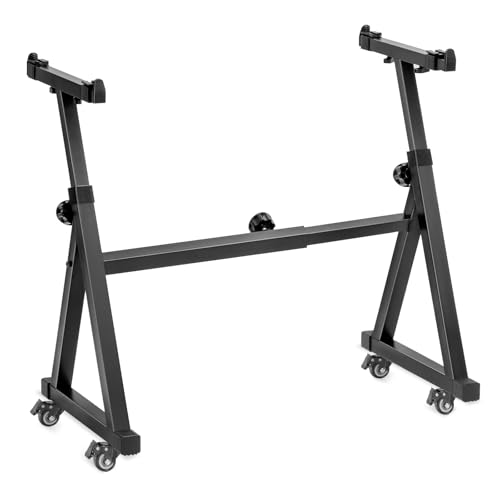
The AODSK Z-style stand is made for players who want a strong base for a 61- or 88-key electric piano. Its Z shape gives the legs a broad, balanced footprint. Both height and width adjust, which helps the stand fit different instruments and playing positions. It also leaves open space below the keyboard for pedals, storage, or a player’s legs.
Compared with a basic X stand, a Z-style stand often feels more like a piece of studio furniture. It can support a more permanent setup while still allowing some adjustment. I would look closely at the locking points and use the stand on a level floor. This is a stand, not a desk, so you will need a separate surface for your computer and recording equipment.
Pros:
- Heavy-duty design suits many full-size keyboards
- Adjustable width and height improve fit
- Z shape offers a stable studio-style base
- Open leg area works well with sustain pedals
- Fits both 61-key and 88-key instruments
- Useful for home, rehearsal, and performance spaces
Cons:
- It provides no built-in computer or monitor space
- May be heavier than a simple X-style stand
- Users must tighten and level the frame carefully
My Recommendation
The AODSK is best for a pianist who wants stability without a large recording desk. It suits a room where the piano needs to stand alone but still connect to a nearby computer. For a home studio, a stable stand protects your playing flow and reduces movement during strong keystrokes. I would pair it with the GLEAM bench and a small side table for an efficient setup.
This stand is a strong choice for the best piano for home studio arrangement when you value open floor space. It also gives you more flexibility than a fixed desk. Make sure the stand matches the piano’s weight and body depth, and confirm that every adjustment is locked before playing.
| Best for | Why |
|---|---|
| Heavy digital pianos | The Z-style frame provides a broad, supportive base. |
| Flexible studios | Adjustable width and height fit changing needs. |
| Pedal users | The open lower area leaves room for sustain pedals. |
NigWarm Single X Keyboard Stand

The NigWarm Single X Keyboard Stand is the simple, portable option. Its X shape folds down for storage and transport, which makes it useful for renters, students, and musicians who move equipment often. The adjustable design can fit many common keyboard sizes. It also costs less space than a full studio desk.
A single X stand works best when you need a straightforward base and nothing more. It will not hold a computer, speakers, or audio interface, so the rest of the setup must sit elsewhere. Stability depends on correct adjustment, even floor contact, and secure tightening. I would choose it for a lightweight or midweight keyboard and a room that changes purpose often.
Pros:
- Folds for easier storage and transport
- Adjustable design fits many keyboards
- Simple setup takes little time
- Uses less space than a studio workstation
- Good choice for renters and mobile musicians
- Leaves room for a separate pedal setup
Cons:
- Single X frames may move more than Z-style stands
- No tray or surface for a computer
- Heavy 88-key pianos need careful weight checking
My Recommendation
The NigWarm is best for someone who wants the lowest-clutter way to support a keyboard. It fits a beginner setup, a temporary practice area, or a home studio that doubles as a living room. If you already own a table for your laptop and interface, this stand may be all you need around the best piano for home studio practice. Its portable design is its biggest advantage.
I would not select it for a permanent production desk if you often play with force or use a very heavy 88-key piano. In that case, a Z-style frame may feel more secure. For basic use, easy storage, and low space needs, the NigWarm remains a practical option.
| Best for | Why |
|---|---|
| Renters | Its compact form is easy to move and store. |
| Students | It offers a simple base without a large furniture cost. |
| Mobile players | The folding design supports transport between locations. |
Liquid Stands Piano Keyboard Workstation

The Liquid Stands Piano Keyboard Workstation combines keyboard support with a useful production surface. It is listed for instruments from 49 to 88 keys, so it can suit both compact controllers and full-size digital pianos. The table-style design gives you a place for a laptop, mixer, interface, or small monitor. That makes it more functional than a basic stand.
Rolling capability adds flexibility in a home recording room. You can move the workstation away from a wall, adjust the layout, or clear space when the room has another use. As with any rolling stand, lock the wheels before playing. I like this option for producers who want a middle ground between a large studio desk and a bare keyboard frame.
Pros:
- Supports a wide range of keyboard sizes
- Provides a work surface for production gear
- Rolling design helps with room changes
- More flexible than a fixed desk
- Useful for keyboards, synths, and digital pianos
- Good fit for small recording workflows
Cons:
- Wheels must be locked for the best stability
- Work surface may not replace a wide computer desk
- Large 88-key models require careful size checking
My Recommendation
The Liquid Stands workstation is best for a producer who wants mobility and workspace in one unit. It works well in a compact room where you need to change the layout often. For buyers building the best piano for home studio setup around a computer, it offers more function than a standard X stand. It can also support a second keyboard or synth in a growing setup, depending on your equipment dimensions.
I would choose it for flexible home production rather than formal piano study alone. Lock the casters, check the load needs, and keep heavy gear balanced across the surface. Its blend of mobility and workspace gives it strong value for modern bedroom studios.
| Best for | Why |
|---|---|
| Mobile home studios | Rolling construction makes layout changes easier. |
| Producers with gear | The top surface holds a laptop and studio tools. |
| Mixed keyboard setups | The design can support several common keyboard sizes. |
How to Choose the Best Piano for a Home Studio
Choosing the best piano for home studio work starts with the instrument, not the furniture. If you want real piano technique, look for 88 weighted keys. A weighted action gives your fingers resistance and helps you learn control across soft and loud notes. A smaller 49- or 61-key keyboard can work for beats and simple parts, but it offers less range for classical practice.
Next, consider the sound engine and connection options. Built-in speakers help with quick practice, while headphone output lets you play late without disturbing others. MIDI or USB connectivity matters if you plan to use a computer. It lets the piano control software instruments, record note data, and work with many music apps.
Noise also matters in a home. A digital piano is usually easier to manage than an acoustic upright because you can use headphones and control the volume. Still, key noise can travel through a desk or floor. A stable stand, soft floor mat, and sensible playing hours can help reduce that problem.
Finally, measure the whole setup. Include the keyboard width, piano depth, bench height, pedal position, monitor, and walking space. A piano may fit on paper but feel cramped once the chair and computer are in place. I always treat comfort as part of sound quality because a tense player will not make relaxed music.
Home Studio Piano Setup Tips
Place the piano so you can reach the computer without twisting your back. Keep the monitor at eye level and slightly behind the keys. Put speakers at equal distances from your head when possible. This simple triangle gives you a more balanced listening position.
Use headphones when you need quiet monitoring. If you use speakers, keep them on solid surfaces and avoid pushing them deep into a corner. Corners can make bass sound too strong. A small room will never behave like a large studio, but careful placement can make mixes easier to judge.
Keep power and audio cables apart when practical. Use cable ties or the built-in management features on a studio desk. Label important cables before you need to troubleshoot them. A clean setup saves time and keeps your attention on the music.
Use a bench that places your elbows near the key level. Sit far enough back to move your hands freely, but do not stretch toward the keys. Keep both feet supported, with the sustain pedal under the correct foot. These small habits protect comfort during long sessions.
Digital Piano Versus MIDI Keyboard
A digital piano aims to feel and sound like a piano. It often includes weighted keys, piano sounds, speakers, and pedals. It can work without a computer, which makes it friendly for daily practice. The UISCOM fits this role better than the desks and stands listed above.
A MIDI keyboard mainly sends note and control data to software. It may have fewer keys and lighter action. This design suits electronic music, beat making, and virtual instruments. It can be cheaper and smaller, but it may not satisfy a player who wants traditional piano practice.
Neither choice is right for every user. Choose a digital piano if touch and piano technique come first. Choose a MIDI keyboard if portability and software control matter most. Some producers keep both, using the digital piano for practice and the controller for sound design.
What I Checked in This Review
I focused on real home studio needs rather than flashy features. Key count, action, space, comfort, stability, mobility, and workflow all affect daily use. I also separated the complete piano from the supporting products. This distinction matters because a desk cannot improve key response, and a stand cannot create piano sound.