Best Budget Overhead Mics For Drums: Top Value Picks
The best budget overhead mics for drums balance clear cymbals, wide sound, strong build, and simple XLR setup.
A drum kit can sound flat when the overhead tracks miss the cymbals, room, and air around each hit. I know the problem: you want a full studio sound, but your budget does not cover premium microphone pairs. The good news is that affordable drum mic kits and pencil condensers now offer useful detail for home studios, rehearsals, demos, and small stages. I tested these options by looking at pickup style, setup, build, included parts, and likely recording use. This guide will help you find the best budget overhead mics for drums without wasting money on gear that does not fit your room or mixer.
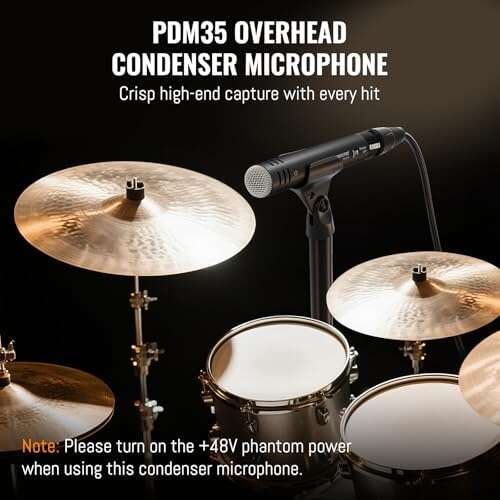
Phenyx Pro PDM35 Overhead Condenser Mic

The Phenyx Pro PDM35 is a simple pencil-style condenser made for overhead drum work, hi-hat, percussion, and other bright instruments. Its cardioid pickup pattern focuses on the sound in front of the capsule and helps reduce noise from the rear. The XLR connection makes it easy to use with an audio interface, mixer, or microphone preamp. For a small home room, this focused pickup can help keep the drum track controlled.
I like this type of microphone when I need cymbal detail without adding a large, heavy body above the kit. It can also work well as a close hi-hat mic or as part of a spaced pair. Like most condenser microphones, it needs phantom power from compatible equipment. Used with careful placement, it gives a budget kit more air and helps the snare and cymbals feel connected.
Pros:
- Cardioid pickup helps reject some rear-room noise
- Pencil design fits well above a compact drum kit
- XLR output works with common recording gear
- Useful for overheads, hi-hat, and percussion
- Wide frequency response supports crisp cymbal detail
- Light body puts less strain on a boom stand
Cons:
- Requires phantom power from the mixer or interface
- One microphone does not create a full stereo overhead image
- Bright cymbals may sound sharp in a lively room
My Recommendation
I recommend the PDM35 for a beginner who needs one affordable overhead microphone for drums. It suits home recording, rehearsal capture, and small production setups where a full seven-piece kit is not needed. It is also a smart starting point for someone who plans to buy a second matching mic later. Among the best budget overhead mics for drums, this model stands out for its direct focus and easy XLR workflow.
W IN-MIX 7-Piece Wired Drum Mic Kit

The W IN-MIX seven-piece kit gives you a complete path into multi-mic drum recording. It includes microphones for kick, snare, toms, and cymbal work, along with holders and threaded clips. The all-metal construction should appeal to players who move gear between practice rooms, stages, and small studios. Since each microphone uses a wired XLR connection, it fits most standard drum recording systems.
This kit makes sense when one overhead is not enough and you want to shape each drum during mixing. You can raise or lower the cymbal channels, add kick weight, and bring the snare forward without relying on one pair of room mics. The included clips can also reduce the need for extra mounting hardware. Still, the final result will depend on preamp quality, placement, phase checks, and room sound.
Pros:
- Complete seven-microphone setup for a full drum kit
- Includes holders and threaded clips for quicker setup
- All-metal bodies support regular transport and use
- Separate channels allow more control during mixing
- XLR outputs suit mixers, interfaces, and stage boxes
- Useful for both studio recording and live performance
Cons:
- Needs several XLR cables and enough preamp inputs
- More setup time than using one or two overhead mics
- Budget capsules may not match premium studio microphones
My Recommendation
I would choose this W IN-MIX kit for a drummer, band, or small venue that needs a complete low-cost system. It is especially useful when you want close control of kick, snare, toms, and overhead sound. It may be more gear than a casual user needs, but the value is strong if you already own a multichannel interface. For shoppers comparing the best budget overhead mics for drums, this kit offers the most complete starting package.
GRIFFIN 11-Foot Rolling Boom Stand

The GRIFFIN 11-foot rolling boom stand is not a microphone, but it can make overhead drum recording much easier. Its tall design gives you the height needed to place a mic above a full kit, while the rolling base helps with position changes. The telescopic arm adds reach when a normal stand cannot sit close enough to the kit. This matters because overhead placement often affects the whole balance of the recording.
I see this stand as a useful partner for pencil condensers and drum mic kits. A stable, tall stand lets you test higher and lower positions without lifting the whole base. The wheels can save time in a rehearsal space, though I would lock or secure the stand before recording. With heavy microphones or long boom extension, check the balance and keep the stand away from players who may bump it.
Pros:
- 11-foot height supports high overhead microphone positions
- Rolling base makes room changes easier
- Telescopic boom adds useful reach over large kits
- Works for drums, choir, vocals, and room recording
- Helps reduce the need for awkward stand placement
- Useful for studios that rearrange gear often
Cons:
- It is a stand, so you must buy microphones separately
- Tall extension needs careful balance and safe placement
- Wheels may move if you fail to lock or secure the base
My Recommendation
This GRIFFIN stand is best for home studios, churches, rehearsal rooms, and mobile engineers who need extra height. It pairs well with the best budget overhead mics for drums because correct placement is just as important as the microphone itself. I would not buy it as a first purchase if you still lack a mic, cable, or interface. However, it offers real value when a standard boom stand cannot reach the right position.
Pyle 7-Piece Drum Microphone Kit

The Pyle seven-piece drum microphone kit combines dynamic and condenser microphones for a complete drum setup. That mix gives you a practical way to use dynamic microphones on loud close sources and condensers for overhead or cymbal detail. A kit like this can cover kick, snare, toms, and overhead duties with one purchase. It is aimed at buyers who want broad coverage without building a system piece by piece.
The main attraction is flexibility. You can record a full kit, use only the overhead condensers, or place the dynamic microphones on other instruments at a rehearsal. The set can also help new engineers learn how microphone distance changes tone. As with any low-cost kit, I would spend time matching levels and checking phase before judging the final sound.
Pros:
- Combines dynamic and condenser microphones in one kit
- Supports full-kit recording with multiple channels
- Offers a low-cost way to learn drum microphone placement
- Dynamic microphones can handle strong close drum signals
- Condenser microphones add air to cymbals and room sound
- Useful beyond drums for vocals and other instruments
Cons:
- Requires a mixer or interface with enough inputs
- More microphones mean more cables and setup work
- Included microphones may need careful EQ in a bright room
My Recommendation
I recommend the Pyle kit for beginners who want to explore multi-mic recording at a low price. It is a good match for a practice room, starter studio, or band that needs one shared microphone set. If you want the best budget overhead mics for drums plus close mics for the rest of the kit, this mixed design is worth considering. Buy it only if your interface has enough inputs to use its full potential.
LyxPro SDPC-2 Stereo Pencil Condenser Pair

The LyxPro SDPC-2 gives you a matched-style pair of pencil condenser microphones for stereo overhead recording. A pair is important because two microphones can capture the width of a drum kit more naturally than one mic. The product includes three capsules, giving you options for shaping the pickup pattern and response. Both microphones use XLR connections and need phantom power from your recording device.
I like stereo pencil condensers for players who want cymbals to spread left and right while the snare stays in the center. You can try an XY setup for strong mono compatibility or a spaced setup for a wider image. The small bodies are easy to position around cymbals and stands. They also work on acoustic guitar, strings, room parts, and percussion, so the pair can stay useful after your first drum project.
Pros:
- Two microphones create a stereo overhead image
- Pencil bodies fit into tight spaces around cymbals
- Three capsules offer useful sound and pattern choices
- XLR outputs work with common studio equipment
- Can also record acoustic guitar and other instruments
- Supports XY and spaced stereo techniques
Cons:
- Needs two preamp inputs and phantom power
- Spaced placement requires careful phase checking
- Room reflections can make bright cymbals sound harsh
My Recommendation
The LyxPro SDPC-2 is one of my top choices for stereo overhead recording on a budget. It suits home recordists who care more about cymbal width and kit balance than close-mic isolation. For many shoppers, a stereo pair is the best budget overhead mics for drums solution because it captures the kit as one instrument. I would choose it over a single mic when your interface has two clean preamp channels.
AUDIX FP7 Fusion Seven-Piece Drum Kit

The AUDIX FP7 Fusion is a more established seven-piece drum microphone package for kick, snare, toms, and overhead work. It includes a travel case, which is valuable for gigging drummers and engineers who move equipment often. The kit follows a focused drum-mic approach rather than asking one microphone to do every job. Its dedicated parts can make a full kit easier to control in a live mix.
This set is a good fit when you want a step up from very basic drum kits but still need to watch spending. The overhead microphones help capture cymbals and kit tone, while the close microphones let you shape attack and body. I would still place the overheads first, because they form the backbone of the drum image. Add the close microphones only after the overhead sound feels balanced and natural.
Pros:
- Complete seven-piece system for full drum coverage
- Includes a travel case for storage and transport
- Dedicated microphones simplify close-mic placement
- Useful for both live sound and studio recording
- Overhead microphones help build a natural kit picture
- Good choice for drummers who play regular gigs
Cons:
- Costs more than entry-level generic drum kits
- Needs a full set of cables, stands, or clips
- Seven microphones may exceed the needs of simple demos
My Recommendation
I recommend the AUDIX FP7 to serious beginners, working bands, and mobile engineers who want a durable full-kit system. It is not the cheapest option here, but its focused design and travel case add practical value. If you need the best budget overhead mics for drums and also want dependable close-mic coverage, this is a strong long-term pick. It makes the most sense for users who will record or perform often.
Depusheng Seven-Piece Drum Microphone Set

The Depusheng seven-piece set uses five dynamic percussion microphones and two condenser microphones. That layout gives you a sensible division of labor: dynamics for kick, snare, and toms, plus condensers for overhead duties. It is designed for instrument recording and music production, so it can cover a home studio or small live setup. The seven-mic format also gives you room to experiment with different placements.
This kit appeals to anyone who wants a complete drum solution without buying each microphone separately. I would begin with the two condensers as overheads, then add the dynamic microphones one at a time. That approach helps you hear what each channel contributes. It also prevents the common beginner mistake of adding too many microphones before the main drum sound works.
Pros:
- Five dynamic and two condenser microphones cover a full kit
- Useful mix of close-mic punch and overhead detail
- Supports home production and small live applications
- Allows gradual setup instead of using all seven microphones
- Good value for new bands and practice studios
- Extra microphones can serve other percussion instruments
Cons:
- Needs enough input channels for complete operation
- More microphones create more phase and cable concerns
- Beginners may need time to learn the best placement
My Recommendation
The Depusheng kit is best for a new producer who wants flexibility at a modest cost. It gives you a clear way to start with overheads and grow into full close-mic recording. I consider it a practical choice among the best budget overhead mics for drums when the buyer wants both condenser and dynamic options. It offers the strongest value for users who plan to record more than drums later.
W IN-MIX G7 Seven-Piece Drum Mic Kit
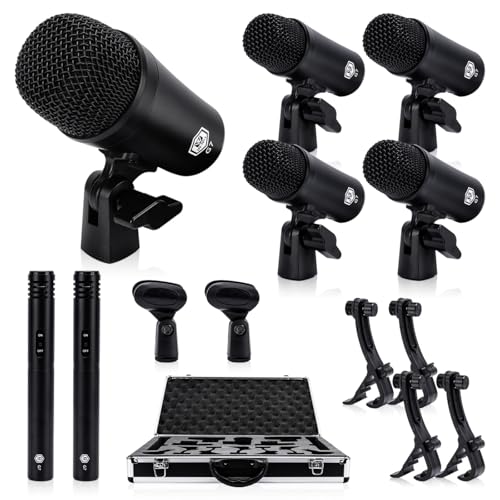
The W IN-MIX G7 is a seven-piece kit with all-metal construction, XLR outputs, dynamic drum microphones, and condenser overhead microphones. It is built for kick, snare, toms, cymbals, studio work, and live performance. The layout follows the standard needs of a full acoustic kit. That makes it easier to plan a recording session before the gear arrives.
The G7 is a useful option for bands that need one set for both rehearsal and stage work. The dynamic microphones can stay close to loud drum heads, while the overhead condensers add cymbal spread and overall kit tone. I would use a high-pass filter on the overhead channels if low-end rumble builds up. Good gain control will also help keep the condensers clean and prevent harsh peaks.
Pros:
- All-metal construction supports frequent handling
- Includes dynamics for close drums and condensers for overheads
- XLR outputs fit standard live and studio systems
- Works for both recording and performance
- Full seven-piece layout covers common drum positions
- Offers flexible sound control during mixing
Cons:
- Requires several stands, clips, and XLR cables
- Full-kit recording needs a multichannel interface
- Overhead condensers need phantom power
My Recommendation
I would choose the G7 for a band that wants one affordable kit for studio sessions and live shows. It gives you the core tools needed to capture a full drum performance without mixing brands. In the search for the best budget overhead mics for drums, its condenser overhead channels make it more useful than a kit made only from dynamics. It is a practical choice when rugged handling matters.
LeiNetfor Seven-Piece Drum Mic Kit

The LeiNetfor seven-piece drum microphone kit uses a full-metal design aimed at complete drum coverage. It includes microphones intended for kick, snare, toms, and overhead positions. A package like this helps you avoid the guesswork of matching separate models from different brands. It also gives a new engineer enough channels to learn how close and overhead microphone choices work together.
I see this as a budget kit for basic recording, rehearsal capture, and small performance use. The full-metal bodies are helpful for users who need gear that can handle regular setup and teardown. Before recording, I would check every threaded clip and keep the overhead microphones clear of cymbal swings. The kit can provide a useful starting sound, but the room and microphone placement will still shape the result.
Pros:
- Seven microphones cover the main drum positions
- Full-metal bodies suit repeated setup and transport
- One purchase gives beginners a complete starting system
- Separate channels allow basic drum mixing control
- Useful for practice rooms and entry-level studios
- Can help new users learn standard drum-mic techniques
Cons:
- Needs multiple cables and recording inputs
- May require EQ to fit cymbals into a dense mix
- Extra setup can feel complex for first-time users
My Recommendation
The LeiNetfor kit is best for buyers who want full coverage at an entry-level price. It fits a beginner band, school music room, or home setup that needs more than two microphones. It is a reasonable candidate among the best budget overhead mics for drums when durability and kit size matter more than advanced capsule detail. I would pair it with a simple multichannel interface and careful placement.
Phenyx Pro PTD-10 Seven-Piece Drum Kit

The Phenyx Pro PTD-10 is a seven-piece wired dynamic drum microphone kit with microphones for bass drum, toms, snare, hi-hat, and cymbal work. It includes a carrying case, holders, and threaded clips. The full-metal design gives it a sturdy feel for home use, rehearsals, and local shows. Because the kit includes dedicated mounts, setup can be faster than building a system from loose microphones.
This is a good fit for players who want to record a full kit without spending premium money. Dynamic microphones are often forgiving on loud drum sources, and the close-mic layout gives you control over attack and body. I would use the overhead or cymbal microphone channels to set the overall tone first. Then I would blend the close mics with restraint so the kit keeps a natural feel.
Pros:
- Complete seven-piece dynamic drum microphone package
- Includes carrying case for easy storage
- Comes with holders and threaded clips
- Full-metal construction supports regular use
- Useful for bass drum, snare, toms, and cymbals
- Good choice for local gigs and home recording
Cons:
- Dynamic overheads may capture less air than condensers
- Requires enough mixer or interface inputs
- Close-mic kits need careful phase and gain setup
My Recommendation
I recommend the PTD-10 for drummers who value a rugged kit with useful accessories. It is especially suited to live bands, rehearsal spaces, and home users who need a case for transport. It may not deliver the same open cymbal detail as a dedicated stereo condenser pair, but it remains one of the best budget overhead mics for drums when full coverage and durability come first. Check current availability and included parts before ordering.
How to Choose the Best Budget Overhead Mics for Drums
Overhead microphones capture more than cymbals. They hear the snare, toms, kick, room, and the space between each drum. That is why I treat overheads as the main picture of the kit, not just an extra pair of tracks. A good budget mic can work well when you place it with care.
Choose condenser microphones for detail
Most overhead drum setups use condenser microphones because they tend to capture fast changes and fine cymbal detail. Pencil condensers are small, easy to position, and often work well in stereo pairs. They need phantom power, usually 48 volts, from an interface or mixer. Always confirm that your recording device supports phantom power before connecting them.
Pick a stereo pair for width
One overhead microphone can produce a useful mono drum sound. Two microphones can add width and help the kit feel more three-dimensional. A stereo pair also gives you more control over the left and right cymbal spread. If you use two overheads, keep the distance from each microphone to the snare as equal as possible when the setup allows it.
Understand pickup patterns
A cardioid microphone hears the front best and rejects much of the rear. This can help in a small room with loud reflections or nearby noise. An omnidirectional microphone hears sound from all directions and may capture more room tone. Beginners often find cardioid models easier to control in untreated spaces.
Watch the room
A cheap microphone in a good room can sound better than an expensive microphone in a poor room. Hard walls and bare floors reflect cymbal energy and may create a sharp or messy track. Try hanging a thick blanket behind the kit or placing soft furniture near strong reflection points. Small changes can make the overheads sound calmer and more focused.
Check phase before mixing
Phase problems can make the snare and kick lose power when you add close microphones to overheads. Start with the overheads alone. Add the kick and snare channels one at a time, then listen for a sudden drop in low-end weight or punch. If the sound changes badly, adjust microphone distance, polarity, or track timing according to your recording setup.
Count your inputs
A seven-piece kit may need seven microphone inputs, plus extra channels for room mics or vocals. A stereo pair needs two inputs. One pencil condenser needs one input, but it will not provide a wide stereo image by itself. Before choosing the best budget overhead mics for drums, count your interface inputs and confirm that you have enough XLR cables.
Do not ignore the stand
Overhead microphones sit above expensive cymbals and moving players. A weak stand can become a safety risk. Choose a stand with enough height, reach, and base weight for the job. Lock rolling stands before playing, and keep the boom balanced over the base. The microphone may be affordable, but the cymbals below it may not be.
Best For Comparison
| Best for | Why |
|---|---|
| Best stereo overhead value | LyxPro SDPC-2 offers two pencil condensers for a wider kit image. |
| Best complete starter kit | W IN-MIX seven-piece kit covers kick, snare, toms, and overhead duties. |
| Best durable gig setup | Phenyx Pro PTD-10 adds full-metal microphones, clips, holders, and a case. |
Simple Drum Overhead Placement Tips
Start with one microphone above the kit, aimed toward the snare. Raise it until the cymbals balance with the drums. If the cymbals dominate, move the mic higher or angle it away from the strongest crash. If the snare sounds weak, lower the microphone slightly or aim more toward the center of the kit.
For a stereo pair, try an XY position above the snare. The capsules sit close together, and the crossed angle can reduce timing differences between the channels. A spaced pair can sound wider, but it needs more care. Measure the distance from each microphone to the snare and listen in mono for phase loss.
Do not place the microphones too close to the cymbals. Close overhead placement can make the cymbals loud and the kit narrow. Give the microphones enough distance to hear the drums as one instrument. Every room is different, so use your ears before copying a famous studio setup.
FAQs Of best budget overhead mics for drums
Can I use one microphone as a drum overhead?
Yes. One cardioid condenser can capture a useful mono image of the kit. Aim it toward the snare and adjust the height until the cymbals and drums balance. A stereo pair adds width, but a single mic costs less and uses only one input.
Do drum overhead microphones need phantom power?
Most pencil condenser overhead microphones need phantom power. Your mixer or audio interface usually provides it through a 48-volt switch. Dynamic microphones do not normally need phantom power, but always follow the instructions for your specific model.
Are drum mic kits better than buying two overheads?
It depends on your goal. A stereo pair may give a more natural overall kit sound. A seven-piece kit gives you separate control over kick, snare, and toms. Choose a full kit if your interface has enough inputs and you want detailed mixing control.
How high should overhead drum mics be?
There is no single correct height. Start above the cymbal line and listen for balance. Raise the microphones for more room and cymbal blend. Lower them for a closer, more direct sound. Keep the stands stable and away from moving cymbals.
What is the best budget overhead mic setup for a small room?
A cardioid condenser or a close stereo pair often works well in a small room. Cardioid pickup can reduce some rear reflections. Add soft surfaces around the kit, check phase, and avoid aiming directly at the brightest crash cymbal.
Final Verdict: Which Should You Buy?
For stereo drum sound, I would buy the LyxPro SDPC-2 pair. For full-kit control, the W IN-MIX or Phenyx Pro PTD-10 offers strong value. The PDM35 is best for a simple one-mic start.