What Are Guitar Picks Made Of: Materials Explained
Most guitar picks are made from plastic, nylon, celluloid, Delrin, or specialized materials such as stone and metal.
The answer to what are guitar picks made of depends on the sound, grip, flexibility, and durability a player needs. Each material changes how a pick feels against the strings, so knowing the differences can help you choose with confidence instead of buying random packs and hoping one feels right.
Why guitar pick material matters
A guitar pick is small, but it sits between your hand and the strings. Its material affects attack, volume, comfort, control, and even how quickly the pick wears down.
Two picks with the same shape and thickness can feel very different. A flexible nylon pick may soften the attack, while a stiff acrylic pick can produce a sharper and louder response.
The main factors affected by pick material include:
• Tone: Some materials sound bright and clear, while others produce a warmer tone.
• Flexibility: Flexible picks bend during a stroke. Firm picks transfer more energy to the string.
• Grip: Surface texture and moisture resistance affect control.
• Durability: Hard materials often last longer, but they may wear strings more quickly.
• Comfort: The edge, weight, and feel can affect hand fatigue during long playing sessions.
This is why asking what are guitar picks made of is more useful than it first appears. The material is not just a manufacturing detail. It is part of the instrument’s playing feel.

Common materials used to make guitar picks
Most guitar picks are made from a small group of plastics and synthetic materials. These materials are easy to shape, affordable, and available in many thicknesses.
Celluloid
Celluloid was one of the earliest popular pick materials. It is made from cellulose-based compounds and has a warm, smooth feel.
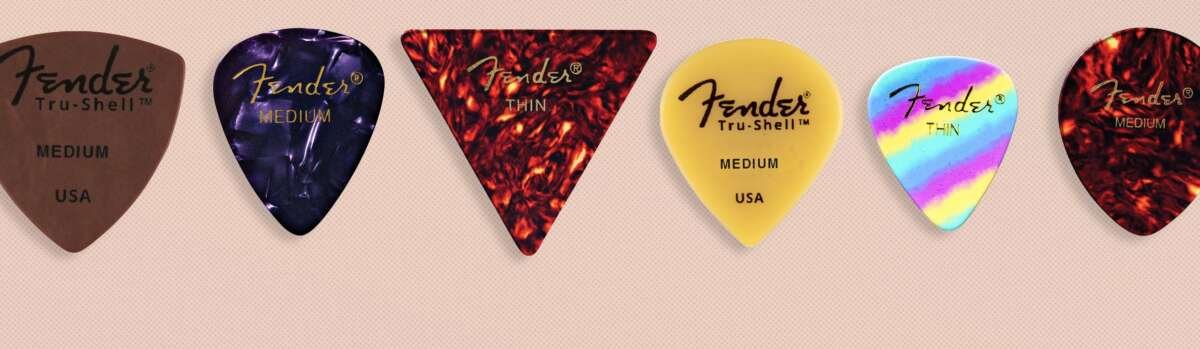
Celluloid picks are known for their wide range of colors and patterns. Many classic “tortoiseshell” designs are made from patterned celluloid rather than real tortoiseshell.
Advantages include:
• Warm and familiar tone
• Smooth release from the string
• Many visual designs
• Easy availability
The main limitation is wear. Celluloid can become thinner at the tip after repeated use. It can also become slippery when your hands sweat.
Celluloid is flammable, so it should be stored away from heat and open flames. Modern manufacturers also use other plastics to create similar looks without relying on traditional tortoiseshell patterns.
Nylon
Nylon is a popular choice for players who want flexibility and a softer feel. It is common in thin and medium picks, though thick nylon picks are also available.
Nylon picks often have a slightly textured surface. This can help with grip, especially during long practice sessions or live performances.
Nylon is often used for:
• Acoustic strumming
• Light electric guitar work
• Beginners who prefer a forgiving pick
• Players who want less pick noise
Nylon can absorb a small amount of moisture and may become more flexible over time. That can be helpful for comfort, but some players find that the pick loses its original shape.
Delrin
Delrin is a strong engineering plastic used in many durable guitar picks. It is also known by the chemical name acetal in industrial settings.
Delrin picks usually have a smooth surface and a firm, controlled response. They resist wear well and tend to glide across strings with less drag than some softer plastics.
Players often choose Delrin for:
• Clear attack
• Fast alternate picking
• Reliable edge retention
• A firm but not overly harsh feel
Delrin does not have the same classic look as celluloid, but it is valued for function. If you are comparing what are guitar picks made of for durability, Delrin is one of the most practical answers.
Acrylic
Acrylic picks are hard, rigid, and often visually striking. They are available in clear, colored, and custom designs.
Because acrylic does not flex much, it can produce a strong and immediate attack. Many players enjoy this response for lead guitar, rock, metal, and precise picking styles.
Acrylic picks can also feel smooth and glass-like. That may suit some players, but others may find them harder to hold if the surface lacks texture.
Polycarbonate
Polycarbonate is a tough plastic that resists impact and cracking. It is used in some guitar picks that need a balance of strength and moderate flexibility.
Polycarbonate picks can provide a bright, direct sound. Their feel depends on the thickness and surface finish, so one model may feel quite different from another.
Ultem
Ultem is a high-performance plastic used in premium picks. It is known for stiffness, strength, and resistance to heat and wear.
Ultem picks often have a crisp attack and a smooth release. They are popular among players who want a firm pick that stays consistent for a long time.
They can cost more than standard plastic picks, but their durability may justify the price for frequent players.
Less common guitar pick materials
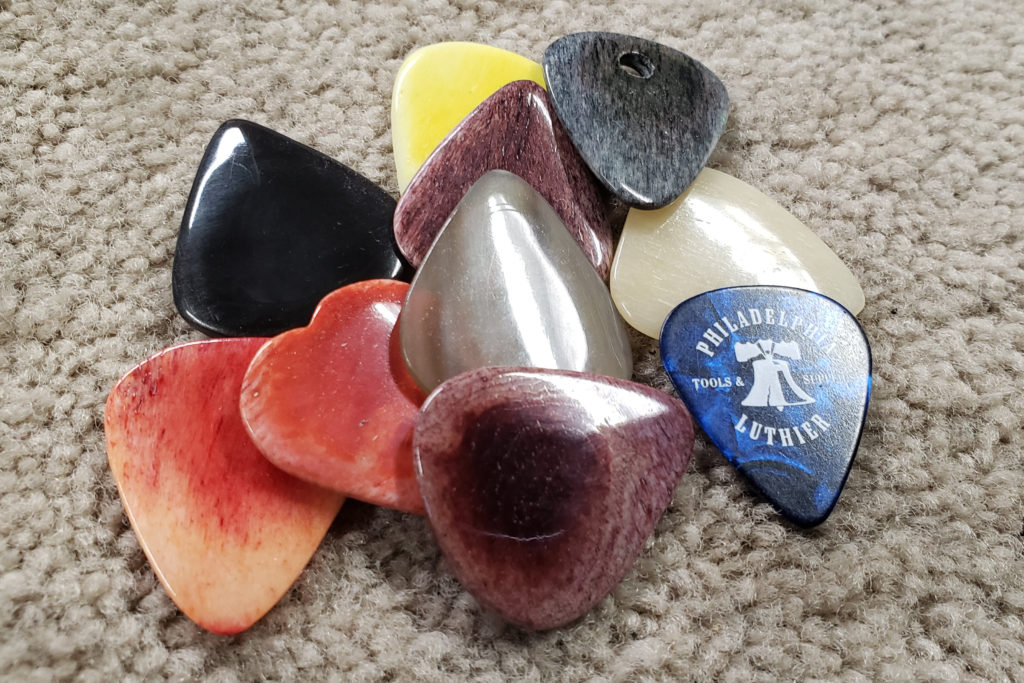
Not every pick is made from ordinary plastic. Boutique makers and specialty brands use materials that create distinct weight, texture, and tone.
Wood
Wooden picks are usually made from hardwoods such as maple, rosewood, ebony, or walnut. They have a natural look and a warm, earthy feel.
Wood picks are often thicker and less flexible than standard plastic picks. They can work well for gentle strumming, folk music, and players who enjoy natural materials.
Their limits are clear, though. Wood can wear unevenly, split, or absorb moisture. The edge may also need careful shaping to prevent rough contact with the strings.
Stone
Stone picks may be made from materials such as agate, jasper, jade, or polished slate. They are dense and rigid, which gives them a powerful and distinctive attack.
A stone pick can feel smooth and substantial in the hand. However, it may be heavy and less forgiving than a plastic pick.
Stone can also be harder on strings if the edge is rough or poorly polished. It is best used with care, especially on expensive instruments.
Metal
Metal picks may use stainless steel, brass, copper, or other alloys. They are very stiff and can produce a bright, sharp tone.
Some players like metal picks for heavy attack and slide-like textures. Others find them too hard on strings or uncomfortable during long sessions.
Metal picks require a well-finished edge. A sharp or uneven edge can damage strings and may scratch a guitar’s finish if the pick slips.
Leather
Leather picks are softer and more flexible than stone or metal picks. They often create a muted, warm sound with reduced pick noise.
They can be useful for mellow acoustic strumming. However, leather may wear quickly, especially when used with steel strings.
Felt
Felt picks are soft and quiet. They are often used with ukulele, bass, and certain acoustic styles.