A Dim 7 Guitar Chord: Easy Playing Guide
A dim 7 guitar chord uses A, C, E♭, and G♭ to create a tense, balanced sound.
The A dim 7 guitar chord is a powerful passing chord with a dark sound and a surprisingly flexible shape. Once you understand its notes, fretboard patterns, and musical uses, you can add smooth tension to blues, jazz, rock, country, and songwriting without making your playing feel overly complex.

What Is the A Dim 7 Guitar Chord?
The A dim 7 guitar chord is built from four notes:
• A, the root
• C, the minor third
• E♭, the diminished fifth
• G♭, the diminished seventh
Its chord symbol is usually written as A°7 or Adim7. The chord has a tense sound because it contains two tritones, which create strong musical pull.
A diminished seventh chord is made by stacking minor thirds. This gives the chord a very even shape. Every note is three semitones away from the next note, so the chord can shift smoothly into several other chords.
The A dim 7 guitar chord often sounds like a musical question. It creates suspense and usually wants to move to a more stable chord, such as A minor, B♭, or another nearby harmony.
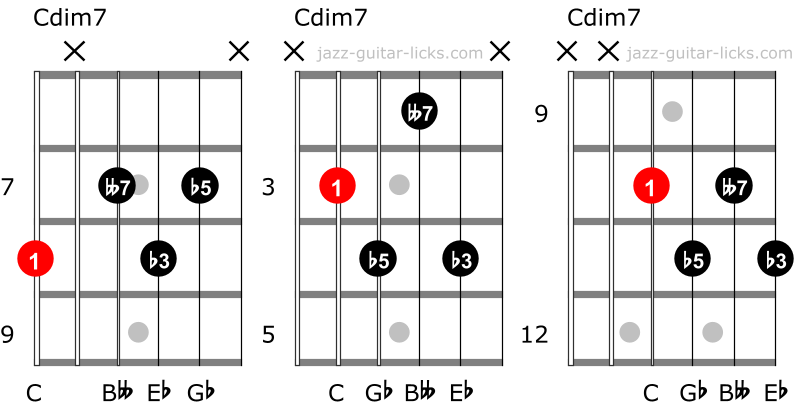
A Dim 7 Guitar Chord Diagram and Easy Shapes
One of the most useful beginner-friendly shapes for the A dim 7 guitar chord is:
A°7: x 0 1 2 1 2
Read the shape from the sixth string to the first string:
e|---2---
B|---1---
G|---2---
D|---1---
A|---0---
E|---x---
This shape produces the notes A, E♭, A, C, and G♭. The note A appears twice, which is fine. Guitar chords often repeat notes to make a shape easier to play.
Place your fingers like this:
• Fifth string: open
• Fourth string: first fret
• Third string: second fret
• Second string: first fret
• First string: second fret
• Sixth string: do not play
Use your thumb or pick to mute the sixth string. Start with a slow strum so each note rings clearly.
Another useful voicing is:
A°7: 5 x 4 5 4 x
This shape uses the fifth string as the bass:
e|---x---
B|---4---
G|---5---
D|---4---
A|---5---
E|---x---
This version sounds tighter and works well when you want the A dim 7 guitar chord in the middle of a progression.

How to Play the A Dim 7 Guitar Chord Cleanly
The A dim 7 guitar chord can feel awkward at first because its fingers do not form a familiar major or minor shape. A few small adjustments can make a big difference.
-
Place your fingers close to the frets. This reduces buzzing and helps each note ring.
-
Keep your thumb behind the neck. A relaxed thumb gives your fingers more room to reach the correct strings.
-
Pick each string one at a time. Check that the fifth, fourth, third, second, and first strings sound clear.
-
Mute the unused sixth string. Accidental low notes can make the chord sound muddy.
-
Practice changing into the chord. Try moving from A minor, A major, or E7 into the A dim 7 guitar chord.
Do not squeeze the neck too hard. Diminished chords often sound better with a light touch because their tension comes from the notes themselves, not from a forceful attack.

The Difference Between A Dim 7 and A Minor 7 Flat 5
Many players confuse the A dim 7 guitar chord with A half-diminished 7, also written as Am7♭5. These chords sound related, but they are not the same.
The A dim 7 guitar chord contains:
• A
• C
• E♭
• G♭
The A half-diminished 7 chord contains:
• A
• C
• E♭
• G
The final note changes from G♭ to G. That one semitone creates a different chord quality and a different musical function.
A diminished seventh chord sounds more tense and symmetrical. A half-diminished chord often sounds softer and is common in minor-key ii–V–i progressions.
A useful way to remember the difference is this: A°7 has a fully diminished seventh, while Am7♭5 has a minor seventh.

A Dim 7 Guitar Chord Theory Made Simple
The formula for a fully diminished seventh chord is:
1 – ♭3 – ♭5 – 𝄫7
In A, that formula gives:
A – C – E♭ – G♭
The double-flat seventh, written 𝄫7, may look confusing. G♭ and F♯ sound the same on a modern, equal-tempered guitar, but G♭ is the correct theoretical spelling for A°7.
The chord is symmetrical because each note is separated by three half steps. This means the same group of notes can be named in four ways:
• A°7
• C°7
• E♭°7
• G♭°7
This does not mean the chord has no identity. The name depends on the bass note and the chord’s role in the progression.
That symmetry is one reason the A dim 7 guitar chord is so useful for moving between distant-sounding chords.

Common Progressions Using A Dim 7
The A dim 7 guitar chord usually works as a passing chord. It adds movement between two stable chords.
A major to A sharp diminished to B minor
A A#°7 Bm
This progression moves upward in the bass. The diminished chord fills the space between A and B minor.
You can also think of A#°7 as B♭°7. The name changes based on the direction of the harmony.
A minor to A dim 7 to B♭ major
Am A°7 B♭
This progression creates a rising bass movement from A to B♭. The A dim 7 guitar chord adds a brief moment of tension before the B♭ chord feels settled.
G major to A dim 7 to A minor
G A°7 Am
This example uses the diminished chord as a colorful approach to A minor. It works especially well in slow songs and dramatic ballads.
E7 to A minor
E7 A°7 Am
Here, the A dim 7 guitar chord can act as a connecting color between the dominant chord and the minor tonic. Try using it for one beat before landing on A minor.

How to Use the A Dim 7 Guitar Chord in Songs
The easiest way to use the A dim 7 guitar chord is to place it between two chords that are one fret or one whole step apart in the bass.
Try these patterns:
• A to A#°7 to Bm
• Am to A°7 to B♭
• G to A°7 to Am
• E to A°7 to F
• A7 to A°7 to Dm
Play the diminished chord for a short time. One beat or two beats is often enough. If you hold it too long, its tension may begin to feel heavy.
You can also use the chord before a target chord. For example, play A°7 just before Dm. The notes in the diminished chord create a strong sense of motion toward the next harmony.
In songwriting, think of the A dim 7 guitar chord as a bridge. It does not usually serve as the destination. It helps the listener travel from one chord to another.

A Dim 7 Guitar Chord in Blues, Jazz, and Popular Music
Jazz guitarists often use diminished seventh chords to connect dominant chords. The chord may appear between a major chord and its neighboring minor chord, or as a substitute for a dominant chord with altered tones.
In blues and early rhythm and blues, diminished chords often add a dramatic turn before the IV chord. A short diminished shape can make a simple twelve-bar progression sound more colorful.