What Is The Saddle On A Guitar: A Simple Guide
The saddle on a guitar is a small bridge part that supports the strings and helps control tone, action, and intonation.
Many beginners notice the saddle only when a guitar buzzes, feels hard to play, or sounds out of tune higher up the neck. Yet this small strip of bone, plastic, or synthetic material has a major effect on how the instrument plays. In this guide, you’ll learn what is the saddle on a guitar, how it works, how it differs from the nut, and when it needs adjustment or replacement.
What Is the Saddle on a Guitar?
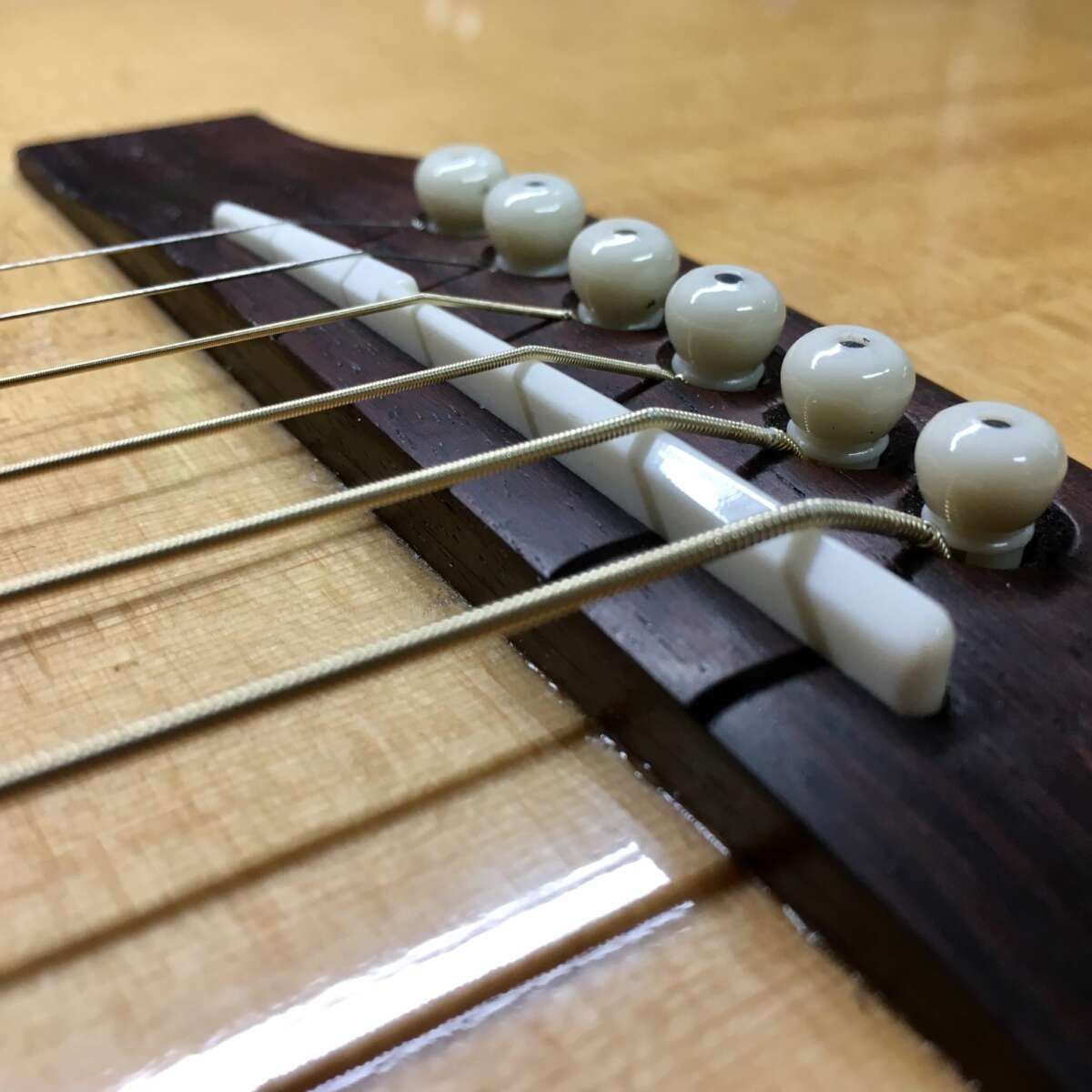
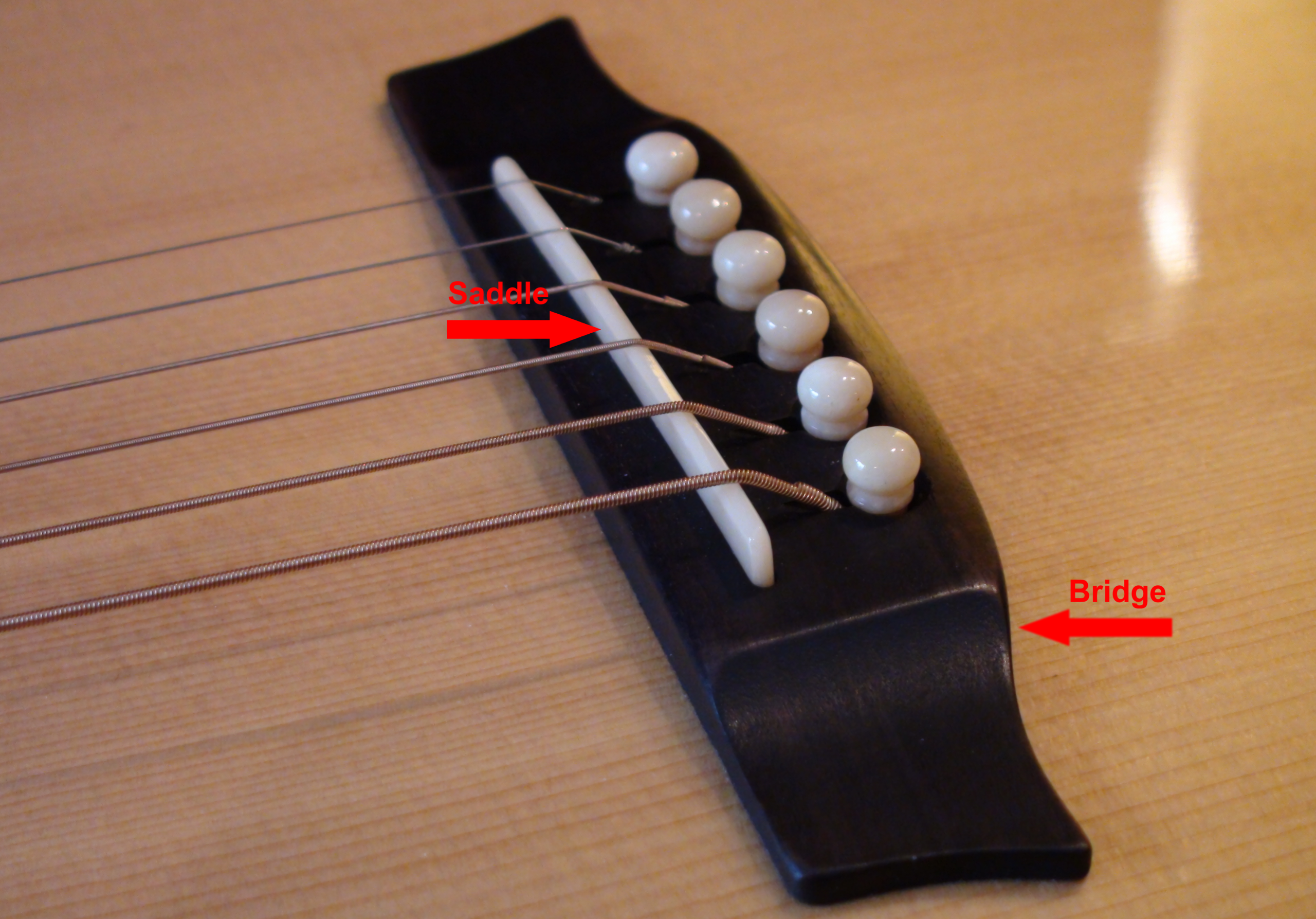
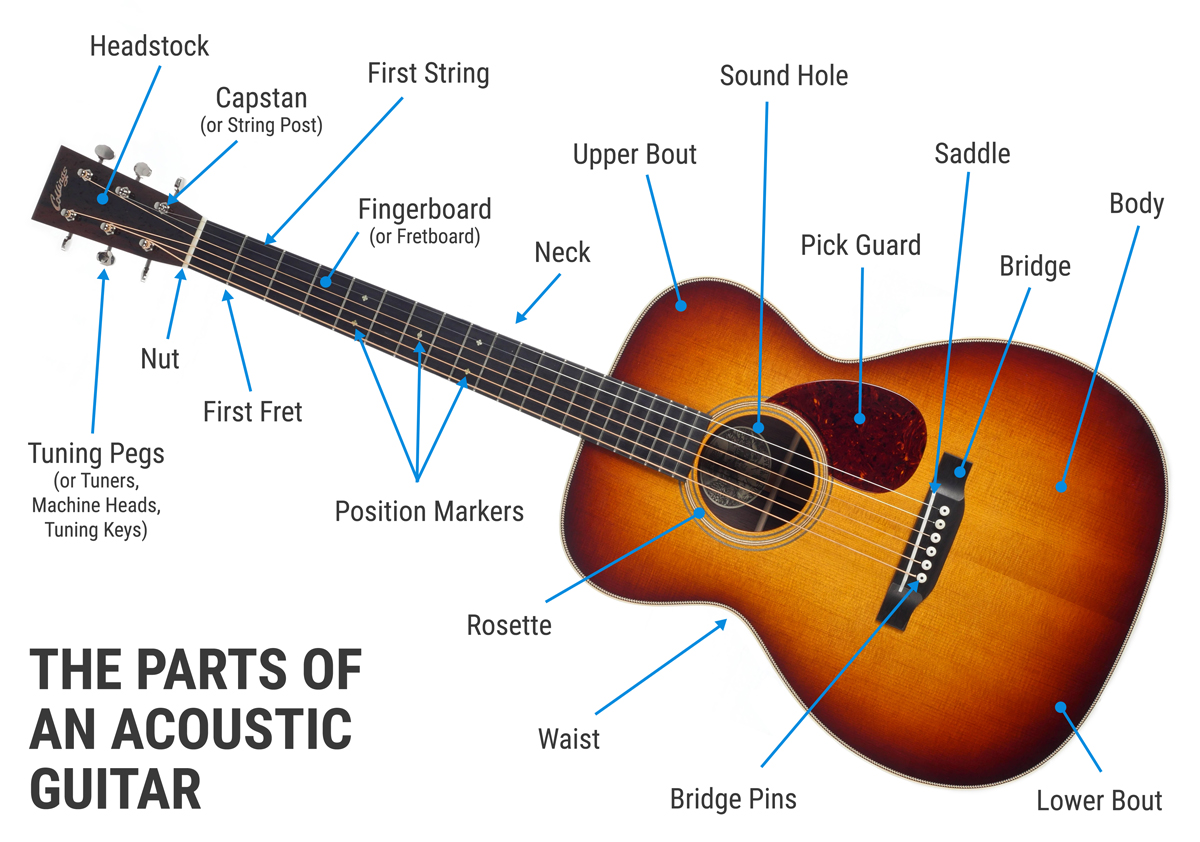
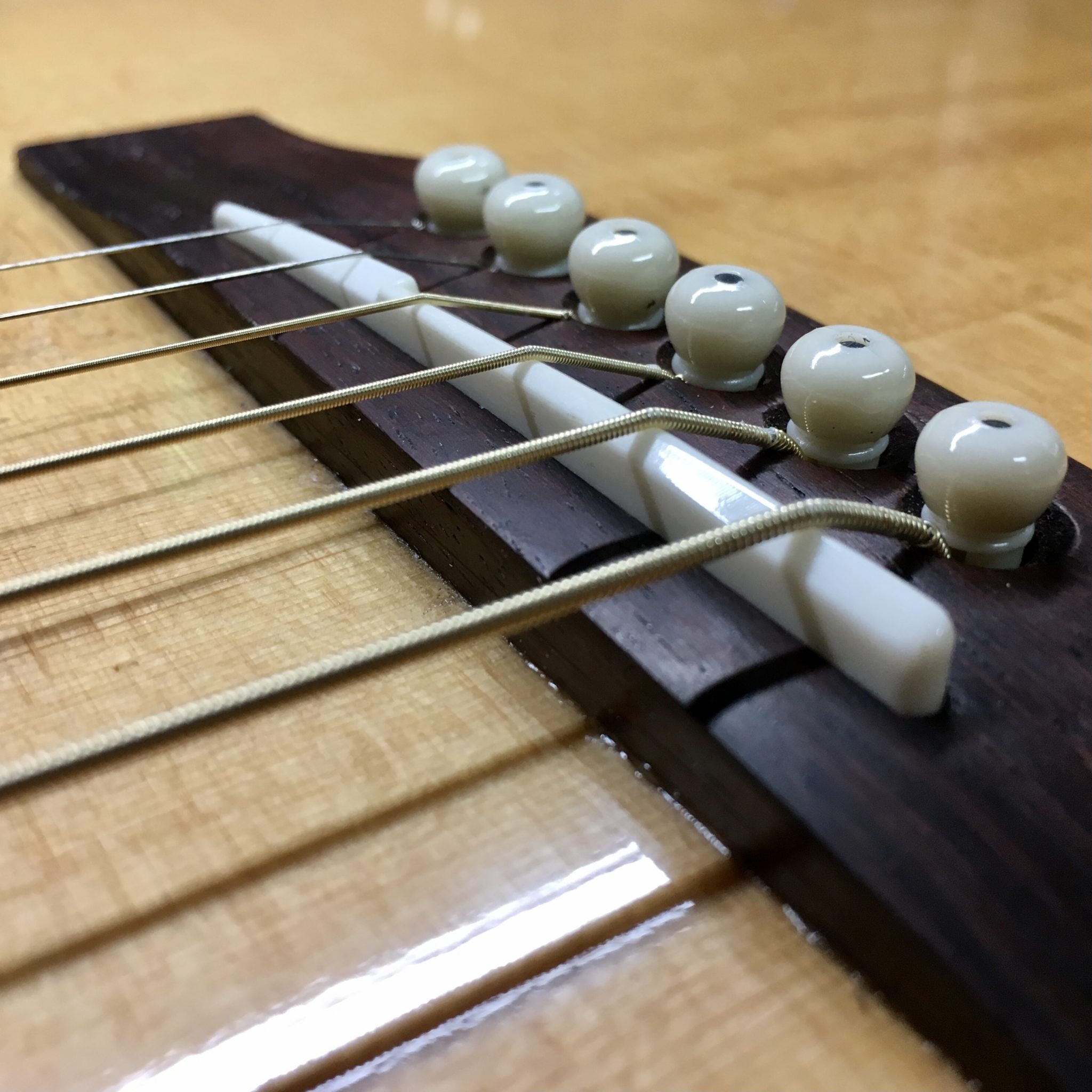
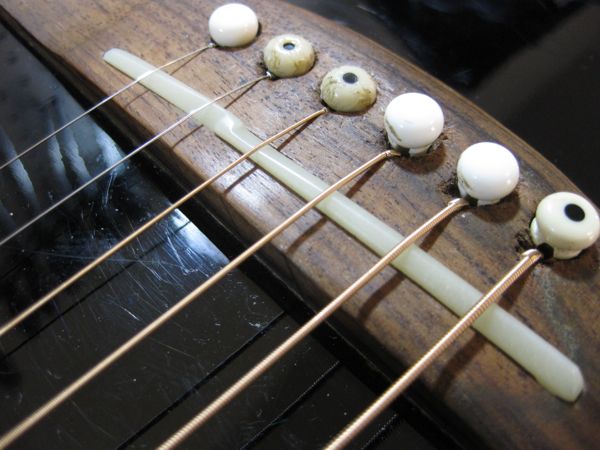
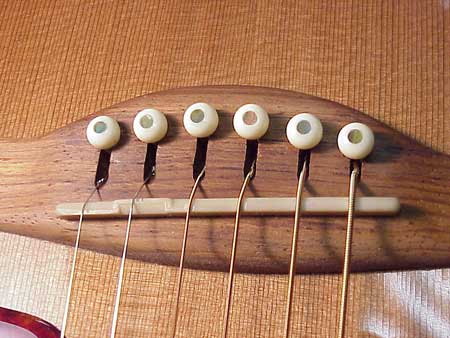
The saddle on a guitar is the raised strip that sits in the bridge. The strings pass over it before reaching the bridge pins or string anchors. On most acoustic guitars, you can see the saddle as a narrow white or cream-colored piece set into a slot on the bridge.
The saddle has three main jobs:
• It transfers string vibration into the guitar’s top or body.
• It sets the height of the strings above the fretboard.
• It helps establish correct string length for accurate intonation.
So, what is the saddle on a guitar in simple terms? It is the guitar’s lower string support. The nut performs a similar job at the headstock, but the saddle works at the opposite end of the strings.
Think of the saddle as a small bridge between the strings and the guitar body. If it fits well, the guitar feels balanced and sounds clear. If it is too high, too low, loose, or poorly shaped, the instrument may become uncomfortable or unstable.
Where Is the Saddle Located?
On an acoustic guitar, the saddle sits in a narrow slot on the bridge. The bridge is glued to the soundboard, which is the large wooden top of the instrument. The strings usually pass over the saddle and then enter the bridge through holes held by bridge pins.
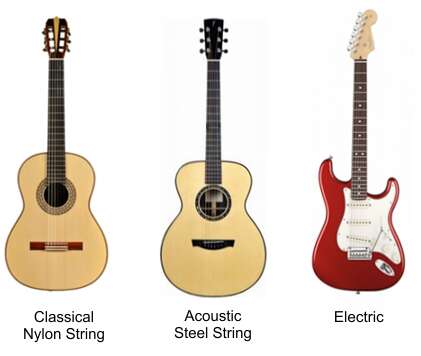
On a classical guitar, the saddle also sits in the bridge, but the strings are tied to the bridge instead of being held by bridge pins. The saddle may look similar, but its shape and setup can differ.
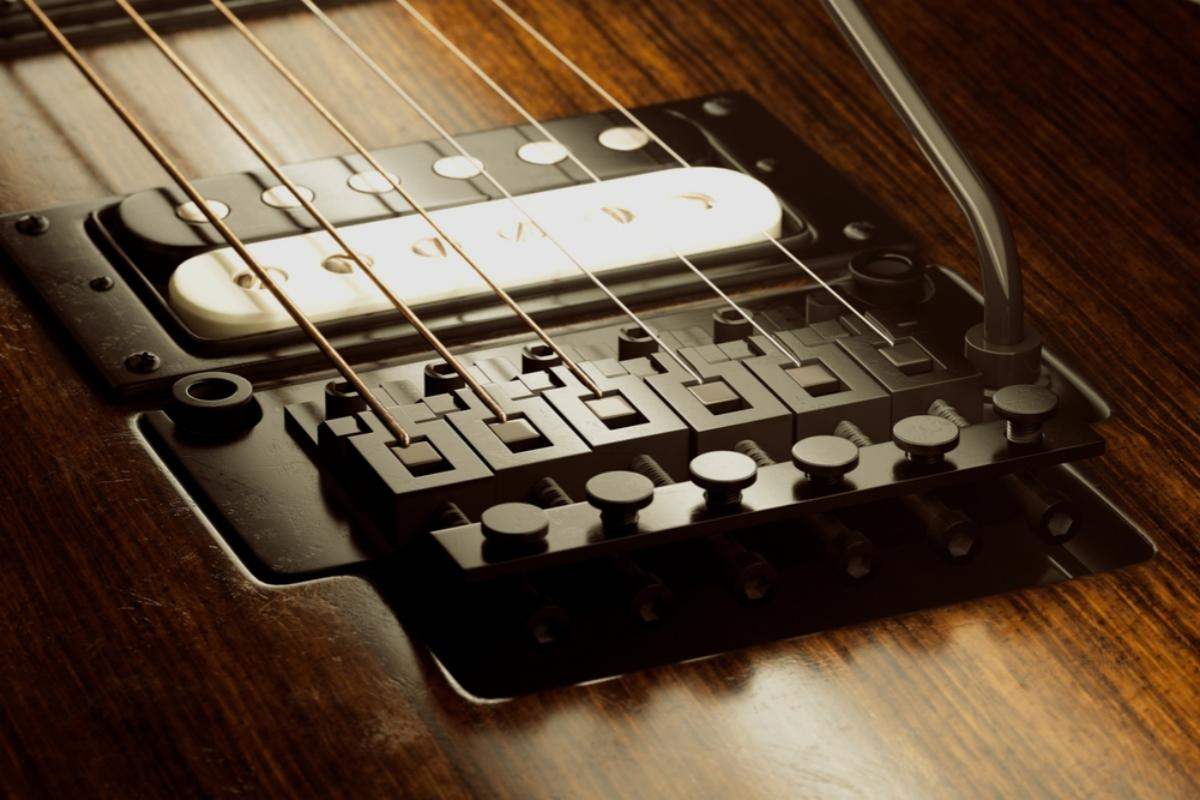
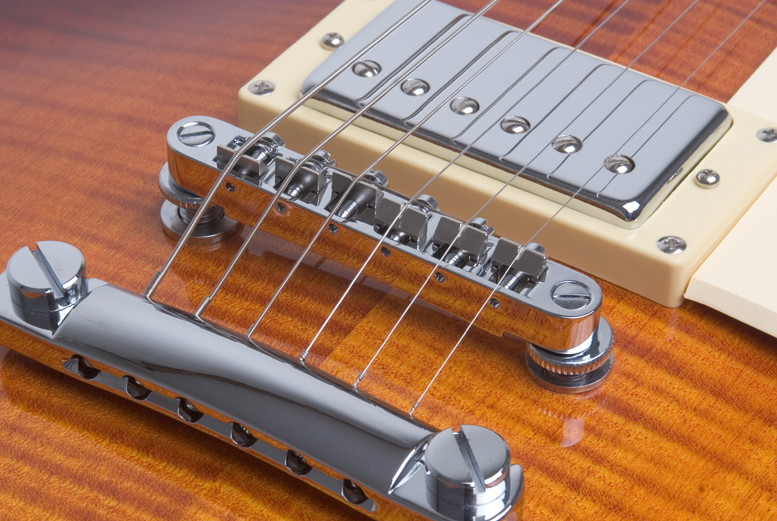
Electric guitars use several saddle designs. A Telecaster may have three barrel saddles or six separate saddles. A Stratocaster often uses six adjustable saddles. Many hardtail and tremolo bridges use one small saddle for each string.
This means the answer to what is the saddle on a guitar can vary by guitar type. The purpose stays similar, but the design changes to suit the bridge system.
What Does a Guitar Saddle Do?
A guitar saddle affects more than string support. It influences comfort, volume, tone, and tuning accuracy.
It Transfers String Vibration
When you pluck a string, the string vibrates from the bridge to the nut. Some of that energy moves through the saddle into the bridge and guitar body. On an acoustic guitar, this vibration helps the top produce sound.
A saddle with a firm, well-fitted contact with the bridge can support strong energy transfer. A loose saddle may reduce sustain or create unwanted rattling. The difference may be subtle, but experienced players often notice it.
It Sets String Action
String action is the distance between the strings and the frets. The saddle is one of the main parts that controls action at the bridge end of the neck.
A high saddle can make the guitar feel stiff, especially above the seventh fret. A low saddle can make the strings easier to press, but it may also cause fret buzz.
When asking what is the saddle on a guitar, remember that it acts like a height control. Small changes can create a noticeable difference in playability.
It Supports Intonation
Intonation describes how accurately a guitar stays in tune as you play different notes up the neck. The saddle position must account for the thickness and movement of each string.
On many electric guitars, each saddle can move forward or backward. This allows a technician or player to adjust the vibrating length of every string. Acoustic guitar saddles often use a slanted or compensated shape instead.
Guitar Saddle vs. Guitar Nut
The saddle and nut look similar because both support the strings. Their locations and roles are different.
| Part | Location | Main purpose |
|---|---|---|
| Nut | Where the neck meets the headstock | Guides the strings and sets the open-string height |
| Saddle | In or on the bridge | Supports the strings and controls bridge-end height and intonation |
The nut affects open notes and the first few frets. The saddle affects notes across much of the fretboard, especially in the higher positions.
A useful way to remember the difference is this: the nut is at the top of the guitar, while the saddle is at the body end. If open strings buzz, the nut may be involved. If notes sound sharp or the action feels high near the body, the saddle may need attention.
This distinction is important because filing the wrong part can make a setup worse. A trained guitar technician checks neck relief, nut height, saddle height, bridge condition, and intonation before making a permanent change.

Common Guitar Saddle Materials
Manufacturers use several materials for guitar saddles. Each material has different qualities, but shape, fit, and setup usually matter more than marketing claims.
Bone
Bone is common on acoustic and high-quality electric guitars. It is hard, durable, and capable of producing a clear attack. Properly fitted bone can also last for many years.
Bone is not always the best choice for every player. It can be more expensive to shape, and natural bone may have small differences in density.
Synthetic Bone
Synthetic materials are designed to copy some properties of natural bone. They offer consistent quality and are easier to manufacture. Many modern guitars use synthetic bone with excellent results.
Plastic
Plastic saddles are common on budget guitars. A good plastic saddle can work well, but soft plastic may wear faster or transfer vibration less efficiently than harder materials.
Replacing a plastic saddle with bone does not automatically transform a guitar. The fit, height, shape, and setup must also be correct.
Metal
Electric guitar saddles are often made from steel, brass, or other metal alloys. Metal saddles suit adjustable bridge systems and can provide strong durability and a clear response.
The best material depends on the guitar design, the player’s needs, and the quality of the installation.
How the Saddle Affects Tone
The saddle contributes to tone, but it does not work alone. The strings, bridge, guitar top, neck, frets, pickups, and playing style all shape the final sound.
A well-fitted saddle may help an acoustic guitar sound more focused and responsive. A poorly fitted saddle can create weak notes, uneven volume, or a dull response. However, claims that one saddle material always sounds better are too simple.
In practical repair work, fit usually comes first. A hard material with poor contact may perform worse than a softer material that fits the slot perfectly. The saddle should sit firmly, make even contact, and match the bridge slot without rocking.
Your strings also matter. New strings can make a much larger tonal change than a saddle swap. Before changing the saddle for tone alone, check the string age, neck relief, bridge condition, and overall setup.
Signs Your Guitar Saddle Needs Attention
A saddle may need inspection when you notice changes in sound, comfort, or tuning.
Look for these signs:
• The guitar has fret buzz near the body.
• The strings feel unusually high or stiff.
• The saddle rocks in its slot.
• The saddle is cracked, chipped, or badly worn.
• Notes sound sharp or flat as you move up the neck.
• One string sounds weaker than the others.
• The saddle is leaning forward under string tension.
• The bridge is lifting from the guitar top.
A visible crack does not always mean immediate failure, but it deserves attention. A leaning saddle can point to poor fit, excessive string tension, or a bridge problem.
A very low saddle can also signal that a previous owner removed too much material. In that case, replacing the saddle may restore proper action more safely than adding a temporary shim.
How to Adjust or Replace a Guitar Saddle
Saddle work is precise. Removing material is permanent, so beginners should move slowly.
A basic setup process often includes these steps:
- Measure the current string action at the twelfth fret.
- Check neck relief and tuning.
- Inspect the bridge, saddle slot, and saddle fit.
- Remove the strings or loosen them enough to lift the saddle.
- Mark the amount of material that needs removal.
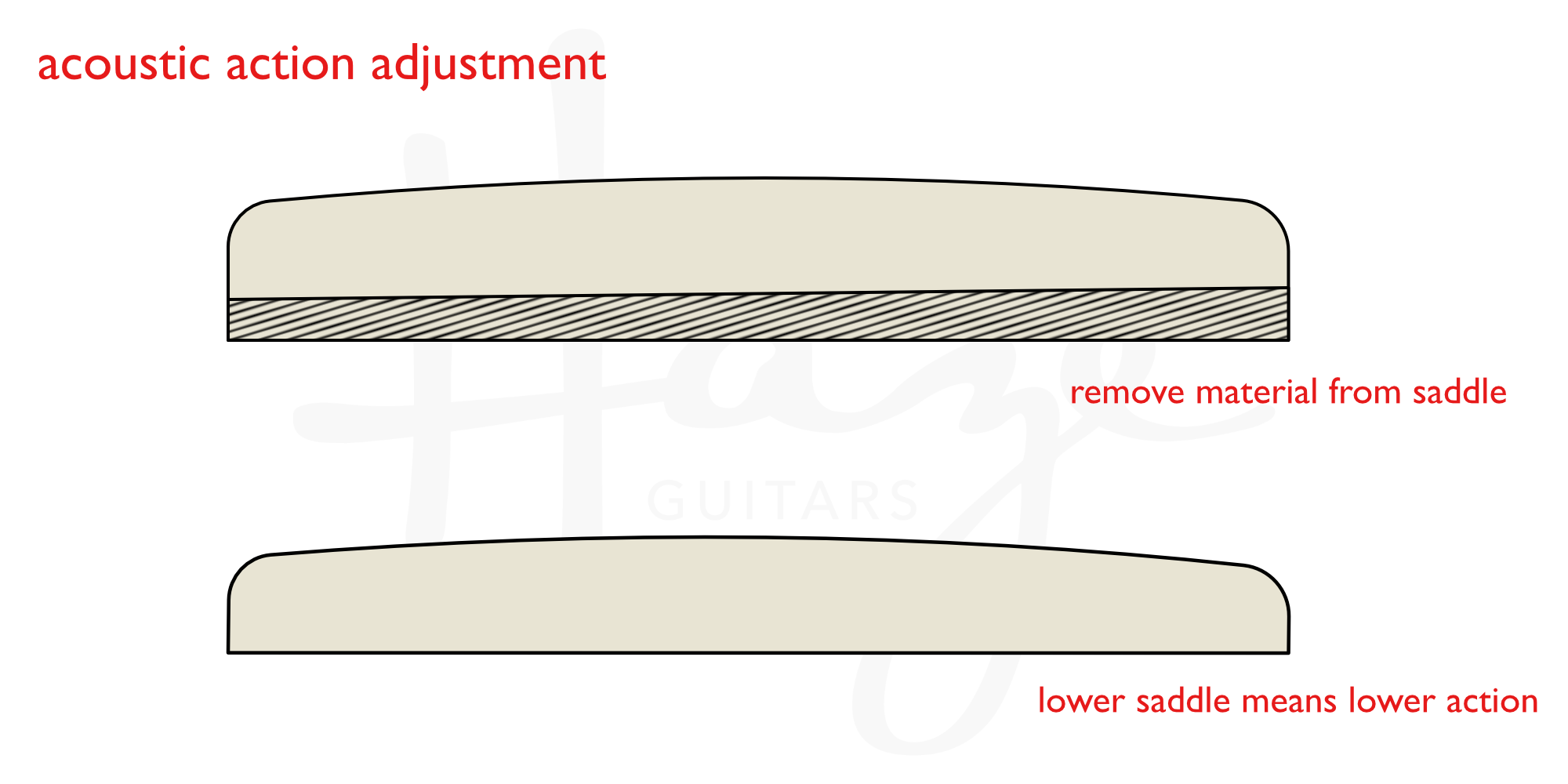
- Sand the bottom of the saddle evenly on a flat surface.
- Reinstall the saddle and tune the guitar.
- Check action, buzz, tone, and intonation again.
A common setup rule is that removing a certain amount from the bottom of the saddle produces roughly half that change at the twelfth fret. The exact result depends on the guitar’s geometry, so this is only a guide.
Do not sand the top of the saddle casually. The top shape controls string contact and may include compensation for intonation. Removing material from the wrong area can create tuning problems or uneven string height.
When I evaluate a saddle, I pay close attention to the bottom. It should be flat and should contact the bridge slot across its full length. A saddle that touches only at one or two points can cause weak transfer and unstable support.
Can You Raise a Guitar Saddle?
Yes, a saddle can sometimes be raised with a properly fitted shim. A shim is a thin piece of material placed under the saddle to increase its height.
A shim may be useful when:
• The saddle was lowered too far.
• The guitar needs a small action increase.
• You want to test a height change before making a new saddle.
• The existing saddle still fits well and remains structurally sound.
A thin, full-length shim is better than a small piece placed under only one section. The shim should provide even support across the saddle’s bottom.
A poorly made shim can create gaps, reduce stability, or cause uneven pressure. For a valuable instrument, a new saddle made to the correct height is usually the cleaner long-term solution.
Can You Lower a Guitar Saddle?
Yes, lowering the saddle can reduce string action. This may make a guitar easier to play, especially for players who use light pressure or have hand discomfort.
However, lowering the saddle is not always the right first step. High action may result from excessive neck relief, a high nut, a loose bridge, or a neck angle problem. Lowering the saddle without checking these areas can hide the real issue.
Before lowering the saddle, check:
• Neck relief
• Nut slot height
• Fret condition
• Bridge stability
• Saddle fit
• String gauge and tuning
If the action is high because the neck angle has changed, the saddle may already be too low. In that case, more sanding will make the guitar worse.
Acoustic Guitar Saddles and Electric Guitar Saddles
Acoustic and electric guitar saddles share the same basic purpose, but their designs are different.
An acoustic guitar saddle is usually one long piece. Its height and shape affect the string action, tone, and intonation. Acoustic saddles may be straight or compensated.
An electric guitar saddle is often part of a larger bridge assembly. Each string may have its own adjustable saddle. Small screws allow the player or technician to adjust height and length.
Electric guitar saddles work closely with pickups and bridge hardware. Their effect on amplified tone may be less obvious than the effect of an acoustic saddle on acoustic volume, but they still affect sustain, tuning, and playing feel.
The answer to what is the saddle on a guitar is therefore broad. On an acoustic guitar, it is often a single fitted strip. On an electric guitar, it may be a set of adjustable metal parts.
Practical Tips for Guitar Saddle Care
A saddle usually needs little daily care. Good maintenance is mostly about avoiding damage and noticing problems early.
• Keep the guitar at a stable humidity level, especially an acoustic guitar.
• Change strings carefully so the saddle does not get knocked loose.
• Do not force a saddle into a slot that is too tight.
• Avoid gluing a loose saddle without checking its fit.
• Use the correct string gauge for the guitar.
• Have bridge lifting or major action changes inspected promptly.
• Store the guitar in a suitable case when you are not playing it.
Wood movement can change the action and saddle fit. Acoustic guitars are especially sensitive to very dry or very damp conditions. A soundhole humidifier may help in dry climates, but it must be used correctly.
One mistake I often see from new players is treating every action problem as a saddle problem. A complete setup is more reliable than filing parts at random.
Frequently Asked Questions About What Is the Saddle on a Guitar
What is the saddle on a guitar made of?
The saddle on a guitar may be made from bone, synthetic bone, plastic, steel, brass, or another hard material. Acoustic saddles are often bone or synthetic, while electric guitar saddles are commonly metal.
Is the guitar saddle the same as the nut?
No. The nut sits near the headstock, while the saddle sits in the bridge. Both support the strings, but the nut controls the open-string end and the saddle controls the bridge end.
Does the saddle affect guitar tone?
Yes, the saddle can affect acoustic volume, sustain, attack, and response. Its fit and shape usually matter as much as its material.
Can I replace a guitar saddle myself?
You can replace one with careful measurement and basic tools, but the work requires precision. If the saddle needs major height changes or the guitar has bridge problems, a qualified repair technician is safer.
Why is my guitar saddle leaning?
A leaning saddle may result from poor fit, string pressure, a damaged bridge slot, or a lifting bridge. Stop making major adjustments and have the instrument inspected before the problem grows.
How high should a guitar saddle be?
There is no single correct height for every guitar. The right height depends on neck relief, fret condition, string gauge, playing style, and the guitar’s design.
Can a saddle fix fret buzz?
Sometimes. A saddle that is too low can cause buzz, but fret buzz may also come from neck relief, uneven frets, loose hardware, or technique. Diagnose the full setup before changing the saddle.
Conclusion
The saddle on a guitar is a small part with a large job. It supports the strings, transfers vibration, sets bridge-end action, and helps the guitar play in tune across the fretboard.
A good saddle must fit securely, sit evenly, and match the guitar’s design. Before replacing or sanding it, check the neck, nut, frets, bridge, and string setup. With careful measurements and the right repair approach, the saddle can make a guitar feel smoother, sound clearer, and stay more accurate.
Inspect your guitar’s saddle the next time you change strings, and consider having a professional setup if the action, buzz, or intonation seems wrong.

Senior Music Reviewer
Alex Carter is a seasoned music reviewer with over a decade of experience in the world of sound and instruments. Passionate about helping musicians and enthusiasts make informed choices, he brings sharp insights and in-depth knowledge to every review. From classical instruments to modern gear, Alex combines technical expertise with a love for music to deliver content that resonates with readers.
As a Senior Music Reviewer and expert author on Tuneluma.com, Alex is dedicated to sharing honest evaluations, practical advice, and thoughtful commentary to guide readers in their musical journey.