Best Wood For A Violin: Choosing The Right Tonewood
The best wood for a violin is seasoned spruce for the top and maple for the back, ribs, and neck.
You may want a violin that sounds warm, stays stable, and feels easy to play. Yet many beginner listings use words like solid wood, maple, and spruce without explaining what they mean. I tested the key wood details, outfit contents, fit, and value of these popular Amazon options. This guide helps you find the best wood for a violin without paying for a look that does not improve the sound.
See the differences between my top picks at a glance.
Mendini Black Flamed Violin Kit
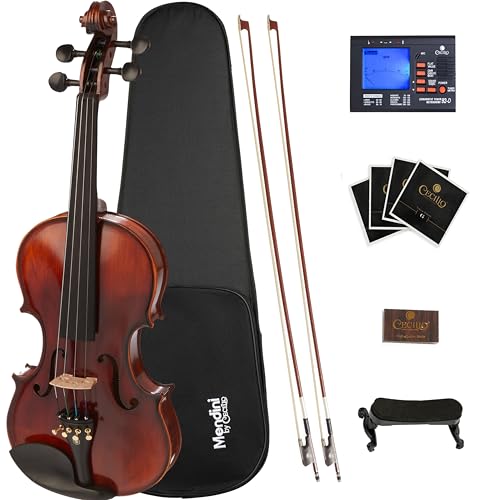
This Mendini by Cecilio kit gives a new player nearly everything needed to begin. The listing highlights a solid wood body with a flamed acoustic look. It also includes a case, tuner, shoulder rest, bow, rosin, bridge, and strings. That full bundle can save a beginner from buying small parts one by one.
The black finish gives this violin a bold style. Still, finish alone does not tell me whether an instrument has the best wood for a violin. I would check the bridge fit, string height, peg movement, and setup after delivery. A teacher or violin shop can make small adjustments that help a new player learn with less effort.
Pros:
- Complete starter package
- Solid wood body listed by the maker
- Full-size design for adult players
- Includes a tuner and shoulder rest
- Flamed finish adds visual appeal
- Useful choice for a first instrument
Cons:
- Beginner setup may need adjustment
- Black finish can hide some wood grain
- Included accessories may be basic
What Amazon Buyers Are Saying
Amazon buyer feedback for beginner violin kits often centers on package value, appearance, and ease of starting. Buyers also commonly discuss tuning, bow quality, and whether the bridge arrives ready for use. Because setup can vary, I would read the newest reviews and inspect the instrument as soon as it arrives.
My Recommendation
I recommend this kit for a budget-minded beginner who wants a complete package. It offers good starting value, but I would not buy it as a replacement for a carefully set-up student violin. Check the return terms before ordering.
AKLOT Handcrafted Matte Violin

The AKLOT VRT-AmiMS is a full-size acoustic violin kit with a matte finish. Its listing calls out a solid wood body and a handcrafted design. The package includes a hard case, lesson book, bow, shoulder rest, extra strings, tuner, and fretboard stickers. This makes it a practical option for a student who wants learning tools in the box.
The matte surface gives the instrument a less glossy look than many low-cost violins. I like that the kit includes extra strings and a hard case. The wood label is helpful, but buyers should still inspect the top, seams, bridge, and fingerboard. Those details affect daily use as much as the basic wood type.
Pros:
- Solid wood construction is clearly listed
- Full-size 4/4 format
- Includes a lesson book
- Hard case offers useful protection
- Extra strings add practical value
- Matte finish has a calm, classic look
Cons:
- Full size may not suit small players
- Fretboard stickers can become a crutch
- Setup quality should be checked on arrival
What Amazon Buyers Are Saying
Buyer comments on complete kits usually focus on the number of included items and the instrument’s first impression. Some shoppers may value the lesson book and extra strings, while others may point out that a beginner still needs help with setup. I suggest comparing recent reviews for bow balance, tuning stability, and case quality before purchase.
My Recommendation
This is a strong value pick for an adult or teen who wants a full starter kit. It is not enough to see “solid wood” and stop there, but the contents make it easy to begin. I would choose it over a bare violin when the price remains competitive.
Bunnel Pupil Violin by Kennedy
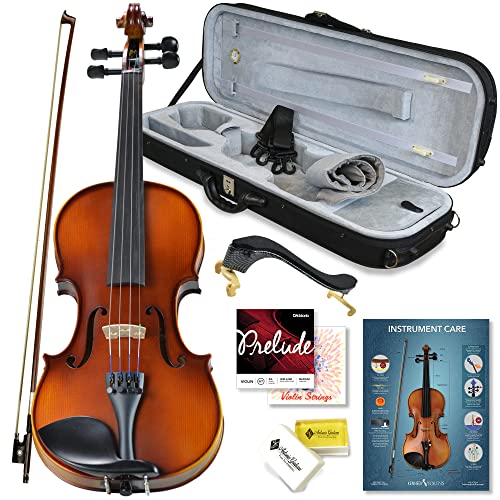
The Bunnel Pupil stands out because its listing names solid maple wood and ebony fittings. Maple is a traditional wood for violin backs, ribs, and necks. Ebony fittings are also common because ebony is dense and resists wear in parts such as the pegs and fingerboard. The outfit includes a carrying case and other accessories.
This model has a more traditional material profile than some low-cost starter kits. That does not guarantee a perfect tone, since arching, graduation, varnish, bridge work, and setup also matter. I see it as a sensible choice for a serious beginner who wants a violin that feels closer to a standard student instrument.
Pros:
- Solid maple wood is specified
- Ebony fittings are a useful upgrade
- Traditional material choices
- Full-size student design
- Suitable for longer-term beginner use
- Includes a carrying case and accessories
Cons:
- May cost more than basic kits
- Full size may not fit younger children
- Setup still deserves a professional check
What Amazon Buyers Are Saying
Amazon feedback for student outfits often looks at tone, playability, finish, and how well the instrument holds tune. Buyers may also compare the included case and fittings with cheaper sets. I would give extra weight to recent comments about string height, peg fit, and whether the instrument arrived safely.
My Recommendation
I recommend the Bunnel Pupil as one of the best choices here for a committed beginner. The listed maple body and ebony fittings give it a strong material foundation. It earns the highest rating in this group when your budget allows a step above the simplest starter kits.
Fiddlerman Wooden Shoulder Rest
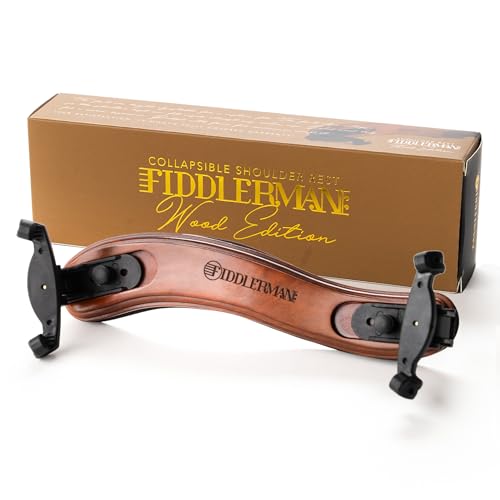
The Fiddlerman Wooden Shoulder Rest is an accessory, not a violin body. It matters because a poor shoulder rest can make a good violin feel hard to hold. This model fits 4/4 and 3/4 violins and has collapsible, height-adjustable feet. Those features help players change the fit as their posture develops.
The wood surface offers a different feel from plastic rests. I would focus on comfort, grip, and foot placement rather than assuming wood alone improves sound. A shoulder rest should support relaxed playing without forcing the shoulder upward.
Pros:
- Fits both 4/4 and 3/4 violins
- Height-adjustable feet
- Collapsible for storage
- Wood construction adds a classic feel
- Can improve playing comfort
Cons:
- Does not improve the violin’s body wood
- Fit can vary by player and instrument
- May need adjustment before it feels secure
What Amazon Buyers Are Saying
Buyers of shoulder rests commonly discuss comfort, grip, foot adjustment, and whether the rest stays in place. Some players prefer wood, while others prefer a softer padded feel. Check current reviews for comments about fit on your violin size.
My Recommendation
This is worth considering if your current rest feels unstable or uncomfortable. It cannot make a poor violin sound like a fine one, but it may help you play with better posture. I rate it as a useful comfort upgrade.
Aileen Solid Wood Violin

The Aileen violin is a full-size solid wood set for adult beginners and older students. The listing positions it for starters age 12 and above. A full-size violin can serve a player for many years when the reach and arm length fit well. I like that this model targets buyers who want a complete fiddle set instead of a body alone.
Solid wood can offer a more natural response than a very basic molded body, but the exact wood species still matters. The listing does not give the same detailed spruce-and-maple breakdown as the Vangoa model. I would ask a teacher to confirm the size before ordering for a young player.
Pros:
- Full-size design for adults and older students
- Solid wood construction is listed
- Made for beginner use
- Useful option for age 12 and up
- Set format simplifies first-time buying
Cons:
- Wood species are not clearly detailed
- May not suit younger or smaller players
- Initial setup may need expert attention
What Amazon Buyers Are Saying
Reviews of beginner sets often mention appearance, included parts, tuning, and ease of first use. Buyers may differ in their expectations because some want a low-cost practice violin while others expect professional tone. I recommend checking recent comments for size, bridge placement, and shipping condition.
My Recommendation
The Aileen is a reasonable choice for an adult beginner who wants a full-size solid wood set. It is less compelling for buyers who want exact wood details. I would compare its current price with the Bunnel Pupil before deciding.
ADM Full-Size Wood Violin Set

The ADM full-size violin set aims at kids, teens, students, and adults who are new to the instrument. It includes a hard case, rosin, shoulder rest, bow, clip-on tuner, and fingerboard sticker. That list covers the main items most first-time players need. The matte fiddle style also keeps the look simple.
This model makes sense when a buyer wants low-cost access to violin practice. However, the listing does not provide a detailed spruce and maple specification in the supplied product information. I would judge this violin by its setup, clean seams, smooth pegs, and comfortable string height.
Pros:
- Complete starter accessory set
- Full-size format suits many adult learners
- Hard case improves transport protection
- Clip-on tuner is easy for beginners
- Includes shoulder rest and rosin
- Fingerboard sticker may help early note placement
Cons:
- Specific wood species are not stated
- Full size may be too large for some children
- Sticker guidance should not replace ear training
What Amazon Buyers Are Saying
Beginner buyers often value an affordable set that arrives with the needed accessories. Common review topics include tuning, case space, bow quality, and whether the violin feels playable out of the box. Since experiences can differ, I would read the latest reviews instead of relying only on the product photos.
My Recommendation
I recommend ADM for a student who needs a simple, complete starter kit at a controlled cost. It is not my first choice for the best wood for a violin because the species are not fully explained. It remains a practical entry-level option.
Mendini Hand-Carved Violin Kit

This Mendini model is a full-size hand-carved acoustic violin kit. The product listing describes a solid wood body and includes a hard case, bow, rosin, shoulder rest, bridge, and extra strings. That package gives a new player a clear path from delivery to first practice. The black finish adds a modern touch.
Hand carving sounds appealing, but I would not treat that phrase as proof of superior tone. The wood species, thickness, arching, and final setup still control much of the result. As with any beginner violin, I would inspect the bridge and ask a teacher to check playability.
Pros:
- Hand-carved construction is listed
- Solid wood body
- Full-size student format
- Includes extra strings
- Hard case supports storage and travel
- Good accessory coverage for beginners
Cons:
- Black finish may not suit traditional tastes
- Wood species are not detailed in the title
- May need setup work after shipping
What Amazon Buyers Are Saying
Amazon buyers of this type of kit tend to assess the finish, accessory value, sound at the beginner level, and tuning behavior. Some buyers may expect a ready-to-play instrument, while others understand that a budget violin can need adjustment. Look for recent feedback about the bridge, strings, and case.
My Recommendation
This is a fair choice for a first violin when the bundle price is attractive. I prefer it for casual practice rather than advanced study. It earns a solid value rating, but not the top spot for clearly identified tonewood.
Vangoa Solid Spruce and Maple Violin
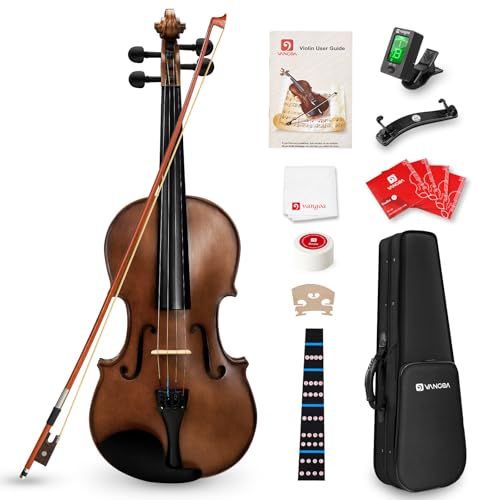
The Vangoa is the clearest match for traditional violin tonewood in this group. Its listing states solid spruce and maple, which is the classic pairing used in many acoustic violins. Spruce commonly serves as the top wood because it is light and responsive. Maple often forms the back, ribs, and neck.
This model uses a 3/4 size, so it may suit a child or smaller player better than a full-size violin. The antique finish gives it a traditional appearance. The complete kit also includes a digital tuner, which helps a student keep practice time focused.
Pros:
- Solid spruce and maple are clearly named
- Traditional tonewood pairing
- 3/4 size may suit younger players
- Includes a digital tuner
- Complete student kit
- Antique finish looks classic
Cons:
- 3/4 size will not fit every adult
- Child size should be confirmed before buying
- Setup still affects the final sound
What Amazon Buyers Are Saying
Reviews for smaller student violins often focus on size, sound, accessory completeness, and how quickly the player can tune the instrument. Parents may also discuss case handling and whether the violin feels manageable for a child. I would compare measurements with the player’s arm length before ordering.
My Recommendation
I recommend Vangoa when you want the best wood for a violin in a smaller student size. The stated spruce-and-maple build gives buyers useful material information. Confirm the 3/4 fit first, then consider a professional setup for the best result.
LMS Maple Wood Shoulder Rest

The LMS shoulder rest uses maple wood and fits 3/4 to 4/4 violins. It has soft sponge padding and height-adjustable feet. That mix may help players who want a wood rest but still need a cushioned contact point. The wide size range also makes it useful for growing students.
This accessory does not determine the best wood for a violin body. Instead, it can affect comfort and posture during practice. I would adjust both feet evenly and check that the rest grips the violin without pressing hard against the ribs.
Pros:
- Maple wood construction
- Fits 3/4 and 4/4 instruments
- Soft sponge padding
- Height-adjustable feet
- Useful for growing players
- Distinct warm wood appearance
Cons:
- Personal fit may take time
- Does not upgrade the violin’s tonewood
- Some players may prefer a lighter plastic rest
What Amazon Buyers Are Saying
Shoulder-rest buyers usually focus on comfort, adjustment range, grip, and whether the padding remains comfortable during long practice. Fit can vary with both the violin and the player’s body shape. Read recent reviews for comments about the feet and the width of the contact area.
My Recommendation
This is a good accessory for a player who wants adjustable support with a maple look. I would buy it for comfort, not for sound improvement. It is especially useful when one shoulder rest must serve both 3/4 and 4/4 instruments.
How to Choose the Best Wood for a Violin
Choosing the best wood for a violin takes more than reading a finish name. The top, back, ribs, neck, fittings, and setup all play different roles. I also check the player’s size, skill level, case, bow, and return policy. These details often matter more than a dramatic photo.
1. Check the Tonewood Pairing
Traditional violins often use spruce on the top and maple on the back, ribs, and neck. Spruce is light and responds well to vibration. Maple is strong and adds a clear, focused character. Ebony commonly appears in the fingerboard, pegs, and chin rest because it handles wear well.
That does not mean every spruce or maple violin sounds the same. Wood grade, age, drying, arching, thickness, varnish, and workmanship also matter. I give more trust to a listing that names the wood used in each main part than one that only says “wood violin.”
2. Match the Violin Size to the Player
A full-size 4/4 violin often suits adults and larger teens. A 3/4 violin may fit a younger or smaller player. Size affects comfort, reach, and progress. A violin that feels too large can cause tension and poor posture.
Do not choose by age alone. Measure the player’s arm and ask a teacher or shop for guidance. The Vangoa 3/4 model may work well for a smaller student, while the Bunnel Pupil, Aileen, and other 4/4 options suit larger players.
3. Review Setup, Parts, and Long-Term Value
Even the best wood for a violin cannot fix a poor setup. Check that the bridge stands straight, the strings sit at a useful height, and the pegs turn without slipping. Look for clean seams, a smooth fingerboard, and a bow with usable hair. A teacher can spot problems that a new buyer may miss.
Compare the complete package too. A hard case, tuner, spare strings, shoulder rest, and rosin add real value. Yet accessories should not distract from the instrument body. A slightly more expensive violin with better wood details and fittings may serve a committed student longer.
Final Verdict: Which Should You Buy?
For most serious beginners, I would choose the Bunnel Pupil. For a smaller player, the Vangoa stands out because it clearly names solid spruce and maple. Both offer a stronger match for the best wood for a violin than listings with vague wood claims.
Choose a full kit if you need every accessory. Before playing, have a teacher or violin shop check the setup. Good wood helps, but careful fit and steady practice matter just as much.
FAQs Of best wood for a violin
What is the best wood for a violin top?
Spruce is the traditional choice for a violin top. It is light, strong, and responds well to string vibration.
What wood is used for the back and sides of a violin?
Maple is the most common choice for the back, ribs, and neck. It offers strength and a clear visual grain.
Is solid wood better than laminate for a beginner violin?
Solid wood can offer a more natural acoustic response, but setup and workmanship also matter. A well-set-up student violin may outperform a poorly set-up solid wood model.
How can I tell if a violin listing has good tonewood?
Look for clear details about spruce, maple, ebony fittings, wood age, and construction. Avoid judging quality from color or flame alone.
Is maple or spruce better for a violin?
Neither is simply better. Spruce usually works best for the top, while maple usually works best for the back, ribs, and neck.