For violin shoppers in the United States, there is no single best violin brand for every player. The right choice depends on your skill level, budget, playing style, instrument size, and access to a good setup or repair shop.
For most beginners, Yamaha, Eastman, Scott Cao, and Knilling are strong brands to investigate. For advanced players, the maker, model, condition, and setup usually matter more than the logo on the label. A well-adjusted violin from a lesser-known maker can sound and play better than a poorly set-up instrument from a famous brand.
Quick answer: Which violin brand is best?
The best violin brand depends on the player:


| Player or need | Brands worth considering | Why |
|---|---|---|
| Beginner student | Yamaha, Eastman, Knilling, Scott Cao | Consistent construction and broad U.S. availability |
| School orchestra | Yamaha, Eastman, Knilling | Practical student models and replacement support |
| Serious intermediate player | Eastman, Scott Cao, Gliga, Jay Haide | More refined tone and stronger upgrade potential |
| Advanced player | Individual luthiers, reputable workshop instruments, selected Eastman or Scott Cao models | The specific instrument matters more than the brand |
| Electric violin | Yamaha, NS Design, 5-string specialist brands | Better-known electronics and reliable design |
| Young player who needs changing sizes | Rental programs from established U.S. shops | Lower upfront cost and easier size changes |
If you want one simple starting point, Yamaha is often the safest choice for a first student violin, while Eastman and Scott Cao deserve close attention for players who want a more developed sound. These are starting points, not universal rankings.
The most important factor is not the brand alone. It is whether the violin has:
- A proper bridge
- Correct string height
- A well-fitted soundpost
- Smooth tuning pegs
- A usable bow
- A return policy or support from the seller
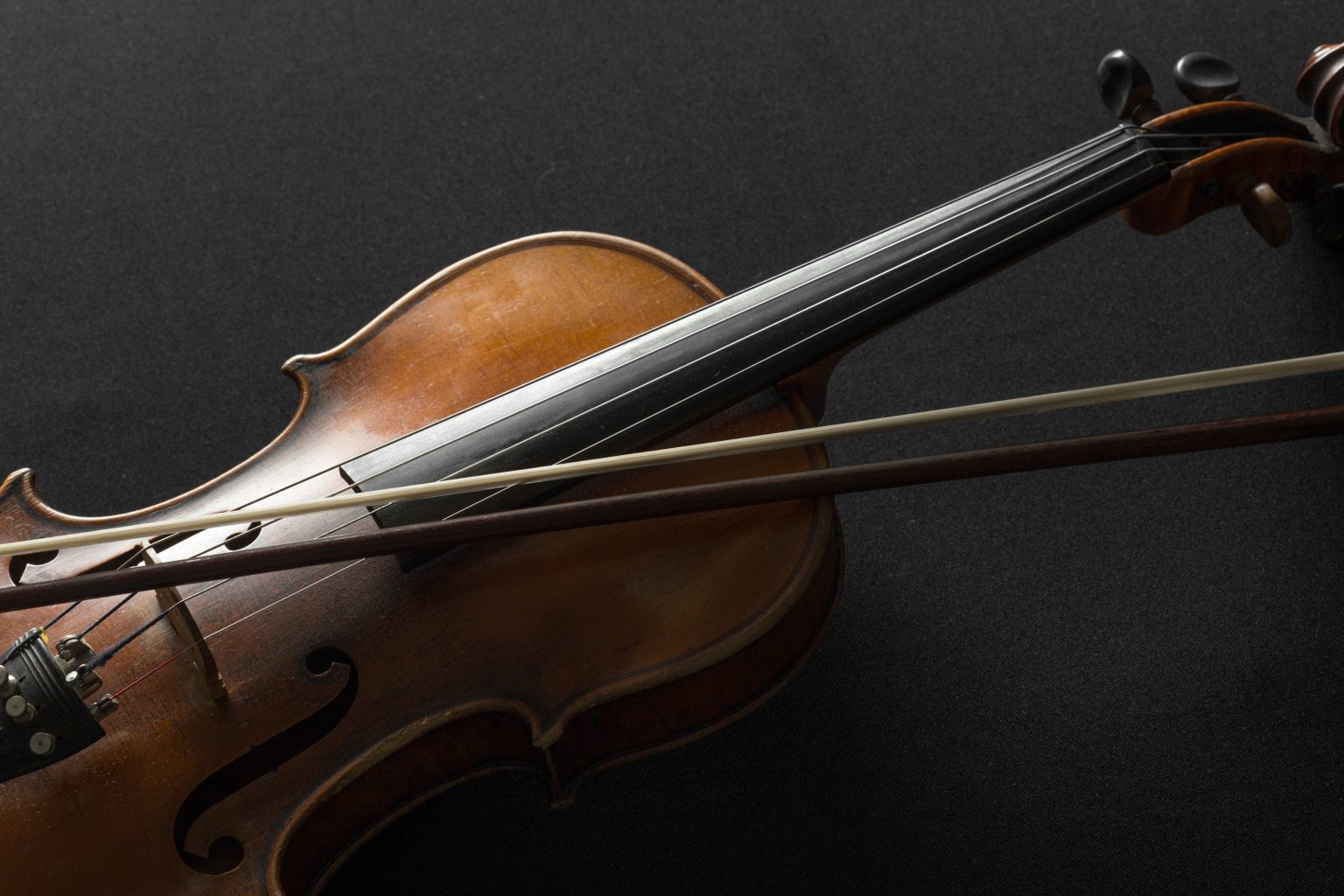
What makes a violin brand good?
A good violin brand offers consistent quality, clear model information, reliable customer support, and instruments that can be adjusted by a violin shop. It does not mean that every violin from that brand will sound the same.
A violin is an acoustic instrument. Small differences in wood, arching, varnish, setup, and age can change its sound. Two violins with the same model name may still feel and sound different.
The brand is only one part of the purchase
A violin has four main string families: G, D, A, and E. Its sound comes from the strings vibrating through the bridge and body. The soundpost and bass bar help transfer that vibration inside the instrument.
That design creates an important buying lesson: setup can change the playing experience as much as the brand.
A low-cost violin with a poor bridge may feel stiff and hard to tune. A modest instrument with a careful setup may feel much easier to play. This is why a local violin shop can be more useful than a product page alone.
The label does not prove quality
Many factory violins carry labels that mention a famous city, old date, or historic maker. A printed label does not prove that the instrument was made by that person or in that place.
For a used violin, ask for:
- The full maker or workshop name
- The instrument’s age, if known
- Repair history
- Any cracks or open seams
- Evidence of previous professional setup
- A written appraisal when value matters
A qualified violin shop or luthier should inspect an expensive used violin before purchase.


Best violin brands for beginners in the United States
Yamaha
Yamaha is a practical first brand for many U.S. students. Its student instruments are widely distributed, and the company has a long history of making musical instruments across several categories.
Best for: beginners who want a familiar brand and predictable retail support.
Strengths:
- Broad availability through music dealers
- Clear student-focused product lines
- Useful choice for school programs
- Often easier to compare with other new instruments
Limits:
- Model quality varies
- A shop setup may still be needed
- The lowest-priced instrument may not provide the best long-term value
A Yamaha violin can be a good fit when the buyer wants a new instrument from a recognizable manufacturer. Still, compare the exact model and setup rather than buying by brand name alone.
Eastman
Eastman is well known for string instruments and offers student, intermediate, and professional-level models. Its violins are often considered by players who want a more traditional workshop-style instrument as they progress.
Best for: students who want room to grow and buyers who can compare several instruments in person.
Strengths:
- Models across several playing levels
- Strong presence in the U.S. string market
- Often available through violin shops
- Some models can serve beyond the early beginner stage
Limits:
- Model names and quality levels differ
- Prices can vary by dealer and setup
- The best choice still depends on the individual violin
Eastman is often a sensible step above basic rental or entry-level instruments, but the exact model should be checked carefully.
Knilling
Knilling makes student violins and is especially known in the U.S. market for practical student designs. Some models use geared tuning systems, which can help children and new players tune more easily.
Best for: young students, families, and players who find traditional pegs difficult to use.
Strengths:
- Student-focused designs
- Some models offer easier tuning
- Commonly found through U.S. music dealers
- Useful for school and first-year study
Limits:


- Not every model uses the same tuning system
- The instrument still needs correct bridge and string setup
- An easier tuner does not replace learning proper tuning habits
A Knilling violin may be especially useful when tuning problems could discourage a new player.
Scott Cao
Scott Cao violins are available in student through advanced ranges. The brand is associated with workshop and handcrafted string instruments, and several models are sold through violin dealers in the United States.
Best for: serious students who want a responsive instrument without immediately moving to a high-end individual maker.
Strengths:
- Multiple levels and model types
- Often stocked by specialty violin shops
- Can offer more tonal color than a basic beginner outfit
- Suitable for players planning to continue
Limits:
- Model differences are significant
- Some instruments may cost more than a first-year beginner needs
- A shop trial is more useful than a brand-only decision

Best violin brands for intermediate and advanced players
Once a player has a stable bow hold, basic intonation, and regular practice habits, the best violin is often the one that matches the player’s sound and technique.
Eastman, Scott Cao, and Gliga
These brands are often considered in the intermediate market. They offer instruments that may provide more response, projection, or tonal variety than basic student outfits.
Gliga violins are associated with Romanian workshops and are sold in several levels. They can be worth trying when a player wants a warmer or more traditional tonal character.
However, the word “intermediate” is not a strict industry standard. One seller’s intermediate model may be another seller’s advanced student instrument. Ask what changed from the lower model:
- Is the wood selected differently?
- Is the varnish applied by hand or by machine?
- Is the bridge fitted in the shop?
- Are the pegs and fingerboard properly shaped?
- Can the violin be adjusted as the player improves?
Workshop instruments versus individual makers
A workshop violin is made by a team or production process. An individual luthier builds or finishes instruments with more direct control over the work.
Neither category is automatically better.
A workshop instrument may offer:
- More consistent availability
- Easier replacement or service
- A lower price than a one-of-a-kind instrument
An individual maker may offer:
- A distinct sound
- More personal communication
- A documented history
- A better fit for a specific player
For advanced players, a trial period matters more than a general brand list. The player should test the violin with their own bow, in a quiet room and, if possible, in a larger performance space.


Vintage and antique violins
Older does not always mean better. An old violin may have a beautiful sound, but it may also need expensive repairs. Neck work, crack repair, peg replacement, and varnish restoration can change the total cost.
Do not buy an expensive antique violin based only on age or a famous-looking label. Have it inspected by a qualified violin specialist, and request a written condition report.

Acoustic or electric: which type should you buy?
For classical lessons, school orchestra, chamber music, and most traditional study, an acoustic violin is usually the correct starting point. It teaches bow control, left-hand placement, tone production, and response without relying on an amplifier.
An electric violin may suit a player who needs quiet practice, amplified performance, or effects. It requires extra equipment, such as an amplifier, headphones interface, or suitable cable, depending on the design.
Electric violins are not always silent. Some still produce acoustic sound from the strings and body. Headphone use also depends on the instrument and the signal chain.
For electric models, Yamaha and NS Design are established names to investigate, but the best choice depends on the player’s music and equipment. An electric violin used for rock or stage work has different needs from an acoustic violin used in an orchestra.

How much should you spend on a violin?
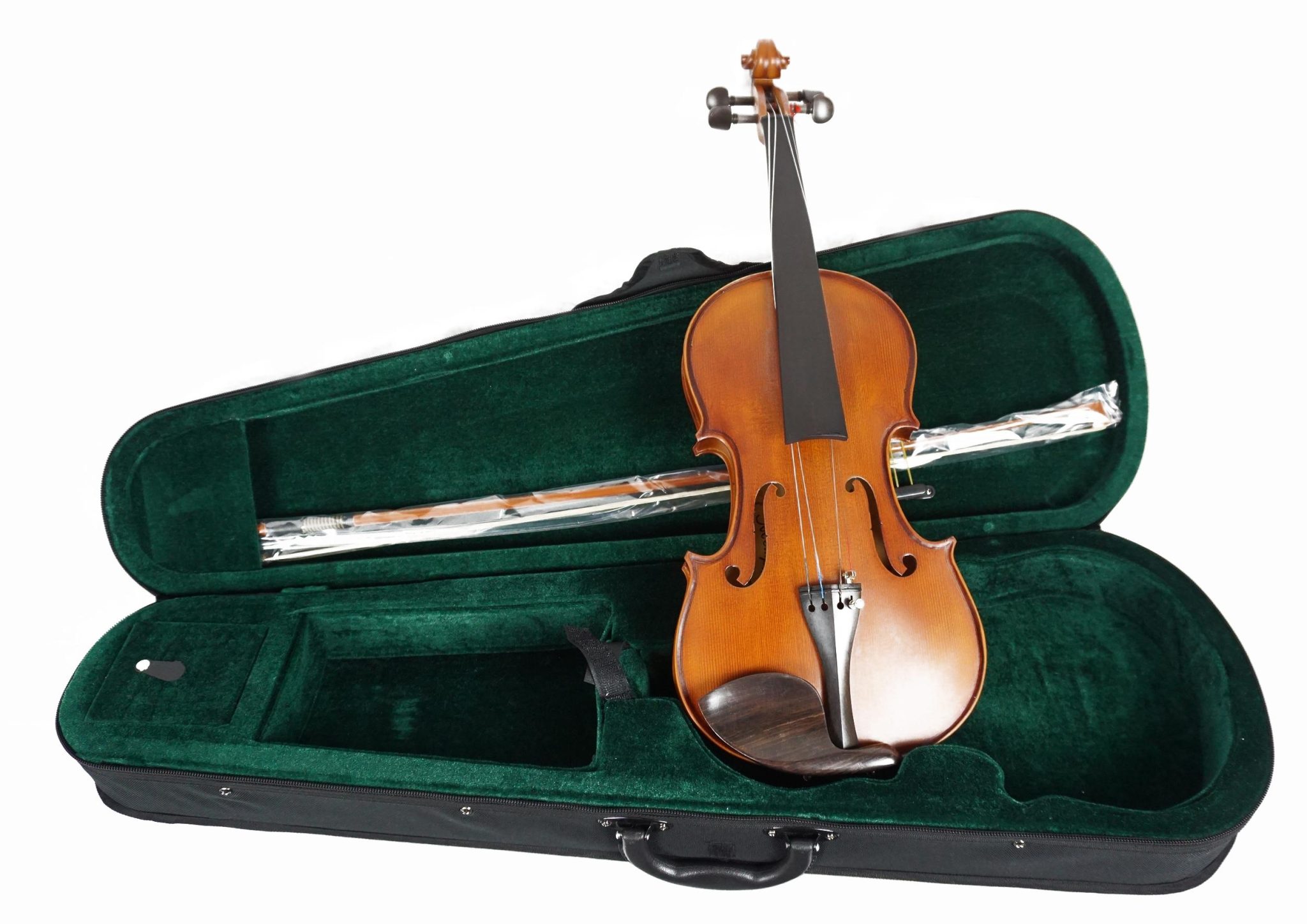
The right budget includes more than the violin itself. You may also need:
- A bow
- A case
- Rosin
- Shoulder rest
- Replacement strings
- Tuning service
- Lessons
- Repairs or setup
A very cheap outfit can become costly if the bridge, pegs, bow, or strings must be replaced at once. A rental can be more practical for a child who may soon need a larger size.
Buying versus renting
Renting is often a strong choice for young beginners in the United States. Many music stores and violin shops offer size exchanges, rent-to-own plans, or maintenance support.
Renting may make sense when:
- The player is still growing
- The teacher wants to test commitment
- The family needs a lower first payment
- Local repair support is included
Buying may make sense when:
- The player has reached full size
- The violin will be used for several years
- A teacher or shop has approved the instrument
- The buyer can return or exchange it if needed
Do not treat a rent-to-own plan as automatically cheaper. Compare the total payments, ownership terms, repair coverage, and exchange rules.


How to choose the best violin step by step
Use this process before you pay.
1. Confirm the correct size
Most adults use a full-size 4/4 violin. Children may need smaller sizes, such as 3/4, 1/2, or 1/4.
A teacher or violin shop should measure the player. A violin that is too large can cause tension and poor posture. A violin that is too small may limit comfort and sound.
2. Set a complete budget
Include the bow, case, rosin, shoulder rest, setup, and likely repairs. If the budget is limited, a good rental may offer better value than a new low-cost outfit.
3. Buy from a seller with a return policy
A return period gives the player time to check comfort, tuning stability, and tone at home. Read the policy before ordering. Check who pays return shipping and whether setup fees are refundable.
4. Test the physical condition
Look for:
- Open seams
- Visible cracks
- A bridge that leans or is badly shaped
- Pegs that slip or are hard to turn
- A fingerboard with deep wear
- Loose fine tuners
- A bow with damaged hair or a warped stick
Do not attempt structural repairs at home. Take the violin to a luthier.
5. Play simple tests
Play open strings first. Listen for buzzes, rattles, and uneven response. Then play a slow scale and a few familiar pieces.
Ask:
- Does the violin respond without excessive force?
- Can the player hear a clear tone?
- Are the notes easy to place?
- Does the sound remain stable across all four strings?
- Does the instrument feel comfortable after several minutes?
A beginner may not know what sound to prefer. A teacher can provide a better comparison.
6. Compare at least two or three instruments
Do not compare only brand names. Compare specific violins at similar prices and with similar setups.
The best choice is often the violin that feels clear, comfortable, and easy to control—not necessarily the one with the loudest sound in the shop.
Common mistakes when buying a violin
Choosing the cheapest online outfit
Very low-cost outfits may use weak fittings, poor bridges, low-quality bows, or strings that make the violin hard to play. A low price is not proof of poor quality, but it increases the need for inspection and a return policy.
Buying by label alone
A label can be incomplete, copied, or misleading. The instrument’s condition and professional evaluation matter more.
Ignoring the bow
The bow affects tone, articulation, and control. A decent violin paired with a poor bow may feel frustrating. Include the bow in every comparison.


Assuming a higher price guarantees a better sound
Price can reflect materials, labor, age, rarity, dealer service, or repair history. It does not guarantee that a particular player will prefer the sound.
Buying an advanced violin for a new student
A powerful or highly responsive violin may expose every weakness in a beginner’s technique. A stable, comfortable student model can support better progress.
Skipping professional setup
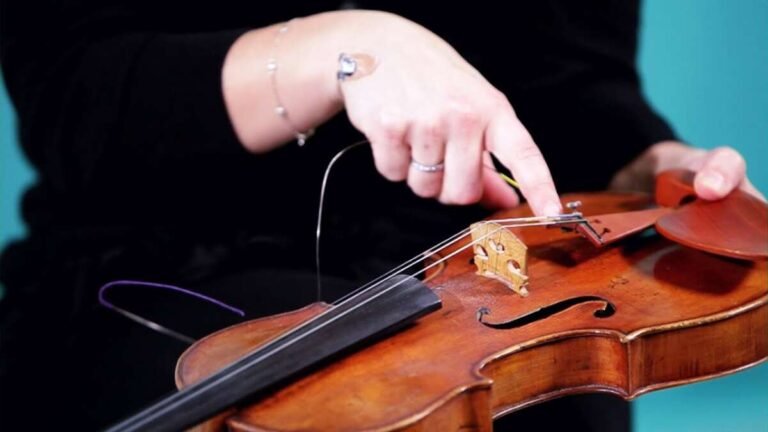
A violin may need bridge adjustment, peg fitting, soundpost work, or string replacement. Setup should be performed by a violin specialist, not by force or improvised tools.
What is the best violin brand for a child?
For a child in the United States, the best option is often a quality rental from a local violin shop, especially when the child is still growing.
If buying, consider Yamaha, Knilling, Eastman, or Scott Cao, depending on the exact model and local support. The correct size, comfortable setup, and reliable bow matter more than choosing the most famous name.
A child should not stretch to reach the scroll or press hard to make a sound. Ask the teacher or shop to confirm the size before purchase.
Is Yamaha better than Eastman?
Neither brand is always better. Yamaha may appeal to buyers who want broad availability and a familiar student line. Eastman may appeal to players seeking workshop-style instruments across beginner and higher student levels.
The exact model, setup, strings, and player preference decide the result. Compare two instruments in person when possible.
Are expensive violins easier to play?
Sometimes, but not always. A better violin may respond more quickly or offer more tonal control. Yet a poor setup can make an expensive violin difficult to play.
A professional setup and suitable strings can improve playability, but they cannot correct every structural problem.
Should I buy a used violin?
A used violin can offer good value, especially when sold by a reputable violin shop. It can also hide costly repairs.
Before buying, request a condition check. Avoid instruments with unclear ownership, major cracks, severe neck problems, or no return option unless a qualified specialist has inspected them.
Do violin brands matter for professional players?
They matter less than the individual instrument, maker, condition, and sound. Professional players may choose a violin made by an individual luthier, a historic maker, or a respected workshop.
At that level, the player usually tests several instruments and considers projection, response, tonal color, comfort, provenance, and maintenance.
What should I do next?
Decide whether you need a rental or a purchase, confirm the correct size, and visit a reputable violin shop with your teacher if possible. Compare several specific instruments, not just several brand names.
Conclusion
The best violin brand is the one that gives the player a comfortable fit, reliable setup, suitable sound, and practical support. For many U.S. beginners, Yamaha, Eastman, Knilling, and Scott Cao are sensible brands to explore. For advanced players, the individual violin matters far more than the name on the label.
Treat the brand as a starting point—not a final answer. A well-set-up instrument, a usable bow, and guidance from a qualified teacher or luthier will usually have the greatest effect on the player’s experience.

Senior Music Reviewer
Alex Carter is a seasoned music reviewer with over a decade of experience in the world of sound and instruments. Passionate about helping musicians and enthusiasts make informed choices, he brings sharp insights and in-depth knowledge to every review. From classical instruments to modern gear, Alex combines technical expertise with a love for music to deliver content that resonates with readers.
As a Senior Music Reviewer and expert author on Tuneluma.com, Alex is dedicated to sharing honest evaluations, practical advice, and thoughtful commentary to guide readers in their musical journey.