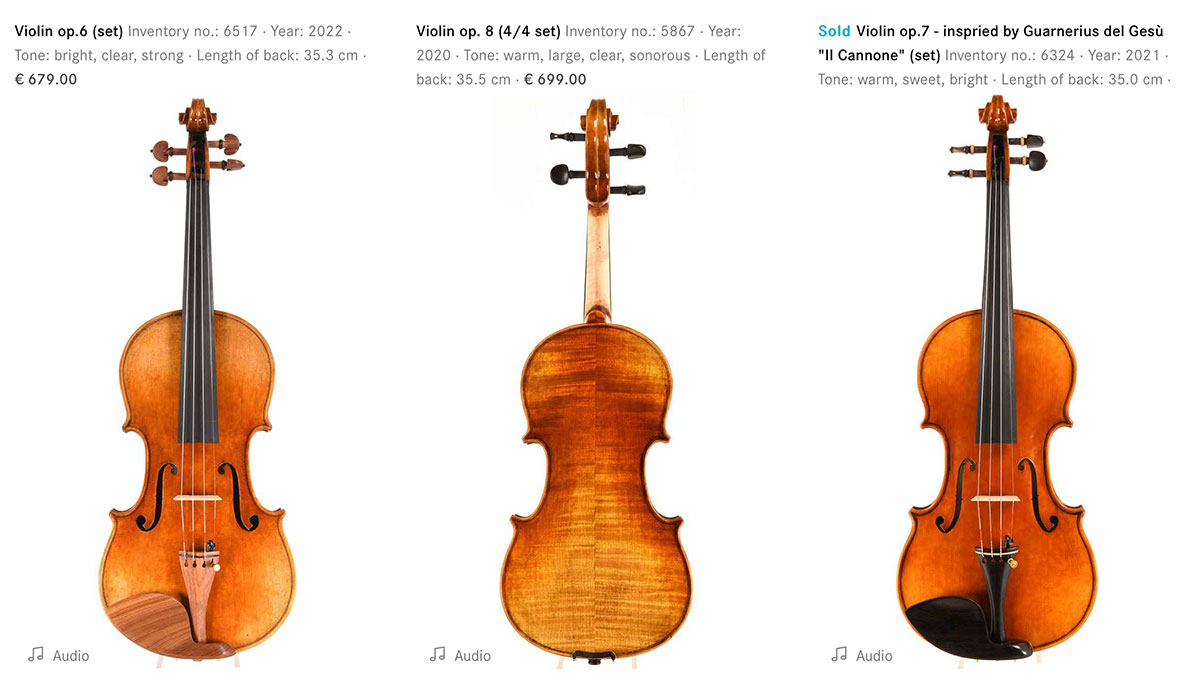
In the United States, a concert violin can cost anywhere from about $5,000 to more than $100,000. A high-quality professional violin often falls between $10,000 and $50,000, while rare Italian instruments may sell for hundreds of thousands or even millions of dollars.
The term concert violin has no single legal or industry grade. It usually means a violin that can meet the demands of a professional recital, orchestra, chamber group, or solo performance. Price depends on the violin’s sound, condition, age, maker, materials, history, and current demand.
For many players, the best concert violin is not the most expensive one. It is the instrument that responds well, projects clearly, feels comfortable, and matches the player’s style.
Typical Concert Violin Prices in the United States
A practical budget for a concert violin is usually $10,000 to $50,000, but the full market is much wider.
| Violin category | Typical U.S. price range | Who it may suit |
|---|---|---|
| Advanced student violin | $1,000–$5,000 | Serious students and developing players |
| Entry-level professional violin | $5,000–$15,000 | College players, teachers, and working musicians |
| Professional concert violin | $15,000–$50,000 | Orchestra members, soloists, and chamber musicians |
| Premium modern violin | $30,000–$100,000+ | Established professionals and collectors |
| Fine antique violin | $50,000–$500,000+ | Professionals, collectors, and institutions |
| Rare Italian master violin | $250,000 to several million dollars | Major collectors and elite soloists |
These are broad market estimates, not fixed price rules. A modern violin by a respected maker may cost more than an older violin with a less desirable history. An instrument with a famous label may also cost more, even when the label does not prove that the famous maker built it.
A concert violin priced at $8,000 may outperform one priced at $20,000 for a particular player. Price can suggest quality, but it does not replace a careful trial.

What Makes a Violin a “Concert” Instrument?
A concert violin is normally judged by how it works in real performance, not only by its age or brand.
A strong concert instrument usually offers:
- Clear sound across all four strings
- Good volume without a harsh tone
- Fast response under the bow
- Stable pitch and even registers
- A wide range of tone colors
- Reliable projection in a large room
- Comfortable playability during long sessions
- A sound that remains controlled at both soft and loud levels
Projection means the sound carries across a hall. It does not simply mean that the violin sounds loud under the player’s ear. Some violins feel powerful nearby but lose focus at a distance. Others sound modest to the player but carry very well.
A concert violin also needs to work with the player’s technique. A bright violin may help one player cut through an orchestra. A darker violin may better suit another player’s sound. This is why a violin’s price alone cannot identify the right instrument.
Modern, antique, and historically important violins
Most professional violins fall into three broad groups:
- Modern violins: Made by living or recently active makers. These may offer strong value and clear documentation.
- Antique european violins: Older instruments made in established workshops or regional schools.
- Historically important Italian violins: Instruments linked to famous makers or rare periods. These command the highest prices.
Older does not always mean better. Age can affect wood, varnish, response, and collector interest, but condition and workmanship still matter. A well-made modern violin may be easier to maintain and more affordable than a fragile antique instrument.

Main Factors That Affect Concert Violin Prices
The biggest price differences come from the violin’s maker, sound, condition, history, and market demand.
Maker and workshop
A violin made by a respected contemporary maker may sell for thousands or tens of thousands of dollars. A violin linked to a famous historical maker can sell for far more.
The maker’s name is only one part of the assessment. Experts also look at:
- Whether the label is genuine
- Whether the violin was made by the named person or workshop
- The quality of the materials
- The construction style
- The condition
- The instrument’s documented ownership history
A label inside a violin is not proof of authorship. Many old violins carry labels that identify a model, workshop, or earlier owner rather than the actual maker.
Sound and response
Professional musicians often pay more for a violin with a distinctive and useful sound. Important traits include:
- Quick response
- Evenness between strings
- Rich low notes
- Focused high notes
- Strong projection
- Several usable tone colors
- Control during soft playing
Sound is partly subjective. Two qualified players may prefer different violins. This makes a playing trial essential.
Condition and repairs
A violin with major cracks, poor repairs, or replaced parts may be worth much less than a similar instrument in original condition.
Common concerns include:
- Cracks in the top or back
- Open seams
- Neck repairs
- Sound-post cracks
- Replaced scrolls or ribs
- Excessive thinning of the wood
- Heavy varnish work
- Warped or damaged fittings
Some repairs are normal and safe when completed by a skilled violin maker. The issue is not simply whether a violin has been repaired. The issue is whether the repair is stable, well executed, and reflected in the price.
Provenance and certificates
Provenance is the documented ownership and history of an instrument. A strong paper trail can raise value and reduce uncertainty.
A certificate from a recognized violin expert may describe the maker, origin, date, and condition. A certificate does not guarantee a violin’s sound or investment return. It supports identity and history, but the player still needs to evaluate the instrument itself.
Supply and demand
Prices also respond to demand. Famous makers, rare examples, and instruments with known performance histories may attract strong competition. Modern makers may have waiting lists, which can affect prices in private sales.
Auction prices and dealer prices are not the same. An auction result may exclude the buyer’s premium, taxes, shipping, insurance, and repair work. A dealer price may include service, setup, a trial period, and some form of warranty.

How Much Should You Budget for a Professional Concert Violin?
For most musicians, a sensible first budget is $10,000 to $25,000. This range can include serious modern instruments and some older professional violins.
Consider these broad budget levels:
$5,000 to $10,000
This range may provide a capable professional instrument, especially from a newer maker or less famous workshop. It can suit a college musician, teacher, orchestra player, or advanced student.
The selection may be smaller. You may need to compare several instruments and accept a less prestigious name.
$10,000 to $25,000
This is often a practical range for a strong working violin. Players may find better projection, more tonal variety, and improved consistency than in lower price groups.
This range can include modern instruments and older European violins. Condition and setup remain important.
$25,000 to $50,000
This budget opens access to more established makers, rare examples, and instruments with stronger market recognition. It may also offer more refined sound and response.
The extra cost does not guarantee that every player will hear or feel a major improvement. A blind playing test can help reduce the effect of labels and expectations.
More than $50,000
At this level, the buyer may be paying for a combination of sound, maker reputation, rarity, condition, provenance, and investment demand.
A high price can be justified for a rare instrument, but it can also include a large collector premium. Players should seek independent advice before treating a violin as an investment.

Extra Costs to Include in Your Budget
The violin is only part of the cost. A realistic U.S. budget should include the bow, case, setup, insurance, and future maintenance.
| Expense | Common planning range |
|---|---|
| Professional bow | $2,000–$20,000+ |
| Basic to premium case | $300–$5,000+ |
| New strings | $50–$200 per set |
| Initial setup | $100–$500 or more |
| Insurance | Varies by value, location, and policy |
| Annual maintenance | Often a few hundred dollars |
| Major repair | Hundreds to many thousands of dollars |
These figures are planning ranges, not quotes. Bow prices vary greatly. A professional bow can materially change the violin’s response, so testing the violin with more than one suitable bow is wise.
A new bridge, soundpost adjustment, fingerboard work, or peg fitting may be needed after purchase. Ask the seller whether the quoted price includes this work.
A simple total-cost example
Suppose a player buys:
- Violin: $18,000
- Bow: $5,000
- Case: $1,200
- Setup: $300
- First year of insurance and care: $500
The estimated first-year total is:
$18,000 + $5,000 + $1,200 + $300 + $500 = $25,000
This example is hypothetical. Taxes, shipping, financing, and repair needs can change the final amount.

How to Shop for a Concert Violin
The safest method is to compare several instruments under similar conditions.
1. Set a complete budget
Decide whether your budget includes the bow, case, sales tax, insurance, and setup. Do not spend the entire budget on the violin if you still need a professional bow.
2. Use a reputable violin shop or maker
A specialist shop should explain the violin’s origin, condition, repair history, trial terms, and return policy. Ask for written details.
Be cautious when a seller:
- Pressures you to buy immediately
- Refuses an independent inspection
- Makes guaranteed investment claims
- Gives unclear answers about the label
- Has no written return terms
- Describes a violin as “concert quality” without explaining why
3. Test the violin in more than one place
Play in a small room, a larger room, and, if possible, a performance space. Ask another musician to play while you listen from a distance.
The player’s sound under the ear may differ from the sound heard by an audience.
4. Compare without looking at the price
If possible, have someone else place instruments in the same price range on stands. Play them without knowing the maker or price.
This does not remove all bias, but it can help you focus on response and sound.
5. Test the full range
Play slow passages, fast passages, double stops, harmonics, soft attacks, and strong sustained notes. Check every string from the lowest notes to the highest notes you use.
Look for even response. A violin should not have one string or position that feels difficult without a clear reason.
6. Ask a qualified violin maker to inspect it
Before buying an expensive violin, arrange an independent inspection. The inspection should address condition, repairs, originality, setup, and likely future work.
For a rare or costly instrument, a second opinion may be worth the fee.
7. Read the trial and return agreement
Confirm:
- Trial length
- Deposit terms
- Shipping responsibility
- Insurance during the trial
- Return shipping costs
- Restocking or cancellation fees
- What happens if an inspection finds a problem
Do not rely on a verbal promise for a major purchase.

Common Mistakes When Buying a Concert Violin
The most common mistake is choosing a violin by label, age, or price instead of by verified condition and playing results.
Mistake 1: Assuming expensive means better
A $40,000 violin may not suit your technique. A $12,000 violin may offer a clearer and more useful sound for your work.
Mistake 2: Confusing loudness with projection
A harsh violin can seem loud nearby. Projection involves clarity and carrying power at a distance.
Mistake 3: Ignoring the bow
The bow affects attack, articulation, color, and control. Test the violin with a bow that matches your playing, and test the bow on more than one violin when possible.
Mistake 4: Skipping the inspection
A low price may reflect serious repair needs. A professional inspection can reveal costs that are hard to see during a short trial.
Mistake 5: Buying for investment without expert advice
Violin values can change. Selling may take time, and dealer commissions, auction fees, repairs, and insurance can reduce returns. Buy first for sound and use, not for an assumed profit.
Mistake 6: Forgetting transport and climate care
Wooden instruments react to changes in temperature and humidity. Keep the violin away from cars, heaters, direct sun, and extreme dryness. A humidifier may help in a dry climate, but use one according to the case and maker’s guidance. Too much moisture can also cause damage.
Are Expensive Concert Violins Worth the Cost?
An expensive violin may be worth the cost when its sound, response, reliability, and condition solve a real need for the player.
The price is harder to justify when it mainly reflects a famous name but offers no clear improvement in playing. A professional who performs often may value projection and tonal range more than a hobby player needs. A student may gain more from lessons, a better bow, or a good setup.
A useful test is to ask:
- Does the violin help me play more freely?
- Can listeners hear the sound clearly?
- Does it offer more than one useful tone color?
- Is the condition stable?
- Can I afford its care and insurance?
- Would I still choose it without knowing the price?
If the answers are mostly yes, the instrument may be a sound purchase for your needs.

Where to Find Reliable Price Information
Use several types of evidence because no single source shows the entire U.S. market.
- Specialist violin dealers: Useful for current asking prices, trial terms, and service details.
- Auction records: Useful for historical sale prices, but check whether buyer premiums and taxes are included.
- Independent violin experts: Useful for authentication, condition, and market context.
- Contemporary makers: Useful for direct prices and wait times.
- Professional musicians and teachers: Useful for playing feedback, but personal preference is not a market valuation.
Resources such as Tarisio publish auction information and instrument records. Major specialist dealers and recognized appraisal professionals can provide more context for a specific violin.
Prices change by date, location, condition, and transaction type. Treat online listings as starting points rather than final proof of value.
Frequently Asked Questions
Is $10,000 enough for a concert violin?
Yes, $10,000 can be enough for a capable professional violin. You may find a strong modern instrument or an older violin from a less famous maker. The right choice depends on sound, condition, setup, and your playing needs.
Can a $2,000 violin be used in concerts?
It can be used in concerts, especially in smaller halls, student recitals, chamber groups, or amplified settings. It may not offer the projection, tonal range, or consistency required by a professional soloist in a large hall.
Does a Stradivarius always sound better?
No. Stradivarius violins are historically important and often extremely valuable, but sound preference is personal. Modern violins can perform very well, and not every historic violin suits every player.
Should I buy a violin or rent one?
Renting can make sense for a beginner or a player who is still growing. Buying becomes more practical when your size, technique, sound goals, and long-term commitment are clear.
How much does a professional violin bow cost?
A professional bow may cost from a few thousand dollars to more than $20,000. Rare bows by important makers can cost much more. Test the bow with the violin rather than judging it by its maker alone.
Final Answer: What Should You Expect to Pay?
For a serious concert violin in the United States, plan on $10,000 to $50,000. A capable professional instrument may cost less, while rare historic violins can cost far more.
Start with your playing needs, not the label. Compare several violins, test them from a distance, include the bow and maintenance in your budget, and arrange an independent inspection before committing to a high-value purchase.

Senior Music Reviewer
Alex Carter is a seasoned music reviewer with over a decade of experience in the world of sound and instruments. Passionate about helping musicians and enthusiasts make informed choices, he brings sharp insights and in-depth knowledge to every review. From classical instruments to modern gear, Alex combines technical expertise with a love for music to deliver content that resonates with readers.
As a Senior Music Reviewer and expert author on Tuneluma.com, Alex is dedicated to sharing honest evaluations, practical advice, and thoughtful commentary to guide readers in their musical journey.