To pick a guitar, start with the music you want to play, your playing space, your budget, and how the guitar feels in your hands. Then compare the guitar type, body size, neck shape, scale length, sound, build quality, and setup. The best guitar is not always the most expensive one. It is the one you will feel comfortable picking up and playing often.
For shoppers in the United States, a first guitar often falls into one of four groups:
- Steel-string acoustic: Good for folk, country, pop, rock, and singer-songwriter music.
- Electric guitar: Best for rock, blues, metal, jazz, and effects-based music.
- Classical or nylon-string guitar: Useful for classical music, flamenco, Latin styles, and softer fingerstyle playing.
- Acoustic-electric guitar: An acoustic guitar with built-in electronics for an amplifier or sound system.
Before you buy, try to play the exact guitar if possible. Check that the neck feels comfortable, the notes ring clearly, the tuning stays stable, and the strings do not feel unnecessarily hard to press.


1. Choose the Right Type of Guitar
The first decision is the guitar’s basic type. A guitar that suits your music will usually keep you more motivated than one chosen only for appearance or price.
Steel-string acoustic guitars
A steel-string acoustic guitar creates sound through its hollow body. It needs no amplifier, which makes it simple for home practice, lessons, travel, and informal playing.
Steel strings produce a bright, strong sound. They work well for:
- Folk
- Country
- Bluegrass
- Pop
- Rock
- Worship music
- Singer-songwriter styles
The trade-off is that steel strings can feel firm on a new player’s fingertips. A smaller acoustic body may feel easier to hold, while a full-size dreadnought may provide more volume and bass.
Electric guitars
An electric guitar uses magnetic pickups and normally needs an amplifier, cable, and power source. Its strings often feel lighter than acoustic strings, but the complete setup costs more and takes more equipment.
Choose an electric guitar if you want to play:
- Rock
- Blues
- Metal
- Jazz
- Funk
- Indie music
- Music that uses distortion, delay, or other effects
Electric guitars vary widely in shape, pickup type, bridge design, and controls. A simple fixed bridge is often easier for a beginner to maintain than a floating tremolo bridge.
Classical and nylon-string guitars
Classical guitars use nylon strings and usually have a wider neck. The softer strings can feel gentle on the fingertips, but the wider neck may feel less comfortable for players with smaller hands.
They suit:
- Classical guitar
- Flamenco
- Latin music
- Fingerstyle
- Some folk and worship arrangements
Do not put steel strings on a classical guitar. The extra tension can damage the instrument because classical guitars are built for nylon-string tension.
Acoustic-electric guitars
An acoustic-electric guitar is still an acoustic guitar, but it includes a pickup and often a tuner or equalizer. It is useful if you plan to play at open mics, church services, rehearsals, or small venues.


The electronics do not automatically make the guitar sound better when played without an amplifier. They mainly make it easier to amplify the guitar later.

2. Match the Guitar to Your Music and Playing goals
your intended use should guide the choice more than a brand name. Think about the songs you hope to play in the next six months, not only the music you enjoy listening to.
| Goal | Usually suitable | Main trade-off |
|---|---|---|
| Strumming chords at home | Steel-string acoustic | Steel strings may feel firm |
| Playing rock or blues | Electric guitar | Requires an amplifier and cable |
| Classical pieces | Nylon-string classical guitar | Wider neck and different technique |
| Recording at home | Electric or acoustic-electric | May require an interface or amplifier |
| Playing with singers | Acoustic guitar | Body size affects volume and comfort |
| Fingerstyle playing | Smaller acoustic, concert guitar, or nylon-string guitar | May produce less low-end power |
| Travel | Travel or ¾-size guitar | Smaller body may reduce volume |
If you are unsure, a steel-string acoustic is a common starting point because it works for many popular styles. However, an electric guitar may be the better choice if your main goal is to play electric music. Starting with the wrong type can make practice feel harder than it needs to be.
A guitar does not have to match a single genre. A dreadnought can play gentle fingerstyle music, and a small electric guitar can play more than rock. The point is to choose the design that removes the largest barrier between you and regular practice.

3. Select a Comfortable Guitar Size
Guitar size affects comfort, tone, volume, and reach. A larger body does not automatically mean a better guitar.
Common acoustic body sizes
Manufacturers use different names, but these categories are useful:
- Travel or ¾-size: Compact and easier for children or adults with limited reach.
- Parlor: Small body with a focused, often balanced sound.
- Concert or auditorium: Medium size with a balance of comfort and volume.
- Grand auditorium: Versatile body with useful bass and clear treble.
- Dreadnought: Large body with strong bass and high volume.
- Jumbo: Very large body with powerful projection.
A larger body may produce more bass and volume. A smaller body may sit more comfortably against your chest and make it easier to reach the upper bout and neck.
When seated, the guitar should rest securely without forcing your right shoulder upward. Your fretting hand should reach the first few frets without sharp wrist pain. If you must squeeze the body or twist your back to hold the instrument, try a different shape.
Do children need a child-size guitar?
Children often benefit from a ¼-, ½-, ¾-, or other short-scale guitar, depending on height and reach. Age alone is not a precise sizing tool. Measure comfort and reach instead.
A child should be able to:
- Hold the guitar without it sliding away
- Reach the first few frets
- Press a string without extreme force
- Sit with both the instrument and body stable
- Move the picking hand freely
A smaller guitar can also suit an adult who wants a compact travel instrument.

4. Understand Scale Length, Neck Shape, and String Feel
The neck is where you spend most of your playing time. Small differences in its design can matter more than decorative details.


Scale length
Scale length is the vibrating distance from the nut to the saddle on an acoustic guitar or to the bridge on an electric guitar. A longer scale usually creates greater string tension when using the same tuning and string gauge.
A shorter scale may feel easier for:
- Smaller hands
- Players who are new to guitar
- Bends on electric guitar
- Players who prefer a softer feel
A longer scale can provide:
- Firmer string response
- More space between frets
- A clear feel for lower tunings
- Stronger tension for some playing styles
Scale length is not the only factor that determines comfort. String gauge, tuning, action, neck shape, and setup also affect how hard the guitar feels to play.
Neck shape and width
Common neck shapes include C, D, and V profiles. The letter describes the curve of the back of the neck, but each manufacturer may use the term differently.
Try several shapes. A fuller neck may feel stable to one player and tiring to another. A slim neck may feel fast but less comfortable for someone who prefers more support.
Neck width matters too. Classical guitars usually have wider necks than steel-string acoustics and electric guitars. A wider neck gives your fingers more room but may make chord shapes harder for some players.
String gauge
String gauge describes string thickness. Light strings usually feel easier to press and bend. Heavier strings can produce a firmer response but require more hand strength.
Do not change to a much heavier gauge without checking whether the guitar needs a setup. A large change can affect neck relief, action, and intonation.

5. Check Playability Before You Buy
A good guitar should feel playable across the neck. You do not need advanced skill to perform a useful check.
Test the neck
Look down the neck from the headstock toward the bridge. A slight amount of neck relief can be normal, but a major twist or unusual bend may require professional evaluation.
You can also place the guitar in playing position and check whether:
- The neck feels stable
- The frets have no sharp ends
- The strings sit at a comfortable height
- The tuning machines turn smoothly
- The neck joint looks secure
A new guitar may still need a professional setup. Setup work can adjust the neck, bridge, nut, intonation, and action. It cannot always correct serious structural problems.
Check for fret buzz
Fret buzz is a rattling sound caused when a string touches a fret it should clear. A small amount of buzz may result from playing technique or setup. Buzz across many frets, buzz that interrupts notes, or buzz caused by a high or uneven fret deserves attention.


Play each fret on each string, one at a time. Listen for:
- Notes that stop too soon
- Rattles
- Dead spots
- Notes that sound much louder or softer than nearby notes
- Strings that become difficult to press high on the neck
If you are a beginner, ask a guitar teacher or experienced player to help inspect the instrument.
Check the action
Action is the distance between the strings and the frets. Low action can feel easy, but action that is too low may create buzz. High action can produce a strong sound, but it may make chords and notes tiring to play.
There is no single action height that fits every player or guitar. The correct height depends on the instrument, string gauge, tuning, playing style, and personal preference.
Check intonation
Intonation describes how accurately the guitar stays in tune as you move up the neck. Tune the open strings, then compare the open note with the note at the 12th fret.
The 12th-fret note may not be perfectly accurate on an inexpensive or poorly adjusted guitar. A small difference can often be corrected through setup. A large problem may indicate incorrect saddle placement, a bridge issue, or another repair need.

6. Listen for the Sound You Actually Want
Tone is personal, but you can still compare guitars in a structured way. Use the same short test on each instrument.
Play:
- Open chords
- Single notes
- A simple fingerpicked pattern
- Chords high on the neck
- Soft notes
- Harder strums
Listen for:
- Bass that sounds full but not muddy
- Treble that is clear but not harsh
- Notes that remain distinct in chords
- Even volume across the strings
- A response that fits your playing pressure
If you are choosing an acoustic guitar, body shape, wood, bracing, finish, and construction can all influence sound. Material names alone do not tell you exactly how one guitar will sound. Two guitars with similar specifications may still differ.
If you are choosing an electric guitar, pickup type has a major effect:
- Single-coil pickups often provide a clear, bright sound.
- Humbucker pickups often provide a thicker, fuller sound and can reduce certain types of electrical hum.
- P-90-style pickups often sit between those broad descriptions, with a strong and expressive sound.
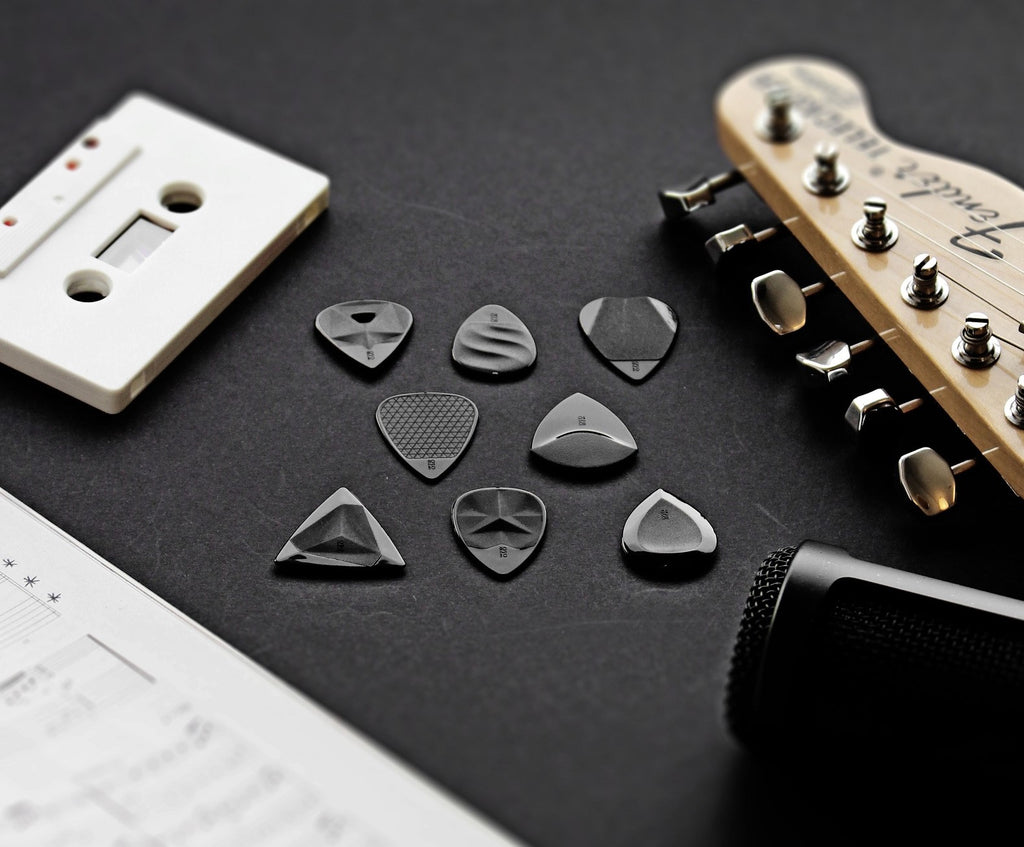
These are general tendencies, not strict rules. Amplifiers, speakers, effects, strings, playing technique, and the room also change the sound.
7. Set a Realistic Guitar Budget
Set a total budget, not just a guitar price. In the United States, the final cost may include sales tax, shipping, a case or gig bag, a tuner, picks, a strap, strings, and setup work.


Example beginner budgets
These are planning examples, not fixed market prices:
| Budget area | What it may cover |
|---|---|
| Basic acoustic setup | Guitar, gig bag, tuner, picks, and extra strings |
| Basic electric setup | Guitar, small amplifier, cable, picks, strap, and tuner |
| Used guitar budget | Instrument plus possible setup or repair cost |
| Higher beginner budget | Better construction, improved playability, and more finish options |
Do not spend every dollar on the guitar if you cannot protect or maintain it. A simple tuner and a secure case can be more useful than a cosmetic upgrade.
For an electric guitar, include the amplifier in the budget. A low-cost guitar connected to a poor or unsuitable amplifier may make it harder to judge the instrument’s real sound.
New versus used
A used guitar can offer good value, but inspect it carefully. Check:
- Neck straightness and stability
- Fret wear
- Cracks near the bridge and neck joint
- Loose braces inside an acoustic guitar
- Bridge lifting
- Electronics and output jack
- Tuning machines
- Signs of water, heat, or impact damage
A low price is not a bargain if the guitar needs repairs that exceed the difference between the used and new price. For a used instrument, ask whether you can return it after a qualified inspection.

8. Choose Features That Help Rather Than Distract
More features do not always make a guitar easier to learn. Choose features that serve your playing.
Useful features may include:
- A built-in tuner on an acoustic-electric guitar
- A fixed bridge on an electric guitar
- A comfortable cutaway for reaching higher frets
- Strap buttons in secure locations
- A truss rod that permits normal adjustment by a qualified technician
- A case that protects the guitar in your climate and travel conditions
A cutaway can improve access to high frets, but it may slightly change the body’s air volume and feel. A pickup adds flexibility, but it also adds electronics that may need maintenance.
Avoid choosing based only on:
- A famous shape
- A decorative finish
- The number of controls
- A celebrity association
- Claims such as “best beginner guitar” without checking fit and playability
The most useful feature is often the one that makes practice easier.

9. How to Pick a Guitar in a Store
Use a short, repeatable test. This helps you compare guitars fairly instead of choosing the first attractive one.
Step 1: State your goal
Tell the salesperson your playing style, budget, and experience level. Ask to try guitars in that range. If you are buying an electric guitar, test each one through a similar amplifier setting.
Step 2: Sit and stand with the guitar
Check whether the body stays in place. Some guitars feel comfortable seated but awkward with a strap. Try both positions if you expect to perform.


Step 3: Tune the guitar
Use a tuner. A guitar that arrives out of tune is not automatically defective, but tuning stability matters. Retune it after playing for several minutes.
Step 4: Play every string
Play open strings, common chords, single notes, and notes across the neck. Listen for buzz, dead notes, and uneven volume.
Step 5: Compare two or three guitars
Play the same pattern on each guitar. Ask:
- Which neck feels easiest?
- Which body feels most stable?
- Which guitar responds well to a light touch?
- Which sound fits your music?
- Which one would you enjoy practicing?
Step 6: Ask about returns and setup
Confirm the store’s return period, warranty terms, included accessories, and setup policy. Policies differ by seller and product. Read the written terms before paying.

10. Buying a Guitar Online
Online shopping gives you more choices, but it removes the chance to test the exact instrument first.
Before ordering, check:
- Exact model and model-year details
- Scale length and body dimensions
- Nut width
- String type and gauge
- Pickup and electronics specifications
- Return period and restocking charges
- Shipping damage procedures
- Warranty limits
- Whether the guitar receives a setup before shipment
When the guitar arrives, keep the packaging until you inspect and test it. Let the instrument adjust gradually if it came from a very different climate. Do not leave it in a hot car, direct sun, or a cold garage.
Inspect the guitar for shipping damage before removing labels or discarding materials. If you see a crack, loose bridge, damaged neck, or serious finish break, photograph it and contact the seller promptly.
A short adjustment in humidity can be normal, especially for an acoustic guitar. Major movement, open cracks, or a bridge that is separating are reasons to stop playing and seek seller or repair-shop advice.

11. Common Guitar-Picking Mistakes
Choosing by appearance alone
A beautiful finish cannot fix a neck that feels wrong. Playability and fit should come first.
Buying the largest acoustic guitar
A dreadnought is popular, but its size may feel uncomfortable. A smaller guitar may encourage longer practice sessions.
Assuming expensive means easy to play
Price can reflect materials, labor, finish, electronics, and brand position. It does not guarantee that the neck shape or setup suits you.
Ignoring the setup
A modest guitar with a good setup may feel better than a more expensive guitar with high action or uneven frets.
Buying the wrong strings
Steel-string, classical, and electric guitars use different string systems. Use the string type intended for the guitar unless a qualified technician confirms a safe change.
Forgetting the full cost
An electric guitar without an amplifier is not a complete electric setup. An acoustic guitar without protection may be difficult to transport safely.
Skipping the return policy
You may discover fit or neck problems after several practice sessions. A clear return policy reduces that risk.

Quick Takeaways
- Choose the guitar type that matches the music you want to play.
- Test comfort before judging appearance or brand.
- Check body size, scale length, neck shape, action, and fret condition.
- Listen for clear, even notes across the neck.
- Include accessories, setup, tax, and protection in your budget.
- For a used guitar, inspect the neck, bridge, frets, electronics, and cracks.
- Ask a teacher or guitar technician for help if you cannot assess the instrument.
- Pick the guitar that makes you want to practice.
Frequently Asked Questions
What is the best guitar for a complete beginner?
There is no single best model for every beginner. A comfortable steel-string acoustic suits many players, while an electric guitar may be better for someone focused on rock, blues, or metal. Choose based on music, body comfort, neck feel, and total budget.
Should I buy an acoustic or electric guitar first?
Buy the type that matches the music you want to play. Acoustic guitars need less equipment. Electric guitars often feel easier on the fingertips but require an amplifier, cable, and power source.
How much should I spend on my first guitar?
Use a budget that includes the instrument and necessary accessories. Avoid choosing the cheapest guitar if it has poor playability, but do not assume a high price guarantees a better fit. A store inspection or professional setup can help you compare value.
Is a smaller guitar easier to play?
A smaller guitar may be easier to hold and reach around, but size does not decide everything. Neck width, scale length, action, string gauge, and setup also affect playability.
Should a beginner buy a used guitar?
A used guitar can be a good choice when it is structurally sound and priced fairly. Have an experienced player or technician inspect it, especially for neck problems, bridge lifting, cracks, fret wear, and faulty electronics.
Do I need a professional setup after buying a guitar?
Not always, but a setup can improve action, intonation, neck relief, and general playability. Consider one if the strings feel unusually high, notes buzz across the neck, tuning is poor, or the guitar feels hard to play.
Conclusion: Pick the Guitar You Will Play
The right guitar balances music, comfort, sound, quality, and cost. Start with the guitar type, then test the body size, neck, strings, action, and tone. Do not let a brand name or finish make the decision for you.
If you are shopping in the United States, visit a local music store when possible and compare at least two or three guitars in your price range. Play the same chords and notes on each one. The best choice is usually clear when one guitar feels comfortable, sounds right for your goals, and makes you want to pick it up again tomorrow.

Senior Music Reviewer
Alex Carter is a seasoned music reviewer with over a decade of experience in the world of sound and instruments. Passionate about helping musicians and enthusiasts make informed choices, he brings sharp insights and in-depth knowledge to every review. From classical instruments to modern gear, Alex combines technical expertise with a love for music to deliver content that resonates with readers.
As a Senior Music Reviewer and expert author on Tuneluma.com, Alex is dedicated to sharing honest evaluations, practical advice, and thoughtful commentary to guide readers in their musical journey.