For guitarists in the United States, a fresh set of strings can seem simple: buy a pack, put it on the guitar, and tune up. But each string is the result of several careful steps involving steel, nickel, bronze, nylon, machines, heat, tension, and quality checks. In short, guitar strings are made by drawing metal wire to size, forming a core, wrapping it with another material when needed, adding end fittings, and testing the finished string for sound and strength.
The exact process depends on the string type. Steel-string acoustic and electric strings use different metal alloys. Classical guitar strings use nylon or similar synthetic materials. Wound bass strings also require a separate winding process because their low pitch needs more mass.

What Are Guitar Strings Made Of?
Most guitar strings have one of two basic designs:


- Plain strings, made from a single wire or filament
- Wound strings, made from a central core wrapped with another wire
The thinnest strings are often plain. The thicker strings are usually wound so they can produce a low note without becoming too stiff.
Steel-string guitar materials
Steel-string acoustic and electric guitars usually use a steel core. The outside wrap changes the sound and feel.
| Guitar string type | Common outer material | Typical use |
|---|---|---|
| Plain steel | High-carbon or music wire steel | Treble strings on acoustic and electric guitars |
| 80/20 bronze | Copper and zinc alloy | Bright acoustic guitar tone |
| Phosphor bronze | Copper alloy with a small amount of phosphorus | Balanced acoustic guitar tone |
| Nickel-plated steel | Steel plated with nickel | Common electric guitar strings |
| Pure nickel | Nickel alloy | Softer, warmer electric guitar tone |
| Stainless steel | Stainless steel alloy | Bright tone and corrosion resistance |
| Coated string | Metal string with a thin polymer coating | Longer resistance to dirt and moisture |
The terms “bronze,” “nickel,” and “stainless steel” usually describe the outer wrap. The core is often still steel.
Classical guitar materials
Classical guitar strings use different materials because their lower tension and softer feel suit nylon-string instruments.
- The first, second, and third strings are often made from clear or rectified nylon.
- The bass strings usually have a nylon or synthetic core.
- A metal wrap, often silver-plated copper, surrounds the bass-string core.
- Some sets use fluorocarbon or other synthetic filaments instead of standard nylon.
A classical guitar string is not simply a steel string with a different label. Its materials, tension, diameter, and winding method are designed for a different bridge, nut, and playing style.
What is the string core?
The core is the central wire in a wound string. It may be:
- Round
- Hexagonal
- Shaped in another specialized profile
A hexagonal core gives the outer wrap small edges to grip. A round core can give a different feel and tone, but the wrap must be held in place by another method.
How Are Steel Guitar Strings Made?
Steel guitar strings are made through a sequence that turns large metal wire into precise, flexible, musical strings. manufacturers adjust the process for the required gauge, tension, tone, and instrument type.
1. Steel wire is drawn to size
Manufacturers begin with metal wire that is thicker than the finished string. The wire passes through a series of dies. Each die reduces the diameter by a small amount.
This process is called wire drawing. It improves size control and gives the wire its final shape. The wire may also receive heat treatment to balance strength and flexibility.
The final diameter matters because guitar string gauges are very small. A change of only a few thousandths of an inch can affect pitch tension and playing feel.


2. The wire receives surface treatment
Plain steel strings may receive cleaning, polishing, or other surface treatment. Some electric guitar strings use steel wire with a nickel coating. That coating can improve corrosion resistance and change the string’s magnetic and tonal behavior.
Nickel-plated steel is common on electric guitars because the steel core and wrap interact well with magnetic pickups. Stainless steel strings use a different alloy and may feel brighter or rougher under the fingers.
The treatment varies by manufacturer. A brand’s name for a string does not always reveal every layer or process used in production.
3. The core is prepared
A wound string starts with a core wire. The core may be round or hexagonal.
The core diameter affects:
- Tension
- Flexibility
- Sustain
- Attack
- Bending feel
- How tightly the wrap grips the string
A smaller core with a thicker wrap can feel more flexible than a larger solid string of the same total diameter. This is one reason two sets with the same printed gauges can feel different.
4. The outer wire is wound around the core
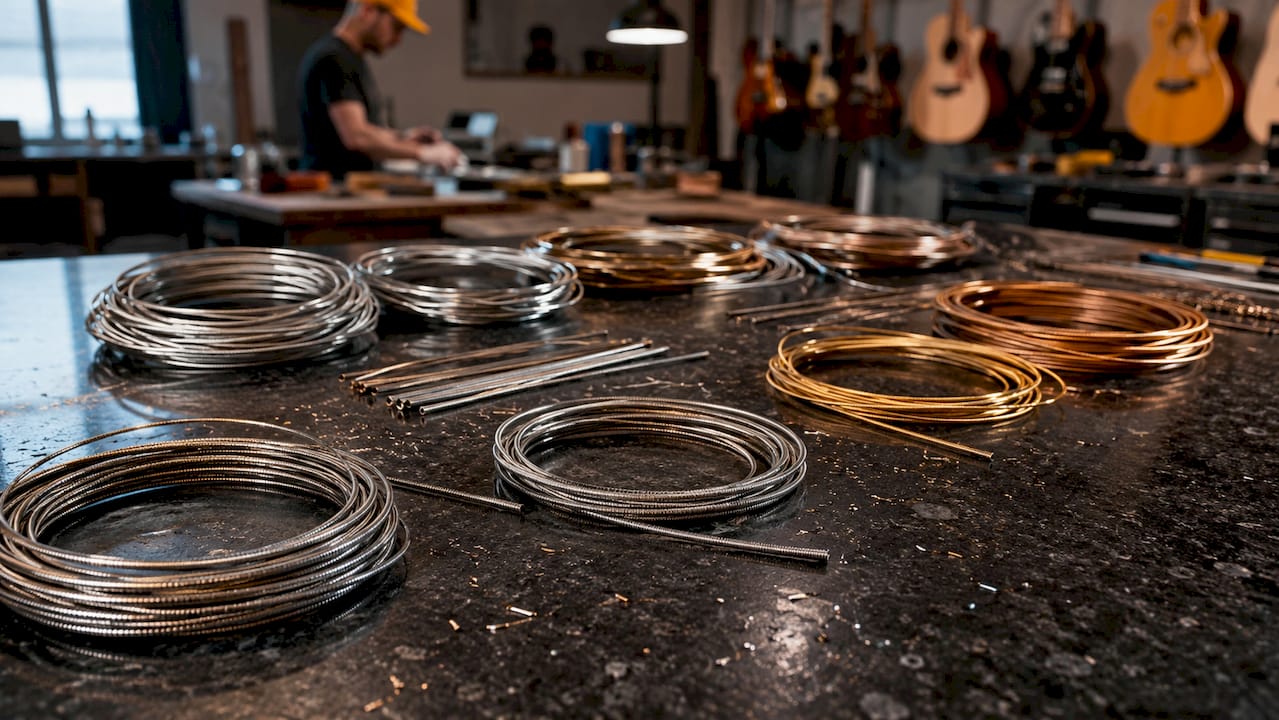
A winding machine spins the core while feeding another wire around it. The outer wire forms a tight spiral along the core’s length.
The wrap wire may be bronze, phosphor bronze, nickel-plated steel, pure nickel, or stainless steel. Its diameter, shape, spacing, and tension all affect the final result.
Winding must stay consistent. A loose section can buzz or sound dull. An uneven section can create poor intonation or cause the string to fail early.
5. The string receives an end fitting
Many steel guitar strings have a small ball end. The ball anchors the string in the bridge or in a tailpiece.
The manufacturer may:
- Wind the string around the ball
- Lock the wrap against the ball
- Add a secondary retention wire
- Use a different end design for a specific instrument
Classical guitar strings often do not use ball ends. The player normally ties them to the bridge and winds them onto the tuning machines.
6. The finished string is cut and inspected
After winding, machines cut the string to its working length. Staff or automated systems may check:
- Diameter
- Length
- Winding quality
- End security
- Surface defects
- Pitch behavior
- Corrosion or coating defects
Manufacturers may also package strings in a controlled environment. This helps limit moisture exposure before the strings reach the player.


How Are Acoustic Guitar Strings Made?
Acoustic guitar strings are usually made with a steel core and a copper-based outer wrap. The two most common acoustic designs are 80/20 bronze and phosphor bronze.
80/20 bronze strings
80/20 bronze contains about 80 percent copper and 20 percent zinc by nominal alloy name. These strings often produce a strong, bright first impression.
They may suit:
- Flatpicking
- Bluegrass
- New guitars that need extra brightness
- Players who want a clear initial attack
The exact result still depends on the guitar, string gauge, pick, playing force, and recording setup.
Phosphor bronze strings
Phosphor bronze adds a small amount of phosphorus to the copper-based alloy. These strings are often chosen for a more balanced sound with a strong low end and smoother high end.
They may suit:
- Fingerstyle
- Singer-songwriters
- Recording
- Guitars that already sound bright
“Warmer” and “brighter” are useful descriptions, but they are not fixed measurements. The same string can sound different on a mahogany guitar, a spruce guitar, or a laminate instrument.
Why do acoustic strings have a steel core?
The steel core provides strength and supports the tension needed to tune the string. The bronze wrap adds mass without requiring a much thicker solid steel wire.
This design lets the string remain flexible enough to fret and bend. A solid wire with the same mass would usually be too thick and stiff for practical guitar use.
How Are Electric Guitar Strings Made?
Electric guitar strings use a design that works with magnetic pickups. The core and outer wrap must contain enough magnetic material for the pickup to detect the vibrating string.
The most common electric guitar string is nickel-plated steel. It usually has a steel core and a steel wrap with a thin nickel surface.
Nickel-plated steel
Nickel-plated steel is a common middle ground. It offers:
- Clear attack
- Familiar feel
- Good pickup response
- Moderate brightness
- Broad compatibility with electric guitars
Pure nickel
Pure nickel strings use a nickel-based outer wrap. They are often associated with a softer feel and a rounder, warmer sound.
They can be useful for:
- Vintage-style tones
- Blues
- Jazz
- Players who find nickel-plated steel too sharp
Stainless steel
Stainless steel strings can sound bright and feel firm or textured. They may resist some forms of corrosion better than other strings, but no guitar string is immune to sweat, humidity, or dirt.


Players with nickel sensitivity should read the manufacturer’s material details carefully. “Nickel-free” claims can depend on the exact string model and every part that touches the player.
What does “round core” mean?
A round-core string uses a round wire at its center. A hex-core string uses a six-sided core.
Round-core and hex-core designs can differ in:
- Flexibility
- Sustain
- Bending feel
- Wrap stability
- Response during picking
Neither design is automatically better. The deciding factor is the sound and feel that work with the player and instrument.
How Are Classical Guitar Strings Made?
Classical guitar strings are made with nylon or similar synthetic materials rather than the steel used on most acoustic and electric guitars.
Treble strings
The top three classical strings are often single nylon filaments. Some use a smooth surface, while others use a shaped or polished surface to improve tuning stability and consistency.
Fluorocarbon treble strings use a denser synthetic material. They can have a different response and may produce a focused tone, but they are not the right match for every player or guitar.
Bass strings
Classical bass strings usually have:
- A nylon or synthetic core
- A fine metal wrap
- A protective finish or treatment in some designs
The wrap adds mass. This lets the bass string produce a low note while keeping the string flexible.
Silver-plated copper is common because it gives the wrap a smooth surface and suitable mass. The plating is thin, so it should not be confused with a solid silver wire.
Why should steel strings not go on a classical guitar?
A classical guitar is built for lower string tension. Steel strings can place far more tension on the neck, bridge, and top than the instrument was designed to handle.
That can lead to:
- Bridge damage
- Top distortion
- Neck problems
- Poor action
- Structural failure
Do not switch string families based only on whether the strings fit in the nut or tuning machines. Use the string type recommended for the guitar, or ask a qualified guitar repair technician.
How Are Guitar Strings Coated?
Coated strings receive a thin polymer layer over some or all of the string surface. The coating acts as a barrier against sweat, skin oils, dirt, and moisture.


The process may coat:
- The full wound string
- Only the outer wrap
- The gaps between the wrap and core
- Plain strings as well as wound strings
A coating can help a string stay usable longer for some players. It can also change the feel, grip, brightness, and response.
Coated does not mean permanent. The coating can wear at the picking area, fret contact points, bridge, or nut. A string can also lose tone from metal fatigue even when its surface still looks clean.
How Do Manufacturers Test Guitar Strings?
String testing helps manufacturers find defects before packaging, but no test can predict every player’s experience.
Common checks can include:
- Visual inspection
- Diameter measurement
- Length measurement
- Core and wrap security
- End-ball attachment
- Breakage resistance
- Tuning and pitch stability
- Corrosion or coating inspection
Some companies use specialized machines to measure vibration or consistency. Others rely on production checks and sampling.
A factory test does not guarantee that a string will last the same length of time for every guitarist. Lifespan depends on hand chemistry, playing time, tuning changes, climate, fret condition, cleaning habits, and string tension.

What Changes the Sound of a Guitar String?
The string material is only one part of the final sound. The following variables matter as well.
| Variable | What it can change |
|---|---|
| Gauge | Tension, volume, attack, and ease of bending |
| Core shape | Flexibility, sustain, and response |
| Wrap material | Brightness, warmth, texture, and corrosion behavior |
| Coating | Feel, lifespan, and high-frequency response |
| String length | Tension and compatibility with the instrument |
| Tuning | Tension and overall response |
| Pick or fingers | Attack and perceived brightness |
| Guitar construction | Resonance, sustain, and balance |
| Pickup type | Output and electrical response on electric guitar |
Gauge and tension
A thicker string usually creates more tension when tuned to the same pitch. It may sound fuller and feel stronger, but it can also be harder to bend and fret.
A thinner set may feel easier to play. It can also produce less resistance under the fingers and may require a setup change if the instrument previously used heavier strings.
Do not assume that “light” means the same tension across brands. Core design and material can change the feel.
Scale length
Longer-scale guitars place more tension on the same string at the same pitch. A string designed for a short-scale instrument may not behave the same way on a long-scale instrument.
Check the manufacturer’s scale-length guidance when buying specialty sets, extended-range strings, or strings for alternate tunings.
Common Myths About Guitar String Manufacturing
“All bronze strings are made from the same metal”
No. 80/20 bronze and phosphor bronze have different alloy compositions. Manufacturers may also use different wrap shapes, core designs, coatings, and production methods.


“A thicker string always sounds better”
Not always. A thicker string can offer more resistance and a strong low end, but it may feel stiff or overwhelm a lightly built guitar. The best gauge depends on the instrument and player.
“Coated strings never go dead”
No. Coatings can slow contamination and corrosion, but strings still experience fatigue, wear, and gradual tonal change.
“The metal color tells you everything”
No. A gold or copper-colored wrap does not provide a complete material specification. Read the manufacturer’s description for the core, wrap alloy, coating, and intended instrument.
“Classical and acoustic strings are interchangeable”
They are not. A steel-string acoustic guitar and a classical guitar use different construction and tension systems. Always match the string family to the instrument.
How to Choose Strings Made for Your Guitar
Start with the guitar, not the marketing term on the package.
- Identify the instrument. Confirm whether it is a classical, steel-string acoustic, electric, bass, or another type.
- Check the current gauge. Use the gauge printed on the old pack if you like the present feel.
- Choose the material. Consider bronze for acoustic guitar, nickel-based strings for electric guitar, and nylon or synthetic strings for classical guitar.
- Choose coated or uncoated. Coated strings may help players whose strings corrode quickly.
- Consider tuning. Lower tunings may benefit from heavier strings, but the guitar may need a setup.
- Change one major variable at a time. This makes it easier to hear and feel the difference.
- Watch for setup symptoms. Buzzing, poor intonation, high action, or slipping strings may require professional adjustment.
If a new gauge causes strong buzzing, sharp intonation problems, or unusual neck movement, stop and have the guitar checked by a qualified technician.

Frequently Asked Questions
How long does it take to make a guitar string?
The production time varies by string type, factory, coating, and quality-control process. The wire-making stage and the final winding stage are separate operations. Manufacturers do not use one universal production schedule for every string.
Why do guitar strings break?
Strings can break from metal fatigue, sharp fret edges, rough saddles, burrs at the bridge, excessive bending, corrosion, or repeated tuning changes. Breakage at one exact location often points to a hardware problem.
Are expensive guitar strings made differently?
Sometimes. A higher price may reflect tighter manufacturing tolerances, special alloys, coatings, packaging, or quality control. Price alone does not prove that a string will sound better on every guitar.
Can I make guitar strings at home?
Making a safe, consistent guitar string requires precise wire, winding control, correct tension, and secure end fittings. Homemade strings may break or damage the instrument. They are not a practical substitute for purpose-made strings.
What makes old strings sound dull?
Dirt, sweat, corrosion, metal fatigue, and small changes in the winding can reduce high-frequency response. The string may still hold pitch while sounding less clear. Replacing the set is usually more reliable than trying to restore its original tone.
Key Takeaways
- Guitar strings are made from plain wire or a core wrapped with another wire.
- Steel-string acoustic and electric strings usually use a steel core.
- Acoustic strings commonly use bronze or phosphor bronze wraps.
- Electric strings commonly use nickel-plated steel, pure nickel, or stainless steel.
- Classical strings use nylon or synthetic materials, with wound bass strings.
- Wire drawing controls the final diameter and strength.
- Winding machines apply the outer wrap with controlled tension.
- Coatings can reduce dirt and corrosion but do not make strings permanent.
- Gauge, core shape, material, coating, tuning, and scale length all affect feel and tone.
- Never put steel strings on a classical guitar unless a qualified technician confirms that the instrument is designed for them.
Conclusion
Guitar strings are small but carefully engineered parts. Their sound comes from the relationship between the core, outer wrap, alloy, gauge, tension, coating, and the guitar itself.
For most players, the best choice is not the most expensive string or the most unusual material. It is the string that matches the instrument, feels comfortable, stays stable, and produces the tone the player wants. Start with the guitar maker’s recommended string type and gauge, then change one feature at a time so you can hear what each design does.

Senior Music Reviewer
Alex Carter is a seasoned music reviewer with over a decade of experience in the world of sound and instruments. Passionate about helping musicians and enthusiasts make informed choices, he brings sharp insights and in-depth knowledge to every review. From classical instruments to modern gear, Alex combines technical expertise with a love for music to deliver content that resonates with readers.
As a Senior Music Reviewer and expert author on Tuneluma.com, Alex is dedicated to sharing honest evaluations, practical advice, and thoughtful commentary to guide readers in their musical journey.