What Are The Parts Of A Guitar: Complete Guide
A guitar has a headstock, neck, body, strings, bridge, pickups, controls, and other parts that shape its sound and playability.
Understanding what are the parts of a guitar makes the instrument easier to play, maintain, and choose. Each part has a clear job, from holding the strings in tune to turning your playing into sound. Whether you own an acoustic, electric, or classical guitar, this guide explains the guitar anatomy in simple terms and shows how the parts work together.
What Are the Parts of a Guitar?
A guitar has three main areas: the headstock, the neck, and the body. These areas contain smaller parts that affect tuning, comfort, tone, volume, and control.
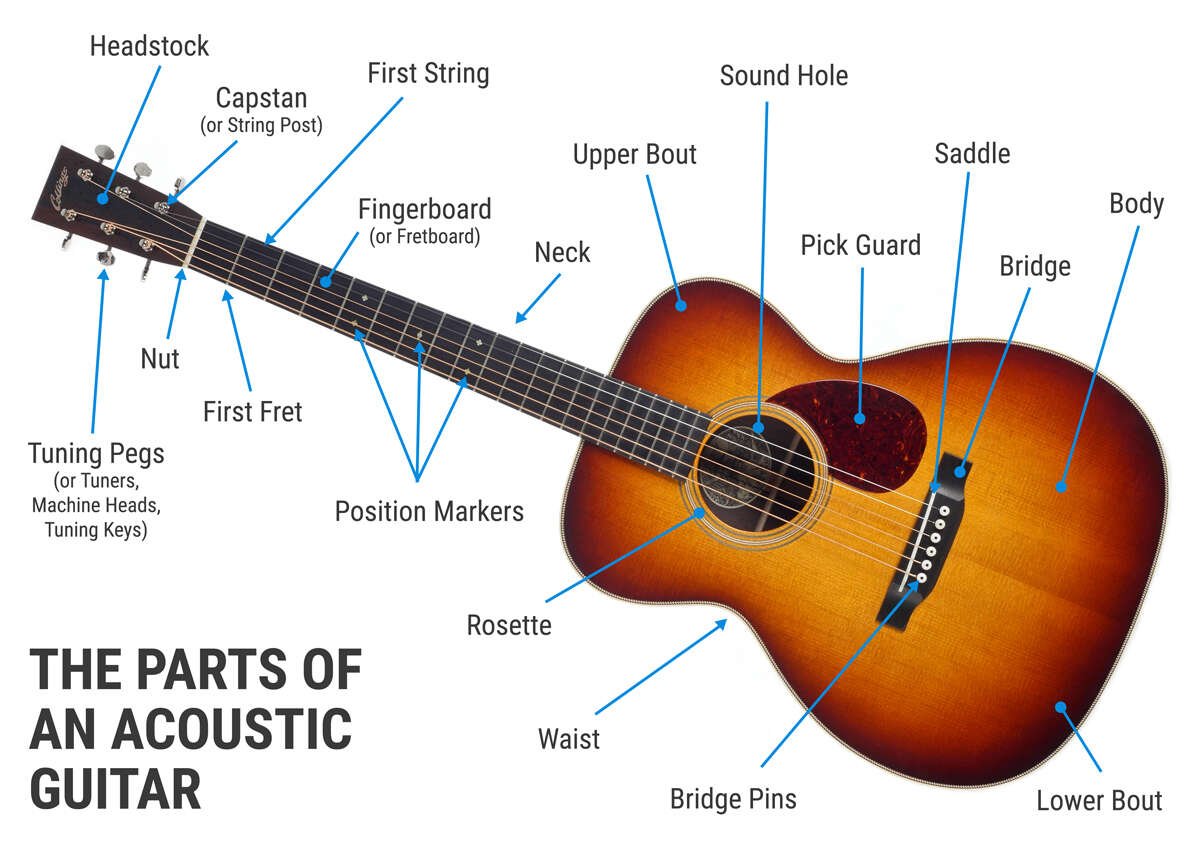
When people ask what are the parts of a guitar, they usually want to identify the visible components and understand their purpose. The basic parts include:
• Headstock: Holds the tuning machines and string ends.
• Tuning machines: Adjust the pitch of each string.
• Nut: Guides the strings from the headstock onto the neck.
• Neck: Supports the fretboard and connects the headstock to the body.
• Fretboard: Provides the surface where you press the strings.
• Frets: Divide the fretboard into musical notes.
• Body: Creates the main shape and supports key hardware.
• Sound hole: Projects sound on most acoustic guitars.
• Bridge: Anchors the strings to the body.
• Pickups: Capture string vibrations on electric guitars.
• Controls: Adjust volume, tone, and pickup selection.
• Strings: Vibrate to produce musical notes.
The exact design depends on the guitar type. An acoustic guitar uses a hollow body to project sound, while an electric guitar often uses pickups, an amplifier, and a solid or semi-hollow body.
The Headstock and Its Parts
The headstock is the uppermost section of the guitar. It extends from the neck and holds the tuning machines, which let you raise or lower the pitch of each string.
Headstock shapes vary by brand and guitar style. Some are flat, while others angle backward. The angle can help create pressure over the nut, which supports stable string contact.
Tuning Machines
Tuning machines are also called tuners, machine heads, or tuning pegs. Each one connects to a string and changes its tension when you turn it.
Turning a tuner one way tightens the string and raises its pitch. Turning it the other way loosens the string and lowers its pitch.
Good tuning machines should turn smoothly. If a tuner feels rough, slips, or has too much movement, the guitar may struggle to stay in tune.
Nut
The nut is a small strip made from plastic, bone, synthetic material, or another hard substance. It sits between the headstock and fretboard.
The nut has small slots that guide the strings. It sets the height of the strings near the first fret and helps maintain the correct spacing between them.
A poorly cut nut can cause buzzing, tuning problems, or stiff bends. In my experience, many new players blame the tuners when the real issue is a badly fitted nut.
String Tree
Some guitars have one or more string trees on the headstock. These small guides press certain strings down so they maintain a proper angle across the nut.
String trees are common on many electric guitars. They are small, but they can affect tuning stability if they create too much friction.

The Neck and Fretboard
The neck is the long wooden section between the headstock and body. It supports the fretboard and gives your fretting hand a path to reach different notes.
The neck must be strong and stable. String tension pulls on it every day, so guitar makers use carefully selected wood, reinforcement rods, and precise construction.
Fretboard
The fretboard, also called the fingerboard, is the front surface of the neck. You press the strings against it to change their vibrating length and produce different notes.
Fretboards may use rosewood, maple, ebony, pau ferro, or other materials. The wood can affect feel, weight, and appearance, but the player’s technique and the guitar’s full design have a larger effect on tone.
Frets
Frets are thin metal strips set into the fretboard. They divide the neck into semitone steps.
When you press a string just behind a fret, the fret becomes the new endpoint of the vibrating string. This raises the note in a controlled way.
Most modern guitars use 20 to 24 frets. Acoustic guitars often have fewer usable upper frets because the body joins the neck at a lower position.
Fret Markers
Fret markers are dots or shapes that help you find common fret positions. They often appear at the third, fifth, seventh, ninth, and twelfth frets.
The twelfth fret usually has a double marker. It sits halfway between the nut and bridge, marking the octave of each open string.
Neck Profile
The neck profile describes its shape from the back. Common profiles include C, D, and V shapes.
A slim neck may feel fast to one player, while a thicker neck may feel more supportive to another. There is no single best profile. Hand size, playing style, and comfort matter most.
Truss Rod
A truss rod is a metal support inside the neck. It helps the neck resist string tension and allows controlled adjustment of its curve.
This adjustment is called neck relief. A small amount of forward curve can help the strings vibrate without hitting the frets.
Truss rod work requires care. Turning the adjustment nut too far can damage the instrument, so a qualified repair technician should handle major changes.

The Guitar Body
The body is the largest part of the guitar. It supports the bridge, pickups, controls, strap buttons, and other hardware.
The body also affects comfort and tone. A large dreadnought acoustic may sound powerful, while a smaller concert body may feel easier to hold.
Acoustic Guitar Body
An acoustic guitar has a hollow body. Its top, back, and sides work together to move air and amplify the strings.
Important acoustic body parts include:
• Top: The front soundboard that vibrates most strongly.
• Back: The rear panel that helps shape the body’s response.
• Sides: The curved panels that connect the top and back.
• Bracing: Internal wooden supports that strengthen the top and shape its vibration.
• Sound hole: The opening that helps project air movement.
• Rosette: The decorative ring around the sound hole.
• Binding: Strips that protect and finish the body edges.
The top is especially important on an acoustic guitar. Its thickness, wood, bracing, and construction affect volume, balance, and response.
Electric Guitar Body
An electric guitar may have a solid, semi-hollow, or hollow body.
A solid body usually offers strong sustain and resistance to feedback at high volume. A semi-hollow or hollow body can provide a lively acoustic character but may be more sensitive to feedback.
Electric guitar bodies may include:
• Pickup cavities: Spaces that hold the pickups.