A drum throne is the padded seat that supports a drummer while they play a drum set. It helps the drummer stay balanced, reach the pedals, and move with control. In the United States, drum thrones come in many sizes and styles, from basic round seats to heavy-duty hydraulic models.
Unlike a normal chair, a drum throne is made for active movement. It lets the player sit high, stay centered, and turn freely while using both feet and both hands.

What Is a Drum Throne?
A drum throne is a height-adjustable seat designed for drum and percussion players. It usually has four main parts:
- A padded seat
- A metal seat post
- A height adjustment system
- A tripod base with rubber feet
The word “throne” is a music term. It does not mean the seat is large or luxurious. It refers to the drummer’s main seat at the kit.
A drum throne may also be called a drum seat, drummer’s stool, or drum stool. These terms often describe the same item. “Drum throne” is the most common term used by drum hardware makers and U.S. music stores.
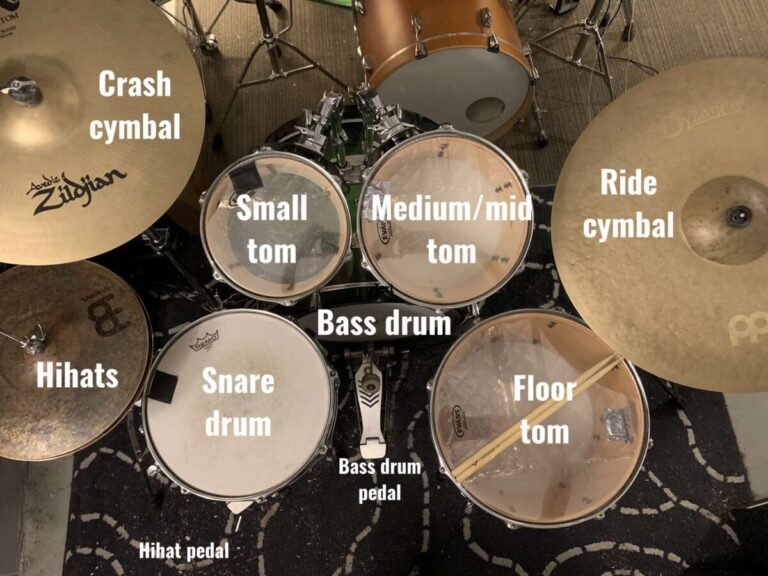
The throne supports the drummer’s body while leaving the legs free to operate the bass drum and hi-hat pedals. Its height, shape, padding, and base all affect how the kit feels to play.
How is a drum throne different from a regular stool?
A regular stool may be too narrow, too tall, or too unstable for drum playing. It may also lack a strong locking system.
A proper drum throne is built to:
- Support repeated movement
- Stay stable during footwork
- Hold the player’s weight over long sessions
- Adjust to different body sizes
- Reduce unwanted seat movement
- Fit behind a drum kit
A bar stool, office chair, or folding chair can work in an emergency. However, each one can limit leg movement or place the drummer at an awkward height.
Why Does a Drum Throne Matter?
A drum throne affects balance, reach, comfort, and control. It is one of the most important parts of a drum set because the drummer’s body connects to every part of the kit through the seat.
When the throne is too low, the hips may sit below the knees. This can make the legs feel cramped and may make it harder to use the pedals with control.
When the throne is too high, the feet may not sit naturally on the pedals. The drummer may also feel less stable because less weight rests through the feet.
The right height gives the drummer a stable center. It should allow free movement without forcing the back, hips, or knees into an extreme position.
A drum throne can affect:
- Bass drum pedal control
- Hi-hat control
- Balance during fills
- Reach to cymbals and toms
- Sitting comfort during practice
- Body movement during live shows
- Setup consistency from one session to the next
A good throne cannot fix every playing problem. Drum placement, pedal settings, posture, and technique also matter. Still, a poor throne can make good technique harder to maintain.
Is a drum throne necessary for beginners?
A beginner does not need the most expensive throne. A beginner does need a stable seat with safe height adjustment.
A weak seat can wobble, sink, or make the player sit at the wrong height. These problems can distract from learning. A basic, well-built throne is usually a better starting point than a premium model with features the player does not need.

Main Parts of a Drum Throne
A drum throne looks simple, but each part has a job. Understanding these parts makes it easier to compare models.
Seat
The seat is the padded top of the throne. It may be round, bicycle-style, or saddle-shaped.
A round seat gives the drummer freedom to turn. It is common on entry-level and mid-range models.
A saddle seat is wider and shaped more like a motorcycle seat. It can provide more support for the hips and thighs, but some players may find it less free-moving.
Seat padding can use foam, molded foam, or other materials. More padding does not always mean more comfort. Very soft foam may compress during a long session and provide less support.
Seat covering
Most drum thrones use vinyl or synthetic coverings. These materials are easy to clean and can handle regular use.
A smooth covering lets the drummer shift position more easily. A textured or grippy covering may hold the player in place but can make turning harder.
For live work, a durable covering is useful. For home practice, comfort and easy cleaning may matter more.
Height adjustment
The adjustment system sets how high the drummer sits. Common systems include:
- Threaded spindle adjustment
- Telescoping post adjustment
- Hydraulic adjustment
A threaded spindle turns up or down like a screw. It offers fine control and is common on many traditional drum thrones.
A telescoping post uses preset holes or a clamp. It can adjust quickly, but the height steps may be larger.
A hydraulic throne uses a gas-lift system. It can provide fast, smooth adjustment, but it may cost more and can require more care if the lift stops working.
Locking system
The lock keeps the chosen height in place. Some thrones use a wing bolt, while others use a memory lock or clamp.
The lock should hold firmly without damaging the post. Check it before playing. If the seat sinks or rocks, stop and inspect the adjustment hardware.
Base and feet
Most drum thrones use a three-leg tripod. The legs fold for transport and spread the load across the floor.
Rubber feet help reduce sliding and protect hard floors. They work best when all three feet sit flat.
A wide base can improve stability. However, a larger base may take up more space in a small practice room or make transport less convenient.

Common Types of Drum Thrones
Drum thrones differ mainly in shape, height adjustment, and support. No single style suits every drummer.
| Type | Main feature | Often suits |
|---|---|---|
| Round throne | Simple, free-moving seat | Beginners, many general players |
| Saddle throne | Wider, contoured seat | Players who want more hip support |
| Hydraulic throne | Fast height adjustment | Players who change kits or stages often |
| Spindle throne | Fine height control | Players who want precise setup |
| Low throne | Shorter height range | Small kits or players with a lower setup |
| Heavy-duty throne | Stronger base and hardware | Larger players, long sessions, touring |
Round drum throne
A round throne is the basic drum seat design. It gives the player room to move and is easy to position behind most kits.
It may be a good choice for a first throne because it is simple and often less expensive. The main trade-off is that it may provide less thigh support than a saddle design.
Saddle drum throne
A saddle throne has a wider seat with raised areas for the legs. Many players like the extra support during long practice sessions.
The shape can also encourage a stable sitting position. However, the wider sides may feel restrictive to players who like to rotate or shift often.
Hydraulic drum throne
A hydraulic throne uses a gas lift to change height. It can be helpful for shared kits, teaching studios, and musicians who set up often.
The adjustment is quick, but the mechanism adds cost and another part that may eventually need repair. A hydraulic model is not automatically more comfortable than a spindle model.
Spindle drum throne
A spindle throne uses a threaded shaft. It usually changes height more slowly than a hydraulic throne, but it allows small and precise adjustments.
This style works well for players who keep one main setup and want to record the exact height they prefer.

How to Choose a Drum Throne
Choose a drum throne by checking stability, height range, seat shape, padding, and transport needs. Price should come after fit and build quality.
1. Check the height range
The throne must rise high enough for your playing position and drop low enough for comfortable setup.
Sit on the throne with your feet on the pedals. Your knees should not feel forced sharply upward or pushed far below the pedals. Your feet should reach the pedals without stretching.
There is no single correct height for every drummer. Body size, pedal style, drum size, and playing method all change the answer.
2. Test the seat shape
Sit for several minutes if possible. A throne can feel comfortable for one minute and uncomfortable after a full practice session.
Check whether the seat:
- Supports your sit bones
- Lets your legs move freely
- Presses behind your knees
- Allows small shifts in position
- Feels stable when you play both pedals
A round seat may suit players who move often. A saddle seat may suit players who want more support.
3. Look for a firm lock
Adjust the throne to your preferred height and tighten the lock. Then sit down and move as you would while playing.
The seat should not sink, tilt, or rotate without control. Avoid using a throne with worn threads, a damaged clamp, or a bent post.
4. Consider your playing time
For short practice sessions, a basic throne may be enough. For long rehearsals, recording sessions, or regular gigs, padding and stability become more important.
The right choice is not always the softest one. Firm support may remain more comfortable over time than very soft foam that collapses under weight.
5. Match the throne to your transport needs
A heavy-duty throne may feel stable but add weight to your hardware bag. A lightweight throne may be easier to carry but offer less support.
If you play local shows, check the folded size and total weight. If the throne stays in one room, stability may matter more than portability.
6. Set a realistic budget
Entry-level thrones can work well when they have solid legs, a reliable lock, and enough padding. More costly models may add better materials, stronger hardware, hydraulic adjustment, or a shaped seat.
A higher price does not prove a better fit. Try to compare the features that affect your use rather than choosing by brand name alone.

How to Set Up a Drum Throne
Set the throne before adjusting the drums. Your seat height determines the position of your legs and affects where the pedals and drums should sit.
- Place the throne on a flat surface.
- Open the tripod fully.
- Set the seat to a middle height.
- Sit with both feet on the pedals.
- Raise or lower the throne in small steps.
- Check that your feet reach the pedals without strain.
- Check that your thighs and knees can move freely.
- Tighten the adjustment lock.
- Play simple bass drum and hi-hat patterns.
- Recheck the height after a few minutes.
A useful setup sign is stable movement. You should be able to play both pedals without rocking the seat or gripping the floor with your feet.
If your thighs press against the seat edge, try a different height or seat shape. If your feet feel too light on the pedals, lower the throne slightly or review the pedal position. Change one setting at a time so you can tell what helped.
Should your knees be above or below your hips?
Many drummers prefer a position where the hips are level with or slightly higher than the knees. This can leave room for the legs to move toward the pedals.
That position is not a strict rule. The correct height depends on your body, technique, and kit. Use comfort, balance, and pedal control as the main tests.
Should the throne be centered with the bass drum?
The throne should place your body in a balanced position relative to the bass drum and hi-hat. It does not always need to sit directly behind the bass drum’s center.
Your body should not twist sharply to reach either pedal. If the hi-hat feels far away, move the throne, pedals, or hi-hat stand as a group.

Drum Throne Safety and Maintenance
Inspect the throne before use, especially if it travels to rehearsals or shows. A loose or damaged throne can make the drummer lose balance.
Check these areas:
- Height lock
- Threaded spindle or gas lift
- Tripod bolts
- Leg hinges
- Rubber feet
- Seat mounting bolts
- Cracks in the seat or base
Tighten loose hardware with the correct tool. Do not force a damaged part. Replace worn feet and damaged locks before regular playing.
Keep the seat dry and clean it with a product suitable for its covering. Avoid harsh cleaners unless the manufacturer says they are safe.
Never stand on the throne. It is designed for sitting, not as a step. Keep the legs fully open on a level floor, and do not use a throne that rocks badly even after adjustment.
Manufacturer instructions are the best source for model-specific care. Brands such as TAMA, Drum Workshop, and Gibraltar Hardware publish information about their drum hardware lines and adjustment systems.

Common Drum Throne Mistakes
Buying by padding alone
Thick padding may look comfortable, but shape and support matter too. Test the seat when possible.
Setting the throne too low
A low throne can crowd the legs and change how the pedals feel. Raise it in small steps until your feet and knees move freely.
Ignoring the lock
A throne that slowly sinks can change your playing position during practice. Tighten the lock and test it before every long session.
Using a chair that limits movement
An office chair may have wheels, arms, or a backrest that gets in the way. A folding chair may be too low or too wide.
Changing too many settings at once
If you move the throne, pedals, snare, and cymbals together, you may not know which change improved or harmed your setup. Adjust one part at a time.
Assuming expensive means correct
A premium throne can still feel wrong for your body. Fit, stability, and control matter more than price.

Frequently Asked Questions
What is the best height for a drum throne?
The best height lets you reach both pedals with control while keeping your body balanced. Start with your hips level with or slightly above your knees, then adjust by feel.
Can I use a drum throne for other instruments?
Yes. A drum throne can work for hand percussion, electronic drums, guitar practice, or keyboard work when its height and shape fit the task. It may not provide the back support needed for long seated work.
How long does a drum throne last?
A well-made throne can last for many years when it stays dry, receives normal use, and has working hardware. The seat covering, foam, feet, and height lock may wear before the metal base does.
Are hydraulic drum thrones better?
Hydraulic thrones are faster to adjust. Spindle thrones often offer more precise adjustment and a simpler mechanism. Neither type is best for every player.
Why does my drum throne wobble?
A wobble may come from an uneven floor, partly opened legs, loose bolts, worn rubber feet, or a damaged height mechanism. Open the tripod fully, place it on a flat surface, and inspect the hardware. Replace damaged parts before playing.
Conclusion: What Is a Drum Throne?
A drum throne is the adjustable seat made for playing drums. It supports the drummer, frees the legs for pedal work, and helps create a stable position behind the kit.
For most players, the best starting point is a throne with a firm seat, a secure height lock, a stable tripod, and a height that allows easy pedal control. Choose the shape and adjustment style that match your body, playing time, and transport needs.
Set the throne before the rest of the kit, test it while playing, and inspect it often. A stable seat may look simple, but it can make the entire drum set feel easier to control.

Senior Music Reviewer
Alex Carter is a seasoned music reviewer with over a decade of experience in the world of sound and instruments. Passionate about helping musicians and enthusiasts make informed choices, he brings sharp insights and in-depth knowledge to every review. From classical instruments to modern gear, Alex combines technical expertise with a love for music to deliver content that resonates with readers.
As a Senior Music Reviewer and expert author on Tuneluma.com, Alex is dedicated to sharing honest evaluations, practical advice, and thoughtful commentary to guide readers in their musical journey.