What Is An Adult Size Violin: Find The Right Fit
An adult size violin is usually a 4/4 full-size instrument designed for players with mature hands and arms.
Understanding what is an adult size violin helps you choose an instrument that feels natural, sounds balanced, and supports healthy playing. Most adults need a 4/4 violin, but body size, reach, hand comfort, and playing experience also matter. This guide explains violin sizing in clear terms so you can buy or rent with confidence.
What Is an Adult Size Violin?
An adult size violin is most often a 4/4 violin, also called a full-size violin. The fraction “4/4” does not mean four separate parts. It means the violin uses the largest standard size in the common violin family sizing system.
For most adults, a 4/4 violin is the correct choice. It has a body length of about 14 inches, though exact measurements vary by maker and model. Its total length, including the neck and scroll, is usually close to 23 to 24 inches.
The term “adult size violin” can be slightly misleading. Adults do not all have the same hand size or arm reach. A smaller adult may feel more comfortable with a 7/8 violin, while a tall adult may prefer a standard 4/4 model.
A violin’s size affects more than comfort. It also affects:
• Finger spacing on the fingerboard
• Bow control and reach
• Shoulder and neck tension
• Intonation accuracy
• Playing endurance
• The instrument’s tone and projection
A violin that is too large can make simple notes feel difficult. A violin that is too small may feel cramped and produce a thinner sound. The best adult size violin is the one that lets you play freely without strain.

What Does 4/4 Mean on a Violin?
A 4/4 violin is the standard full-size violin used by most adult students, performers, teachers, and professional players. It is also the size most often used in orchestras and chamber music groups.
The “4/4” label describes the instrument’s overall design and scale. It does not mean that every 4/4 violin has identical measurements. Small differences in body length, neck shape, string length, and shoulder curve are common between brands.
A typical 4/4 violin includes:
• A body length of roughly 14 inches
• A vibrating string length of about 13 inches
• A full-length neck and fingerboard
• Standard adult spacing between notes
• A bow that is normally around 29 inches long
These measurements are useful guides, not strict rules. Two full-size violins can feel very different in the hands. One may have a wider neck, a deeper body, or a longer string length.
When someone asks, “What is an adult size violin?” the simplest answer is a 4/4 violin. However, comfort and fit should confirm the choice.
Full-size violin versus fractional violin
Fractional violins are smaller instruments made for children. Common sizes include 1/16, 1/10, 1/8, 1/4, 1/2, and 3/4. A 7/8 violin sits between a 3/4 and 4/4 violin, although it is generally considered a reduced adult instrument rather than a child’s violin.
A 4/4 violin is not automatically better than every smaller violin. It is simply the normal full-size option for a mature player. The right size depends on the player’s body and technique.

How Do You Know if You Need an Adult Size Violin?
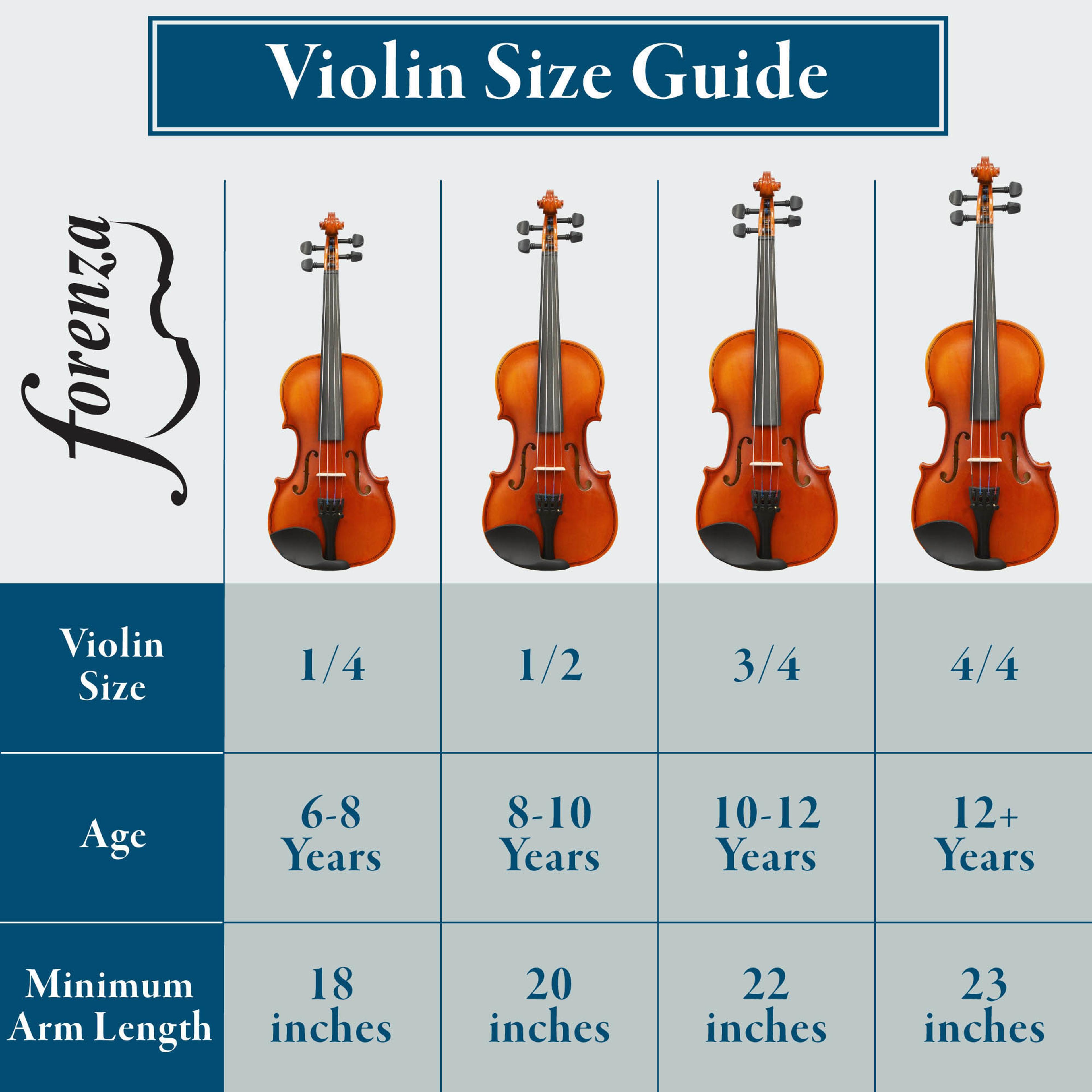
Age is a useful starting point, but it should not be the only factor. Many children move into a 4/4 violin between ages 11 and 15. Some smaller players need more time, while some tall players move up sooner.
Adults who are new to the violin usually begin with a 4/4 instrument. Still, a teacher or trained violin shop employee should check the fit before you buy.
Use these signs as a basic guide:
• Your left hand can reach the notes without stretching hard.
• Your thumb rests in a relaxed position under the neck.
• Your elbow can move freely beneath the violin.
• You can hold the instrument without lifting your shoulder.
• Your wrist stays fairly straight rather than sharply bent.
• You can play for several minutes without pain or numbness.
A proper adult size violin should feel like an extension of your body. It should not feel like you are reaching across a table.
The arm-length test
A common sizing test involves placing the violin under the player’s chin and extending the left arm beneath the instrument. The hand should reach around the scroll, but the fingers should not strain to grip it.
This test gives useful information, but it is not perfect. Arm length alone cannot show how flexible your fingers are or how your shoulder responds to the instrument.
The hand and finger test
Place your left hand around the neck of the violin. Your fingers should be able to reach the fingerboard with a natural curve. If your first finger collapses or your thumb presses hard, the violin may be too large or poorly set up.
A teacher can also watch your posture. This matters because beginners often blame their size when the real problem is an incorrect chin rest, shoulder rest, or neck position.

Adult Violin Size Chart
The chart below gives general guidance. It is not a replacement for trying the violin in person.
| Violin size | Approximate player age | Typical body length | Common use |
|---|---|---|---|
| 1/16 | 3 to 4 years | About 9 inches | Very young children |
| 1/10 | 4 to 5 years | About 10 inches | Young beginners |
| 1/8 | 4 to 6 years | About 10.5 inches | Small children |
| 1/4 | 5 to 7 years | About 11 inches | Children |
| 1/2 | 7 to 9 years | About 12.5 inches | Children |
| 3/4 | 9 to 12 years | About 13 inches | Older children and smaller players |
| 7/8 | Older children and adults | About 13.5 to 13.75 inches | Smaller adult players |
| 4/4 | About 12 years and older | About 14 inches | Most adults and professionals |
These age ranges are approximate. Growth, reach, hand size, and physical comfort are more important than a birth-date rule.
The 7/8 size deserves special attention. It can be a good choice for adults with shorter arms or smaller hands. Some adult players also prefer a 7/8 violin because it reduces left-hand stretch while preserving much of the sound and feel of a full-size instrument.

What Is the Difference Between a 4/4 and 3/4 Violin?
The main difference is physical scale. A 4/4 violin has a longer body, longer neck, longer string length, and wider spacing between many notes than a 3/4 violin.
A 3/4 violin may feel easier for a small adult at first. However, moving between positions and reaching certain notes can feel different from playing a 4/4 instrument. The smaller body may also produce a different level of volume and depth.
Here are the main differences:
• A 4/4 violin is the standard adult size.
• A 3/4 violin has a smaller body and shorter string length.
• A 4/4 violin may offer a broader, more powerful sound.
• A 3/4 violin may reduce stretch for smaller players.
• A 3/4 violin is often easier for children to hold.
• A 4/4 violin is usually easier to resell because demand is higher.
A smaller violin is not always a beginner violin. Some skilled players use smaller instruments for comfort. The key is to avoid choosing a smaller size only because it feels easy during the first five minutes.
Over time, poor fit can affect your technique. It may limit shifting, make bowing less stable, or encourage bad posture. Try to think about how the violin will feel after a full lesson, not just during a quick store test.

How to Choose the Best Adult Size Violin
Choosing an adult size violin involves more than selecting the right fraction. The instrument must also have a good setup, comfortable dimensions, and reliable construction.
1. Try the violin before buying
If possible, play several violins. Even instruments made by the same brand can feel different. Compare the neck, fingerboard, shoulder area, and overall weight.
Play simple scales and open strings. Notice whether your left shoulder rises or your right arm feels blocked. Those signs often point to a fit or setup problem.
2. Check the setup
A well-set-up violin is easier to play. Important setup details include:
• Correct bridge height and shape
• Properly cut nut
• Smooth fingerboard
• Pegs that turn without slipping
• Correct soundpost position
• Comfortable chin rest
• Suitable string height
A poor setup can make a good violin feel uncomfortable. Beginners sometimes replace the instrument when a qualified luthier could solve the issue with a simple adjustment.
3. Consider a 7/8 violin if needed
A 7/8 violin may suit adults with small hands, short arms, or limited shoulder mobility. It can also help players who experience pain when using a standard 4/4 model.
Do not assume that 7/8 means low quality. Many respected violin makers produce smaller adult instruments. The important point is that the dimensions should match your body.
4. Test the bow as well
The violin and bow work as a pair. A full-size violin normally uses a full-size bow, but the bow should still feel balanced and manageable.
If the bow feels too heavy, you may press instead of drawing a smooth sound. If it is too light or poorly balanced, your tone may become weak or uneven.
5. Ask for a return period
A violin can feel comfortable in a store but uncomfortable after a long practice session. A return or trial period gives you time to test posture, sound, and endurance.
Many professional shops allow players to compare several instruments at home or with a teacher. This is especially helpful for beginners who cannot yet judge tone and setup on their own.
Common Mistakes When Buying an Adult Size Violin
Many first-time buyers focus only on price or appearance. A glossy finish and attractive wood do not guarantee a comfortable or good-sounding instrument.
Avoid these common mistakes:
• Choosing a violin based only on age
• Buying the largest instrument without trying it
• Assuming an expensive violin must fit well
• Ignoring a raised shoulder or bent wrist
• Buying online without checking the return policy
• Using very cheap strings and blaming the violin’s tone
• Selecting a violin with rough pegs or a poorly fitted bridge
• Forgetting that the chin rest and shoulder rest affect comfort
One lesson experienced teachers often repeat is simple: pain is not part of normal violin practice. Mild muscle fatigue can happen as you build strength, but sharp pain, tingling, or numbness needs attention.
A well-fitted adult size violin should support good posture. It should not force your neck forward or make your left hand grip the neck tightly.
The instrument’s weight also matters. A heavy violin may increase shoulder tension, especially during long practice sessions. If two violins fit equally well, the lighter and more responsive one may be easier for a beginner to manage.
Does Violin Size Affect Sound?
Yes, violin size can affect sound, but construction and setup also play major roles. A larger violin often has more air volume and a longer string length, which can support a broad and powerful tone.