How To Buy Violin Strings: Smart Guide For Beginners
To buy violin strings, match the string set to your violin, playing level, sound goal, and budget.
Learning how to buy violin strings can feel confusing because many sets look similar but respond very differently. String material, tension, size, tone, and playing style all matter. This guide explains how to buy violin strings with clear steps, practical examples, and lessons drawn from years of helping players choose strings for practice, lessons, concerts, and recording.
Know When Your Violin Strings Need Replacing
Before learning how to buy violin strings, check whether your current strings need replacement. Violin strings lose brightness and flexibility over time. A string may still produce a note, yet perform poorly under the bow.
Common signs include:
• A dull, weak, or uneven sound
• Fraying near the bridge, nut, or fine tuner
• Rust, discoloration, or rough spots
• Frequent tuning problems
• Whistling or poor response on the E string
• A string that feels stiff or slow under the fingers
• Visible dents where the string rests on the bridge or nut
How long strings last depends on playing time, sweat, string type, and personal sound standards. A beginner who practices twice a week may use one set for several months. A serious student may replace strings every one to three months. A professional may change them more often.
Do not wait for a string to break. Old strings can make your violin feel difficult to play. They may also cause you to press too hard or use too much bow force. Fresh strings often make the instrument feel easier without any other adjustment.

Understand the Main Types of Violin Strings
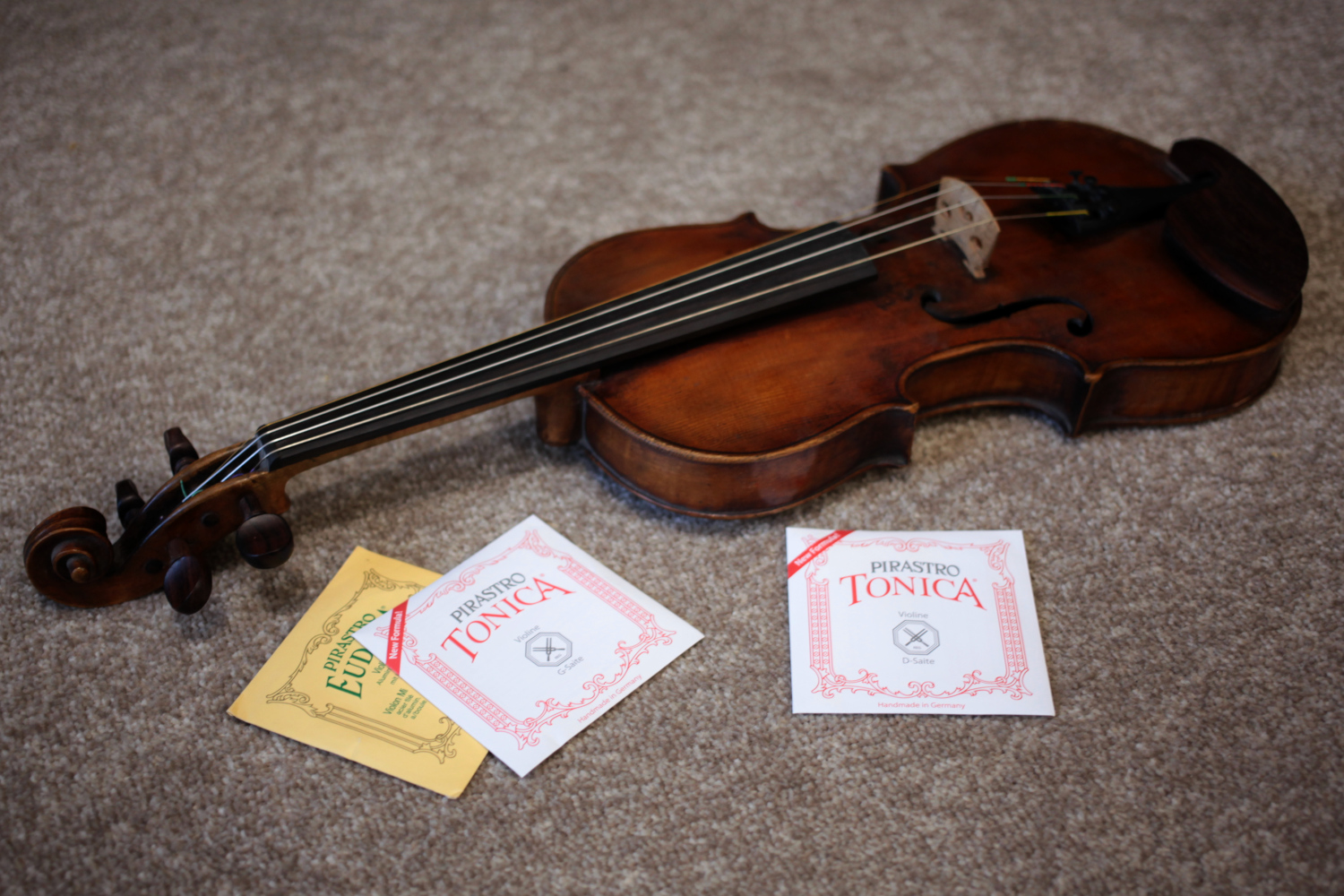
The first major step in how to buy violin strings is understanding their construction. Most violin strings fall into three groups: gut, synthetic core, and steel core.
Gut core strings
Gut strings use a core made from animal intestine. They are known for a warm, complex, and colorful sound. Many early music performers prefer them because they suit historical instruments and period performance styles.
Gut strings also have limits. They can react more strongly to changes in humidity and temperature. They may stretch longer after installation and require more frequent tuning. They are often a poor first choice for a beginner who needs simple care and stable tuning.
Synthetic core strings
Synthetic core strings use materials such as nylon or other modern fibers. They offer a balance of warmth, stability, projection, and comfort. Many student, advanced, and professional players use them.
Synthetic strings are often the safest starting point when you want to buy violin strings for a standard modern violin. They usually provide a rich sound without the higher care demands of gut strings.
Steel core strings
Steel core strings use a solid or stranded steel center. They respond quickly and hold their pitch well. Their sound can be bright, focused, and direct.
Steel strings work well for some beginner violins, folk styles, electric violins, and instruments that need a clear response. However, some steel sets may sound too sharp or thin on a bright violin.
The string core is only one part of the sound. Winding material, tension, violin setup, bow, rosin, and your technique also change the result.
Choose the Right String Tension
String tension describes how much force a string applies when tuned to pitch. Sets often come in low, medium, or high tension. Some brands use terms such as light, standard, heavy, weich, mittel, or stark.
Low tension
Low-tension strings may feel soft and easy under the fingers. They can suit a stiff or naturally bright violin because they may add warmth and reduce harshness.
Possible limitations include lower projection and a less focused response. A low-tension set may also feel too loose for a player who uses strong bow pressure.
Medium tension
Medium tension is the most useful starting point for many players. It offers a balanced mix of response, volume, color, and comfort.
If you are unsure how to buy violin strings, a medium-tension synthetic set designed for your violin size is usually a sensible first trial. It gives you a clear reference point for later changes.
High tension
High-tension strings can increase focus and projection on some instruments. They may help a quiet violin speak with more strength in a large room.
High tension can also create problems. The violin may feel stiff, the sound may become harsh, and the instrument may experience more downward force at the bridge. Ask a qualified violin technician before using high-tension strings on a delicate, old, or fragile instrument.
When I compare strings, I do not judge volume alone. A loud string is not always a better string. The best set gives a clear sound while remaining comfortable and easy to control.

Match the Strings to Your Violin
Your violin’s size and setup affect which strings you should buy. Most full-size adult violins use 4/4 strings. Smaller violins need strings made for their exact size.
Common violin sizes include:
• 1/16
• 1/10
• 1/8
• 1/4
• 1/2
• 3/4
• 4/4
Never assume that a smaller string set will work well on a larger violin. The length, tension, and playing response may be wrong. Check the label or measure the instrument with help from a teacher or violin shop.
The violin’s age and design also matter. An old Italian violin, a modern workshop violin, and a student factory violin may respond very differently to the same string set. A string that sounds warm on one violin may sound muddy on another.
The bridge, soundpost, nut, fingerboard, and tailpiece also affect string performance. If your violin suddenly sounds bad after changing strings, the strings may not be the only cause. A loose bridge, worn groove, or poor setup can create similar symptoms.
If you are unsure how to buy violin strings for a valuable or unusual instrument, speak with a violin maker or repair technician. A short professional consultation can prevent an expensive mistake.

Select Strings Based on Your Sound Goal
A useful way to buy violin strings is to start with the sound you want. Do you want warmth, brightness, power, clarity, or a blend?
For a warm and mellow sound
Choose strings marketed for warmth, depth, or a broad tone. Lower or medium tension may work well on a bright violin. Synthetic core strings are often a good option.
Warm strings can soften a sharp instrument. They may not be ideal if your violin already sounds dark or slow.
For a bright and clear sound
Look for strings with a focused, brilliant, or clear tone. Medium or higher tension may help, depending on the violin.
Bright strings can improve clarity in fast music. They may sound too edgy if your violin has a strong upper register.
For more projection
Players who perform with a piano, orchestra, or large group may need strings with strong carrying power. A focused synthetic set or suitable high-tension set may help.
Projection is not the same as loudness at the player’s ear. Some strings sound modest beneath your ear but travel well across a room. Test them in a hall when possible.
For easy response
If you are a beginner or have a light bow arm, choose strings known for quick response and moderate tension. A string that speaks easily can make practice more enjoyable.
Do not choose strings only because a famous player uses them. That player may have a different violin, bow, technique, and sound goal.
Consider Each String in the Set
Many players treat a violin string set as one product. In practice, the G, D, A, and E strings each have a different job.
The G string carries depth and power. The D string often links the lower and middle registers. The A string can reveal problems with balance. The E string must speak clearly without sounding painful or thin.
Some players use a mixed set. For example, they may choose one brand for the G, D, and A strings, then use a different E string for better clarity or fewer whistles.
A mixed set can work very well, but it may require testing. The sound should feel balanced across the four strings. You should not hear a large jump in volume or color when crossing from one string to the next.