The A minor acoustic guitar chord uses three notes—A, C, and E—to create a warm, emotional sound on guitar.
The a minor acoustic guitar chord is one of the first shapes many players learn, and for good reason. It is easy to fret, sounds rich on steel-string guitars, and appears in folk, pop, rock, country, and worship music. This guide explains the correct fingering, chord theory, strumming patterns, common mistakes, useful variations, and practical ways to make the chord sound clean.
What Is the A Minor Acoustic Guitar Chord?
The a minor acoustic guitar chord, written as Am, is a minor triad. Its notes are A, C, and E.
The A note is the root. C is the minor third, which gives the chord its darker sound. E is the perfect fifth, which adds balance and strength.
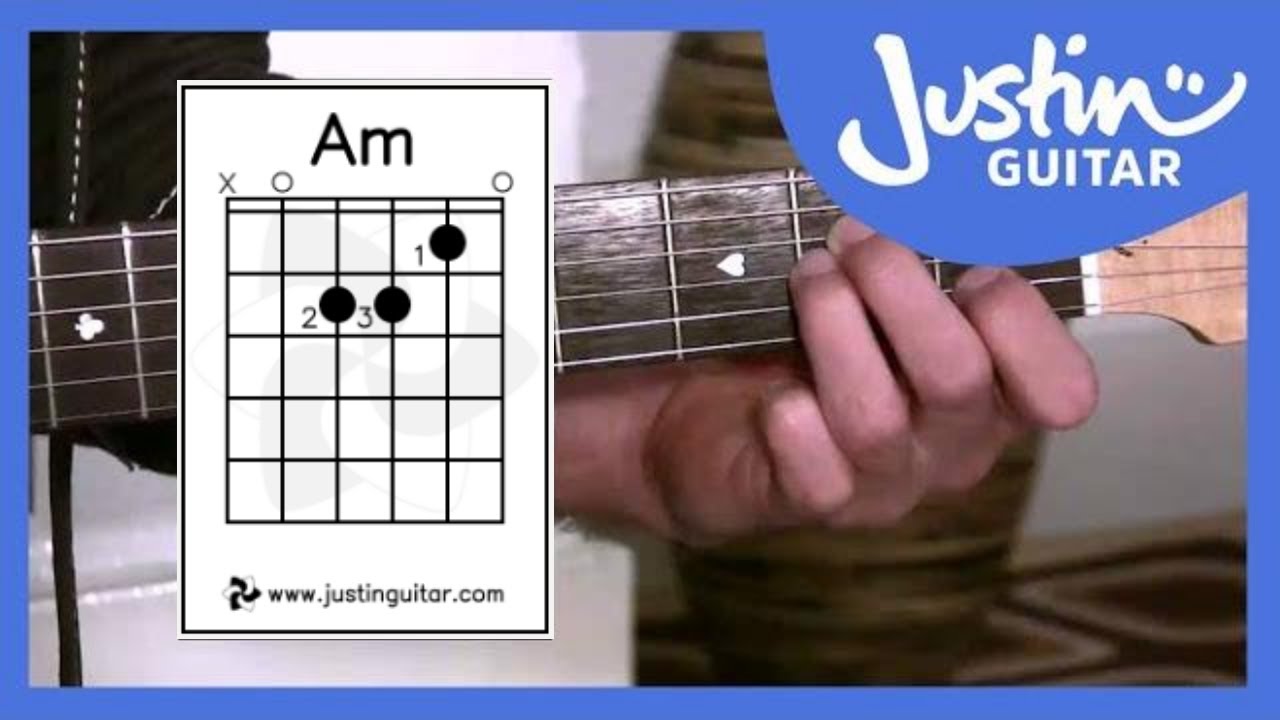
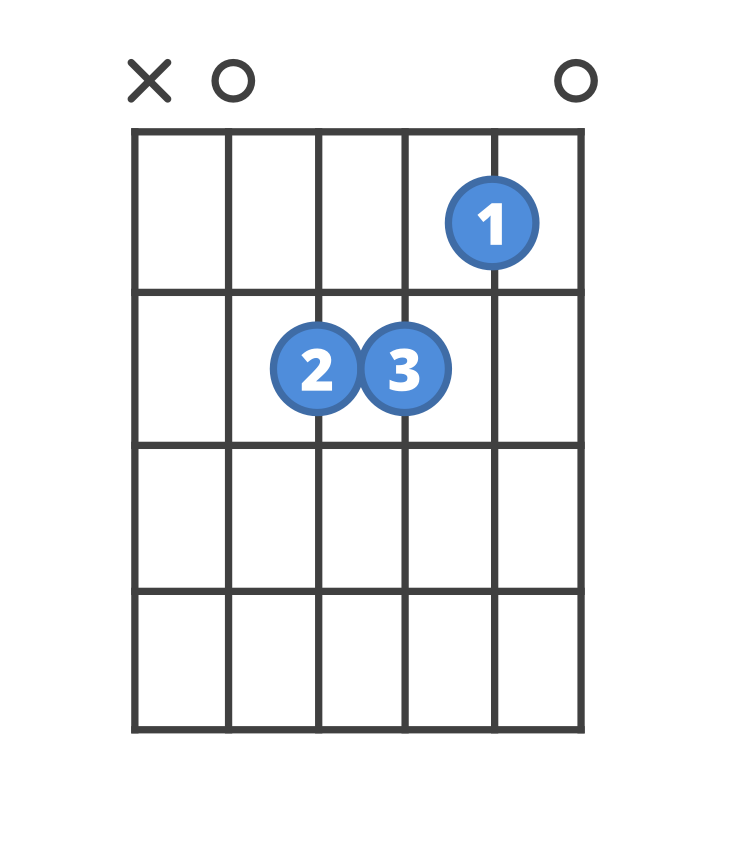
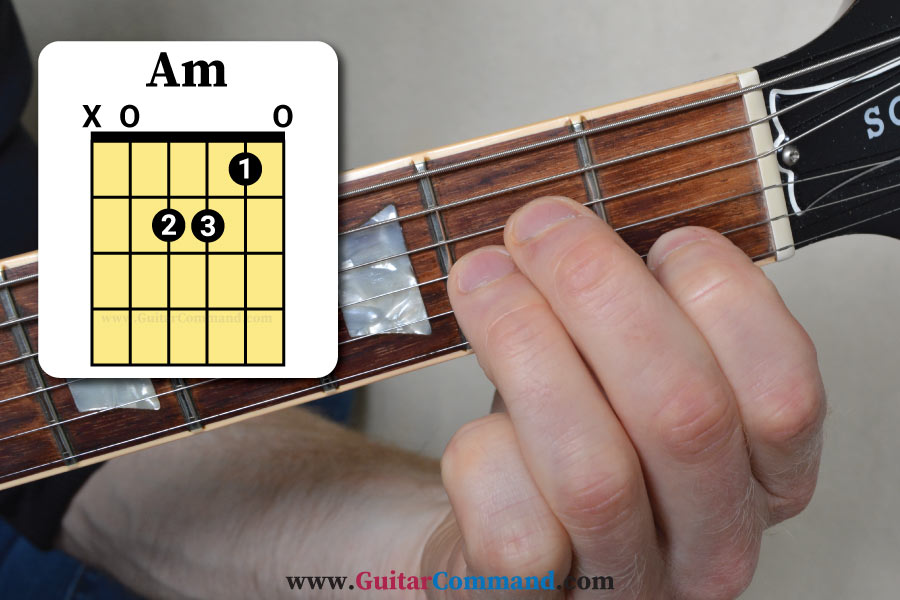
On an acoustic guitar, the most common open Am shape looks like this:
Am chord

e|—0—|  High E string
B|—1—|
G|—2—|
D|—2—|
A|—0—|
E|—x—|  Do not play
The numbers show the fret to press. A zero means to play the string open. An “x” means to mute or skip the string.
The standard a minor acoustic guitar chord uses five strings. Start from the A string and strum down through the high E string. Avoid the low E string because it adds an unwanted bass note.
How to Play the A Minor Acoustic Guitar Chord
Follow these steps to form a clean Am chord:
- Place your index finger on the first fret of the B string.
- Place your middle finger on the second fret of the D string.
- Place your ring finger on the second fret of the G string.
- Leave the A and high E strings open.
- Keep the low E string silent.
- Strum from the A string down.
Your fingers should form a compact shape. Keep each fingertip close to the fret wire without touching the next string.
A useful fingering is:
• Index finger: first fret, B string
• Middle finger: second fret, D string
• Ring finger: second fret, G string
Press only as hard as needed. Too much pressure can make your hand tired and may pull the notes sharp. Too little pressure can create buzzing.
When checking the a minor acoustic guitar chord, pick each string one at a time. You should hear five clear notes. If one string sounds dull or muted, adjust your finger angle before pressing harder.
Why the A Minor Chord Sounds Sad or Emotional
Minor chords often sound darker or more reflective than major chords. The main reason is the minor third.
In an A major chord, the third is C-sharp. In an A minor chord, that note becomes C natural. This small change creates the emotional difference between major and minor.
You can think of the third as the chord’s mood-setting note. The root tells you where the chord lives, while the third helps tell you how it feels.
The a minor acoustic guitar chord can sound:
• Thoughtful
• Gentle
• Mellow
• Dramatic
• Restless
• Emotional
This does not mean every song using Am will sound sad. Tempo, melody, lyrics, rhythm, and the chords around it also shape the mood.
For example, Am can sound soft during fingerpicking. With strong downstrokes, the same chord can sound urgent or powerful. The guitar’s tone, strings, pick, and room also affect the result.

Common A Minor Guitar Chord Diagrams
The open Am shape is the best starting point, but other forms are useful as your skills grow.
Open A Minor Chord
e|—0—|
B|—1—|
G|—2—|
D|—2—|
A|—0—|
E|—x—|
This is the standard a minor acoustic guitar chord for beginners. It works well in many common chord progressions.
A Minor With a Low E Bass Note
Some players use an Am shape that includes the low E string. This creates an Am/E sound because E becomes the lowest note.
e|—0—|
B|—1—|
G|—2—|
D|—2—|
A|—0—|
E|—0—|
This version can sound full, but it may not fit every song. Use it when the bass movement sounds right.
A Minor Barre Chord at the Fifth Fret
An Am barre chord uses the Em-shaped minor form at the fifth fret:
e|—5—|
B|—5—|
G|—5—|
D|—7—|
A|—7—|
E|—5—|
This shape requires more hand strength. It also gives a brighter and more focused sound than the open version.
The open a minor acoustic guitar chord is usually best for beginners, while the barre version helps you play Am in different parts of the neck.

A Minor Chord Transitions to Practice
Smooth chord changes matter more than playing one shape perfectly. Am often appears beside C, G, F, E, and Dm.
Try these progressions:
• Am, C, G, F
• Am, F, C, G
• Am, G, F, E
• Dm, Am, E, Am
• C, Am, F, G
Start with one slow downstroke per beat. Do not rush. Change chords only when your fingers can move without panic.
A useful practice method is the “anchor finger” approach. In the change from Am to C, your index finger stays on the first fret of the B string. This gives your hand a guide while the other fingers move.
For Am to E, your index finger stays on the first fret of the B string, while your middle and ring fingers shift. For Am to Dm, your index finger remains useful as a reference point.
Practice each change for one minute:
- Form the first chord.
- Strum once.
- Move to the next chord.
- Strum once.
- Repeat slowly.
- Increase speed only after the change feels relaxed.
When I practice the a minor acoustic guitar chord with students, I often see them lift every finger too high. That wastes time. Keep your fingers close to the strings and make small movements.

Strumming Patterns for A Minor
The chord itself is only half the sound. Your right hand controls the rhythm and energy.
Beginner Downstroke Pattern
Count:
1   2   3   4
D   D   D   D
Play one relaxed downstroke on each beat. This helps you focus on clean fretting.
Simple Pop Pattern
1 & 2 & 3 & 4 &
D   D U   U D U
The “D” means downstroke. The “U” means upstroke. Keep your hand moving even when you skip a stroke.
Gentle Folk Pattern
D D U D U
Use a soft touch. Let the open strings ring, but avoid hitting the low E string.
Six-Eight Feel
For a flowing ballad rhythm, count:
1 2 3 4 5 6
D   D U D U
This pattern works well with slow chord progressions. Keep the first beat slightly stronger than the others.
The a minor acoustic guitar chord can sound harsh if you strum too hard. Start softly, then add force only when the rhythm is steady.
Fingerpicking the A Minor Chord
Fingerpicking can make Am sound calm and spacious. Use your thumb for the bass strings and your fingers for the higher strings.
A simple pattern is:
Thumb, index, middle, ring, middle, index
For the open Am chord:
• Thumb: A string
• Index finger: G string
• Middle finger: B string
• Ring finger: high E string
Try this string pattern:
A – G – B – e – B – G
Keep the movement even. The goal is not speed. The goal is a smooth flow from one note to the next.
You can also use a basic arpeggio:
A – D – G – B – G – D
Let each note ring when possible. If the sound becomes muddy, check whether your fingers are touching nearby strings.
A common mistake is plucking too hard. Acoustic guitar strings respond well to a light touch, especially when the instrument has a bright tone.

Common Problems With the A Minor Acoustic Guitar Chord
Many beginners struggle with the a minor acoustic guitar chord at first. Most problems have simple causes.
Buzzing on the B String
Your index finger may be too far from the fret. Move it closer to the metal fret wire, but do not place it directly on top.
Muted High E String
Your ring or middle finger may be leaning into the high E string. Curve your fingers more and play the string alone to test it.
A Weak Sound
You may not be pressing all fingers evenly. Check each note one at a time, then strum the full shape.
Accidental Low E String
This happens often during fast strumming. Practice aiming your pick at the A string. You can also lightly touch the low E string with the tip of your thumb.
Hand Pain
Some pressure is normal, but sharp pain is not. Relax your wrist, lower your thumb, and take short breaks. A guitar with high action can also make the chord harder than it should be.
Slow Chord Changes
Your fingers may be moving too far from the fretboard. Practice placing all three fingers at once over the Am shape, even without strumming.
A properly adjusted guitar should not require extreme force. If several chords buzz across the neck, ask a qualified guitar technician to check the action and neck relief.

Tips for Making A Minor Sound Clean
Use these small adjustments to improve your tone:
• Place fingertips near the fret wire.
• Keep your thumb behind the neck.
• Bend your fretting fingers at the knuckles.
• Relax your shoulder and picking hand.
• Strike the strings with a steady motion.
• Check every string separately.
• Keep unused fingers close to the fretboard.
• Practice slowly with a metronome.
Your thumb should not squeeze the neck like a clamp. It works more like a balance point. A relaxed hand gives your fingers more control.
I once spent too much time trying to fix buzzing by pressing harder. The real issue was finger placement. Moving each fingertip a few millimeters toward the fret wire solved the problem and made the chord feel much easier.
Record yourself on a phone while playing the a minor acoustic guitar chord. Your recording may reveal uneven rhythm, muted notes, or excessive string noise that you do not notice while playing.
A Minor Chord Progressions for Beginners
Chord progressions help you use Am in a musical setting instead of practicing it alone.
Am, F, C, G
This progression has a familiar modern sound. Use four beats per chord and begin with simple downstrokes.
Am, G, F, E
This pattern has a strong descending feel. It can sound dramatic, especially with slow strumming.
Dm, Am, E, Am
This progression returns naturally to Am. The E chord creates tension, while Am provides release.
C, G, Am, F
This is a widely used pop and folk progression. It gives Am an emotional role without making the whole progression feel dark.
Start at 60 beats per minute. Play one chord per bar. Once the changes are clean, move to 70 or 80 beats per minute.
Do not measure progress only by speed. A slow, clean chord change is more useful than a fast change full of muted strings.
A Minor Chord Variations and When to Use Them
Once the basic shape feels comfortable, try these variations.
Am7
e|—0—|
B|—1—|
G|—0—|
D|—2—|
A|—0—|
E|—x—|
Am7 has a softer, more open color. It works well in blues, jazz, soul, and mellow acoustic music.
Asus2
e|—0—|
B|—0—|
G|—2—|
D|—2—|
A|—0—|
E|—x—|
Asus2 removes the third and adds B. It sounds open and unresolved.
Am/G
e|—0—|
B|—1—|
G|—2—|
D|—2—|
A|—0—|
E|—3—|
This chord places G in the bass. It may create a smooth bass line, but use it only when the progression supports that note.
Chord names can vary based on voicing and bass note. If you are unsure, listen to the lowest note and compare the shape with the surrounding chords.
Acoustic Guitar Setup and String Choice
A well-set-up guitar makes the a minor acoustic guitar chord easier to play. High string action forces your fingers to press farther and may cause hand fatigue.
String gauge also matters. Light strings usually feel easier for new players. Medium strings can provide more volume and a stronger bass tone, but they may require more finger pressure.
Your guitar’s scale length, neck shape, fret condition, and string material all affect comfort. There is no single best setup for everyone.
If your guitar buzzes only on one fret, the issue may involve fret wear or neck relief. If every chord feels difficult, the action may be too high. A professional setup can often improve playability without changing the instrument.
These points are practical, not absolute. Some players prefer heavier strings for tone, while others choose extra-light strings for comfort. The best choice is the one that lets you play cleanly without pain.
A Simple Seven-Day Practice Plan
A short daily routine can build the chord into muscle memory.
Day One: Shape and Sound
Form Am and pick each string. Fix muted notes before adding rhythm.
Day Two: Slow Strumming
Use four downstrokes per bar. Focus on a relaxed hand.
Day Three: Am to C
Practice the shared index finger. Use a metronome at 50 to 60 beats per minute.
Day Four: Am to G
Lift your fingers only as far as needed. Keep the movement small.
Day Five: Am to F
Start with an easier Fmaj7 shape if a full F barre chord feels too hard.
Day Six: Fingerpicking
Use the A–G–B–high E pattern. Keep every note even.
Day Seven: Play a Progression
Combine Am with three other chords. Record one minute and listen for clean changes.
Ten focused minutes can be more valuable than an hour of rushed practice. Stop if your hand hurts, then return later with a relaxed grip.
Frequently Asked Questions About the A Minor Acoustic Guitar Chord
What is the easiest way to play A minor on acoustic guitar?
Use the open Am shape: x02210. Place your index finger on the first fret of the B string, your middle finger on the second fret of the D string, and your ring finger on the second fret of the G string.
Which strings do you strum for A minor?
Strum from the open A string through the high E string. Avoid the low E string unless you intentionally want an Am/E sound.
Why does my A minor chord sound muted?
A finger may be touching a nearby string, or your fingertip may be too far from the fret wire. Pick each string alone to find the problem, then adjust your finger angle.
Is A minor harder than A major?
Many beginners find A minor easier because its fingers fit in a compact shape. A major often requires three fingers across the same fret, which can feel crowded.
What chords go well with A minor?
Am commonly works with C, G, F, E, Dm, and Em. Try Am–F–C–G or Dm–Am–E–Am for simple practice progressions.
Can I play A minor with a barre chord?
Yes. Use the minor barre shape based on the E minor form at the fifth fret. This gives you a movable Am chord and a different tone from the open shape.
Conclusion
The a minor acoustic guitar chord is simple to form but highly useful. Its A, C, and E notes create a warm minor sound, while the open shape makes it ideal for beginners and experienced players alike.
Focus on clean fingering, skip the low E string, and practice slow transitions into C, G, F, E, and Dm. Add strumming, fingerpicking, and chord variations as your control improves.
Pick up your guitar today and play Am for five focused minutes. Then build a small progression around it, record your sound, and keep exploring new acoustic guitar chords.

Senior Music Reviewer
Alex Carter is a seasoned music reviewer with over a decade of experience in the world of sound and instruments. Passionate about helping musicians and enthusiasts make informed choices, he brings sharp insights and in-depth knowledge to every review. From classical instruments to modern gear, Alex combines technical expertise with a love for music to deliver content that resonates with readers.
As a Senior Music Reviewer and expert author on Tuneluma.com, Alex is dedicated to sharing honest evaluations, practical advice, and thoughtful commentary to guide readers in their musical journey.