How Do You Play Am On Guitar: Easy Chord Guide
To play Am on guitar, place three fingers in the correct frets and strum five strings smoothly.
Learning how do you play am on guitar is a key step for every beginner. The A minor chord sounds warm, emotional, and rich, yet it uses a simple shape that appears in songs across pop, rock, folk, and blues. This guide explains the Am chord clearly, shows common mistakes, and gives practice steps that help you play it cleanly.
What Is the Am Chord on Guitar?
Am means A minor. It contains three main notes: A, C, and E. These notes form a minor triad, which gives the chord its gentle, thoughtful, and slightly sad sound.
In standard guitar tuning, the most common open Am chord uses five strings. The low sixth string is not played. The open fifth string provides the root note, A, which makes the chord sound stable.
When people ask how do you play am on guitar, they usually mean the open Am shape. It is one of the first minor chords taught to new players because it is easy to form and works well with chords such as C, G, F, and E.
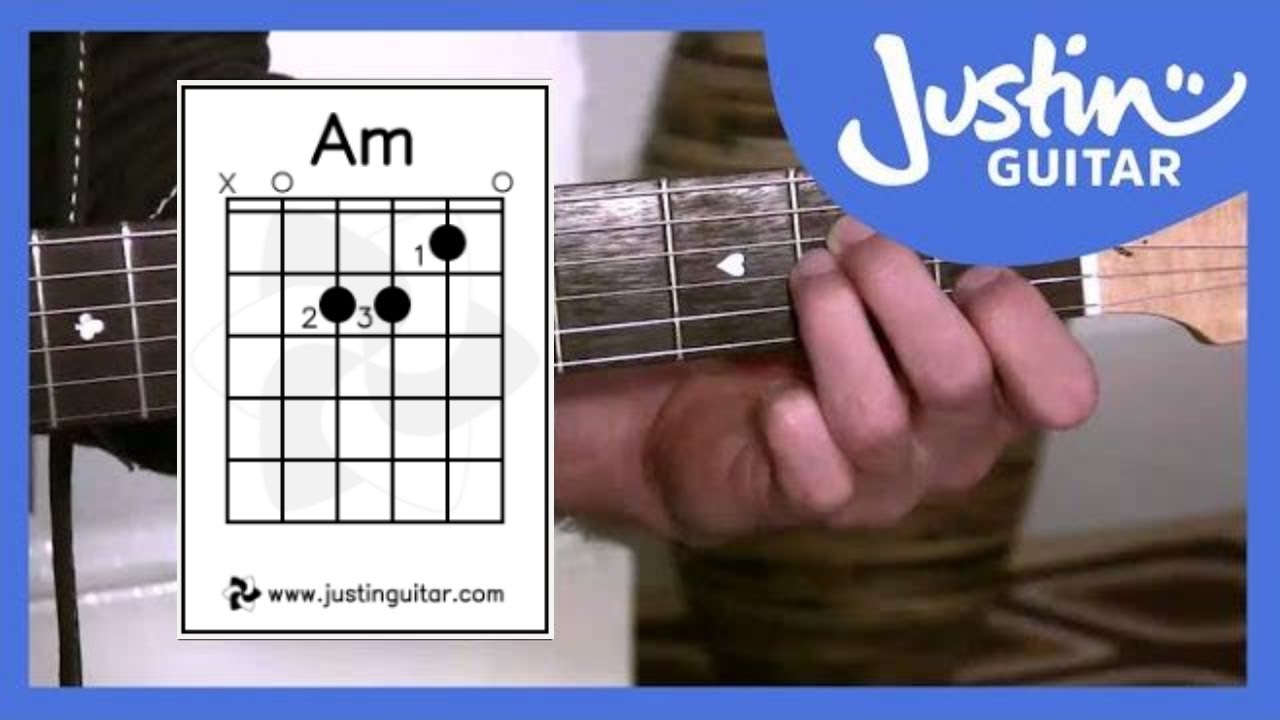
How Do You Play Am on Guitar?
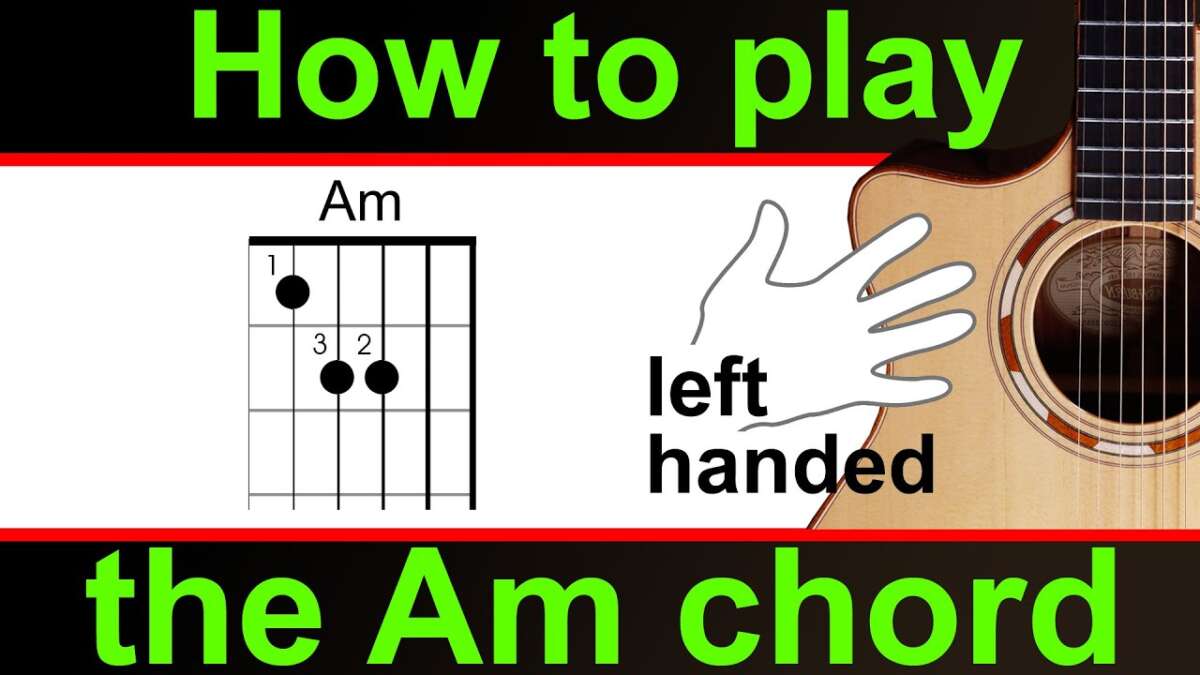
Use this simple Am chord fingering:
- Place your index finger on the second string at the first fret.
- Place your middle finger on the fourth string at the second fret.
- Place your ring finger on the third string at the second fret.
- Leave the first and fifth strings open.
- Avoid playing the sixth string.
- Strum from the fifth string down to the first string.
The chord diagram looks like this:
Am: x 0 2 2 1 0
The numbers represent the strings from the sixth string to the first string:
• x means do not play the string
• 0 means play the string open
• 1 means press the first fret
• 2 means press the second fret
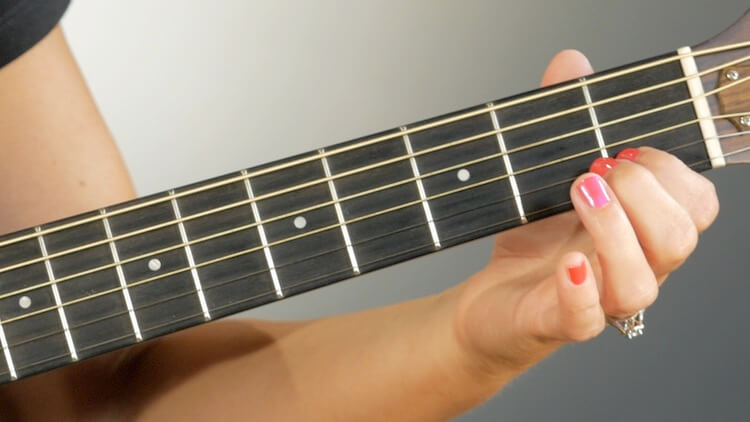
Your fingers should form a small triangle. The middle and ring fingers sit beside each other on the second fret, while the index finger rests on the first fret of the B string.
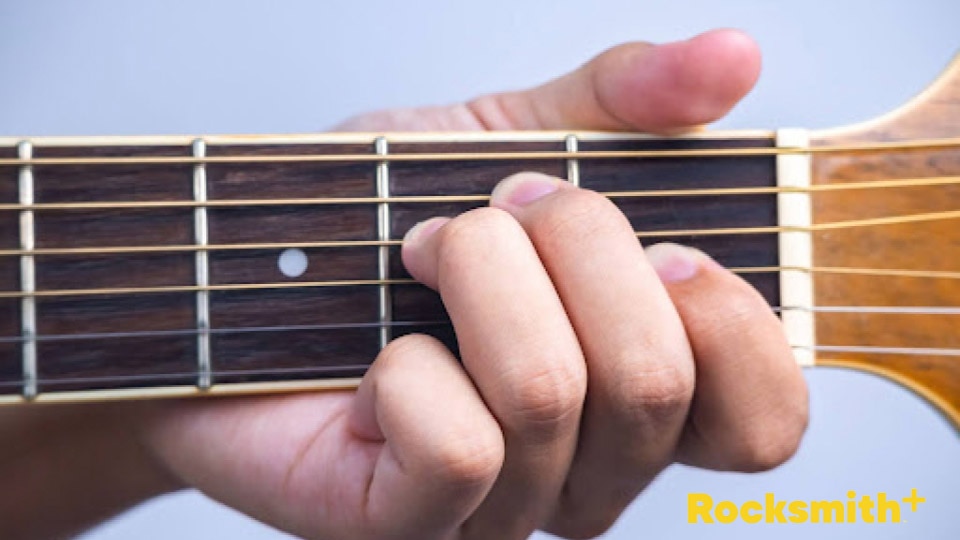
Am Guitar Chord Finger Placement
Correct finger placement makes a major difference. Beginners often press too hard or place their fingers too far from the frets. Both habits can cause buzzing.
Follow these placement tips:
• Keep your thumb behind the neck, near its center.
• Bend each finger so the fingertip touches the string.
• Place each finger just behind the metal fret wire.
• Keep your wrist relaxed and avoid squeezing the neck.
• Let your fingers stand tall so they do not touch nearby strings.
Your index finger should press the second string at the first fret. Your middle finger should press the fourth string, and your ring finger should press the third string. Keep the open first and fifth strings clear.
A useful test is to play each string one at a time. Start with the fifth string, then play the fourth, third, second, and first strings. If one note sounds dull, check whether a finger is touching that string by accident.

How to Strum the Am Chord
After forming the shape, strum slowly from the fifth string toward the first string. Use a relaxed downward motion. Your pick or thumb should move across the strings without digging too deeply into them.
For a basic rhythm, count:
1 2 3 4
D D D D
Here, D means a downstroke. Play one downstroke on each count. This simple pattern helps you focus on clean notes before adding speed.
Once the chord rings clearly, try this common pattern:
D D U U D U
Count it as:
1 2 and and 4 and
Do not rush the upward strokes. Keep your hand moving in a steady rhythm, even when it does not touch the strings. This motion acts like a pendulum and helps your timing stay even.
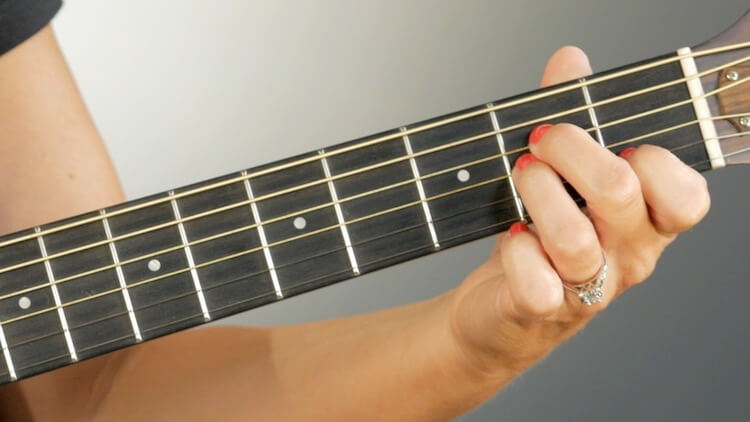
Common Mistakes When Playing Am
Many new players understand how do you play am on guitar but still struggle to make the chord sound clean. That is normal. Most problems come from small setup issues rather than a lack of talent.
Playing the Low E String
The sixth string is marked with an “x” in the chord shape. If you play it, the chord may sound muddy. Begin your strum on the open fifth string.
Touching the High Strings
Your ring or middle finger may lean into the second or first string. Keep your fingers curved and use the tips rather than the flat part of each finger.
Pressing Too Far From the Fret
A finger placed in the middle of the fret space needs more force. Move it close to the fret wire without placing it directly on top of the metal.
Squeezing the Neck
A tight grip can cause hand pain and slow your chord changes. Use only enough pressure to make the note ring. Think of holding a small bird: secure, but gentle.
Strumming Too Hard
Hard strumming does not fix a weak chord. It often makes buzzing and muted notes more noticeable. Start softly and increase volume only after the notes sound clear.
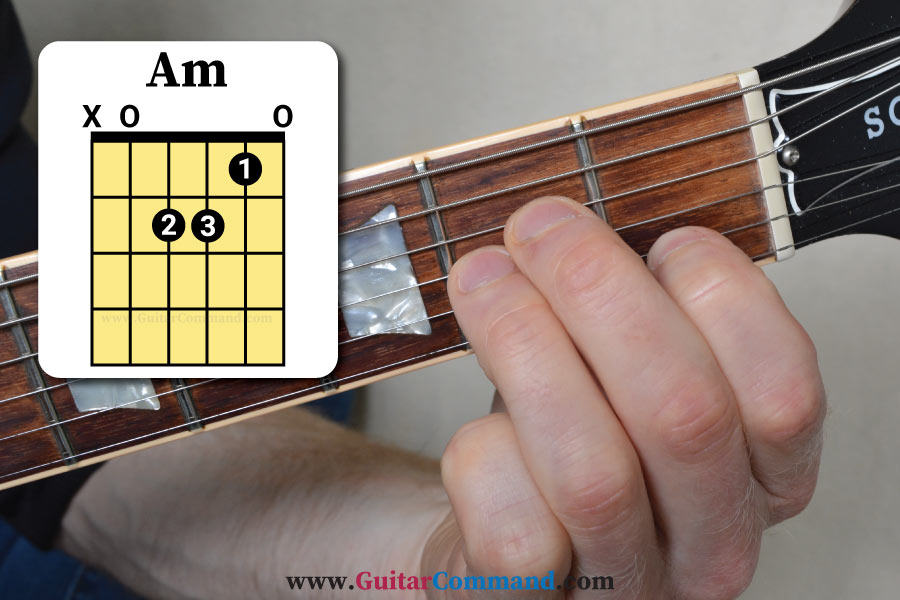
A Simple Am Chord Practice Routine
If you want to learn how do you play am on guitar, short practice sessions work better than rare, long sessions. Aim for five to ten minutes each day.
Try this routine:
- Form the Am chord and hold it for ten seconds.
- Play each string slowly to check for muted notes.
- Relax your hand and form the chord again.
- Strum four slow downstrokes.
- Remove your fingers and repeat the shape.
- Practice changing between Am and C.
- Practice changing between Am and E.
- End with one minute of steady strumming.
Do not stop every time you make a mistake. Keep the beat moving, then correct the chord on the next change. This teaches your hands to recover, which is an important real-world guitar skill.
In my experience teaching beginners, the biggest improvement often comes when players stop staring at their fingers. Look at the chord briefly, then focus on the rhythm. Your hands learn the shape through repeated movement.
How to Change to Am From Other Chords
Chord changes become easier when you look for shared fingers. Am shares useful notes and nearby finger movements with several common open chords.
From C Major to Am
The C major chord uses:
x 3 2 0 1 0
To move from C to Am, keep your index finger on the first fret of the second string. Move your ring finger from the fifth string to the third string, then place your middle finger on the fourth string.
This change feels natural because one finger stays in place.
From Am to E Major
The E major chord uses:
0 2 2 1 0 0
The index finger remains on the second string at the first fret. Move the other two fingers down one string each. You can then strum all six strings for E major.
From Am to F Major 7
An easier version of F major 7 uses:
x x 3 2 1 0
This chord has a similar emotional color to Am. Practice moving slowly between the two shapes while keeping the first string open.

Easy Songs That Use Am
The Am chord appears in many beginner song progressions. You can practice it without learning a full song at first.
Try these progressions:
• Am, C, G, F
• Am, F, C, G
• Am, G, F, E
• Am, Dm, E, Am
Play each chord for four beats. Use only downstrokes at first. When the changes feel steady, add the pattern D D U U D U.
Am often appears in songs with a reflective or emotional mood. It can make a progression feel more serious, much like a cloudy sky adds mood to an otherwise bright scene. The exact sound depends on the chords around it, the key, the melody, and the strumming style.
Always check the chord chart or official sheet music for the song you are learning. Some arrangements use a different Am voicing or a capo, which can change the shape you need.
Am Chord Variations and Other Shapes
The open Am shape is the best starting point, but guitarists use several other Am voicings.
Am7
The Am7 chord is:
x 0 2 0 1 0
To play it, remove your ring finger from the third string. Am7 has a softer, more open sound than Am.
A Minor Barre Chord
A common movable Am shape is based on the fifth-string barre chord. It uses the minor shape at the twelfth fret:
5 7 7 5 5 5
The same shape can move to other frets. At the fifth fret, it produces D minor. At the seventh fret, it produces E minor. Barre chords require more finger strength, so learn the open shape first.
Am With a Different Bass Note
You may also see Am/C:
x 3 2 2 1 0
This chord has the notes of Am but places C in the bass. It creates a smoother bass line in chord progressions.

How Long Does It Take to Learn Am?
Most beginners can form an Am chord within one practice session. Playing it cleanly and changing to it without stopping may take several days or weeks.
Your progress depends on practice time, hand comfort, guitar setup, and previous music experience. A guitar with very high action can make every chord feel harder because the strings sit farther from the fretboard.
Practice quality matters more than speed. Five focused minutes can help more than thirty distracted minutes. Stop if you feel sharp pain, and check your posture, wrist angle, and grip.
A properly tuned guitar also matters. Standard tuning is E A D G B E from the sixth string to the first string. An electronic tuner or reliable tuning app can help you hear whether your chord sounds correct.
How to Make Am Sound Clear
Use this quick checklist when your Am chord buzzes:
• Tune the guitar before practicing.
• Check each string one at a time.
• Move your fingers close to the fret wire.
• Curve your fingers more sharply.
• Relax your thumb and wrist.
• Strum only the correct five strings.
• Lower your strumming force.
• Check whether your guitar needs a setup.
If every chord sounds poor, the issue may not be your technique. Old strings, a bent neck, high action, or uneven frets can affect playability. A qualified guitar technician can inspect the instrument and adjust it safely.
One lesson I learned early is that clean playing comes from small corrections. Moving a fingertip only a few millimeters can turn a dull note into a clear one. Take your time and listen closely.
How Do You Play Am on Guitar Without a Pick?
You can play Am with your fingers. Use your thumb for the fifth, fourth, and third strings, then use your index finger for the second string and your middle finger for the first string.
For a gentle pattern, pluck the strings in this order:
5 4 3 2 1 2 3 4
This is called fingerpicking. Keep the Am shape still while your picking hand moves through the strings.
You can also brush the strings with the back of your fingernail for a soft downstroke. Fingerstyle playing gives Am a warm sound and works well for ballads, folk music, and quiet practice.
Frequently Asked Questions About How Do You Play Am on Guitar
What strings do you play for the Am chord?
Play the fifth, fourth, third, second, and first strings. Do not play the sixth string because its low E note can make the open Am chord sound muddy.
Which fingers play the Am chord?
Place your index finger on the second string at the first fret. Place your middle finger on the fourth string at the second fret and your ring finger on the third string at the second fret.
Why does my Am chord sound muted?
A finger may be touching a nearby string, or you may not be pressing close enough to the fret. Play each string alone and adjust one finger at a time.
Is Am an easy guitar chord for beginners?
Yes. Am is one of the easier beginner guitar chords because it uses three fingers in a compact shape. It also helps you learn finger control and chord changes.
Can I play Am with a capo?
Yes. Place a capo on any fret and use the same Am shape. The chord will sound higher, but the shape remains the same.
What is the difference between Am and Am7?
Am uses the notes A, C, and E. Am7 adds a G note, which gives the chord a softer and more open sound.
Conclusion
Now you know how do you play am on guitar using the common open shape: x 0 2 2 1 0. Keep the sixth string quiet, press close to the frets, and check each note before you strum.
Start with slow downstrokes, then practice Am with C, E, F, and G. A few focused minutes each day will build clean technique and smoother chord changes. Pick up your guitar today, play the shape ten times, and explore a simple song that uses Am.

Senior Music Reviewer
Alex Carter is a seasoned music reviewer with over a decade of experience in the world of sound and instruments. Passionate about helping musicians and enthusiasts make informed choices, he brings sharp insights and in-depth knowledge to every review. From classical instruments to modern gear, Alex combines technical expertise with a love for music to deliver content that resonates with readers.
As a Senior Music Reviewer and expert author on Tuneluma.com, Alex is dedicated to sharing honest evaluations, practical advice, and thoughtful commentary to guide readers in their musical journey.