What Is A Smoke Drum Recorder: Simple Guide
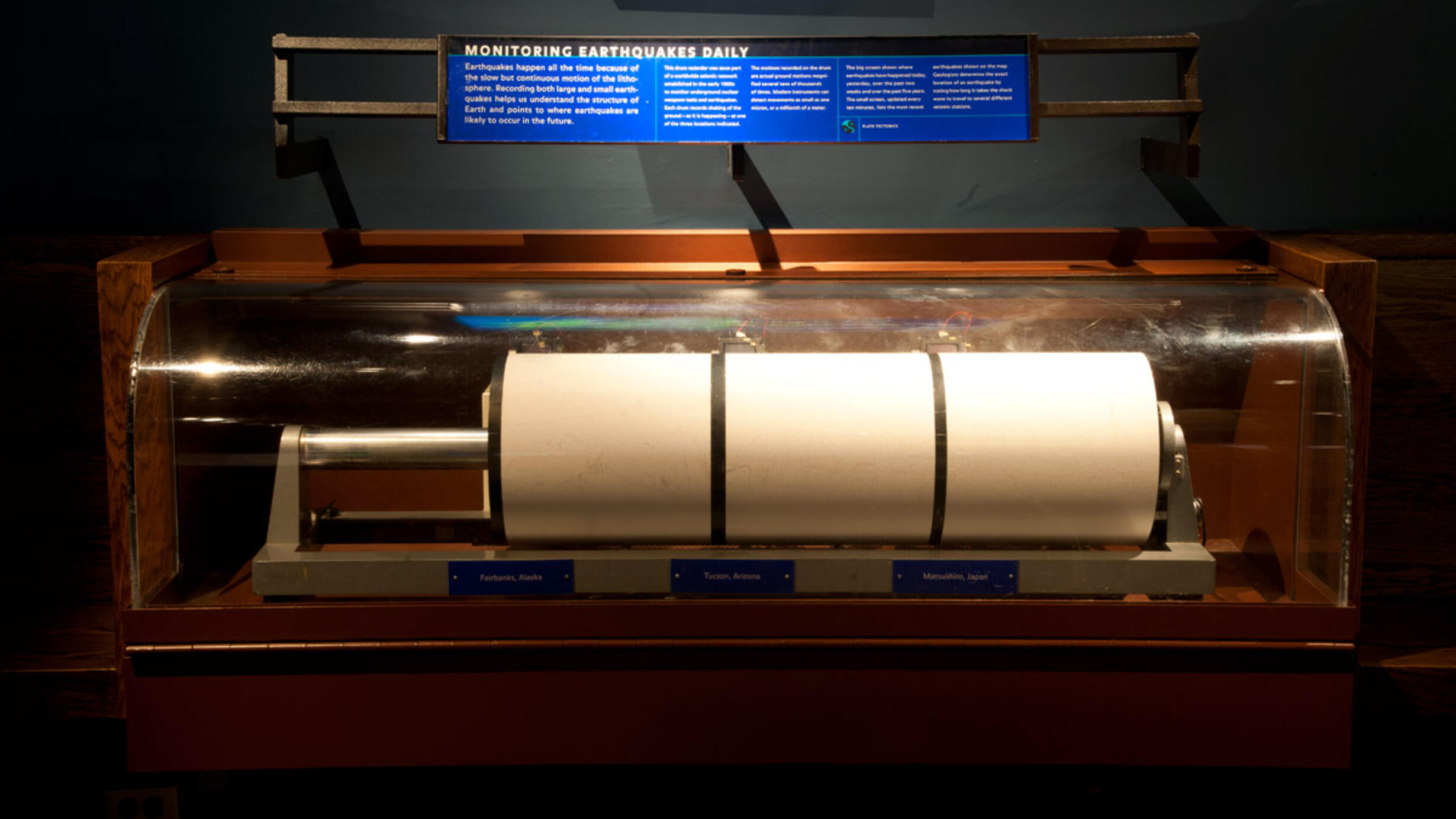
A smoke drum recorder is a mechanical device that records movement as a line on a soot-covered rotating drum.
To understand what is a smoke drum recorder, picture an early laboratory tool that turns motion into a visible trace. Before electronic sensors and digital charts, researchers used this simple device to study breathing, muscle action, heartbeat, vibration, and other changing events. Its design is basic, but it helped shape modern recording instruments and remains useful for teaching the history of science.
What Is a Smoke Drum Recorder?
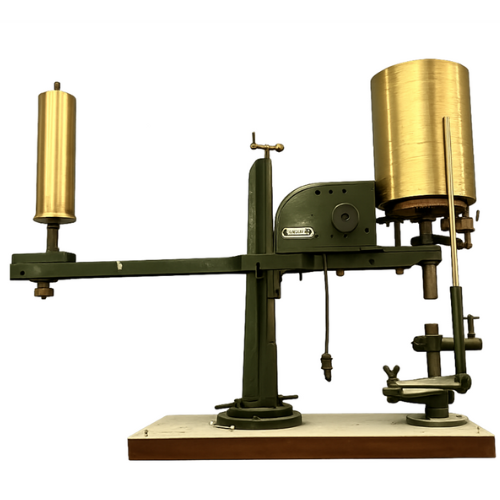
A smoke drum recorder is an instrument that records movement on a rotating drum coated with a thin layer of soot, or smoke. A light writing arm touches the black surface and leaves a clear line as the drum turns.
The drum usually rotates at a steady speed. A sensor, lever, or mechanical connection moves the writing arm up, down, or from side to side. The result is a time-based graph called a trace.
In simple terms, the smoke drum recorder changes motion into a picture. The drum shows when movement happened, how strong it was, and how it changed over time.
The device is also linked to instruments called kymographs. A kymograph records motion against time, often by using a rotating drum and a writing stylus. Some kymographs used smoked paper, while others used ink or another recording method.
How Does a Smoke Drum Recorder Work?
The working principle of a smoke drum recorder is easy to follow. It combines a moving drum, a recording surface, and a writing mechanism.
A typical recording process follows these steps:
- A drum is covered with a thin, even layer of soot.
- The drum rotates at a known speed.
- A stylus or writing lever rests lightly against the drum.
- A biological, mechanical, or physical signal moves the stylus.
- The stylus scratches a line through the soot.
- The finished trace is removed, preserved, or transferred for study.
The rotating drum provides the time scale. The movement of the stylus provides the signal. If the drum rotates faster, the recorded events spread across a longer distance. If it rotates more slowly, the same events appear closer together.
The soot must be thin and smooth. A heavy coating can make the line unclear. A rough coating can cause breaks or false marks. This is one reason careful preparation matters so much when using a smoke drum recorder.
The main parts
Most smoke drum recorders contain several basic parts:
• Rotating drum: Holds the soot-covered recording surface.
• Drive system: Turns the drum at a controlled speed. Early models used clockwork, weights, springs, or hand operation.
• Stylus: Makes a visible mark by touching the soot.
• Lever system: Transfers movement from the subject or sensor to the stylus.
• Support frame: Keeps the parts aligned and reduces unwanted vibration.
• Timing scale: Helps the user compare the trace with time.
Some designs also include a lifting mechanism. This lets the user raise the stylus from the surface without damaging the trace.
What Does a Smoke Drum Recorder Record?
A smoke drum recorder can record many kinds of movement. Its use depends on the sensor or lever attached to it.
In physiology, researchers used similar devices to record:
• Breathing patterns
• Muscle contractions
• Heart or pulse movements
• Blood pressure changes
• Reflex actions
• Movement in isolated organs
In physics and engineering, a smoke drum recorder could show:
• Vibration
• Pendulum motion
• Changes in pressure
• Mechanical displacement
• Repeating cycles
• Short bursts of movement
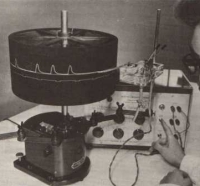
For example, a breathing belt could connect to a lever. Each breath would move the lever. The drum would then show a rising and falling wave. A deep breath might create a taller wave, while rapid breathing might create waves that are closer together.
The trace does not always show the original event directly. Instead, it shows how the event moved the recording mechanism. This difference is important. A weak trace might result from a weak signal, poor contact, friction, or an incorrectly adjusted lever.
Why Was the Smoke Drum Recorder Important?
The smoke drum recorder helped scientists study events that could not be seen easily with the eye. Breathing, muscle force, and small vibrations happen over time. A written trace made those events easier to compare.
Before recording devices became common, researchers often depended on direct observation. That method could miss short changes or small differences. A smoke drum recorder created a lasting record that could be measured later.
Its importance came from three key strengths:
• It made invisible movement visible.
• It connected movement with time.
• It created a physical record for later analysis.
This idea remains central to modern science. Digital monitors, laboratory sensors, and medical instruments still convert real events into graphs. The main difference is that modern devices use electronic signals instead of soot and a mechanical stylus.
The smoke drum recorder was therefore more than an old machine. It was an early example of data visualization. It helped researchers see patterns instead of relying only on memory or guesswork.
Smoke Drum Recorder vs. Kymograph
The terms smoke drum recorder and kymograph are closely related, but they are not always identical.
A kymograph is a broad type of instrument that records movement over time. A smoke drum recorder describes a kymograph or similar device that uses soot as its recording surface.
This means that many smoke drum recorders are kymographs, but not every kymograph is a smoke drum recorder. Some kymographs use ink, wax, photographic paper, or electronic sensors.
The word “kymograph” comes from Greek roots related to movement and writing. The term fits the device because it creates a written record of motion.
A helpful comparison looks like this:
| Feature | Smoke drum recorder | Modern digital recorder |
|---|---|---|
| Recording surface | Soot-covered drum | Computer display or memory |
| Writing method | Mechanical stylus | Electronic sensor |
| Time display | Drum rotation | Digital clock or sampling rate |
| Data storage | Physical trace | Digital file |
| Accuracy | Limited by friction and mechanics | Often much higher |
| Main value | Historical and educational | Research, clinical, or industrial use |
The older system is less precise, but it makes the recording process easy to see. Students can watch the lever move and then follow the line on the drum. That direct connection can make basic measurement concepts easier to understand.
Benefits of a Smoke Drum Recorder
A smoke drum recorder has several useful qualities, especially in education and historical demonstrations.
It gives a direct visual record
The line on the drum shows the movement as it happens. A student can connect a physical action with a visible result.
It does not need complex electronics
A basic model can work with mechanical parts alone. This makes the design easier to understand and repair than many modern systems.
It shows time and movement together
The drum’s rotation creates a time path. The vertical or horizontal change in the trace shows the strength or position of the signal.
It preserves a physical sample
The soot trace can sometimes be transferred to paper or another surface. This gives the observer a record that can be examined after the experiment.
It teaches the roots of modern instruments
Learning how a smoke drum recorder works helps explain the development of spirometers, polygraphs, seismographs, chart recorders, and electronic monitoring systems.
From an educational point of view, the device is like a mechanical ancestor of a computer graph. It shows that data recording does not begin with software. It begins with a way to connect change, time, and a visible mark.
Limitations of a Smoke Drum Recorder
A smoke drum recorder is useful, but it has clear limits. It should not be treated as a modern medical or scientific monitor.
The main limitations include:
• Low recording precision compared with digital sensors
• Friction between the stylus and drum
• Delays caused by levers, springs, and moving parts
• Difficulty keeping drum speed perfectly constant
• Damage to the soot layer during recording
• Limited ability to record several signals at once
• Exposure to soot and smoke during setup
• Need for careful calibration
The writing arm can also affect the movement it is meant to measure. This problem is called loading. For example, a heavy lever may resist a small movement and change the result.
Another issue is timing. If the drum speed changes, the spacing between events no longer represents time accurately. A researcher must know the drum speed and check it during the experiment.
For these reasons, a smoke drum recorder is best used for demonstrations, historical study, and simple mechanical recordings. It is not a substitute for approved medical equipment, laboratory data systems, or safety-tested monitoring devices.

How to Read a Smoke Drum Recorder Trace
Reading the trace requires attention to both the shape of the line and the drum’s time scale.
A taller movement usually means a larger change in the measured signal. The meaning of “taller” depends on the setup. It might represent stronger muscle force, greater pressure, deeper breathing, or larger mechanical movement.
The distance between repeated waves can show timing. Waves that are close together suggest a faster cycle. Waves that are farther apart suggest a slower cycle.
Look for these features:
• Amplitude: The height of a wave or movement.
• Frequency: How often the pattern repeats.
• Period: The time needed for one complete cycle.
• Baseline: The normal resting position of the trace.
• Irregularity: A change from the expected pattern.
• Artifact: An unwanted mark caused by vibration, friction, or handling.
A common mistake is to assume every change in the line represents a change in the subject. Sometimes the cause is mechanical. The stylus may bounce, the drum may slip, or the soot may be uneven.
A reliable analysis compares several cycles instead of judging one mark alone. It also checks the machine setup before drawing a conclusion.

How to Use a Smoke Drum Recorder Safely
A smoke drum recorder should be used in a controlled setting. The soot may come from a flame, and smoke can irritate the eyes and lungs.
Follow these basic precautions:
- Use the device in a well-ventilated area.
- Keep flames away from paper, solvents, and other materials that can burn.
- Allow hot parts to cool before touching them.
- Avoid breathing soot or smoke.
- Wear suitable eye protection when preparing the drum.
- Keep loose clothing and hair away from moving parts.
- Check the frame and drum before operation.
- Never connect the device to a person without proper expert supervision.
- Do not use an old instrument for medical diagnosis.
- Clean the area after the demonstration.
A practical lesson from working with historical instruments is that preparation often matters more than speed. A rushed setup can produce a poor trace and create avoidable safety risks. A slow check of the drum, stylus, drive system, and ventilation usually leads to a much better result.
Common Problems and How to Avoid Them
A weak or unclear trace does not always mean the signal is weak. The problem may come from the recording surface or the mechanical parts.
Uneven soot
An uneven surface creates gaps and dark patches. Apply the soot as evenly as possible and avoid touching the drum after preparation.
Too much stylus pressure
Heavy pressure can scrape away too much soot and slow the drum. Use the lightest contact that still creates a clear line.
Drum speed changes
A loose drive system can change the time scale. Check the rotation speed before recording and repeat the check after the session.
Loose connections
A loose lever can create extra movement. Secure each connection, but do not tighten it so much that the signal cannot move freely.
Vibration
A shaky table or nearby machine can create false waves. Place the recorder on a stable surface and isolate it from strong vibration.
Poor calibration
Without calibration, the trace may look meaningful but have no reliable measurement value. Test the system with a known movement before recording the real signal.
These problems explain why historical traces must be read with care. The line is evidence, but it is not perfect evidence. Good interpretation considers both the signal and the instrument that produced it.
Modern Alternatives to a Smoke Drum Recorder
Modern systems use electronic sensors and software to record movement. Examples include digital data loggers, pressure sensors, accelerometers, respiratory belts, and computer-based chart recorders.
These systems offer several advantages:
• Higher sensitivity
• Better timing accuracy
• Easier data storage
• Automatic calculations
• Multiple channels
• Simple sharing and analysis
Still, modern tools can hide the basic process. A screen may display a graph without showing how the signal was created. A smoke drum recorder makes that process visible from start to finish.
For teaching, a useful approach is to compare both systems. Students can observe a movement on the mechanical recorder, then view the same event on a digital graph. This shows that the technology changed, while the basic idea stayed the same.
The old device records motion with a stylus. The new device records motion with a sensor. Both turn change into a trace that people can study.
Frequently Asked Questions About What Is a Smoke Drum Recorder
What is a smoke drum recorder used for?
A smoke drum recorder is used to record movement over time. It has been used to study breathing, muscle contractions, pressure changes, vibrations, and other mechanical signals.
Is a smoke drum recorder the same as a kymograph?
Not exactly. A kymograph is a general type of motion-recording instrument, while a smoke drum recorder is a version that uses soot on a rotating drum.
Why does a smoke drum recorder use soot?
Soot creates a dark, smooth surface that can be marked by a stylus. When the stylus moves, it removes the soot and leaves a visible line.
Can a smoke drum recorder measure heartbeat?
Some historical instruments recorded pulse or heart-related movement through mechanical connections. However, a smoke drum recorder should not be used to diagnose heart conditions or replace approved medical equipment.
What is the main weakness of a smoke drum recorder?
Its main weakness is limited accuracy. Friction, uneven soot, changing drum speed, vibration, and lever movement can all affect the recorded trace.
Are smoke drum recorders still used today?
They are mainly used for historical demonstrations, science education, museum displays, and study of early laboratory equipment. Modern research usually relies on electronic sensors and digital recording systems.
Who invented the kymograph?
The kymograph is commonly associated with Carl Ludwig, who developed an early version in the 19th century. Later instruments used similar ideas with improved recording surfaces and mechanical systems.
Conclusion
A smoke drum recorder is a mechanical instrument that turns movement into a visible line on a soot-covered rotating drum. It helped early researchers study breathing, muscle action, pressure, vibration, and other events that change over time.
Its value comes from its simple idea: one part creates motion, one part tracks time, and a stylus records the result. Although modern digital tools are more accurate and safer for clinical work, the smoke drum recorder remains an important teaching tool and a key step in the history of scientific measurement.
If you study one, focus on calibration, gentle stylus pressure, steady drum speed, and careful interpretation. Explore related instruments such as kymographs and modern digital sensors to see how the same recording principle continues to shape science today.

Senior Music Reviewer
Alex Carter is a seasoned music reviewer with over a decade of experience in the world of sound and instruments. Passionate about helping musicians and enthusiasts make informed choices, he brings sharp insights and in-depth knowledge to every review. From classical instruments to modern gear, Alex combines technical expertise with a love for music to deliver content that resonates with readers.
As a Senior Music Reviewer and expert author on Tuneluma.com, Alex is dedicated to sharing honest evaluations, practical advice, and thoughtful commentary to guide readers in their musical journey.