How Many Keys On A Piano Are White: Quick Answer
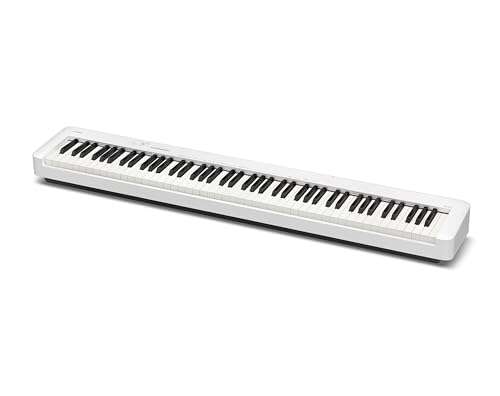
A standard 88-key piano has 52 white keys and 36 black keys.
Knowing how many keys on a piano are white helps beginners understand the keyboard, learn note names, and choose the right instrument. The answer is simple for a full-size piano, but smaller keyboards and historic pianos can have different layouts. This guide explains the count, the reason behind it, and how to check any piano with confidence.
How Many Keys on a Piano Are White?
A standard modern piano has 52 white keys. It also has 36 black keys, making 88 keys in total.
The white keys play the natural notes:
• A
• B
• C
• D
• E
• F
• G
These seven notes repeat across the keyboard. The black keys play sharp and flat notes, such as C-sharp or D-flat.
When people ask how many keys on a piano are white, they usually mean a full-size acoustic or digital piano. In that case, the correct answer is 52 white keys.
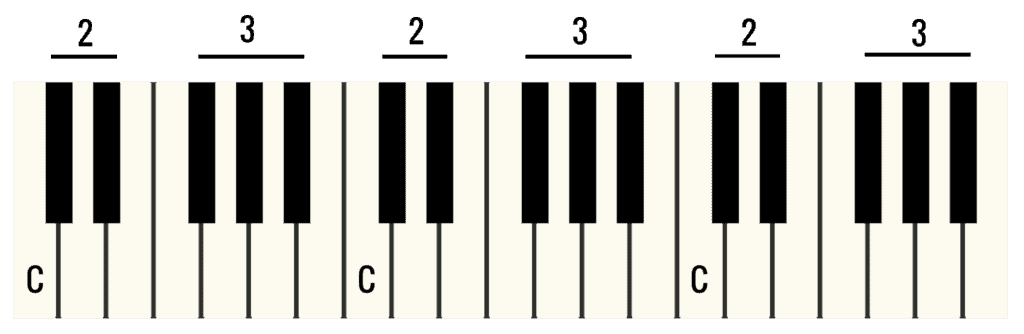
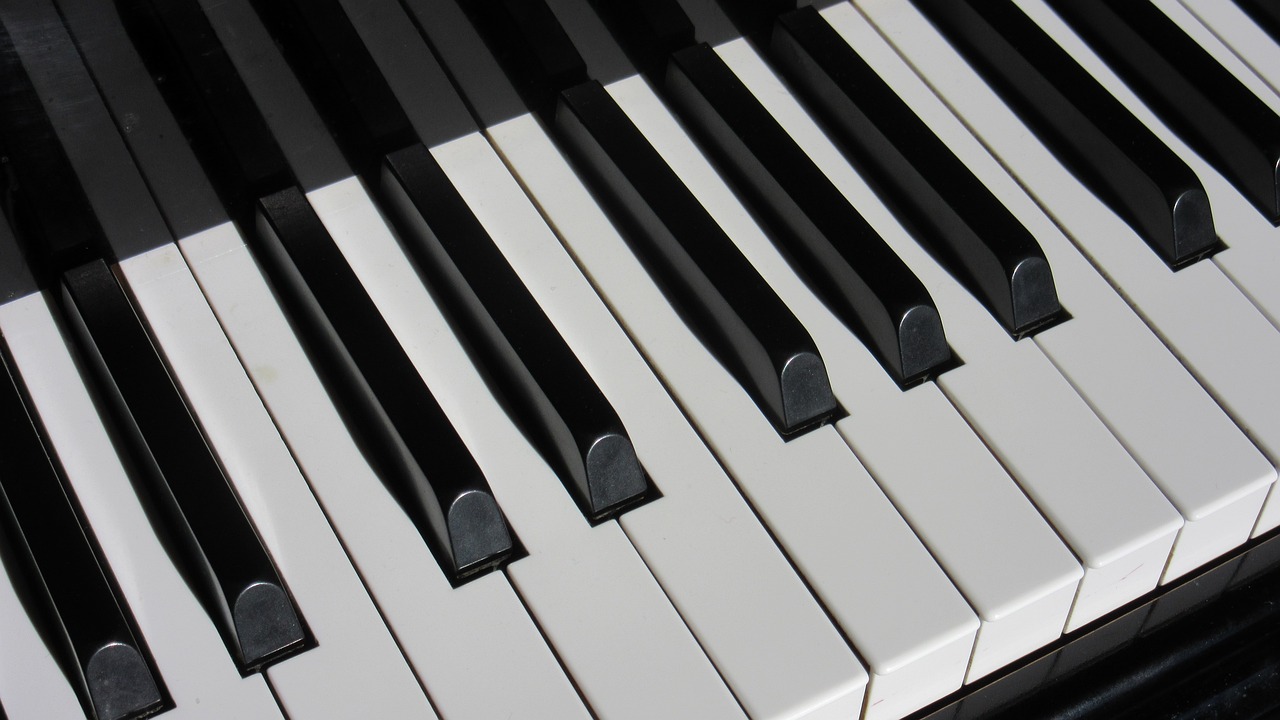
The white keys are also called natural keys. They form the main visual and musical pattern of the keyboard. The black keys sit in groups of two and three, which helps players find notes quickly.

Why Does a Standard Piano Have 52 White Keys?
The 52 white keys come from the piano’s musical range. A standard 88-key piano begins at A0 and ends at C8. This range includes more than seven full octaves.
Each full octave contains seven white keys:
- C
- D
- E
- F
- G
- A
- B
A full piano has seven complete groups of seven white keys, which equals 49. The extra three white keys extend the range at each end, bringing the total to 52.
This layout gives the piano a broad range. It can play deep bass notes, rich middle notes, and bright high notes on one instrument.
The answer to how many keys on a piano are white is tied to this note pattern, not just to the physical size of the keyboard. A piano with fewer keys may still use the same repeating musical system.
How Are the 52 White Keys Arranged?
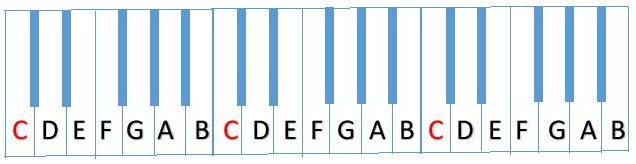
The white keys follow a repeating pattern of seven natural notes. Once you learn the order, you can identify every white key on the piano.
The pattern is:
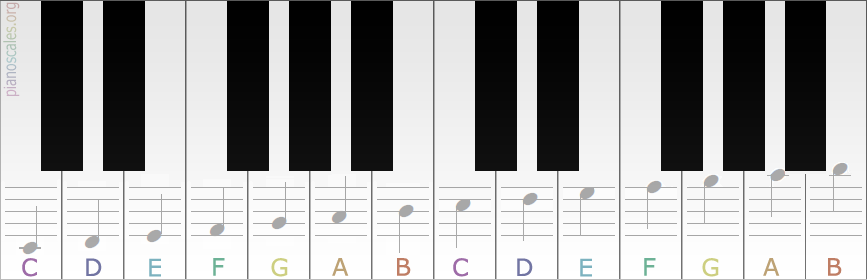
C, D, E, F, G, A, B
Then the pattern starts again at C in the next octave.
The black keys help you locate the white keys. Around the group of two black keys, the white key to the left is C. Around the group of three black keys, the white keys are F, G, and A in sequence.
This pattern is one reason the piano is friendly for beginners. Unlike some instruments, the notes are laid out in a straight line. The keyboard gives you a clear map of pitch.
If you are learning how many keys on a piano are white, count the natural keys from the lowest A to the highest C. On a full-size piano, the result will be 52.
White Keys Versus Black Keys
The white keys and black keys have different musical roles, but both are essential.
White keys play natural notes. Black keys play altered notes, usually called sharps or flats. For example, the black key between C and D can be called C-sharp or D-flat.
A standard 88-key piano contains:
| Key type | Number of keys | Common name |
|---|---|---|
| White keys | 52 | Natural keys |
| Black keys | 36 | Sharp and flat keys |
| Total keys | 88 | Full-size keyboard |
There is one important detail: the black keys do not appear between every pair of white keys. There is no black key between E and F or between B and C.
That gap creates the familiar pattern of two black keys followed by three black keys. It also makes it easier to find notes without counting every key.
When someone asks how many keys on a piano are white, they may also be comparing white keys with black keys. The 52-to-36 split is the standard answer for an 88-key piano.

Do All Pianos Have 52 White Keys?
No. Only a standard 88-key piano has 52 white keys in the usual layout.
Many keyboards are shorter. Their white-key count depends on the total number of keys and the starting and ending notes.
Common keyboard sizes include:
• 25 keys for compact controllers
• 37 keys for small portable keyboards
• 49 keys for many music-production controllers
• 61 keys for beginner and intermediate keyboards
• 76 keys for some stage pianos
• 88 keys for full-size pianos
A 61-key keyboard may have fewer than 52 white keys. The exact number can vary because some models begin or end on different notes.
For example, a keyboard that starts and ends on white notes may have a different white-key count from one that includes a partial range. Always check the model’s specifications instead of guessing from the key count alone.
So, the answer to how many keys on a piano are white depends on the instrument. For a full-size 88-key piano, it is 52. For a compact keyboard, it may be much lower.
How to Count White Keys on Any Piano
You can count the white keys by hand, but there is a faster method.
Method 1: Count the natural keys
Start at the lowest white key and count each white key until you reach the highest one. Do not count the black keys.
This method works well for small keyboards. It also helps children connect the physical keys with the notes they are learning.
Method 2: Use the total key count
If the piano follows a standard 88-key design, you already know the answer:
88 total keys minus 36 black keys equals 52 white keys.
This method is quick, but it works best for a normal full-size piano. Smaller keyboards may not follow the same range.
Method 3: Look for the C pattern
Find the groups of two and three black keys. The white key just to the left of each pair of black keys is C.
From there, count the white keys across the keyboard. This approach also gives you useful practice with note recognition.
A common beginner mistake is to count the spaces between keys rather than the keys themselves. Touch each natural key as you count. That simple habit prevents missed notes.
Why the Number of White Keys Matters for Beginners
The number of white keys tells you how much musical range an instrument offers. A full-size piano can support beginner exercises, advanced classical pieces, jazz chords, and large arrangements.
For a new player, 52 white keys can seem like a lot. In practice, most beginner songs use a small section near middle C. You do not need to memorize the entire keyboard at once.
Start with these notes:
• C near the center of the keyboard
• D next to C
• E next to D
• F, G, A, and B in order
Then learn the same pattern in higher and lower octaves.
Understanding how many keys on a piano are white can also help when buying an instrument. A 61-key keyboard may be enough for lessons and pop music, while an 88-key piano is better for classical study and full piano technique.
Standard Piano Range and Octaves
An octave is the distance between one note and the next note with the same name. For example, the distance from one C to the next C is one octave.
A standard 88-key piano contains:
• 52 white keys
• 36 black keys
• 12 notes in each chromatic octave
• A range from A0 to C8
• More than seven octaves of pitch
The white keys do not divide into exactly seven complete octaves because the keyboard starts on A and ends on C. That is why the total is 52 rather than 49.
This range is one of the piano’s greatest strengths. A player can create a deep bass line with the left hand and a high melody with the right hand at the same time.
When you understand how many keys on a piano are white, the full layout becomes less mysterious. It is a repeating system with a carefully extended range at both ends.
Historic Pianos and Different Key Counts
Modern pianos were not always built with 88 keys. Earlier pianos often had shorter keyboards because composers and builders were still developing the instrument.
Some historic pianos had around 61 keys. Others had 66, 73, 78, or 85 keys. Their number of white keys depended on the starting and ending notes.
For example, an 85-key piano may not have the same white-key count as a modern 88-key piano. It could begin or end at a different point in the musical range.
This matters when reading older music or studying period instruments. A piece written for an early piano may not use the full range found on a modern concert piano.
The standard 88-key design became widely accepted because it provides a useful range for most music. Still, the question how many keys on a piano are white has more than one answer when historic and portable instruments are included.
Practical Tips for Learning the White Keys
Learning all 52 white keys at once can feel like trying to memorize a long road. Use landmarks instead.
Try these simple steps:
- Find every group of two black keys.
- Identify the white key just to the left as C.
- Say the notes C, D, and E.
- Find a group of three black keys.
- Identify the white keys around that group as F, G, A, and B.
- Repeat the pattern across the keyboard.
- Practice naming notes without looking at a chart.
A useful exercise is to play every white key slowly while saying its name aloud. Then play the notes backward from the highest key to the lowest.
In my experience, beginners often make the mistake of staring at the entire keyboard and feeling overwhelmed. Focusing on the repeating black-key groups makes the instrument feel smaller and easier to understand.
You can also place small removable note labels on a practice keyboard. Remove them after a few days so your eyes and hands learn to recognize the pattern naturally.
Common Mistakes When Counting Piano Keys
Counting piano keys seems easy, but several errors are common.
Mistaking a keyboard for a full piano
A 61-key keyboard does not have the same number of white keys as an 88-key piano. Check the total key count and the model’s note range.
Counting black keys as white keys
The raised keys are black keys, even when their plastic color is unusual. Some digital pianos use different finishes, so identify them by position and function.
Assuming every piano starts at C
A standard piano begins at A0, not C. This is why the white-key total does not equal exactly seven times seven.
Forgetting that notes can have two names
A black key can be called a sharp or a flat. This does not change the total number of white keys.
Counting only visible keys
Some compact digital instruments use split zones, touch strips, or unusual layouts. Count the actual playable keys listed in the specifications.
These details explain why the answer to how many keys on a piano are white should always include the instrument type.
How Many Keys on a Piano Are White: Quick Facts
Here are the key facts in one place:
• A standard piano has 88 keys.
• A standard piano has 52 white keys.
• A standard piano has 36 black keys.
• White keys play natural notes.
• Black keys play sharps and flats.
• The standard range runs from A0 to C8.
• Smaller keyboards may have fewer white keys.
• Historic pianos may use different key counts.
The most useful fact to remember is simple: 52 white keys belong to the standard 88-key piano.
Frequently Asked Questions About How Many Keys on a Piano Are White
How many white keys are on a full-size piano?
A full-size 88-key piano has 52 white keys. The other 36 keys are black.
How many white keys are on a 61-key keyboard?
A 61-key keyboard usually has fewer than 52 white keys, but the exact number depends on its starting and ending notes. Check the manufacturer’s range for a precise count.
Are white piano keys called natural keys?
Yes. White piano keys are commonly called natural keys because they play the natural notes A, B, C, D, E, F, and G.
Why are there no black keys between E and F?
There is no separate sharp or flat pitch between E and F in the standard Western musical system. The same is true for B and C.
Does every piano have 88 keys?
No. Most modern full-size pianos have 88 keys, but smaller keyboards, historic pianos, and some specialty instruments have different numbers.
Is 52 white keys enough for beginners?
Yes. A full-size piano offers more than enough range for beginners. Many early songs use only a small group of notes near middle C.
Conclusion
A standard 88-key piano has 52 white keys and 36 black keys. The white keys play the seven natural notes, while the black keys play sharps and flats. Smaller keyboards and historic pianos can have different totals, so the instrument’s size and range always matter.
Use the groups of two and three black keys as landmarks when learning the keyboard. Once you can find C and follow the repeating note pattern, all 52 white keys become much easier to understand. Explore your keyboard, practice naming the notes, and share your questions or learning progress in the comments.

Senior Music Reviewer
Alex Carter is a seasoned music reviewer with over a decade of experience in the world of sound and instruments. Passionate about helping musicians and enthusiasts make informed choices, he brings sharp insights and in-depth knowledge to every review. From classical instruments to modern gear, Alex combines technical expertise with a love for music to deliver content that resonates with readers.
As a Senior Music Reviewer and expert author on Tuneluma.com, Alex is dedicated to sharing honest evaluations, practical advice, and thoughtful commentary to guide readers in their musical journey.