Best Classical Piano Pieces For Advanced Players: Top Picks
The best classical piano pieces for advanced players combine musical depth, technical challenge, and lasting recital value.
You may know the notes but still feel unsure what to study next. A large piano anthology can help, yet not every book suits an advanced player. Some focus on early works, while others offer a wide mix of famous solos. I compared the listed collections for repertoire range, playing level, print value, and practical use in lessons, practice, and performance. The goal is simple: help you find music that stretches your skill without wasting your time.
Library of Piano Classics

The Library of Piano Classics is a broad solo collection for players who want famous works in one practical book. Its intermediate-to-advanced focus makes it useful for pianists who have moved beyond basic method pieces. The selection can serve as a bridge between study music and serious recital repertoire. I especially like this type of book for players who want variety without buying a separate volume for every composer.
This collection works well when you need to compare styles. A pianist can move from a clear Baroque texture to a more dramatic Romantic work and then test a lyrical piece. That range helps build style awareness, not just finger speed. It is one of the most useful starting points for exploring the best classical piano pieces for advanced players, although very advanced students may still need separate scholarly editions for major sonatas and concert works.
Pros:
- Wide mix of well-known classical piano works
- Useful for home study and lesson planning
- Good bridge from intermediate to advanced repertoire
- Offers variety across musical periods
- Can reduce the need to buy many short books
- Suitable for adult learners and returning pianists
Cons:
- May not include every major work an advanced concert pianist needs
- Difficulty can vary from one piece to the next
- Players may prefer separate editions for detailed fingerings and notes
My Recommendation
I recommend this book for an advanced hobbyist, adult pianist, or teacher who wants a flexible shelf starter. It gives you many directions to explore and supports a balanced practice plan. It is not a replacement for a complete Beethoven, Chopin, or Bach edition. Still, it offers strong value when you want accessible versions of the best classical piano pieces for advanced players.
| Best for | Why |
|---|---|
| Repertoire discovery | It gives you many styles in one volume. |
| Adult advanced learners | It supports steady study without a narrow focus. |
| Teachers | It provides varied pieces for different student needs. |
Piano Masterworks: Early Advanced Level

Piano Masterworks – Early Advanced Level is the most direct match for pianists who need a clear step into advanced literature. The level label matters because it helps prevent a common mistake: choosing pieces that sound impressive but sit far beyond your current control. Early advanced music can still demand clean voicing, smart pedaling, and careful rhythm. It also gives you room to grow instead of forcing you to fight every measure.
I see this book as a useful training ground before tackling the hardest Liszt études or late-Romantic concert works. It can help you build control, phrasing, and endurance through a varied set of masterworks. The Schirmer format also makes it practical for teachers, studios, and organized practice. For pianists searching for the best classical piano pieces for advanced players, this collection offers a sensible level target and a strong path forward.
Pros:
- Clearly aimed at early advanced players
- Supports gradual progress toward harder repertoire
- Useful for technique, phrasing, and musical control
- Good fit for teachers and structured lessons
- Offers more focus than a general beginner anthology
- Helps players choose music within a realistic range
Cons:
- Early advanced players may outgrow some selections
- It may not satisfy pianists seeking extreme virtuoso works
- Edition details may feel basic beside specialist scholarly editions
My Recommendation
This is my top choice for a pianist who wants the best classical piano pieces for advanced players but still values a manageable workload. It suits serious students, adult learners with solid technique, and teachers building a first advanced program. Choose it if you want music that challenges you while leaving space for interpretation. Its level-based design gives it better practical value than a random collection of difficult titles.
| Best for | Why |
|---|---|
| Early advanced study | The level helps you avoid a poor repertoire match. |
| Technique building | It develops control before extreme virtuoso demands. |
| Lesson programs | Teachers can assign pieces with a clear skill goal. |
Piano Masterworks: Early Intermediate Level

Piano Masterworks Early Intermediate Level is not an advanced book, but it still deserves attention in a serious piano library. It includes 144 classical pieces and features composers such as Bach and Beethoven. Advanced players can use this kind of collection to revisit fundamentals, coach younger students, or refresh musical habits after a long break. Easy does not mean useless; simple music exposes weak rhythm, uneven touch, and poor phrasing very quickly.
This book also makes a helpful warm-up source. A skilled pianist can use short, clear pieces to focus on articulation, balance, and tone without spending weeks learning notes. It may serve as a teaching resource rather than a main recital book for an advanced player. If your search for the best classical piano pieces for advanced players includes coaching, review, or family instruction, this collection offers practical value.
Pros:
- Large selection of 144 pieces
- Useful for teaching and student assignments
- Good material for sight-reading practice
- Helps reinforce rhythm and basic musical style
- Includes recognizable major composers
- Can provide short pieces for quick daily work
Cons:
- Too easy for most advanced recital programs
- May not provide enough technical stretch
- Experienced players may use only a small part of the book
My Recommendation
I recommend this volume for piano teachers, advanced players who mentor beginners, and pianists rebuilding their skills. It is also a smart companion book for sight-reading. Do not buy it as your only source of advanced repertoire. Buy it when you need clean, teachable pieces that support the larger journey toward the best classical piano pieces for advanced players.
| Best for | Why |
|---|---|
| Teachers | The large selection gives lessons plenty of options. |
| Sight-reading | Shorter works make daily reading less tiring. |
| Skill review | Clear textures reveal gaps in rhythm and touch. |
100 of the Most Beautiful Piano Solos Ever

This collection takes a broad view of piano music. Along with classical selections, it includes popular, jazz, film, and Broadway solos. That mix can be useful for a pianist who performs for friends, church groups, community events, or casual gatherings. It gives you more ways to keep playing when you want a break from dense classical study.
Advanced musicians should view this book as a variety resource, not a pure classical syllabus. Some pieces may be arranged for accessibility, so they may not offer the full technical and artistic depth of an original concert score. Even so, beautiful melodies help develop sound, timing, and expressive control. Among the best classical piano pieces for advanced players, lyrical works can teach as much about musical speech as fast passagework.
Pros:
- Very broad selection of 100 piano solos
- Includes classical and nonclassical styles
- Useful for parties, recitals, and casual performance
- Good source of melodic and expressive pieces
- Helps prevent practice fatigue through variety
- Appeals to adult pianists with mixed musical tastes
Cons:
- Not a strictly classical collection
- Arrangements may be less demanding than original scores
- Advanced players may need a deeper edition for serious study
My Recommendation
Choose this book if you want a flexible piano library rather than a formal advanced course. It is best for adult players, entertainers, and pianists who enjoy moving between classical, jazz, film, and stage music. I would pair it with a dedicated advanced masterworks book. That combination gives you both the best classical piano pieces for advanced players and lighter music for relaxed playing.
| Best for | Why |
|---|---|
| Mixed musical taste | You can change style when your mood changes. |
| Casual performance | Familiar melodies work well for many audiences. |
| Expressive practice | Lyrical solos help refine tone and phrasing. |
Library of Piano Classics: Large Print

The large-print edition of The Library of Piano Classics contains 51 beloved classical pieces. Its main advantage is easy reading. Larger notation can reduce eye strain, improve page tracking, and make practice more comfortable for older players or anyone who uses a dim music stand. This may sound like a small detail, but clear notation can make a long practice session feel much less tiring.
The repertoire suits beginners through advanced players, so difficulty will vary. Advanced pianists may find some selections too familiar or easy, but they can still use the book for warm-ups, teaching, and quick repertoire refreshers. I also like large print for players who memorize in sections and need to glance back at the score. For anyone comparing the best classical piano pieces for advanced players, readability deserves a place beside difficulty.
Pros:
- Large notation is easier to read
- Includes 51 familiar classical works
- Helpful for older eyes and long practice sessions
- Useful for teachers and shared piano studios
- Simple format makes pieces easy to find
- Good companion for memorization and review
Cons:
- Only some selections will challenge an advanced pianist
- Large print can make the book less compact
- It may not include detailed performance commentary
My Recommendation
This is the best choice for players who value comfort and visibility. It fits older adults, pianists with vision concerns, and teachers who want readable music at the piano. Advanced players should treat it as a supplementary volume rather than a complete high-level program. If page clarity affects your practice, this edition can make the best classical piano pieces for advanced players easier to live with every day.
| Best for | Why |
|---|---|
| Large notation | The print is easier to track at the keyboard. |
| Older pianists | It may reduce visual strain during practice. |
| Teaching studios | Shared reading becomes more comfortable. |
Big Book of Beginner’s Piano Classics
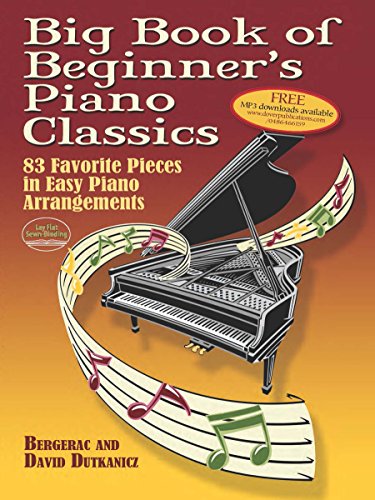
The Big Book of Beginner’s Piano Classics includes 83 favorite pieces in easy arrangements and comes with downloadable MP3 support. It is aimed at beginners, so advanced pianists should not expect demanding fingerwork or full concert versions. Its strength is approachability. The book can help a learner meet famous themes without the fear that often comes with a thick advanced score.
Why include it in this guide? Good advanced players often teach, accompany, or help family members learn. A simple anthology can also support sight-reading, warm-ups, and musical relaxation. The audio downloads may help a newer player hear the basic shape of each work before playing it. It is not a top pick for advanced repertoire, but it can support the foundation beneath the best classical piano pieces for advanced players.
Pros:
- 83 pieces offer strong quantity for the price
- Easy arrangements reduce entry barriers
- Downloadable MP3 files can support learning
- Useful for beginners and family instruction
- Good source for basic sight-reading
- Familiar works can keep new players motivated
Cons:
- Too easy for an experienced advanced pianist
- Arrangements may omit original technical detail
- Less suitable for formal advanced recitals
My Recommendation
I recommend this book only as a support volume for advanced players. It is best for teaching beginners, helping a returning pianist, or keeping short classical pieces close at hand. If your goal is a demanding solo program, choose the early advanced Schirmer book instead. Still, every strong pianist benefits from having easy music available, and this collection offers good practical value for that role.
| Best for | Why |
|---|---|
| Beginner teaching | Easy versions make famous music less daunting. |
| Audio-assisted study | MP3 files can model the general musical shape. |
| Quick warm-ups | Short pieces help start a practice session. |
Easy Piano Classics

Easy Piano Classics offers 97 pieces for early and intermediate players. The book is designed to make classical music playable without the full weight of advanced original scores. That makes it a useful first step for learners who want to build confidence. It also gives experienced pianists a large bank of short pieces for reading practice and teaching.
Advanced players should be honest about what this collection can do. It will not replace original Chopin, Beethoven, or Bach editions when technical and stylistic detail matters. However, easy arrangements can help a pianist focus on melody, pulse, and clean coordination. I consider it a practical companion for anyone building toward the best classical piano pieces for advanced players rather than a final destination.
Pros:
- Contains 97 accessible classical pieces
- Good for early study and steady progress
- Useful for beginner and intermediate teaching
- Supports sight-reading and rhythm work
- Lets players sample many composers quickly
- Usually less frustrating than difficult original scores
Cons:
- Does not target advanced technique
- Easy arrangements may simplify important textures
- Serious performers will need more complete editions
My Recommendation
Buy this book if you need a friendly collection for a developing pianist or a teaching studio. Advanced players can use it as a warm-up and sight-reading resource, but not as their main repertoire book. Its value comes from ease, range, and low practice pressure. Pair it with original advanced works when you are ready for deeper study.
| Best for | Why |
|---|---|
| Early learners | The arrangements make classical music more playable. |
| Sight-reading | Many short works encourage regular reading. |
| Technique review | Simple textures let you check basic control. |
First 50 Classical Pieces You Should Play

First 50 Classical Pieces You Should Play on the Piano is a beginner-to-intermediate collection. Its purpose is clear: introduce players to a set of timeless classical works in approachable arrangements. That makes it a useful guide for someone who feels lost at the start of a repertoire search. The book can also help an advanced pianist choose pieces for a new student.
This is not a high-level performance anthology. An advanced player may find the technical demands modest, but the selected musical ideas still matter. Early exposure to dance forms, song-like phrases, and clear cadences helps create habits that later support demanding sonatas and études. I would use it as a teaching and orientation book beside, not instead of, the best classical piano pieces for advanced players.
Pros:
- Clear starting point for classical piano study
- Contains 50 recognizable pieces
- Useful for teachers and new adult learners
- Supports a gradual path from beginner to intermediate
- Good for choosing first composer studies
- Can make repertoire planning feel less confusing
Cons:
- Not difficult enough for advanced solo performance
- Arrangements may be too simple for experienced pianists
- Limited use for a demanding recital program
My Recommendation
I recommend this collection for a new pianist, a returning adult, or a teacher planning the first year of study. Advanced players should buy it only if they teach or want an easy reference to core repertoire. Its strongest feature is its clear progression and friendly scope. It can help build the road that leads to the best classical piano pieces for advanced players.
| Best for | Why |
|---|---|
| New classical students | The book offers a clear first repertoire list. |
| Adult beginners | Approachable pieces can build early confidence. |
| Teachers | It supplies familiar works for early assignments. |
65 Famous Classical Pieces for Solo Piano

This 65-piece solo piano collection covers a wide composer list, including Bach, Beethoven, Chopin, Debussy, Mendelssohn, Scarlatti, Schubert, and Tchaikovsky. That range is its main selling point. It gives a pianist a fast way to compare different sounds, forms, and keyboard styles. For a home library, this kind of broad survey can be more useful than a book centered on one period.
The key question is arrangement quality and level. Because the title gathers works from many composers, difficulty and depth may vary. Advanced players should check whether a chosen piece uses an original text or an easier arrangement before preparing it for a serious recital. Still, the book is a strong discovery tool for anyone seeking the best classical piano pieces for advanced players across several eras.
Pros:
- Strong composer variety in one volume
- Includes Baroque, Classical, Romantic, and modern color
- Useful for repertoire exploration
- Works well for home practice and casual performance
- Includes many famous names students recognize
- Can help compare style and musical character
Cons:
- Difficulty may change sharply between pieces
- Some works may be simplified or arranged
- Advanced performers may want urtext editions for final study
My Recommendation
This is a good choice for the pianist who wants breadth above all else. It suits adult learners, teachers, and advanced hobbyists who want to sample composers before buying larger individual volumes. I would not rely on it alone for a conservatory audition. As a discovery book, however, it makes finding the best classical piano pieces for advanced players much faster.
| Best for | Why |
|---|---|
| Composer sampling | You can explore many major voices in one book. |
| Home libraries | One volume gives broad repertoire coverage. |
| Program ideas | It can spark choices for future deeper study. |
Beethoven: Selected Piano Pieces

This Beethoven collection includes 35 short solo works, sonatas, bagatelles, rondos, and dances. That mix gives it more personality than a generic classical anthology. Beethoven’s shorter pieces can look simple on the page, yet they demand sharp rhythm, strong contrast, and a clear sense of direction. They are excellent study material for pianists who want to improve musical authority.
The early intermediate to intermediate label means advanced players will not find every selection difficult. Still, Beethoven’s music rewards mature playing at any level. A skilled pianist can return to a familiar bagatelle and discover new work in timing, touch, and dynamic shape. This makes the collection a useful stepping stone toward the best classical piano pieces for advanced players, especially Beethoven’s larger sonatas.
Pros:
- Focused collection from one essential composer
- Includes several different Beethoven forms
- Short works fit daily practice well
- Excellent for rhythm and dynamic contrast
- Useful preparation for larger Beethoven sonatas
- Good choice for teachers and adult pianists
Cons:
- Many pieces are below advanced difficulty
- It does not provide Beethoven’s complete sonata cycle
- Players seeking advanced virtuoso works may need another volume
My Recommendation
Choose this book if Beethoven is part of your long-term piano plan. It suits developing players who want a focused composer study and advanced pianists who enjoy revisiting short works. I especially recommend it for learning how to shape strong phrases without hiding behind pedal. It is a smart, affordable addition to a search for the best classical piano pieces for advanced players.
| Best for | Why |
|---|---|
| Beethoven study | The book offers several forms in one focused volume. |
| Short daily practice | Many selections fit a limited practice window. |
| Musical control | Beethoven exposes weak rhythm and unclear phrasing. |
How I Judge Advanced Classical Piano Repertoire
Difficulty alone does not define the best classical piano pieces for advanced players. A piece can run fast and still lack musical value for your current goal. I look at four points: technical demand, artistic depth, edition quality, and fit for the player. A strong book should help you grow, not simply give you notes that look difficult.
Technical demand includes more than speed. It may involve wide leaps, repeated chords, polyphonic balance, octaves, fast scales, awkward hand positions, or long-form endurance. Artistic demand can be even greater. You must shape a phrase, control a climax, manage silence, and make the music sound natural rather than practiced.
Edition quality also matters. For major works, I prefer a reliable score with clear notation and useful editorial information. Fingerings can help, but I do not treat one printed fingering as a rule. A good player tests it against hand size, sound, phrasing, and physical comfort.
Finally, think about your purpose. A teacher may need accessible pieces with clear goals. A recital pianist may need a complete original text. An adult learner may want famous music that fits a busy schedule. The right book is the one that supports your real life and your musical direction.
How to Choose the Best Classical Piano Pieces for Advanced Players
Start with your current strengths. If your fingers move well but your sound feels flat, choose lyrical works that require voicing and color. If you play expressively but lose pulse, study a piece with clear dance rhythm or counterpoint. If endurance limits you, do not begin with a long sonata movement. Build stamina with smaller works first.
Next, consider the composer and period. Bach can sharpen independence between voices. Mozart can reveal uneven touch at once. Beethoven can develop structure and contrast. Chopin can test tone, rubato, and inner balance. Debussy can refine pedaling and color. Each period acts like a different lens for your technique.
Read through the score before you commit. Check the key, tempo, length, repeated patterns, large leaps, and dense sections. Play a small sample at a slow pace. If the music feels impossible even after careful reading, save it for later. Ambition is helpful, but a good repertoire plan should feel like a steep path, not a cliff.
Also check the intended level. Publishers use labels such as intermediate, early advanced, and advanced, but these terms are not perfectly uniform. One book’s advanced piece may be another book’s upper-intermediate work. Look at the actual notes and your teacher’s advice. The best classical piano pieces for advanced players should challenge your weak areas while still allowing musical progress.
Practice Advice for Difficult Classical Piano Pieces
Divide the work into small sections. I often begin with two to four measures, then connect them only after the motions feel stable. Slow practice is useful when it solves a problem. Slow practice without attention can simply teach slow mistakes.
Practice hands separately when the texture is complex. This works especially well in Bach, where each line needs a distinct shape. It also helps in Romantic music when one hand carries the melody and the other supports it. Bring the hands together early enough to learn coordination, but do not rush that step.
Use rhythms to train fast passages. Play a group of notes with a long-short pattern, then reverse it. Change the accents, but keep the hand relaxed. This method can expose weak fingers and help the passage become even. Return to the written rhythm often so the exercise does not change the music’s natural flow.
Do not add full pedal too soon. First make the fingers and rhythm clear. Then test half pedal, quick changes, and longer resonance. A blurred sound may feel rich under your ear but hide poor harmony. The best classical piano pieces for advanced players need color, not fog.
Record yourself once a week. A phone recording can reveal rushed transitions, weak bass notes, or a melody that disappears. You do not need expensive gear to learn from playback. Listen with a pencil nearby and mark one or two changes for the next session.
Protect your body. Keep the wrist flexible, avoid lifting the shoulders, and stop when pain appears. Fatigue is not proof of progress. A relaxed motion repeated well will take you farther than force.
Classical Piano Repertoire by Skill Goal
If you want stronger finger independence, look for contrapuntal works and pieces with moving inner lines. Bach is a natural choice, but many Classical-era works also demand clean separation. The goal is not to make every voice equally loud. The goal is to let each voice speak at the right moment.
If you want better phrasing, choose a slow movement or lyrical solo. Hold the melody in your mind before you play it. Sing the line if needed. Your fingers often find a more natural shape when your ear knows where the phrase is going.
If you want power and endurance, select music with repeated chord patterns, octaves, or long climaxes. Build the work in layers. First learn the notes. Then shape the rhythm. Then add sound and energy. Never confuse loudness with strength; real power comes from control.
If you want color, study works that use pedal, register, and harmony in sensitive ways. Debussy and Ravel are obvious choices, but Romantic repertoire also offers deep lessons in tone. Use your ear as the final judge. The printed dynamic is a guide, not a substitute for listening.
If you need recital pieces, balance the program. A long dramatic work may need a shorter contrasting piece. A fast work can sound stronger after a calm one. Think of a recital as a conversation. Every selection should have a reason to be there.
Why Anthology Books Still Matter in 2026
Digital scores are easy to store, search, and carry. Yet printed anthologies still have a place at the piano. A physical book encourages browsing, and browsing often leads to unexpected discoveries. You may open the book for one piece and find a composer you had never planned to study.
Paper also supports memory in a different way. The location of a passage on a page can become part of your mental map. That can help during memorization. Large print may improve comfort, while a compact book may suit travel or lessons.
In 2026, buyers should still check the edition details before ordering. Look for the stated level, number of pieces, arrangement notes, audio access, and print size. Product listings can change, so confirm the current format and availability on the retailer page. I also recommend checking the table of contents when possible.
These books work best when you use them with a plan. Mark pieces as “read,” “studying,” or “performance ready.” Write the date beside each selection. This simple system turns a shelf of music into a useful long-term map.
Common Mistakes When Buying Advanced Piano Sheet Music
The first mistake is buying only by composer name. A book that says Beethoven or Chopin may still contain easy arrangements. That is not bad, but it may not meet your goal. Read the level and contents before you buy.
The second mistake is chasing famous titles. A famous piece can be a poor fit if it stresses a physical weakness or leaves no time for thoughtful work. Choose music because it serves your growth, not because its title looks impressive.
The third mistake is ignoring the edition. Urtext, teaching editions, and simplified arrangements serve different needs. A teaching edition may offer helpful fingering. An urtext edition may stay closer to the source. Know which one you want before placing the order.
The fourth mistake is expecting one anthology to solve every need. A broad book is excellent for discovery, but a serious study of Bach, Beethoven, or Chopin often deserves a dedicated volume. Use anthologies as doors, not walls.
The final mistake is forgetting the physical book. Check page size, binding, print clarity, and whether the score stays open. These details affect every practice session. The best classical piano pieces for advanced players deserve a score that you can read with ease.
FAQs Of best classical piano pieces for advanced players
What makes a classical piano piece advanced?
An advanced piece may require fast technique, wide leaps, complex rhythm, independent voices, difficult pedaling, or long musical control. It also demands mature interpretation. Difficulty depends on the player, not only the title.
Which book is best for an early advanced pianist?
Piano Masterworks – Early Advanced Level is the strongest match in this list. Its level focus helps players choose music that stretches skill without creating an unrealistic workload.
Are easy classical collections useful for advanced players?
Yes, but mainly for teaching, sight-reading, warm-ups, and review. They should support advanced study rather than replace original, demanding repertoire.
Should I buy an anthology or a composer-specific book?
Buy an anthology when you want variety and discovery. Choose a composer-specific book when you plan a deep study, recital, audition, or complete work cycle.
How can I tell if a piano piece is too hard for me?
Read the score, test a short section slowly, and check whether you can keep a relaxed motion. If basic coordination remains unstable after careful practice, select an easier work and return later.
Final Verdict: Which Should You Buy?
For most serious students, Piano Masterworks – Early Advanced Level is the best buy. It offers a clear challenge and practical growth. The broad Library of Piano Classics is the better pick for variety.
Choose by level, purpose, and print comfort. The best classical piano pieces for advanced players should challenge your hands while feeding your musical voice.

Senior Music Reviewer
Alex Carter is a seasoned music reviewer with over a decade of experience in the world of sound and instruments. Passionate about helping musicians and enthusiasts make informed choices, he brings sharp insights and in-depth knowledge to every review. From classical instruments to modern gear, Alex combines technical expertise with a love for music to deliver content that resonates with readers.
As a Senior Music Reviewer and expert author on Tuneluma.com, Alex is dedicated to sharing honest evaluations, practical advice, and thoughtful commentary to guide readers in their musical journey.