Are Piano Keys Made Of Ivory: The Truth About Modern Pianos
Most modern piano keys are not made of ivory; older pianos may have ivory keytops.
The question “are piano keys made of ivory?” has a more detailed answer than many people expect. Ivory was once common on the white keytops of acoustic pianos, but manufacturers now use plastic, acrylic, and other synthetic materials. Knowing the difference can help you identify an older piano, care for its keys, and avoid legal or ethical problems when buying or selling one.
Are Piano Keys Made of Ivory?
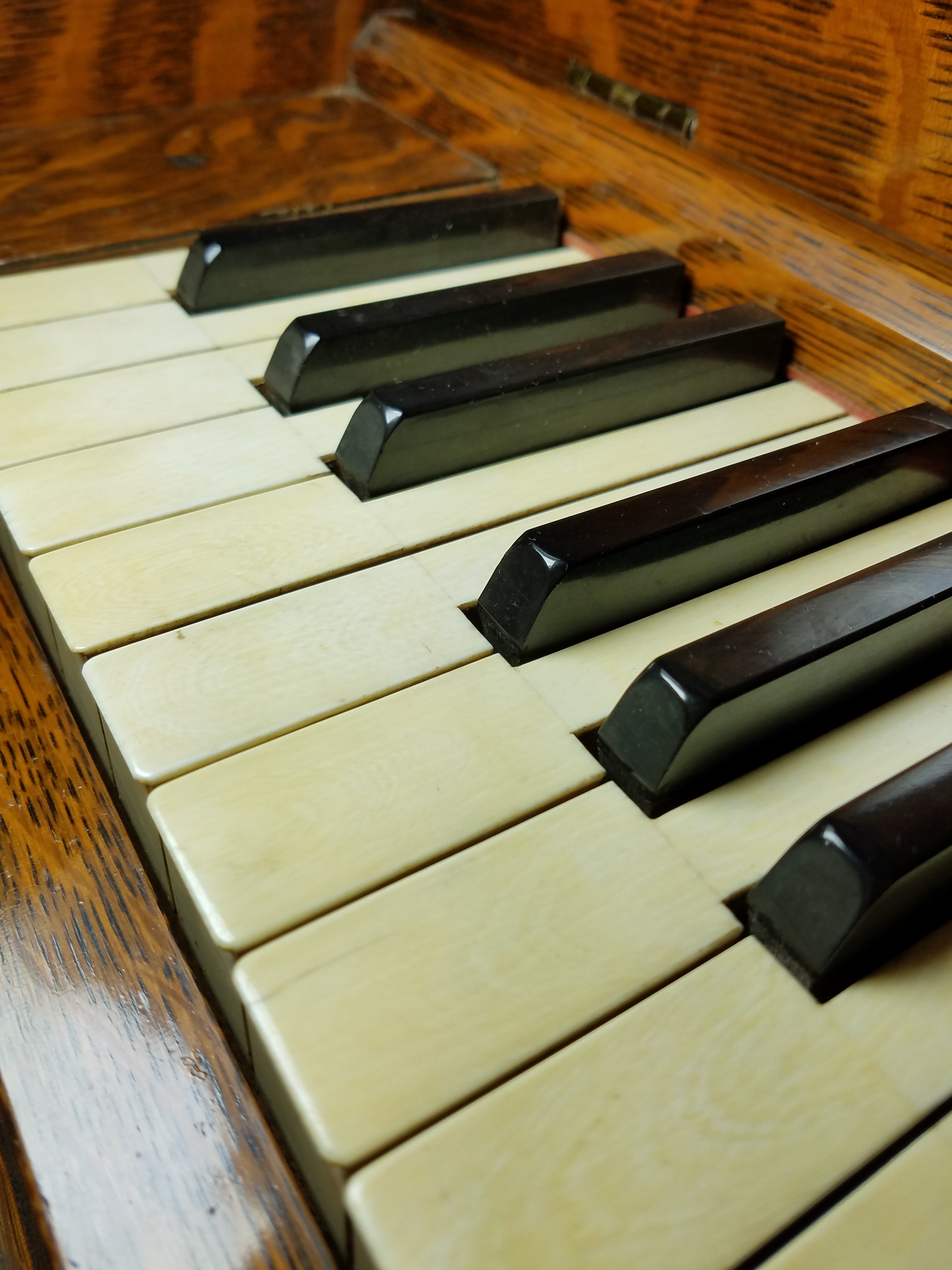
Older piano keys were often covered with thin pieces of elephant ivory. The ivory was used only as a surface layer, not as the entire key. Beneath the keytop was usually a wooden key made from materials such as spruce, pine, or another light, strong wood.
Modern piano keys are almost always made with synthetic materials. Common choices include:
• Acrylic
• ABS plastic
• Resin
• High-quality molded polymers
• Wood covered with a synthetic keytop
The black keys were traditionally made from ebony or another dark wood. Today, they are often made from plastic or composite materials that copy the look and feel of ebony.
So, are piano keys made of ivory today? In most cases, no. Ivory keytops are mainly found on older pianos made before the widespread use of modern plastics.
Why Was Ivory Used for Piano Keys?
Ivory was popular because it had qualities that suited piano playing. It was hard, smooth, and attractive. It could also absorb a small amount of moisture from the player’s fingers, which helped reduce a slippery feeling during long practice sessions.
Ivory also had a natural grain. Skilled piano makers could cut and polish it into thin keytops with a warm, slightly uneven look. This gave older pianos a character that synthetic materials often try to imitate.
However, ivory had serious limits:
• It could crack when exposed to dry air.
• It could yellow over time.
• It could absorb dirt and skin oils.
• It needed careful cleaning.
• It came from animals, mainly elephants.
• Its trade is now restricted by strict laws.
Ivory was once viewed as a premium material. Today, its use is tied to animal welfare, conservation, and international trade concerns. Modern piano makers can produce reliable key surfaces without using wildlife materials.
What Part of a Piano Key Is Ivory?
When people ask, “are piano keys made of ivory?” they often imagine a solid ivory key. That is not how most traditional pianos were built.
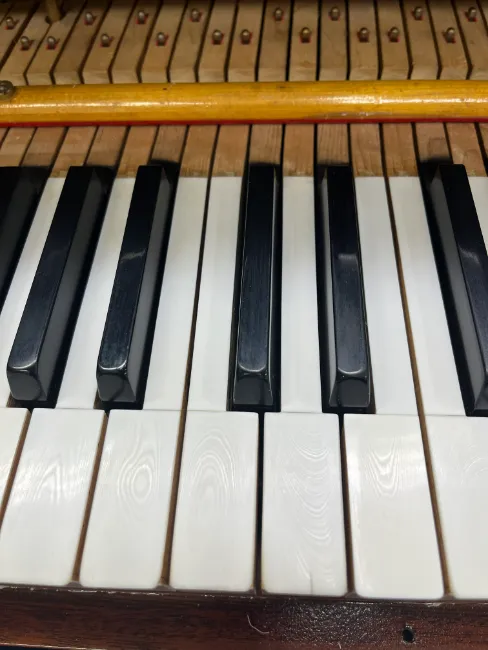
The ivory usually covered the top of a white key in one or two thin pieces. A separate piece may have covered the front edge, also called the key “fall” or “front.” The wooden key underneath provided the main structure and carried the mechanical force to the piano action.
This design matters when restoring an old piano. A technician may find ivory on the keytops even though most of the key is wood. A missing or damaged ivory piece can sometimes be replaced with a legal synthetic material.
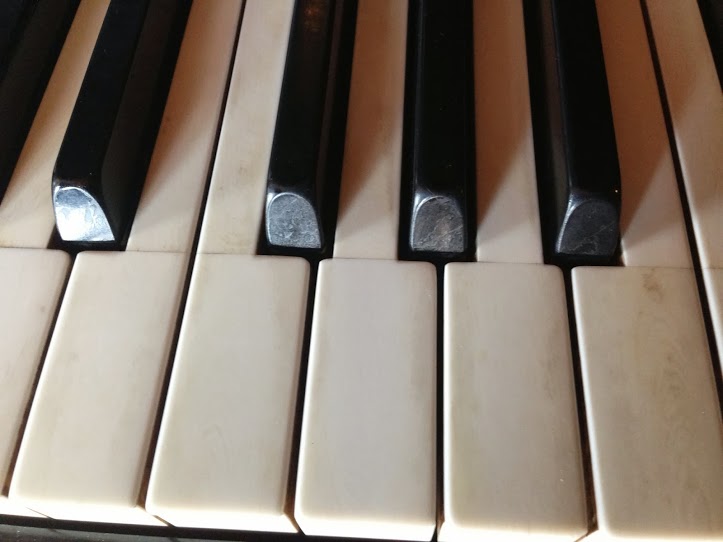
Ivory keytops often have visible seams. Many older white keys show a line between the main top piece and the front piece. You may also see fine grain, small pores, or a warm cream color rather than a bright, uniform white.
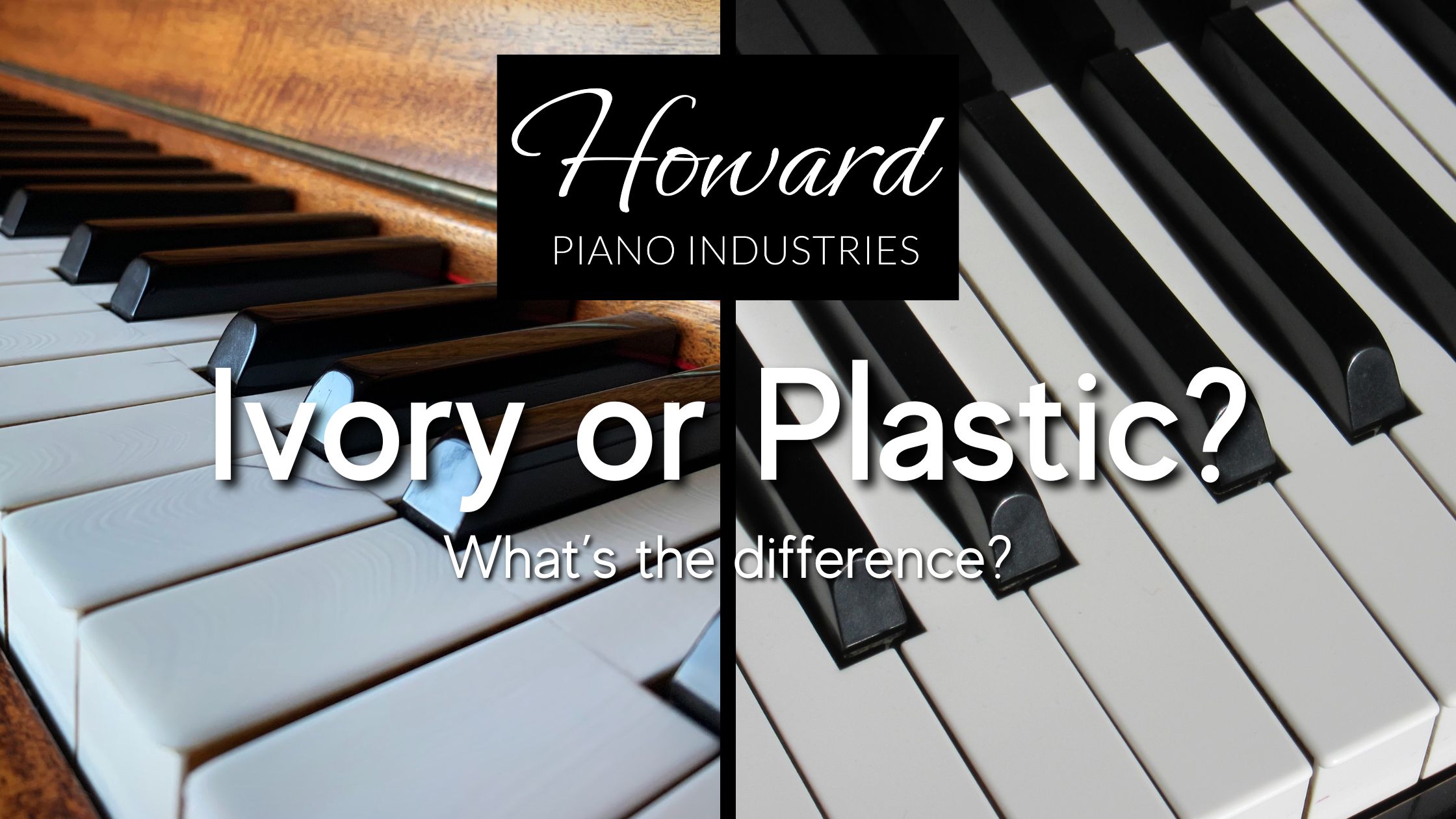
How to Tell Whether Piano Keys Are Ivory
Identifying ivory takes care. Age alone does not prove that a piano has ivory keys. Some old pianos used early plastics, while some newer replacement keytops may look similar to ivory.
Look for these signs:
Color and aging
Ivory often turns cream, yellow, or light tan with age. It may have darker areas near the edges. Plastic usually has a more even color, although old plastic can also discolor.
Grain and texture
Real ivory may show a fine crosshatched pattern or subtle grain. This pattern is sometimes called Schreger lines. It is most useful when viewed with good light and magnification.
Plastic often looks smooth and consistent. Some replacement plastics are textured on purpose, so texture alone is not a final test.
Seams
Many ivory keytops have a visible seam between two pieces. This is one of the most helpful clues. Still, some plastic keytops also have seams because they copy older designs.
Feel
Ivory can feel slightly warmer and less glossy than some plastics. It may also have a gentle grip when your fingers are dry. Feel is only a clue, not proof.
Piano age
Pianos made before the middle of the 20th century are more likely to have ivory keytops. The exact date varies by maker and region. A serial number can help establish the piano’s age, but it cannot confirm the material by itself.
Do not scrape, drill, burn, or use harsh chemicals to test a key. These methods can damage the piano and may violate laws that protect ivory objects. A qualified piano technician or appraiser can inspect the keytops without causing harm.
Are Ivory Piano Keys Legal?
Ivory ownership and trade laws vary by country, state, and situation. In the United States, federal rules place strict limits on the sale, import, export, and transport of elephant ivory. Some states have additional restrictions.
An old piano with ivory keytops is not automatically illegal to own. The legal issue often involves what you do with it. Selling, shipping, donating, or exporting an ivory-keyed piano may require proof of age, documentation, or compliance with specific rules.
Before buying or selling an older piano:
- Record the piano maker and serial number.
- Photograph the keytops and the full instrument.
- Ask for written information about its history.
- Check federal and state wildlife regulations.
- Speak with a qualified dealer, attorney, or wildlife authority when needed.
Laws can change, and rules may differ for interstate or international movement. Do not rely only on a seller’s claim that “old ivory is always legal.” A written record is much safer.
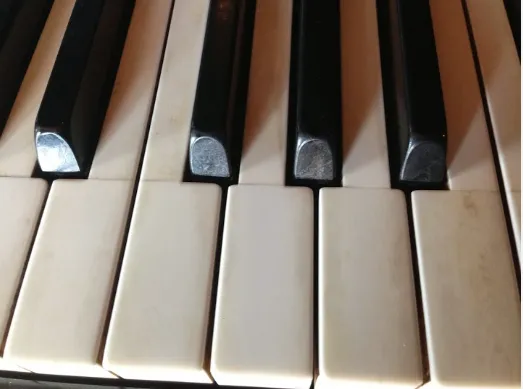
Ivory Versus Plastic Piano Keys
Ivory and plastic feel different, but both can work well for piano playing. The quality of the key surface matters, but it is not the main factor that determines the sound or value of a piano.
Advantages of ivory
• A natural, warm appearance
• A slightly textured playing surface
• Good moisture absorption
• Historical value on some antique pianos
• Easy recognition of certain older instruments
Disadvantages of ivory
• It can crack and chip.
• It may separate from the wooden key.
• It can yellow unevenly.
• It requires gentle care.
• Replacement may be costly or legally complex.
• Its origin raises major conservation concerns.
Advantages of modern plastic
• It is durable and easy to replace.
• It is available in consistent sizes.
• It does not create the same wildlife concerns.
• It is easier to clean.
• It works well in homes, schools, and concert settings.
High-quality synthetic keytops can feel excellent under the fingers. In many cases, a pianist will notice the piano’s action, regulation, voicing, and overall condition more than the difference between ivory and plastic.
Do Ivory Keys Make a Piano Sound Better?
Ivory keytops do not directly create a better piano sound. The keytop is the part your finger touches. It does not strike the string, shape the hammer, or control the soundboard.
Tone depends more on:
• The piano’s design
• The soundboard
• The strings
• The hammers
• The action
• Regulation and voicing
• The room’s acoustics
• The pianist’s technique
Ivory can affect playing comfort for some musicians. A player may prefer its texture, especially in warm or humid conditions. That is a touch preference, not proof that ivory improves tone.
A well-maintained piano with plastic keytops can sound far better than a neglected piano with ivory. When testing an instrument, listen to the tone and check the action before focusing on the key material.
How to Clean and Protect Ivory Piano Keys
If your piano has suspected ivory keytops, use a gentle approach. Ivory is porous and can be damaged by excess water, strong cleaners, and rough rubbing.
Follow these steps:
- Dust the keys with a soft, dry cloth.
- Use a barely damp white cloth for small marks.
- Dry each key at once with another soft cloth.
- Leave the fallboard open for a short time after cleaning.
- Keep the piano away from direct sunlight and heat vents.
Do not use bleach, alcohol, abrasive paste, furniture polish, or disinfectant unless a piano professional specifically approves it. Avoid soaking the cloth. Water can seep between the keytop and the wood.
A useful care habit is to wash and dry your hands before playing. This reduces skin oil and dirt on both ivory and plastic keys. It also helps prevent dark marks around the edges.
Never try to whiten old ivory with a strong chemical. Uneven yellowing is common, and aggressive whitening can cause cracks or weaken the material.
How Ivory Keytops Are Repaired or Replaced
An experienced piano technician can repair loose, cracked, chipped, or missing keytops. The repair may involve cleaning the wood, stabilizing the key, and attaching a replacement surface.
Because legal ivory may be difficult to source, technicians often use modern replacement materials. These materials can match the color, shape, and texture of the original keys without adding new ivory to the instrument.
Common repair choices include:
• Re-gluing a loose keytop
• Replacing one damaged keytop
• Re-covering a group of keys
• Replacing all white key surfaces
• Adjusting the key height after repairs
A single repaired key may look slightly different from the others. For a more even appearance, some owners choose to replace a full set of keytops. The best choice depends on the piano’s condition, historic value, budget, and intended use.
One mistake to avoid is polishing the keys before a technician examines them. Heavy polishing can remove useful surface details and make an accurate material assessment harder.
Does Ivory Increase a Piano’s Value?
Ivory keytops may add historical interest, but they do not automatically increase a piano’s value. Buyers usually care more about the maker, model, age, condition, action, soundboard, tuning stability, and restoration quality.
An old piano with damaged ivory can cost more to restore than a similar piano with intact plastic keytops. Legal limits can also make transport and resale more difficult.
Collectors may value original materials. Working musicians may prefer a reliable instrument with clean, durable replacement keytops. These are different priorities, so the “best” choice depends on the buyer.
Before paying more for ivory keys, arrange an inspection. A piano technician can identify structural problems that are easy to miss, such as cracked bridges, worn hammers, loose tuning pins, or damaged soundboard ribs.
Common Mistakes When Buying an Ivory-Key Piano
Buying an antique piano can be exciting. It can also become expensive if the key material distracts you from the piano’s overall condition.