How Many Strings On A Piano: The Complete Guide
Most modern pianos have about 220 to 240 strings, though the exact number varies by model and design.
The answer to how many strings on a piano is more complex than simply counting its 88 keys. Piano makers use one, two, or three strings for each note, so the total depends on the piano’s size, range, and string layout. This guide explains the numbers, the reason for the design, and what the strings do.
How many strings does a piano have?
Most full-size, 88-key pianos have between 220 and 240 strings. A common figure is about strings, but there is no single number that fits every piano.
The number of strings on a piano depends on three main factors:
• The number of keys
• The pitch range of the instrument
• The number of strings used for each note
A standard piano has 88 keys, but it does not have one string for every key. In the upper range, most notes use three strings. In the middle range, notes often use two or three strings. In the bass range, many notes use only one or two strings.
For example, a concert grand piano may have 243 strings. Many upright pianos have about 220 strings, while smaller or older pianos may have fewer.
The best short answer is this: an 88-key piano usually has about 220 to 240 strings, but the exact count varies.
Why does a piano have more strings than keys?
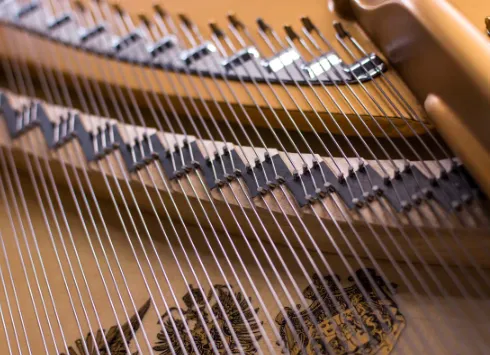
A piano has more strings than keys because many notes use two or three strings at the same pitch. These grouped strings are called unisons.
When you press one key, the action lifts a felt-covered hammer. The hammer strikes one, two, or three strings at once. The strings vibrate together and create the sound you hear.
Using several strings for one note gives the piano a richer and louder voice. It also adds small differences in vibration. These differences create a full tone that one string alone cannot easily produce.
Think of it like singing in a small group. One singer can carry a tune, but several singers create a wider and stronger sound. Piano strings work in a similar way.
Most piano makers use this general pattern:
• Bass notes often use one thick string
• Lower middle notes often use two strings
• Upper middle and treble notes often use three strings
The exact change from one string to two or from two to three depends on the piano’s scale design. Each maker chooses a layout that balances tone, power, string tension, and space.
How are piano strings arranged?
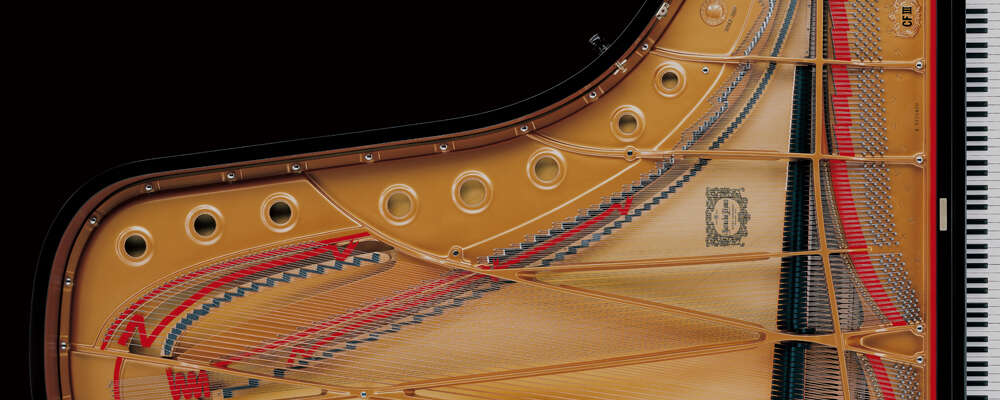
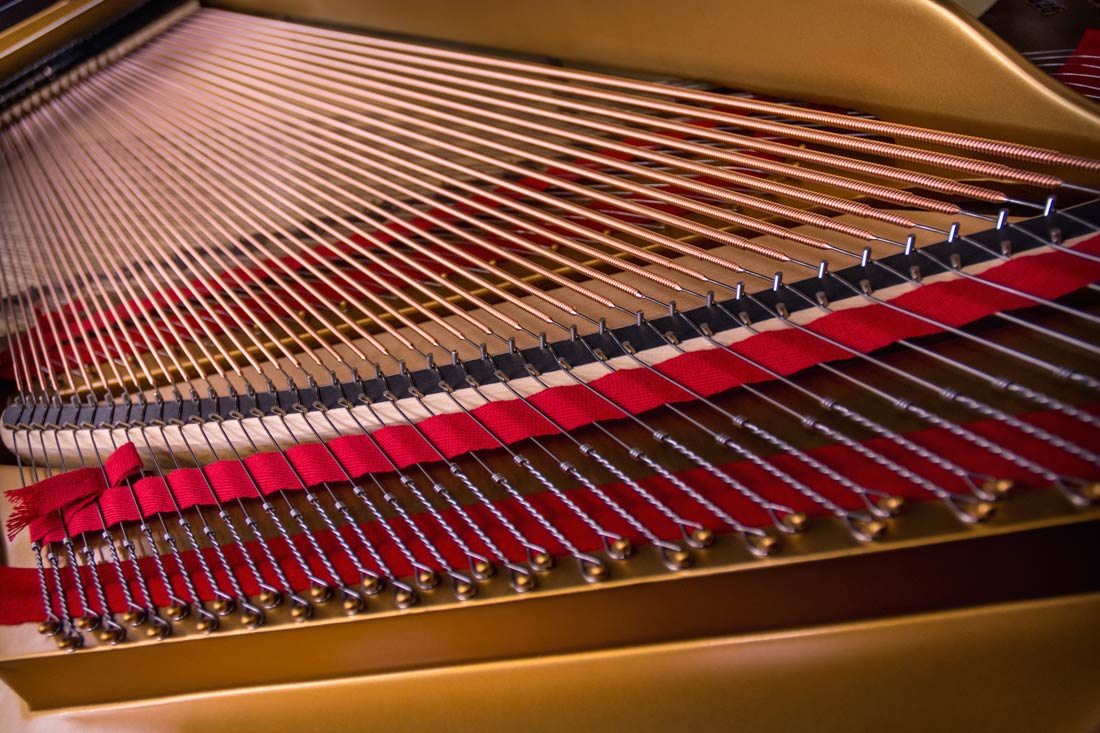
Piano strings run from the tuning pins near the keyboard end to the hitch pins near the back of the instrument. The frame and soundboard support the string system.
The strings are arranged from thick and long in the bass to thin and short in the treble. This layout helps the piano cover a wide pitch range, from deep rumbling bass notes to bright high notes.
Bass strings
Bass strings are thick and often wrapped with copper wire. The copper winding adds mass without making the string too thick to fit inside the piano.
The lowest notes may use one string per key. Some bass notes use two strings, depending on the piano’s design. These strings can be very long in a grand piano, which helps produce a deep and powerful tone.
Middle-register strings
The middle section often uses two or three strings for each note. This area gives the piano much of its warmth and strength.
Many upright pianos and grand pianos use two strings in part of the lower middle range. As the pitch rises, the design often shifts to three strings per note.
Treble strings
Most treble notes use three thin, steel strings. These strings are usually plain steel and are not wrapped with copper.
Three strings help the high notes sound clear and strong. Without them, the treble could sound weak compared with the bass.
How many strings are on an 88-key piano?
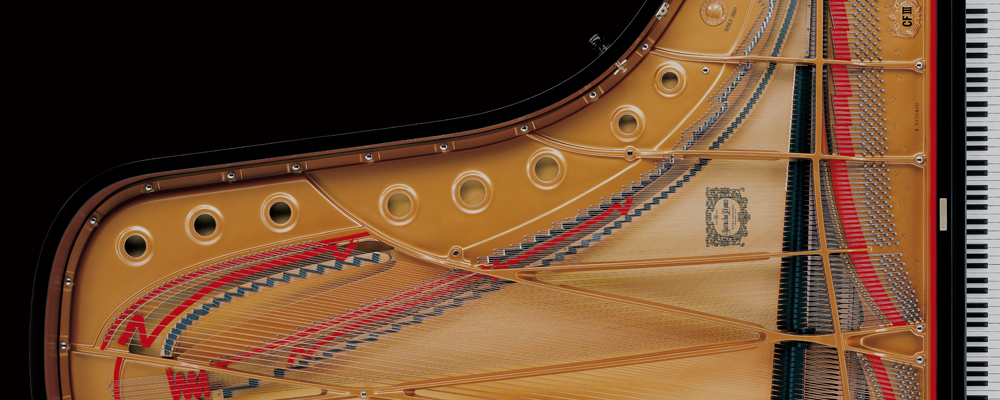
An 88-key piano usually has about 220 to 240 strings. The exact total depends on how many notes use one, two, or three strings.
A simple example can show why the count is higher than 88:
• 12 bass notes use one string each, creating 12 strings
• 30 lower and middle notes use two strings each, creating 60 strings
• 46 upper notes use three strings each, creating 138 strings
This example gives a total of 210 strings. A real piano may use a different split and may include extra strings in its scale design. That is why many 88-key pianos end up closer to 220, 230, or 240 strings.
Some famous concert grand pianos have 243 strings. This number is often used as a reference because large concert instruments need strong tone across their full range.
The number of keys still matters, but it is not the only factor. Two 88-key pianos can have different string counts because their makers use different stringing plans.

How many strings are on a baby grand piano?
A baby grand piano often has about 220 to 240 strings. Many models use a string count close to that of a larger grand piano because both may have the same 88-note range.
The main difference is not always the number of strings. It is often the length of the strings, the size of the soundboard, and the shape of the case.
A larger grand piano can use longer bass strings. Longer strings often create a deeper and more powerful tone. A baby grand has less room, so its bass strings may be shorter.
This does not mean every large piano has more strings. A 5-foot baby grand and a 9-foot concert grand may both use around 220 to 243 strings. Their sound can still differ greatly because of scale design and body size.
When comparing pianos, look at more than the string count. Also consider:
• String length
• Soundboard area
• Crown of the soundboard
• Metal frame design
• String tension
• Hammer size and shape
• Cabinet size
String count tells you part of the story, not the whole story.
How many strings are on an upright piano?
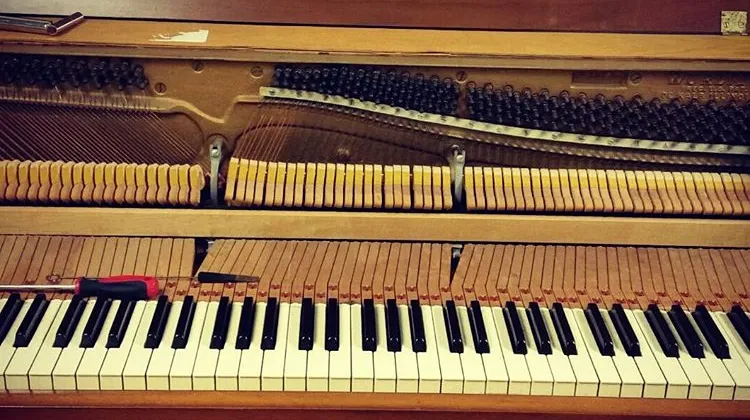
Most full-size upright pianos have about 220 strings, although the number can vary. Smaller studio uprights may use fewer strings, while some larger uprights use a count close to that of a grand piano.
An upright piano has less horizontal space than a grand piano. Its strings stand nearly vertical, and the action uses a different movement to strike the strings.
Uprights still follow the same broad pattern:
• One string for some low bass notes
• Two strings for many lower and middle notes
• Three strings for most upper notes
The height of an upright affects string length. A taller upright can often use longer bass strings than a short spinet piano. This can improve bass depth and balance.
A piano technician can often estimate the string layout by looking inside the instrument. However, the most accurate method is to check the model specifications or count the strings directly.

Why do piano strings break?
Piano strings can break because of age, metal fatigue, rust, excess tension, or a sharp contact point. A broken string is common enough that piano technicians know how to replace it, but it should not be ignored.
Every piano string stays under strong tension. The tension helps the string vibrate at the correct pitch, but it also places stress on the wire over time.
Common causes of a broken piano string include:
• Rust or moisture damage
• Repeated tuning changes
• A worn bridge pin
• A sharp edge near the tuning pin
• A damaged agraffe or capo bar
• Normal metal fatigue
Treble strings often break near the tuning pin or bridge. Bass strings can also fail, though their copper wrapping makes them different from plain steel treble strings.
A broken string does not mean the whole piano is unsafe or beyond repair. A technician can usually measure the old string and install a replacement with the correct diameter and length.
Do not try to tune a replacement string by force. New strings need time to settle, and poor installation can damage the pin or other parts.
What are piano strings made of?
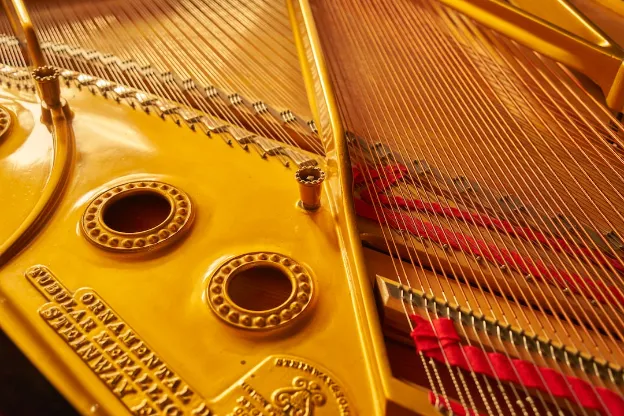
Most piano strings use high-carbon steel piano wire. Bass strings usually have a steel core wrapped with copper wire.
Plain steel strings are used for many middle and treble notes. They are strong, thin, and able to vibrate at high frequencies.
Bass strings need more mass to produce low notes. Instead of making them extremely thick, makers wrap copper around a steel core. This creates a heavier string that can fit inside the piano.
A bass string may have one or two layers of copper winding. The design affects its tone, flexibility, and ability to hold pitch.
Piano wire must meet strict standards for strength and size. Small changes in wire diameter can affect pitch and tone. Technicians use special measurements when replacing strings.
The material also affects maintenance. Humid air can encourage rust, while very dry air can harm other wooden parts of the piano. Stable indoor humidity helps protect both the strings and the soundboard.

Do all piano strings have the same tension?
No. Piano strings do not all have the same tension. Bass and treble strings differ in length, thickness, material, and tension.
Piano makers design each string to reach a certain pitch while fitting safely within the frame. A high note needs a faster vibration, so it usually uses a short, thin string. A low note needs a slower vibration, so it uses a longer, heavier string.
String tension also varies across the piano. The total tension of a full piano can reach many tons, depending on its size and design.
The cast-iron frame supports this force. The wooden soundboard then receives energy from the vibrating strings through the bridge. This energy moves the air and creates the sound that reaches your ears.
This system explains why piano tuning matters. A small pitch change in one string can make a unison sound rough or wavy. When all strings in a note match closely, the piano sounds smooth and clear.
How do multiple strings affect piano tone?
Multiple strings make a piano louder, richer, and more complex. They also help each note blend with nearby notes.
When two or three strings are tuned to the same note, they never vibrate in exactly the same way. Tiny differences in tension and motion create gentle changes in volume. These changes add life to the sound.
If one string in a three-string group is out of tune, you may hear a beating sound. The note can seem to shimmer, wobble, or sound harsh.
This is why piano tuning is more than setting one pitch per key. A technician must tune each string group so the strings work together. The technician may also adjust the unisons by ear.
In my practical examples of piano care, this is one of the first things players notice after a proper tuning. The piano may not sound louder, but it often feels calmer and more focused.
A common mistake is to assume that one out-of-tune string affects only one small part of the piano. In fact, an uneven unison can stand out every time that note is played.
How do you count the strings on a piano?
You can count the strings on a piano by opening the lid and counting each speaking string from the lowest note to the highest note. This takes patience because some strings may be hidden behind dampers or other parts.
Follow these steps:
-
Place the piano in a safe, well-lit area.
-
Open the top only if the design allows safe access.
-
Start at the lowest bass note.
-
Count each string connected with each note.
-
Continue across the middle and treble sections.
-
Record the count in groups to avoid losing your place.
Do not touch the strings while counting. Piano strings are under high tension, and sharp parts inside the case can cause injury.
You may also find the string count in the manufacturer’s technical information. This is often easier and safer than counting by hand.
Remember that a piano can have extra lengths of wire that do not freely vibrate. These sections may help with design, termination, or resonance, but they are not always counted as speaking strings.
What is the difference between strings and notes?
A note is the pitch you hear when you press a key. A string is the wire that vibrates to help create that pitch.
One piano note may use one, two, or three strings. Therefore, the piano has many more strings than notes.
For example, pressing middle C activates a set of strings designed to produce the pitch of middle C. On many pianos, that note uses two or three strings rather than one.
The key controls the action, but the action controls the hammer. The hammer strikes the string group, and the strings transfer energy to the bridge and soundboard.
This difference matters when people ask how many strings on a piano. They may be counting keys, notes, or physical wires. Those are related, but they are not the same thing.
Does a piano have extra strings for resonance?
Some pianos use duplex scaling or aliquot stringing to improve resonance. These systems may include short string sections that vibrate along with the main speaking length.
Duplex scaling allows a portion of a string beyond the bridge to vibrate. This can add brightness and complexity to the tone.
Aliquot systems use separate small sections or additional strings in selected areas. They are more common in certain grand piano designs than in basic upright pianos.
These parts can make string counting confusing. A person may see extra wire and assume it is another full string for a key. In many cases, it is a non-speaking or resonating section rather than a separate note string.
Manufacturers use these systems in different ways. They can affect tone, but they do not always change the basic answer: most 88-key pianos have roughly 220 to 240 main strings.
How often should piano strings be checked?
A piano technician should inspect the strings during regular tuning and maintenance visits. Most home pianos benefit from tuning at least once or twice each year.
More frequent service may help when:
• The piano is new
• The instrument is moved
• The room has large humidity changes
• The piano is used for lessons or performances
• A string sounds dull or unstable
• Rust is visible
A piano that sits unused still needs care. Temperature and humidity can change the tension of the strings and the shape of wooden parts.
If one string breaks, avoid playing the same note until the problem is checked. The remaining strings may continue to work, but the note will not sound balanced.
A technician can also check the bridge, tuning pins, dampers, soundboard, and frame. Looking at the full system is better than replacing a string without finding the cause of the break.
Frequently Asked Questions About How Many Strings on a Piano
How many strings are on a standard piano?
A standard 88-key piano usually has about 220 to 240 strings. The exact number depends on how many notes use one, two, or three strings.
Does each piano key have one string?
No. Many piano keys control two or three strings tuned to the same note. Low bass keys often use one string, while many treble keys use three.
How many strings are on a grand piano?
Most grand pianos have about 220 to 240 main strings. Some large concert grand pianos use around 243 strings.
How many strings are on an upright piano?
Many upright pianos have close to 220 strings. Smaller uprights may have fewer, while larger models can use a similar number to some grand pianos.
Why does a piano need three strings for one note?
Three strings make the note louder and fuller. They also create a richer tone by producing small differences in vibration.
Are piano strings all the same size?
No. Piano strings vary in length, thickness, material, and tension. Bass strings are usually thick and copper-wound, while treble strings are thin, plain steel wire.
Can I count piano strings myself?
You can count them, but use care. Piano strings are under high tension, and the inside of the instrument contains sharp and delicate parts, so manufacturer information or a technician is often safer.
Conclusion
Most 88-key pianos have about 220 to 240 strings, even though they have only 88 keys. Low notes often use one string, middle notes use two or three, and high notes usually use three thin strings.
The number of strings on a piano depends on its size, scale design, pitch range, and maker. String length, material, tension, and soundboard design also shape the piano’s voice.
If you own a piano, listen for buzzing, uneven unisons, rust, or a sudden change in tone. Schedule regular tuning and ask a qualified technician to inspect any damaged string. Explore your piano’s model details, learn more about its design, and share your questions or experiences with other piano players.

Senior Music Reviewer
Alex Carter is a seasoned music reviewer with over a decade of experience in the world of sound and instruments. Passionate about helping musicians and enthusiasts make informed choices, he brings sharp insights and in-depth knowledge to every review. From classical instruments to modern gear, Alex combines technical expertise with a love for music to deliver content that resonates with readers.
As a Senior Music Reviewer and expert author on Tuneluma.com, Alex is dedicated to sharing honest evaluations, practical advice, and thoughtful commentary to guide readers in their musical journey.