What Is A Ghost Note On Drums: Simple Guide
A ghost note on drums is a very soft rhythmic stroke that adds subtle groove.
I’ve played and taught drums for years, and I can tell you a ghost note on drums is one of the most powerful tools for shaping pocket and feel. This guide breaks down what a ghost note on drums is, how it works, how to play it, and how to use it in real songs. Read on for clear steps, practice drills, and tips from my studio and stage experience so you can add tasteful ghost notes to your drumming instantly.

What is a ghost note on drums?
A ghost note on drums is a quiet, often barely audible hit. It sits behind the main beats. Drummers use these light strokes to fill space. Ghost notes make grooves feel more human and less mechanical.
A typical ghost note on drums lives on snare or toms. It is played softer than accents and is not meant to replace the main pulse. Think of it as a whisper in a conversation. It colors the rhythm without drawing attention.
How ghost notes function in rhythm and groove
Ghost notes on drums add texture and micro-dynamics. They help create forward motion without changing the core beat. When placed on off-beats or between 16th notes, they make grooves swing or push.
Use cases:
- Groove enrichment: Ghost notes fill gaps between strong beats.
- Accentuating pocket: They help the kick and snare lock in.
- Dynamic contrast: Soft strokes highlight louder accents.
- Ghost notes also aid in phrasing. They give the listener cues about tension and release.
Common placements include:
- Between snare hits on 2 and 4 to add bounce.
- On the "e" or "a" of a 16th-note pattern to create syncopation.
- As low-volume buzzes on toms for subtle movement.

Quick PAA-style questions
How loud should a ghost note on drums be?
A ghost note should be much softer than an accent, often 10–30% of accent volume. It should be just loud enough to be felt, not dominate.
Where do ghost notes typically sit in a beat?
They usually sit on off-beats or the inner 16th subdivisions, supporting the main backbeat. Placement depends on feel and style.
How to play ghost notes on drums — techniques and practice exercises
Start with stick control. Use wrist strokes and control rebound. Keep fingers active for quieter notes.
- Play single strokes at quarter-note tempo. Add a soft snare hit on the "and" between quarters.
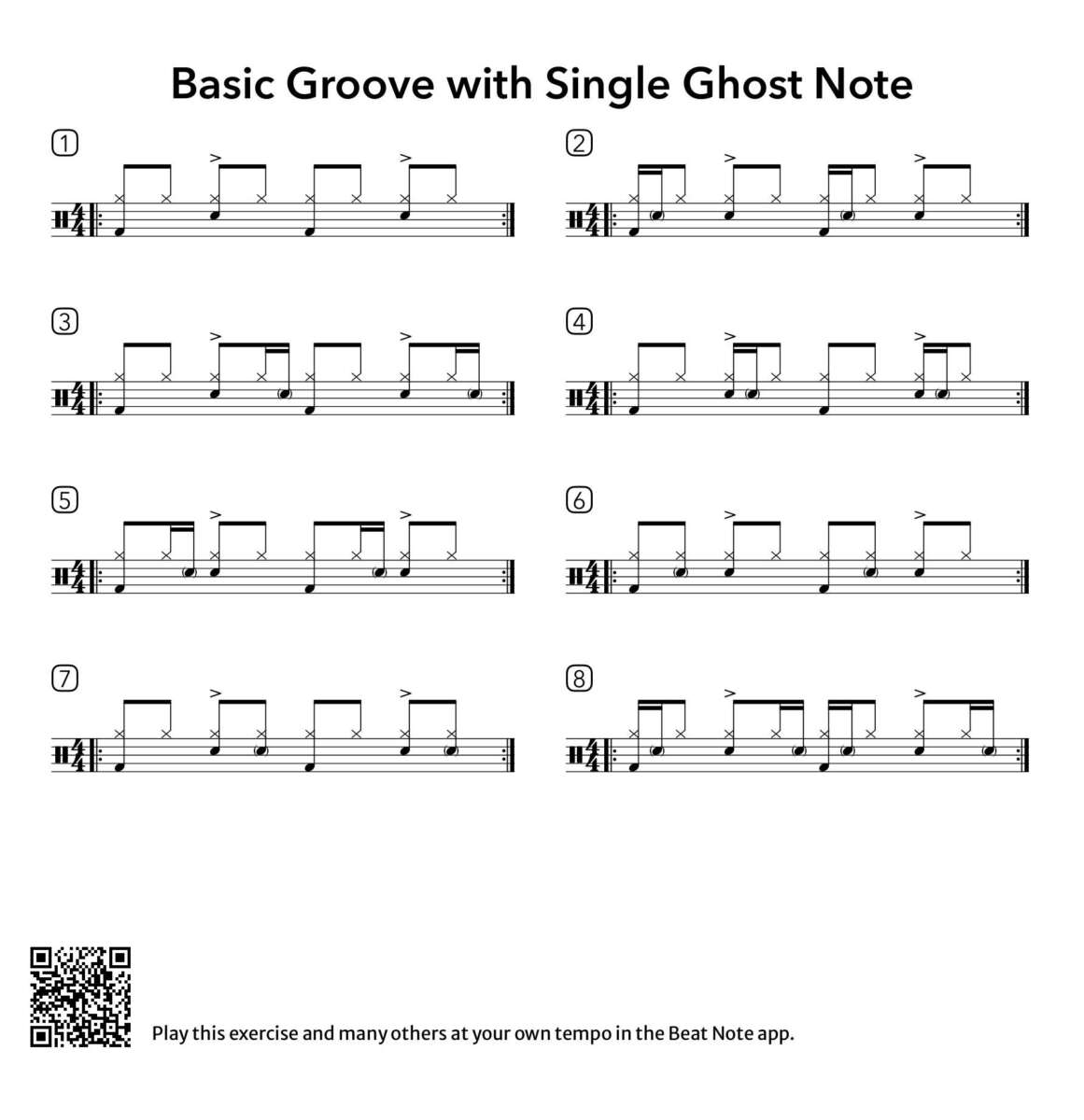
- Practice 16th-note patterns. Accent 2 and 4, keep other snare hits as ghost notes.
- Use a metronome at slow tempo. Reduce ghost-note volume gradually.
Practice tips from my experience:
- Record practice sessions to hear whether ghost notes sit correctly.
- Use a pillow or practice pad to focus on touch.
- Start loud, then work down until ghost notes disappear. Find the sweet spot when they are felt but not heard.

Common mistakes and how to avoid them
Overplaying ghost notes:
- Problem: They become full snare hits and swamp the groove.
- Fix: Lower hand height and use more wrist control.
Inconsistent volume:
- Problem: Ghost notes jump in loudness.
- Fix: Isolate them in slow practice and use a metronome.
Poor placement:
- Problem: They fall on strong beats and confuse the pocket.
- Fix: Count subdivisions and map ghost notes to specific 16th or 8th slots.
Ignoring dynamics of the rest of the kit:
- Problem: Ghost notes vanish under heavy cymbal work.
- Fix: Adjust cymbal volume or shift ghost notes to quieter drums.

Notation and counting ghost notes
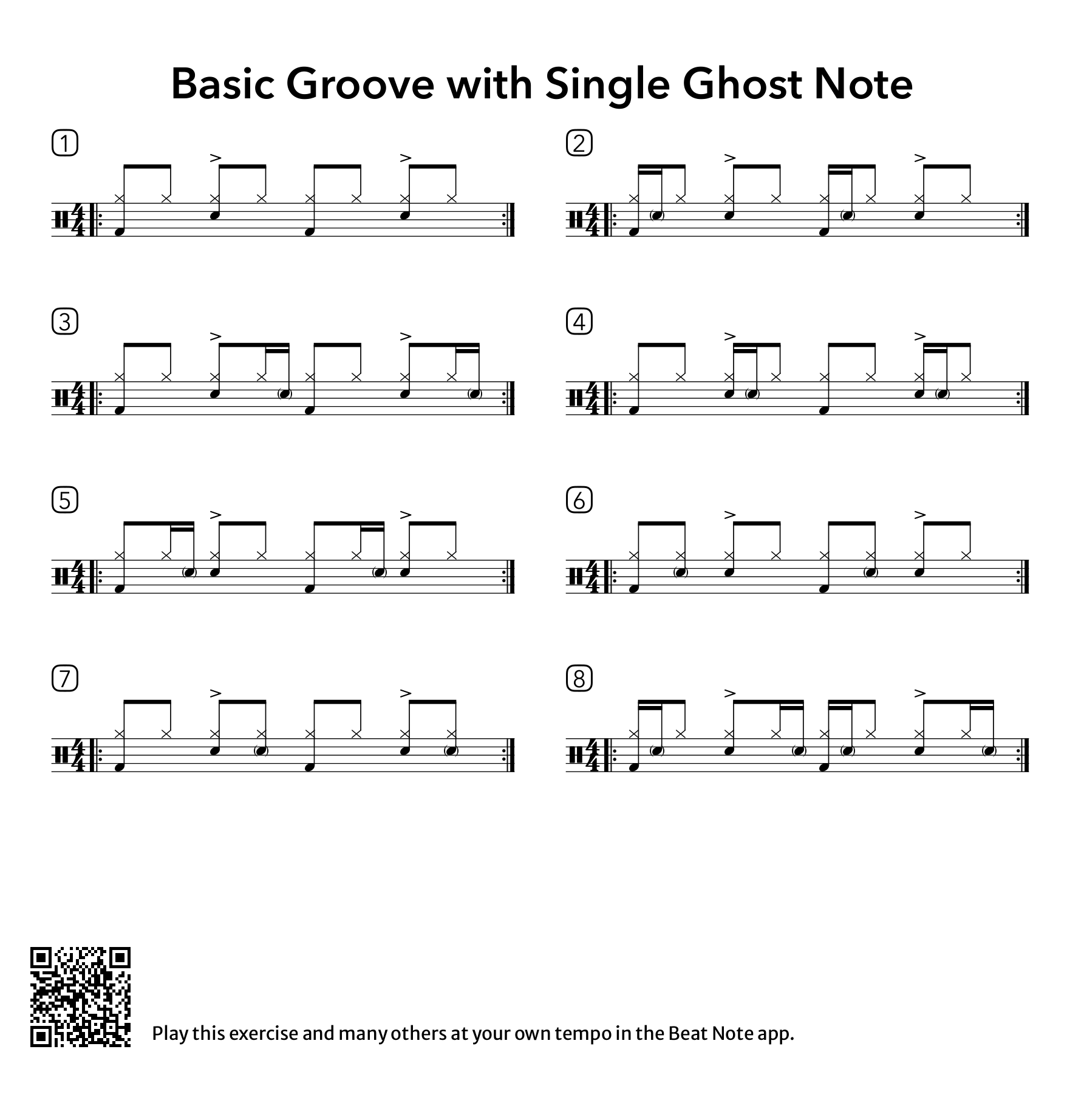
Notation for a ghost note on drums usually shows a parenthesis or a smaller note head. Dynamics marking p or pp can signal ghost strokes. In drum charts, ghost notes may use an "x" or dotted notation for clarity.
Counting tips:
- Count 1 e & a for 16th notes. Place ghost notes on specific subdivisions.
- Map out the groove slowly and tap only ghost-note slots.
- Use simple charts to mark which snare strokes are ghosts and which are accents.

Styles and musical contexts that use ghost notes
Funk and R&B:
- Ghost notes on drums are essential here. They add the pocket and groove that define the style.
Jazz:
- Drummers use ghost notes to imply swing and subtle phrasing. Soft snare taps can suggest a brush-like texture.
Hip-hop and pop:
- Ghost notes make loops and beats feel alive. Producers often layer quiet snares for rhythm depth.
Latin and Afro-Cuban:
- Ghost notes support polyrhythms and secondary accents on toms and snare.
Rock and metal:
- Ghost notes can add grit and drive, especially in grooves that need extra momentum.
Gear, setup, and sound shaping for ghost notes
Tuning and snare response matter:
- A snare tuned too tightly loses low-end for ghost notes. Tune to a sweet spot for touch.
Stick choice:
- Thinner sticks and nylon tips make softer ghost notes easier. Brushes and rods are great for very soft textures.
Snare wires and muffling:
- Sensitive snare wires help ghost notes speak. Use slight muffling to control ring without killing the feel.
Mic placement and mixing:
- In live or studio settings, close-mic the snare and use gentle compression. Lower ghost-note pickup in the mix so they sit under accents.
Exercises and a 4-week study plan
Week 1 — Control and touch:
- Practice single strokes at slow tempos.
- Add one ghost note per bar between accents.
Week 2 — Subdivision focus:
- Work on 16th-note patterns with accents on 2 and 4.
- Record and listen for consistency.
Week 3 — Groove application:
- Play along with funk and R&B tracks.
- Add ghost notes in fills and grooves.
Week 4 — Dynamics and live feel:
- Practice with a drummer friend or metronome with swing.
- Use dynamic contrast to place ghost notes tastefully.
Drill examples:
- 8-bar loop: Kick on 1, snare accents on 2 and 4, add ghost notes on the "e" and "a".
- Fill exercise: Use ghost notes to lead into an accented backbeat.
Personal tips, mistakes I made, and lessons learned
When I first used ghost notes on drums, I made them too loud. That lost the groove. I learned to play them with fingers and wrist, not arm. Recording myself was the big breakthrough. Hearing the mix helped me place notes better.
A tip that changed my playing:
- Sit at low volume and aim for ghost notes that you can feel in the stick, not only hear. That tactile feedback keeps them consistent.
Related concepts and deeper study
Related terms to explore:
- Pocket: The space where ghost notes live to support main beats.
- Subdivision: The timing slots (8th, 16th) ghost notes often occupy.
- Dynamics and touch: How volume shapes groove.
Further study suggestions:
- Transcribe grooves from funk records and mark ghost notes.
- Practice rudiments with soft strokes to build control.
- Learn to use brushes and rods for more ghost-note colors.
Frequently Asked Questions of what is a ghost note on drums
What exactly counts as a ghost note on drums?
A ghost note on drums is any intentionally soft drum stroke that supports the main rhythm. It is played much softer than accents and often sits on off-beats or subdivisions.
Can ghost notes be played on drums other than the snare?
Yes. Ghost notes on drums can be placed on toms, rims, or even kick in certain patterns. The snare is most common because it offers clear attack at low volume.
How loud should a ghost note on drums be in a band mix?
In a band mix, ghost notes should be felt more than heard. They should sit under accents and support the groove without drawing focus.
Will practicing ghost notes improve my overall drumming?
Yes. Practicing ghost notes sharpens dynamics, timing, and control. These skills improve fills, grooves, and musical sensitivity.
Are ghost notes important for all musical styles?
Ghost notes on drums are useful in many styles, especially funk, jazz, R&B, and pop. Some heavy genres use them less, but they can still add nuance when used sparingly.
How do I learn to control ghost notes better?
Slow, focused practice and recording sessions help. Work with a metronome and use exercises that isolate soft snare taps between accented beats.
Conclusion
Ghost notes on drums are subtle but powerful. They add life to grooves, tighten pocket, and give music a human feel. Start small, practice slow, and listen back to your playing. Use the exercises and gear tips here to develop control and taste.
Try adding one ghost note to a simple beat today. Record it, compare before and after, and refine. If this guide helped, leave a comment with a groove you tried or subscribe for more drumming tips.

Senior Music Reviewer
Alex Carter is a seasoned music reviewer with over a decade of experience in the world of sound and instruments. Passionate about helping musicians and enthusiasts make informed choices, he brings sharp insights and in-depth knowledge to every review. From classical instruments to modern gear, Alex combines technical expertise with a love for music to deliver content that resonates with readers.
As a Senior Music Reviewer and expert author on Tuneluma.com, Alex is dedicated to sharing honest evaluations, practical advice, and thoughtful commentary to guide readers in their musical journey.