Buy a used violin by checking its condition, sound, history, size, and setup with help from a skilled violin shop or luthier.
Learning how to buy a used violin can save you money, but a low price does not always mean a good deal. A violin may look beautiful and still have hidden cracks, poor repairs, the wrong size, or a weak setup. This guide explains what experienced players and teachers look for, how to test an instrument, which questions to ask, and when to walk away.

Why Buy a Used Violin?
A good used violin can offer excellent value. Many older violins have settled wood, a comfortable feel, and a richer sound than cheap new instruments at the same price. You may also find a better bow, case, and setup when buying from a trusted shop.


Used violins are common among students, parents, advancing players, and professionals. The key is to judge the instrument’s condition and sound rather than its age alone.
Benefits of a used violin
• Lower cost than a comparable new violin
• More character and tonal depth
• A wider range of makers and models
• Better resale potential when the violin has clear records
• Access to instruments already adjusted by a professional
Limits of buying used
A used violin may need repairs, new strings, bridge work, or soundpost adjustment. These costs can reduce the savings. A violin that seems inexpensive may become costly if it needs major crack repair or neck work.
Age also does not guarantee quality. Some old violins are poorly made, badly stored, or heavily damaged. A newer violin from a respected maker may be a safer choice than an older violin with an unclear history.

Set Your Budget Before You Shop
Before learning how to buy a used violin, decide how much you can spend on the complete outfit. The violin is only one part of the cost. You may also need a bow, case, shoulder rest, rosin, strings, and professional adjustments.
A practical budget should include a repair reserve. Set aside money for new strings and a basic setup, even if the instrument seems ready to play. A proper setup can make a large difference in comfort and tone.


Typical used violin price ranges
Prices vary by region, maker, condition, and level. These ranges are broad estimates, not fixed market values.
• Beginner student violins: about $200 to $800
• Better student and advancing-player violins: about $800 to $3,000
• Professional-quality violins: $3,000 and above
• Rare or historically important instruments: prices can reach far higher
A very cheap violin may still be useful if it is structurally sound and correctly sized. However, avoid judging value from labels, age, or decorative details alone. A professional appraisal is more useful than a dramatic seller description.
Plan for the full outfit
Include these items in your budget:
• Violin
• Bow
• Case
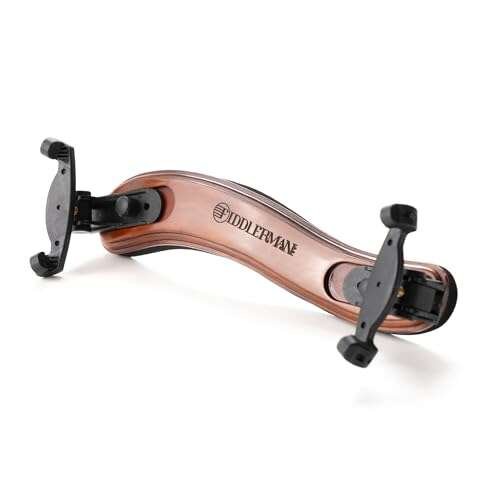
• Shoulder rest
• Rosin
• Spare strings
• Setup or repair work
• Sales tax and shipping


A bow can strongly affect playability. A weak or warped bow may make a good violin feel difficult to control. Ask whether the bow is included and whether a shop has checked its stick, hair, frog, and tip.
 size”
style=”max-width: 100%; height: auto; border: 2px solid black; border-radius: 10px; display: block; margin: 0 auto;”
loading=”lazy”
/>
Choose the Correct Violin size
size is one of the first things to check, especially for a child. Full-size violins are usually called 4/4 violins. Smaller sizes include 3/4, 1/2, 1/4, 1/8, and smaller models.
Do not choose a size only by age. Arm length and hand reach matter more. A teacher or violin shop can measure the player and confirm the correct fit.
A violin that is too large can cause tension in the shoulder, wrist, and fingers. A violin that is too small may limit growth and feel cramped. The player should be able to reach the scroll with a relaxed arm while holding the instrument safely.
Signs of a good fit
• The player can hold the violin without lifting the shoulder
• The left hand can reach the notes without strain
• The instrument feels stable under the chin
• The bow arm can move freely
• The player can maintain a relaxed posture
A child may move to a larger violin as they grow. Keep records of the instrument’s size and purchase details. This can help when trading it in or selling it later.

Inspect the Violin’s Structure
A careful structural inspection is the most important part of learning how to buy a used violin. Small scratches are often harmless. Open seams, repaired cracks, and a weak neck angle can be much more serious.
Inspect the instrument in bright, natural light. Use a small flashlight to look inside through the f-holes, but do not place objects inside the violin. Never press hard on the top, back, bridge, or fingerboard.
Check the body
Look closely at the following areas:
• Top and back plates


• Ribs and corners
• Scroll and pegbox
• Endpin area
• F-holes
• Purfling
• Neck joint
• Bridge feet
Cracks near the soundpost, bass bar, neck, or endpin deserve special attention. These areas carry stress. A repaired crack may be stable, but the quality of the repair matters.
Open seams are often less serious than structural cracks, but they still need attention. Do not try to glue a seam at home. Household glue can damage the wood and make professional repair harder.
Check the neck and fingerboard
The neck should feel firm and properly aligned with the body. The fingerboard should be smooth and correctly shaped. Deep grooves, flat spots, or an uneven fingerboard can cause buzzing and poor intonation.
Look down the fingerboard from the scroll toward the bridge. A violin maker or repairer should check this more closely, but a major twist or obvious misalignment is a warning sign.
Check the bridge
The bridge should stand upright and fit the violin’s top. Its feet should sit flat, and it should not lean sharply toward the fingerboard or tailpiece.
A bridge can warp over time. A replacement bridge is normal maintenance, but it must be cut and fitted by a professional. A badly fitted bridge can harm the tone and place stress on the top.

Examine the Pegs, Tailpiece, and Soundpost
The tuning parts should work smoothly. Pegs that slip or stick may need fitting, lubrication, or replacement. This is common in used violins and does not always indicate serious damage.


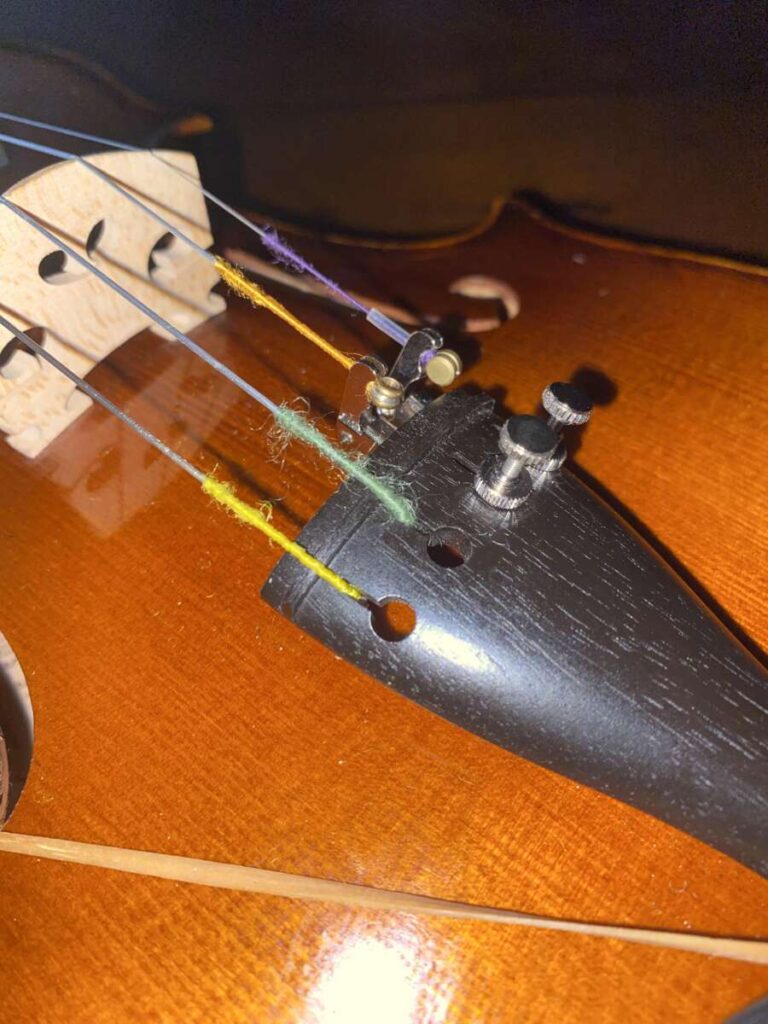
The tailpiece should be secure and properly aligned. Inspect the fine tuners, tailgut, and endpin. Loose or damaged fittings can affect both safety and tone.
The soundpost is a small spruce post inside the violin. It transfers vibration between the top and back. You should not move it yourself because even a small change can affect the instrument and may damage the top.
Ask a luthier to inspect the soundpost. The post should fit correctly and should not be loose, fallen, or forced into place. A professional can also check the bass bar, internal repairs, and signs of wood damage.
Look for wood damage
Be alert for:
• Worm holes
• Soft or crumbling wood
• Water stains
• Mold
• Severe dryness
• Heat damage
• Loose lining
Small marks from normal use are usually acceptable. Soft wood, strong odors, or evidence of poor storage may signal deeper problems.

Test the Sound and Playability
A violin must be judged by sound, not only by appearance. If you are a beginner, ask your teacher or an experienced player to test it. A new player may not yet have the bow control needed to reveal the violin’s full character.
Play each string with open bows first. Listen for a clear response, even volume, and a stable tone. Then test notes in several positions and compare the sound under the ear with the sound heard several feet away.


What to listen for
• Quick response when the bow touches the string
• Clear sound on all four strings
• No persistent buzzing
• Even volume from string to string
• Comfortable resistance under the bow
• Good projection without excessive harshness
• A tone that suits the player’s music
A violin does not need to sound perfect at first touch. Strings, bridge shape, soundpost position, and setup can change the result. However, constant buzzing, weak response, or a very nasal sound should be assessed by a professional before purchase.
Test the instrument with another bow
If possible, try the violin with two or three bows. A poor bow can make a good violin seem dull. A very strong bow can also hide weaknesses in the instrument.
Ask a teacher to play the violin from across the room. Players often hear a different sound under the ear than listeners hear at a distance. Both perspectives matter.

Ask About the Violin’s History
A trustworthy seller should answer basic questions clearly. Ask where the violin came from, who owned it, and what repairs it has received.
Important questions include:
• When was the violin purchased?
• Has it had cracks or major repairs?
• Who performed the repairs?
• When was the last setup?
• Are there receipts or repair records?
• Is the label original or a later replacement?
• Does the seller offer a trial period?
• Is there a return policy?
A label inside a violin does not prove who made it. Many labels name a famous maker even when the instrument is only a copy. Expert identification requires knowledge of construction, wood, varnish, workmanship, and documented history.
Be careful with claims such as “rare antique,” “master-made,” or “worth thousands.” Ask for written evidence. If the price is high, arrange an independent appraisal before completing the purchase.
Check for stolen instruments
Ask for a written bill of sale with the seller’s name, contact details, instrument description, and serial or identifying information. Avoid sellers who refuse to provide basic documentation.
If the instrument appears unusually valuable, check whether a professional shop can verify its history. Clear records protect both the buyer and the seller.

Buy From a Safe Seller
The safest places to buy a used violin are established violin shops, reputable teachers, recognized dealers, and private sellers who allow a proper inspection. A shop may charge more, but it often provides setup work, a trial period, and a return policy.
Online marketplaces can offer good choices, but they carry more risk. Photos may hide cracks, poor repairs, warped bridges, or incorrect sizing. Shipping can also expose an instrument to sudden temperature and humidity changes.
Questions to ask an online seller
• Can you provide clear photos of the top, back, ribs, scroll, bridge, and pegbox?
• Are there any cracks, open seams, or repaired areas?
• What are the exact body length and string length?
• Has a luthier inspected the violin?
• What is included in the sale?
• How will the violin be packed?
• Is there a written return period?
Do not send a large payment through an unprotected method. Use a payment option that provides a clear record and buyer protection when appropriate.
A short trial is extremely valuable. It gives a teacher or luthier time to inspect the instrument and lets the player test it in a familiar room.

Have a Luthier Inspect It
A professional inspection is often the best money you can spend when buying a used violin. A luthier can identify problems that are easy to miss, estimate repair costs, and explain whether the asking price is reasonable.
Ask for a written or clearly explained assessment. It should cover the body, neck, fingerboard, bridge, pegs, soundpost, tailpiece, strings, and bow.
What an inspection may reveal
• Open seams
• Repaired or unstable cracks
• Incorrect neck angle
• Poor bridge fit
• Worn fingerboard
• Loose fittings
• Weak or badly fitted soundpost
• Hidden repair costs
A luthier cannot always predict how every listener will respond to a violin. Tone is partly personal. Still, structural safety and setup quality can be assessed with much more confidence.
For an expensive violin, seek an independent opinion. Avoid relying only on a seller’s preferred repairer when the instrument has significant value.
Compare Total Cost, Not Sticker Price
The best deal is not always the violin with the lowest price. Compare the purchase price with immediate repair and setup costs.
For example, a $500 violin that needs $400 in repairs may cost more than a $750 violin that is ready to play. The second instrument may also be easier to resell later.
Create a simple comparison list:
• Purchase price
• Estimated repairs
• New strings
• Bridge or soundpost work
• Bow repairs
• Case replacement
• Shipping and insurance
• Return or trial costs
Ask the shop to separate urgent work from optional improvements. A new set of strings may be helpful now, while cosmetic varnish work may not matter at all.
Negotiate With Care
Used violin prices may be negotiable, especially when the instrument needs clear work. Use repair estimates as the basis for your offer rather than making an arbitrary low bid.
A fair conversation sounds like this: “The violin needs a bridge, new strings, and peg work. Could we adjust the price to reflect those costs?”
Do not pressure a seller to reduce the price simply because the violin has scratches. Cosmetic wear can be harmless and may be part of the instrument’s history. Focus on safety, setup, sound, and documented value.
Be willing to leave. If the seller refuses an inspection, hides repair details, or creates pressure with a limited-time story, another instrument will appear.
Common Mistakes to Avoid
Many first-time buyers focus on the label or finish. Those details can be interesting, but they do not tell you enough about playability or condition.
Avoid these common mistakes:
• Buying without checking the size
• Choosing based only on age
• Trusting a famous label without proof
• Ignoring cracks and open seams
• Testing only one string
• Forgetting the bow and case
• Skipping a teacher’s advice
• Buying without a return policy
• Assuming a high price proves quality
• Repairing the instrument with household glue
One mistake worth highlighting is buying a violin that feels impressive for five minutes but causes tension after a longer session. Comfort matters. Ask the player to hold and play the instrument for at least 20 to 30 minutes when possible.
A Practical Used Violin Buying Checklist
Use this checklist when you visit a shop or meet a seller.
Before the visit
• Set a complete budget
• Confirm the player’s size
• Ask about return terms
• Bring a teacher or experienced player
• Plan for a luthier inspection
During the inspection
• Check for cracks and open seams
• Examine the neck and fingerboard
• Test the bridge and pegs
• Look for mold, pests, and water damage
• Inspect the case and bow
• Ask about repairs and records
During the playing test
• Play all four strings
• Test soft and loud dynamics
• Listen for buzzing
• Try more than one bow
• Ask another player to perform
• Notice comfort and response
Before payment
• Confirm the final price
• Get a written bill of sale
• Record identifying details
• Confirm the return period
• Save receipts and repair notes
This process may feel slow, but buying a used violin is not a race. A careful hour can prevent months of frustration and unexpected expense.
How to Care for a Used Violin After Purchase
After you buy a used violin, give it stable care. Keep it in a strong case and protect it from direct sunlight, heaters, cars, and rapid temperature changes.
Wipe rosin dust from the strings and instrument with a soft, dry cloth after playing. Do not use household polish or furniture cleaner. Some products can damage varnish.
Keep the bridge upright and check it often. If it begins to lean, ask a shop to correct it. Do not force it back unless a professional has shown you how.
Humidity can affect wood instruments. A room that is extremely dry may increase the risk of open seams or cracks. Ask a violin shop whether a case humidifier is suitable for your climate.
Frequently Asked Questions About How to Buy a Used Violin
Is it safe to buy a used violin online?
It can be safe when the seller provides clear photos, honest condition details, secure payment, and a written return period. Have a teacher or luthier inspect the violin as soon as it arrives.
How much should I pay for a used violin?
The price depends on size, maker, condition, setup, sound, and local demand. Compare several instruments and include expected repair costs instead of judging the sticker price alone.
How can I tell if a used violin is good?
Check its structure, playability, sound, and setup. A professional luthier can identify hidden repairs and tell you whether the instrument is safe and fairly priced.
Are older violins better than newer violins?
Not always. Age can add character, but workmanship, condition, setup, and sound matter more than age by itself.
Should I buy a used violin with cracks?
Some repaired cracks are stable and acceptable, while others can be serious. Never judge a crack from a photo alone; have a qualified luthier inspect it before you buy.
What should come with a used violin?
A complete outfit may include a bow, case, shoulder rest, rosin, and spare strings. Confirm the condition and value of each item because accessories can vary widely.
Should a beginner buy a used violin?
Yes, if the violin is correctly sized, easy to play, and inspected by a teacher or luthier. A properly set up used violin can support learning better than a poorly made new instrument.
Conclusion
Buying a used violin becomes much easier when you focus on condition, sound, fit, setup, and seller reliability. Inspect the instrument carefully, ask for repair records, test it with a skilled player, and include future costs in your budget.
The smartest purchase is not always the oldest or cheapest violin. It is the instrument that feels comfortable, responds clearly, has a sound you enjoy, and comes with enough trustworthy information to support your decision.
Take your time, arrange a professional inspection, and compare several violins before paying. If this guide helped, share it with a teacher or fellow player, and keep exploring reliable violin resources as your musical journey grows.

Senior Music Reviewer
Alex Carter is a seasoned music reviewer with over a decade of experience in the world of sound and instruments. Passionate about helping musicians and enthusiasts make informed choices, he brings sharp insights and in-depth knowledge to every review. From classical instruments to modern gear, Alex combines technical expertise with a love for music to deliver content that resonates with readers.
As a Senior Music Reviewer and expert author on Tuneluma.com, Alex is dedicated to sharing honest evaluations, practical advice, and thoughtful commentary to guide readers in their musical journey.