What Is Open Tuning On A Guitar: Beginner’s Guide
Open tuning on a guitar tunes the open strings to notes that form a complete chord.
If you have played standard tuning for years, open tuning on a guitar can feel like discovering a new instrument. A single strum can sound full and musical, while a slide, bar, or simple chord shape can create a rich guitar part. This guide explains how open tunings work, which tunings are most useful, and how to use them safely and creatively.
What Is Open Tuning on a Guitar?
Open tuning on a guitar means tuning the six open strings so they sound like a complete chord when played without pressing any frets. In standard tuning, the open strings create E, A, D, G, B, and E. Those notes do not form one simple major chord.
In an open tuning, every open string belongs to the same chord. For example, Open G tuning uses the notes G, B, and D. Strumming all six open strings produces a G major chord.
The word “open” refers to the open strings. You do not need to fret a note to create the main chord. This gives the guitar a wide, ringing sound that works well for blues, folk, country, rock, slide guitar, and acoustic songwriting.
Think of standard tuning as a set of separate roads. Open tuning connects those roads into one clear path. You can still play melodies and complex chords, but the open strings now add a strong musical color.

How Open Tuning Works
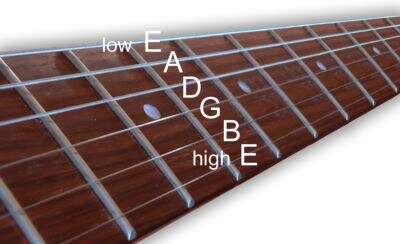
A guitar has six strings, usually tuned from the lowest string to the highest string. Standard tuning is:
• 6th string: E
• 5th string: A
• 4th string: D
• 3rd string: G
• 2nd string: B
• 1st string: E
The notes in an open tuning are changed until they spell a chord. The most common chord types are major, minor, and suspended chords.
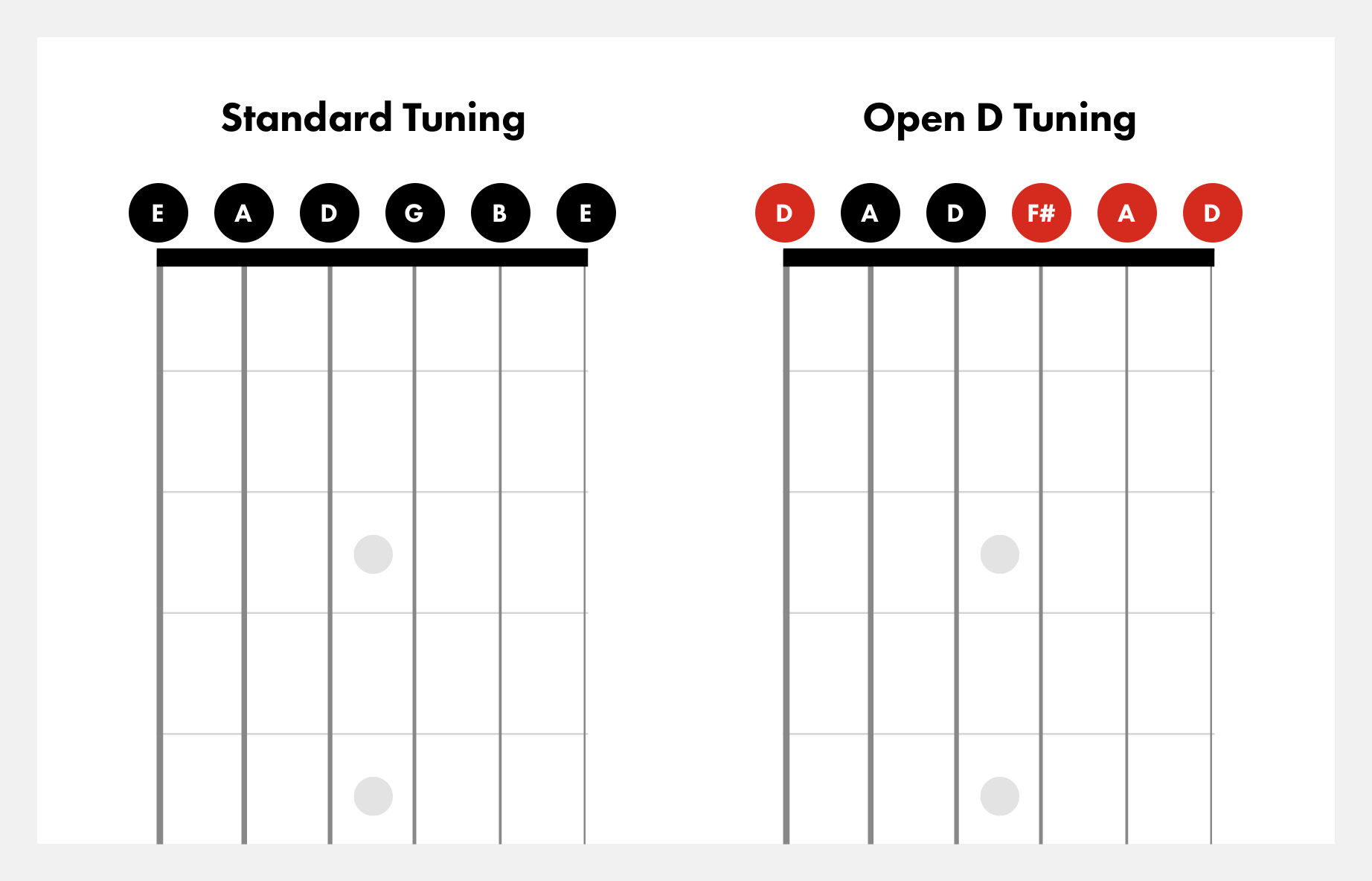
For example, Open D tuning is D-A-D-F#-A-D. These notes create a D major chord because they contain:
• D as the root
• F# as the major third
• A as the perfect fifth
When you place one finger across all six strings at the same fret, you can often create another major chord. This technique is called barring. It is one reason open tuning on a guitar is so useful for slide playing and rhythm guitar.
However, open tuning does not remove the need to understand the fretboard. It changes the note layout. Chords that are easy in standard tuning may become harder, while new shapes may become very simple.
The Most Popular Open Guitar Tunings
Different open tunings create different sounds and playing styles. These are the most useful choices for beginners and experienced players.
Open G Tuning
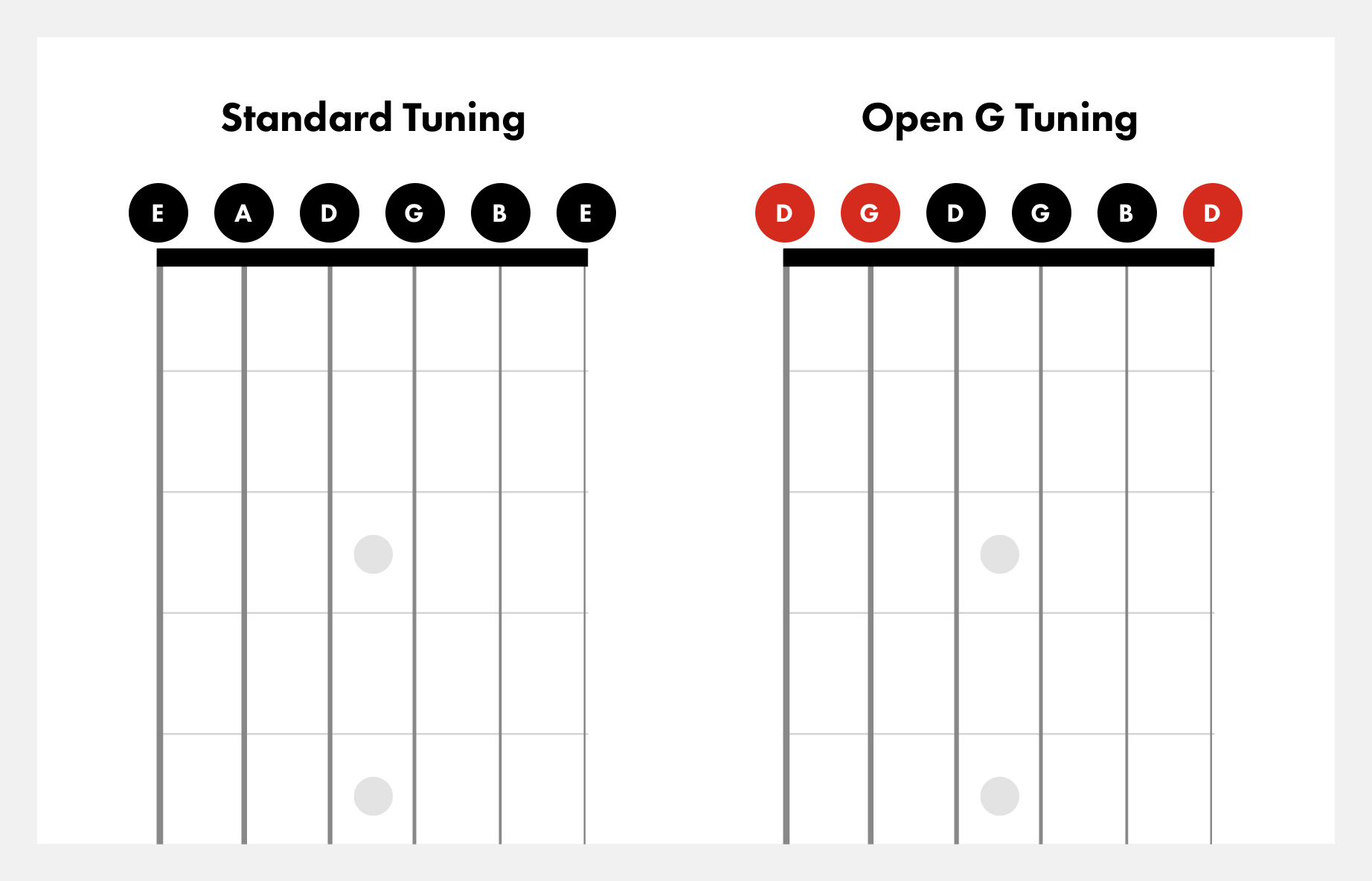
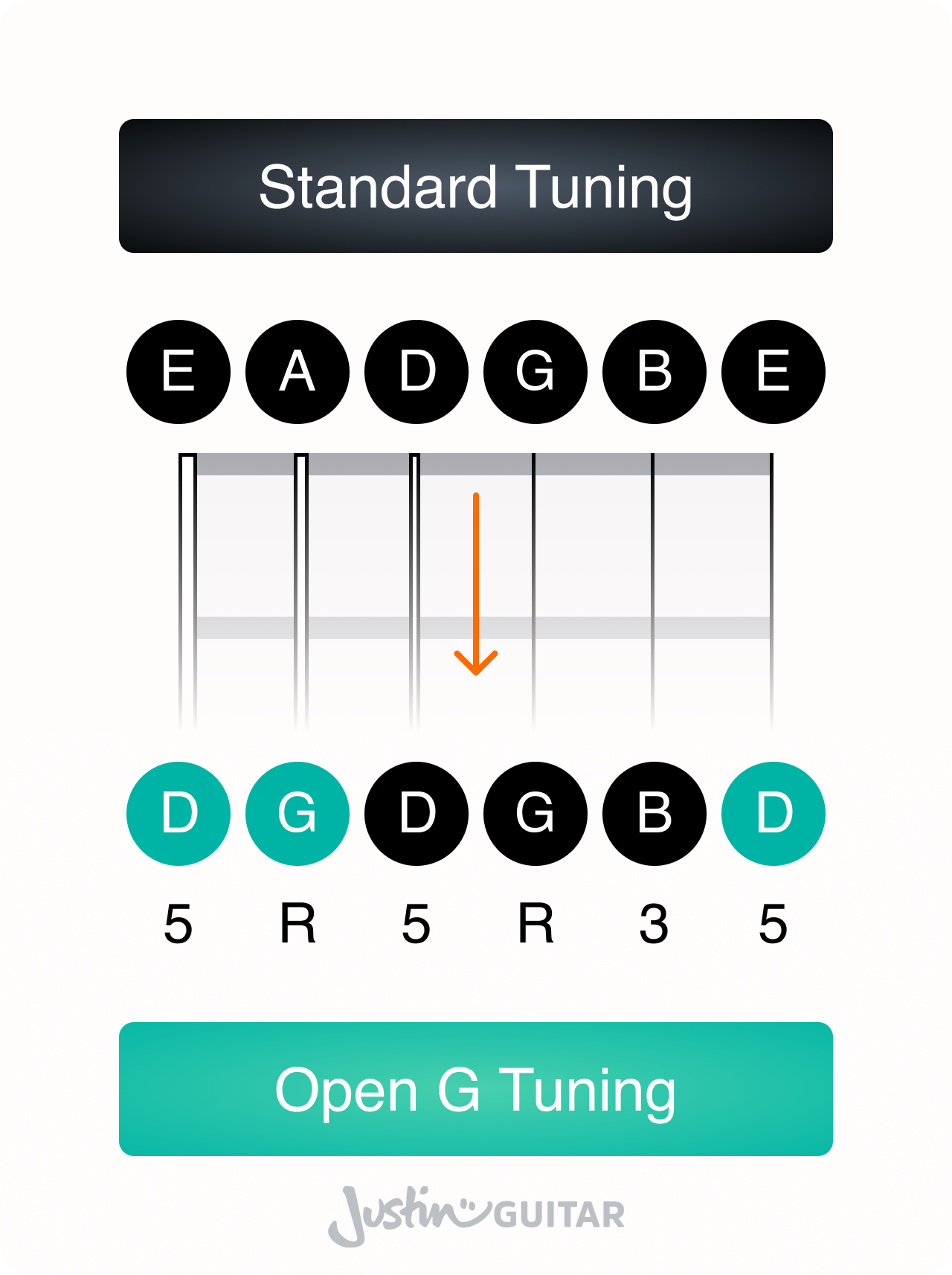
Open G is tuned low to high as:
D-G-D-G-B-D
It creates a G major chord. To reach it from standard tuning, lower the 6th string from E to D, lower the 5th string from A to G, and lower the 1st string from E to D.
Open G is common in:
• Blues slide guitar
• Country rhythm guitar
• Folk music
• Roots rock
• Keith Richards-style rock guitar
Open G lets you play a major chord with one finger across the strings. It also makes alternating bass patterns easy to build.
Open D Tuning
Open D is tuned:
D-A-D-F#-A-D
This tuning has a deep, bright, and powerful tone. It is a favorite for acoustic guitar because the lower strings sound broad and full.
Open D works well for:
• Slide guitar
• Blues
• Folk ballads
• Fingerstyle guitar
• Drones and ringing chords
Because the lowest string is tuned down to D, you should check the string tension and setup. Most guitars handle this tuning well, but frequent changes may require small adjustments.
Open E Tuning
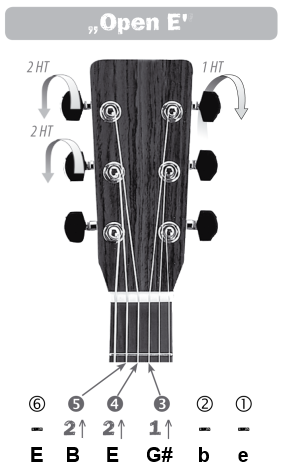
Open E is tuned:
E-B-E-G#-B-E
It produces an E major chord and gives the guitar a strong, bright voice. Many blues players like it because the guitar sits naturally in the key of E.
Open E can place more tension on some strings than Open D. For that reason, many players tune to Open D and use a capo at the second fret to reach the sound and pitch of Open E.
Open A Tuning
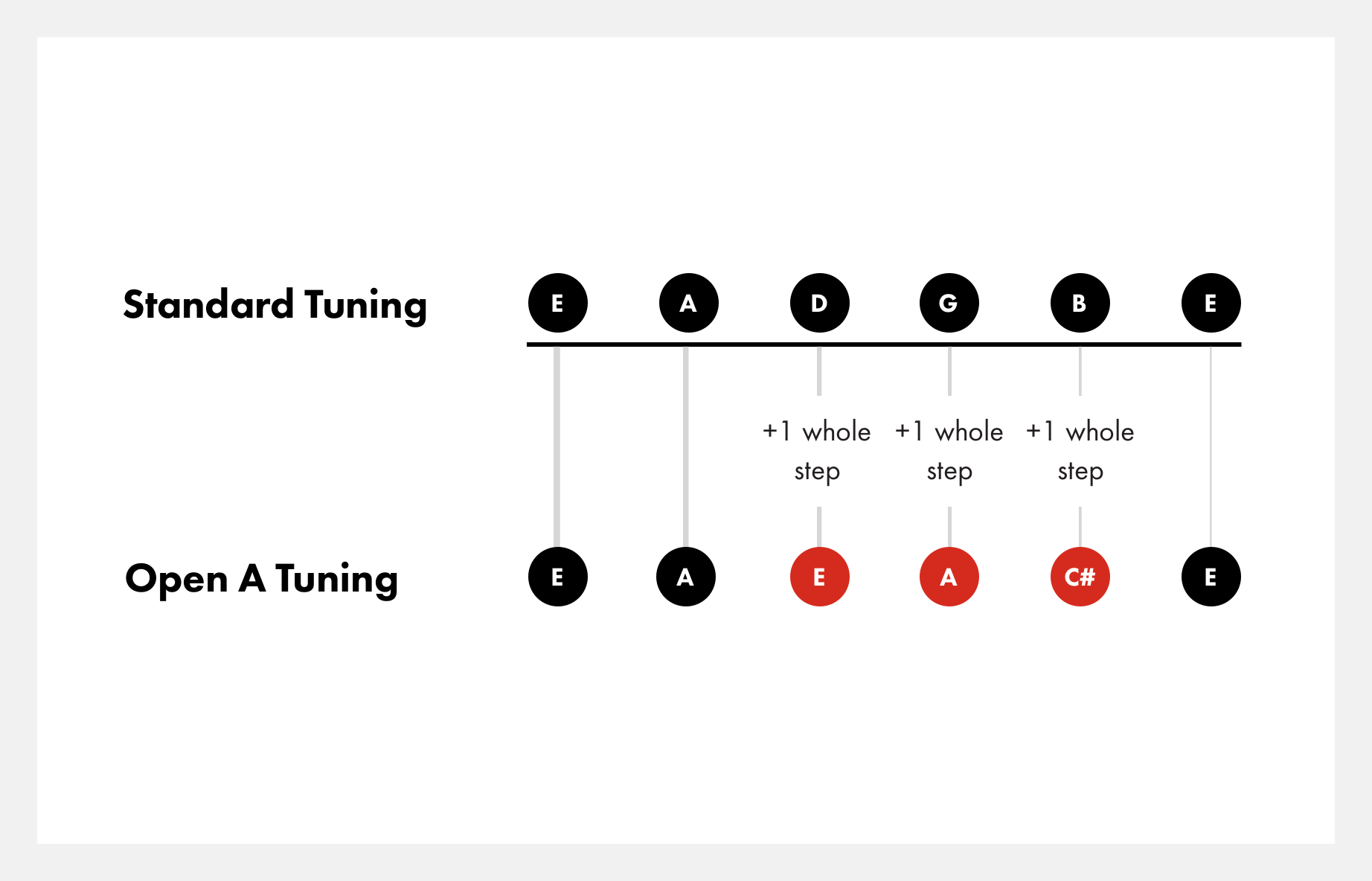
Open A has several versions. One common version is:
E-A-C#-E-A-E
It creates an A major chord. Open A can sound excellent for slide guitar and blues, but it may require more care because some versions raise string tension.
Open C Tuning
A common Open C tuning is:
C-G-C-G-C-E
This tuning creates a C major chord. It offers a wide, deep sound and works well for acoustic arrangements, drones, and modern fingerstyle playing.
Open C lowers several strings. You may need heavier strings or a professional setup if you use it often.

Why Use Open Tuning on a Guitar?
Open tuning on a guitar can make certain musical tasks easier and more expressive. It is not automatically better than standard tuning. It is simply a different tool.
Easier Chord Sounds
A simple finger across the strings can create a full major chord. This helps beginners play rich rhythm parts without learning many difficult shapes.
Stronger Resonance
Several strings share notes from the same chord. They ring together instead of clashing. This creates a wide, open sound that is hard to copy in standard tuning.
Better Slide Playing
A slide needs a clear note layout. Open tuning gives you a complete chord under the slide, so you can move along the fretboard and play major chords in different keys.
Useful Drone Notes
Drone notes continue to ring while you play a melody. Open tunings make these drones easy to access, especially on acoustic guitar.
Fresh Songwriting Ideas
Changing tuning changes your physical habits. Familiar shapes disappear, and new sounds appear. This can help when standard tuning feels predictable.
In my experience, the best use of open tuning is not to play every song differently. It is to use a new tuning when you want a larger sound, a simple drone, or a fresh songwriting path.
Open Tuning Compared With Standard Tuning
Standard tuning is more flexible for general playing. Most guitar lessons, chord charts, scales, and online tutorials use standard tuning. It also makes it easier to switch between different musical keys.
Open tuning on a guitar gives you a stronger chord identity. The open strings support one main chord, so the instrument may sound more dramatic but less neutral.
Here is a simple comparison:
• Standard tuning offers familiar chord shapes and broad flexibility.
• Open tuning offers ringing chords and simple movable shapes.
• Standard tuning is often better for jazz, pop, and complex chord changes.
• Open tuning is often better for slide, blues, folk, and drone-based music.
• Standard tuning makes shared lessons easier.
• Open tuning can inspire new ideas and textures.
You can also combine both approaches. A guitarist may write a song in Open G, then return to standard tuning for a solo or a different section.
The key is to treat tuning as part of the arrangement. It affects the sound, the chord shapes, the string tension, and the way your hands move.
How to Tune a Guitar to Open Tuning
A clip-on tuner is the safest and easiest tool for changing tunings. Tune each string slowly and check the pitch more than once.
Follow these steps:
- Choose an open tuning and write down the string notes.
- Tune the thickest string first.
- Adjust each string in small turns.
- Always tune up to the target note when possible.
- Strum the open strings and check the chord.
- Retune all six strings after the guitar settles.
- Check the tuning again after playing for a few minutes.
When lowering a string, it may go slightly sharp or flat as the tension settles. This is normal. Do not force a tuning peg, especially on an older guitar.
A digital tuner may show enharmonic notes. For example, F# and Gb have the same pitch in equal temperament, but the correct spelling depends on the chord and tuning system.
If the guitar feels unusually tight, the notes buzz, or the bridge begins to lift, stop and return to standard tuning. A repair technician can check the instrument.
How to Play Chords in Open Tuning
The open chord is your home base. From there, explore the fretboard with simple shapes.
In many major open tunings, a full barre across one fret creates a major chord. For example, in Open G, barring the fifth fret often produces a C major chord, while barring the seventh fret produces a D major chord.
Start with this practice plan:
- Strum the open strings slowly.
- Place one finger across every string at the fifth fret.
- Listen for a new major chord.
- Move the barre to the seventh fret.
- Return to the open position.
- Add a simple bass pattern with your thumb.
- Try a slide after the basic sound feels steady.
Do not press harder than needed. Excess pressure can pull notes sharp and make the guitar feel tiring. Light pressure gives cleaner notes and better control.
You can also mute selected strings to create seventh chords, suspended chords, and partial voicings. The open position is only the starting point. Experienced players often combine fretted notes, muted strings, and open drones.
Using a Slide in Open Tuning
Open tuning on a guitar is closely linked with slide guitar because the strings already form a chord. The slide should sit above the fret rather than directly on the metal fret.
Use these basic tips:
• Keep the slide parallel to the frets.
• Touch the string lightly without pressing it to the fretboard.
• Use your picking-hand fingers to mute unwanted noise.
• Place the slide directly over the fret for accurate pitch.
• Practice moving slowly between the root, third, and fifth.
• Use a clean tone before adding heavy effects.
The frets act like visual markers, but your ear must guide the pitch. A slide can sound expressive, but it can also expose weak timing and poor muting.
When I practice slide, I begin with one-note melodies instead of full chords. This builds control. After that, I add chord movement and vibrato.
A small amount of slide vibrato can make a note sing. Move the slide slightly back and forth around the fret, but keep the movement controlled.

Common Problems and Mistakes
Open tuning on a guitar is enjoyable, but beginners often meet a few predictable problems.
Forgetting the New Note Layout
Your familiar chord shapes may no longer work. This is normal. Keep a tuning chart near your music stand and learn one shape at a time.
Using Too Much Finger Pressure
A full barre can feel demanding. Press only until every needed note rings clearly. A lighter touch reduces fatigue.
Ignoring String Tension
Raising a string too far can increase tension. Open E and some Open A variations deserve extra care. Open D and Open G are often gentler because they lower several strings.
Losing Track of the Original Tuning
Label your guitar case or write the current tuning on a note. This prevents confusion when you pick up the guitar later.
Expecting Every Chord to Stay Easy
Open tunings simplify some chords and complicate others. Minor, dominant seventh, and extended chords may need new shapes.
Skipping Intonation Checks
If notes sound in tune at the open position but sharp or flat higher up the neck, the guitar may need an intonation adjustment. A technician can correct this.

Does Open Tuning Damage a Guitar?
Most common open tunings do not damage a well-maintained guitar when used correctly. The main concern is string tension, especially when several strings are raised significantly.
Lower tunings usually reduce tension. Higher tunings can increase tension and place more stress on the neck, bridge, nut, and strings.
Keep these points in mind:
• Use a suitable string gauge for the tuning.
• Avoid tuning above the recommended pitch.
• Check for buzzing, sharp fret ends, or bridge movement.
• Let the guitar settle after changing tuning.
• Ask a qualified guitar technician about permanent alternate tuning.
If you plan to keep a guitar in one open tuning, a setup may improve the action, intonation, and nut fit. A setup is especially helpful when moving from standard tuning to a much lower or higher tuning.
Best Strings for Open Tunings
String choice depends on the tuning, scale length, guitar type, and playing style. There is no single best set for every player.
Lighter strings can feel comfortable and bend easily, but they may become loose in lower tunings. Heavier strings can provide stronger tone and stable tension, but they may feel harder to fret.
For low tunings, many acoustic players choose medium or light-medium strings. For slide, a slightly heavier set may offer better control and sustain.
Electric guitars often work well with nickel-wound strings. Acoustic guitars may use phosphor bronze or 80/20 bronze strings, depending on the desired tone.
Change one variable at a time. If you change the tuning, string gauge, action, and pickup settings together, it becomes hard to understand what improved or caused a problem.
A Simple Practice Routine
Use this 15-minute routine to learn open tuning on a guitar without feeling lost.
- Spend two minutes checking the tuning.
- Strum the open chord and listen to each string.
- Practice major barres at the third, fifth, and seventh frets.
- Play a simple bass pattern with your thumb.
- Add a melody on the first two strings.
- Practice muting with your picking hand.
- Try a basic slide phrase.
- Record one minute of playing and listen back.
Recording helps reveal timing problems that may feel invisible while playing. It also shows whether the open strings ring clearly or create unwanted noise.
Do not rush to learn dozens of tunings. Choose one, learn its root notes, and write a short song. One useful tuning is worth more than ten tunings you barely understand.
Frequently Asked Questions About Open Tuning on a Guitar
What does open tuning mean on a guitar?
Open tuning means tuning the open strings so they form a complete chord. When you strum without fretting any notes, the guitar produces that chord.
Is open tuning easier than standard tuning?
Open tuning can make major chords and slide playing easier. However, some minor and extended chords may require new shapes, so it is different rather than always easier.
What is the easiest open tuning for beginners?
Open G and Open D are popular starting points. Both offer clear chord sounds and work well for rhythm guitar, blues, folk, and slide.
Can I use a capo with open tuning?
Yes. A capo raises the pitch while keeping the same chord shapes. For example, Open D with a capo at the second fret produces an E major sound.
Will open tuning hurt my guitar?
Common open tunings are generally safe when you use the correct pitches. Avoid raising strings too far, and watch for unusual tension, buzzing, or bridge movement.
Can I play normal chords in open tuning?
You can, but the shapes may differ from standard tuning. Major chords are often simple, while minor and seventh chords may need alternate voicings.
Do I need special strings for open tuning?
Not always. Standard strings work for many open tunings, but heavier strings may feel and sound better in lower tunings. Your ideal choice depends on tension and playing style.
Conclusion
Open tuning on a guitar changes the notes of the open strings so they create a complete chord. It can produce rich resonance, simple movable chord shapes, strong drone notes, and a natural platform for slide guitar.
Open G, Open D, and Open E are excellent places to begin. Tune slowly, watch string tension, learn the new note layout, and practice one useful shape at a time.
Pick one tuning this week and write a short rhythm part or slide melody with it. Then explore more guitar guides, share your favorite tuning, and keep building your sound.

Senior Music Reviewer
Alex Carter is a seasoned music reviewer with over a decade of experience in the world of sound and instruments. Passionate about helping musicians and enthusiasts make informed choices, he brings sharp insights and in-depth knowledge to every review. From classical instruments to modern gear, Alex combines technical expertise with a love for music to deliver content that resonates with readers.
As a Senior Music Reviewer and expert author on Tuneluma.com, Alex is dedicated to sharing honest evaluations, practical advice, and thoughtful commentary to guide readers in their musical journey.