Is Stayin Alive Hard To Play On Guitar: Easy Chord Guide
“Stayin’ Alive” is moderately easy on guitar, but its tight rhythm and muted groove can challenge new players.
The Bee Gees’ “Stayin’ Alive” sounds simple because it uses a steady disco pulse and repeating patterns. Yet playing it well takes more than knowing the chords. This guide explains is stayin alive hard to play on guitar, what makes the song tricky, and how to practice it with clean timing, smooth chord changes, and the right feel.
Is “Stayin’ Alive” Hard to Play on Guitar?
For most players, “Stayin’ Alive” is not hard because of complex chords. It is challenging because of rhythm, control, and consistency.
A beginner can learn a simplified chord version in one practice session. A more accurate version may take several days or weeks, especially if you want to copy the original groove.
The difficulty depends on your goal:
• Easy level: Play basic chords with a steady downstroke pattern.
• Medium level: Add muted strums, syncopation, and bass movement.
• Advanced level: Recreate the full disco feel with rhythmic accents, chord inversions, and melodic parts.
So, is stayin alive hard to play on guitar? The honest answer is no for the chords, but yes for the feel. The notes are manageable. The timing must be sharp.
Why “Stayin’ Alive” Can Feel Difficult
The song has a strong dance groove. That groove must stay steady from the first beat to the last. Even a small timing error can make the guitar sound loose.
The main challenges usually come from four areas.
1. The rhythm is more important than the chords
Many players focus on chord shapes first. With “Stayin’ Alive,” rhythm matters more. The guitar should support the beat without covering the vocal or bass.
Disco guitar often uses short, controlled strokes. You do not let every chord ring for a long time. Instead, you play tight hits and muted strokes.
2. The song uses syncopation
Syncopation means placing accents between the main beats. Beginners often want to strum only on beats one, two, three, and four. That approach can sound flat.
The guitar part gains its energy from offbeat accents. Your strumming hand should keep moving, even when your pick does not touch the strings.
3. Muting requires control
Your fretting hand must relax quickly to stop the strings. Your picking hand also helps control unwanted noise.
This can feel strange at first. It is like tapping your foot while opening and closing a door with the same hand. The movement becomes easier after slow, repeated practice.
4. The groove must remain even
The song has a clear pulse. Speeding up or slowing down weakens the entire part.
Use a metronome during practice. Start well below the recording speed, then increase the tempo in small steps.

What Chords Are Used in “Stayin’ Alive”?
Different guitar arrangements use different keys and chord shapes. The original recording is commonly identified in F minor, but many guitarists use easier shapes by changing the key or placing a capo on the neck.
A basic arrangement may use a small group of minor and major chords. The exact shapes depend on the version, tuning, capo position, and whether you are following the vocal, bass, or rhythm guitar part.
Common choices include:
• Open chord shapes for a simple beginner arrangement
• Barre chords for a fuller and more accurate sound
• Chord inversions for smoother movement
• Short chord stabs for a disco rhythm part
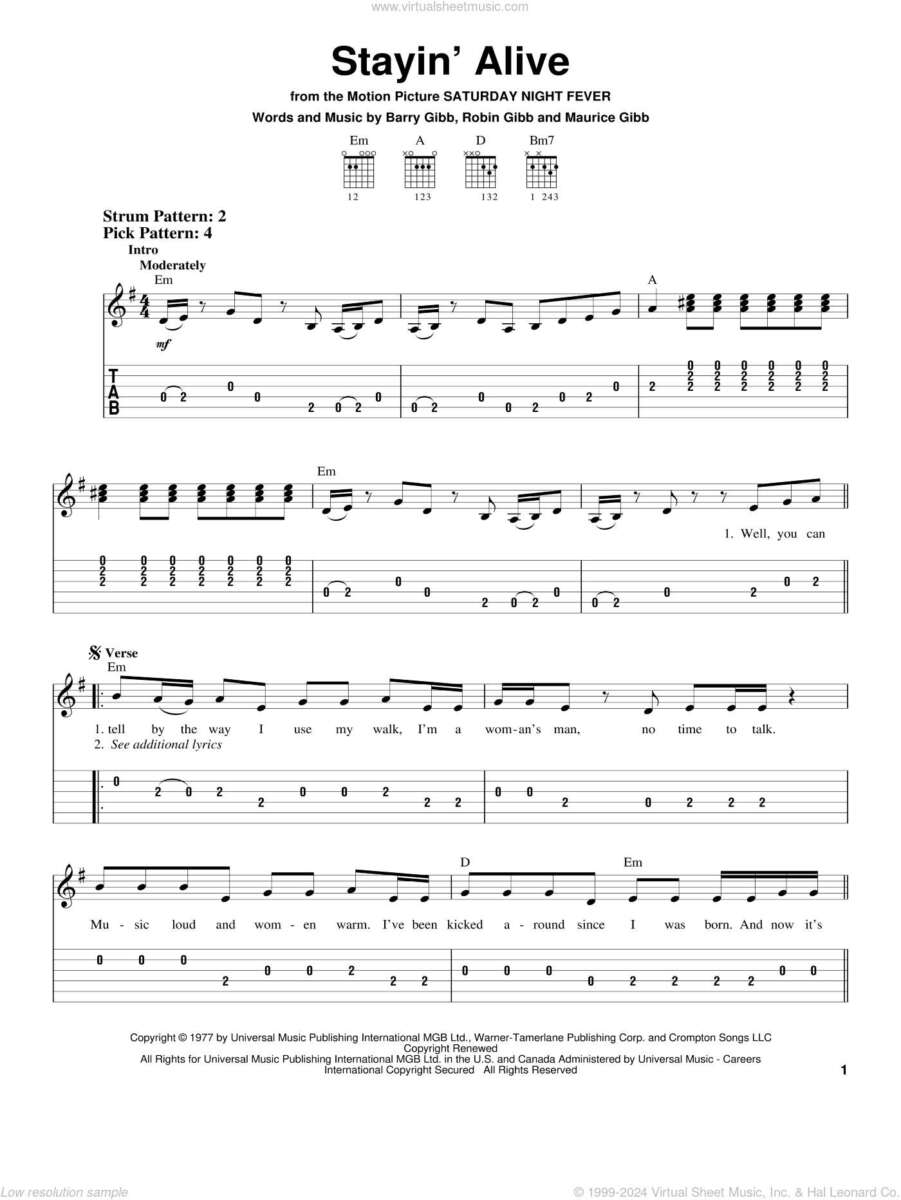
The best approach is to use a licensed chord chart or official sheet music for the exact progression. Online chord versions can differ because many players simplify the harmony.
When asking is stayin alive hard to play on guitar, chord knowledge is only part of the answer. If you can play basic minor chords and a few barre chords, you likely have enough technical skill to begin.

Beginner-Friendly Guitar Approach
If you are new to guitar, do not try to copy every sound at once. Start with a simple version that lets you sing or play along with the recording.
Use this practice plan:
-
Learn the chord changes without strumming.
-
Practice changing chords once per bar.
-
Add simple downstrokes.
-
Use a metronome at a slow tempo.
-
Add muted strokes after the changes feel smooth.
-
Increase the tempo gradually.
For the first stage, let each chord ring. This helps your fretting hand learn the shapes. Once the changes are reliable, shorten the chords to create a tighter rhythm.
A common mistake is trying to play at full speed too soon. The song may feel easy when you listen to it, but the recorded groove is very precise. Slow practice builds control without creating tension.

How to Play the Rhythm More Accurately
The guitar rhythm should feel light, short, and steady. Think of your strumming hand as a pendulum. It keeps moving even when you skip a stroke.
Try this method:
• Count “one and two and three and four and.”
• Keep your hand moving down and up.
• Play only the strokes shown in your chosen rhythm pattern.
• Mute the strings when you do not want a full chord.
• Accent selected offbeats instead of hitting every stroke equally.
Do not grip the pick too tightly. A relaxed grip produces a cleaner sound and reduces hand fatigue.
You can also practice on muted strings. Place your fretting hand lightly across the strings and play the rhythm without forming chords. This isolates the strumming pattern and helps you hear whether your timing is steady.
This is one of the most useful answers to is stayin alive hard to play on guitar. The right hand often needs more work than the left hand.

Playing the Bass-Like Guitar Riff
The famous opening line is closely linked to the bass part. A guitarist can play a simplified version, but it may require single-note picking, position changes, and accurate timing.
Do not rush into the riff if you are still learning basic rhythm. First, listen for the pulse and understand where the notes sit within the bar.
Practice the riff in small pieces:
-
Learn two or three notes at a time.
-
Play each group slowly.
-
Connect the groups without speeding up.
-
Use alternate picking if it feels natural.
-
Practice with a metronome or drum loop.
The original bass sound has a deep, rounded quality that a standard guitar may not reproduce. An electric guitar with a clean or lightly compressed tone can get closer, but the arrangement will still sound different.
This is why is stayin alive hard to play on guitar can have different answers. The chord version is much easier than a detailed version that copies the bass and studio arrangement.

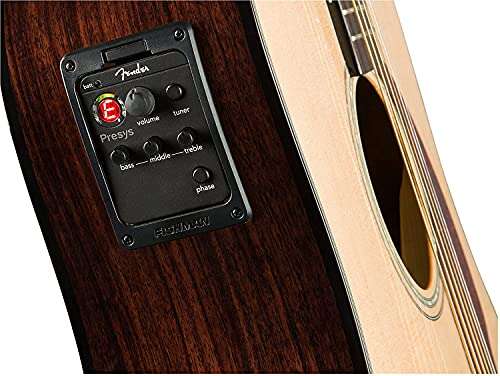
Acoustic Guitar Versus Electric Guitar
“Stayin’ Alive” works on both acoustic and electric guitar, but each instrument presents different challenges.
Acoustic guitar
An acoustic guitar gives the song a warm and direct sound. It works well for singing and casual performances.
However, the strings may ring longer than you want. Muting takes careful fretting-hand control. Heavy strumming can also make the rhythm sound too full.
Electric guitar
An electric guitar makes short, clean rhythm hits easier. You can use a clean tone, light compression, and a small amount of reverb.
Electric guitar also makes it easier to separate the chord rhythm from the single-note parts. Avoid too much distortion because it can blur the tight disco accents.
For a beginner arrangement, acoustic guitar may be more practical. For a faithful rhythm part, electric guitar usually offers more control.
A Practical Practice Routine
A short, focused routine works better than playing the whole song repeatedly. Try this 20-minute plan.
Minutes 1–5: Chord changes
Move between the main chord shapes without strumming. Keep your fingers close to the fretboard.
Minutes 6–10: Muted rhythm
Mute the strings and practice the strumming pattern. Focus on steady movement rather than speed.
Minutes 11–15: Chords and rhythm
Add the chord shapes. Keep the strokes short and listen for unwanted string noise.
Minutes 16–20: Play with the recording
Start with a slower backing track if possible. Notice whether your guitar stays with the beat.
When I work on rhythm songs, I find that recording a short practice take reveals problems quickly. You may feel steady while playing, yet hear rushing or uneven accents during playback.
That small check can save hours. It shows whether the issue is chord changes, strumming tension, or tempo control.
Common Mistakes to Avoid
Many players make the same errors when learning this song.
• Playing every chord with long, open strums
• Using too much force in the picking hand
• Ignoring muted strokes
• Practicing without a steady beat
• Changing chords before the correct beat
• Trying to copy the bass line and rhythm at the same time
• Adding effects before fixing timing
The most important lesson is simple: clean rhythm beats flashy technique. A basic part played with strong timing will sound better than a complicated part played unevenly.
If your hand becomes tense, stop and shake it out. Tension often causes missed strokes, stiff chord changes, and unwanted noise.
How Long Does It Take to Learn?
A complete beginner may learn a simple chord version in one to three practice sessions. Playing it smoothly with the recording may take one to two weeks of regular practice.
A more detailed arrangement can take longer. The time depends on your experience with:
• Barre chords
• Muted strumming
• Syncopated rhythm
• Single-note picking
• Playing with a metronome
Practice quality matters more than practice length. Ten focused minutes can help more than an hour of repeating the song without a plan.
If you practice five days per week, you should notice better timing and smoother changes fairly quickly. Do not compare your progress with a guitarist who has years of rhythm experience.
Is “Stayin’ Alive” Good for Beginners?
Yes, the song can be good for beginners if you use a simplified arrangement. It teaches several useful guitar skills without requiring advanced theory.
You can learn:
• Minor and major chord changes
• Steady eighth-note strumming
• Muted rhythm guitar
• Syncopated accents
• Playing with a backing track
• Listening for the bass and drum pulse
The song is less suitable as a first-ever guitar song if you are still learning how to hold a pick or form basic chords. In that case, start with the chord shapes and a slow rhythm.
For a player with a few months of experience, is stayin alive hard to play on guitar? It is usually a realistic and rewarding challenge.
Helpful Gear and Settings
You do not need expensive equipment to play this song. A basic guitar, tuner, pick, and metronome are enough.
For electric guitar, try these general settings:
• Use a clean amp channel.
• Add light compression if available.
• Keep distortion low.
• Use a modest amount of reverb.
• Choose the bridge or middle pickup as a starting point.
The exact tone is less important than timing. A perfect tone cannot hide an uneven rhythm.
A drum machine or backing track can help you feel the disco pulse. Make sure the track is legally obtained, and use official or licensed music materials when learning the exact arrangement.
PAA-Style Questions About Learning the Song
Is “Stayin’ Alive” easy on acoustic guitar?
A basic acoustic version is fairly easy. The main challenge is stopping the chords quickly enough to create a tight, rhythmic sound.
What guitar skills are needed for “Stayin’ Alive”?
You need basic chord changes, steady strumming, and simple muting. A detailed version may also require barre chords and single-note picking.
Should I use a capo for “Stayin’ Alive”?
A capo can make the chord shapes easier or move the song into a comfortable singing key. Use the capo position shown in a reliable, licensed arrangement.
Frequently Asked Questions About Is Stayin Alive Hard to Play on Guitar
Is “Stayin’ Alive” hard for a complete beginner?
A simplified version is approachable, but the rhythm may challenge someone who has never played before. Begin with slow chord changes and muted-string strumming.
What is the hardest part of playing “Stayin’ Alive” on guitar?
The hardest part is usually the tight, syncopated rhythm. Muting the strings and keeping a steady pulse require more control than the chord shapes themselves.
Can I play “Stayin’ Alive” with basic chords?
Yes, you can play a simplified arrangement with basic chords. It will not copy every part of the original recording, but it can work well for singing and casual performance.
Do I need barre chords to play “Stayin’ Alive”?
No. Open chords can make the song easier for beginners. Barre chords and inversions become useful when you want smoother movement or a closer match to the recording.
How can I improve my timing for this song?
Practice with a metronome or drum loop at a slow speed. Keep your strumming hand moving evenly and record yourself to find places where you rush.
Should I learn the bass line or chord rhythm first?
Learn the chord rhythm first unless you already have strong single-note technique. A steady rhythm gives you the foundation needed to add the bass-like parts later.
What tempo should I use while practicing?
Start at a tempo where you can play without tension or missed changes. Increase the speed by small steps only after you can repeat the pattern several times cleanly.
Conclusion
So, is stayin alive hard to play on guitar? The chord version is beginner-friendly, but the famous groove requires careful timing, muted strokes, and relaxed strumming.
Start with simple chords, practice the rhythm on muted strings, and use a metronome before playing with the recording. Once the basic groove feels natural, add bass notes, inversions, and tighter accents.
Pick up your guitar and work on one small section today. Then explore a reliable chord chart, backing track, or lesson to keep building your rhythm skills.

Senior Music Reviewer
Alex Carter is a seasoned music reviewer with over a decade of experience in the world of sound and instruments. Passionate about helping musicians and enthusiasts make informed choices, he brings sharp insights and in-depth knowledge to every review. From classical instruments to modern gear, Alex combines technical expertise with a love for music to deliver content that resonates with readers.
As a Senior Music Reviewer and expert author on Tuneluma.com, Alex is dedicated to sharing honest evaluations, practical advice, and thoughtful commentary to guide readers in their musical journey.