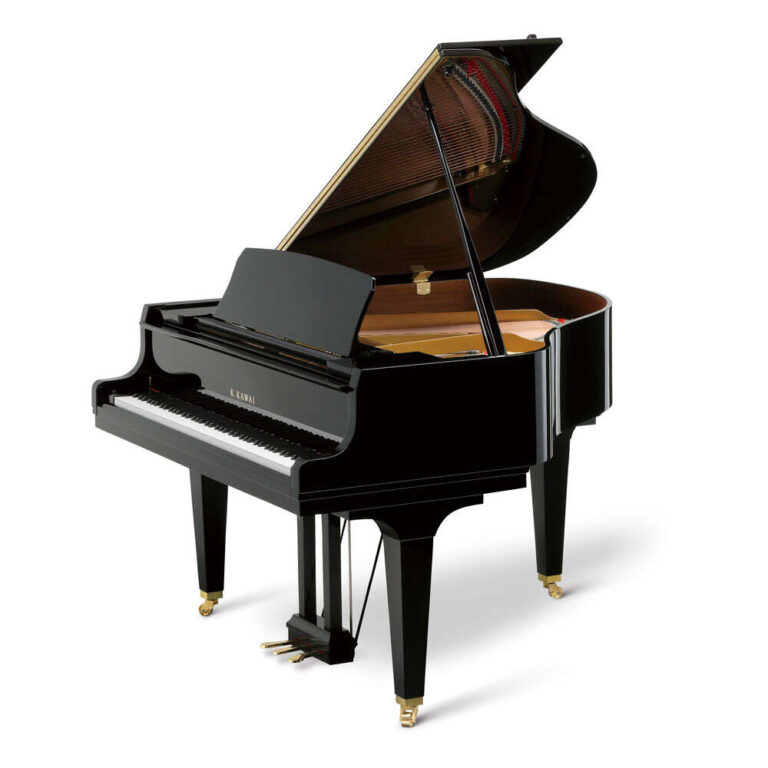
What Is An Octave On A Piano: Simple Guide
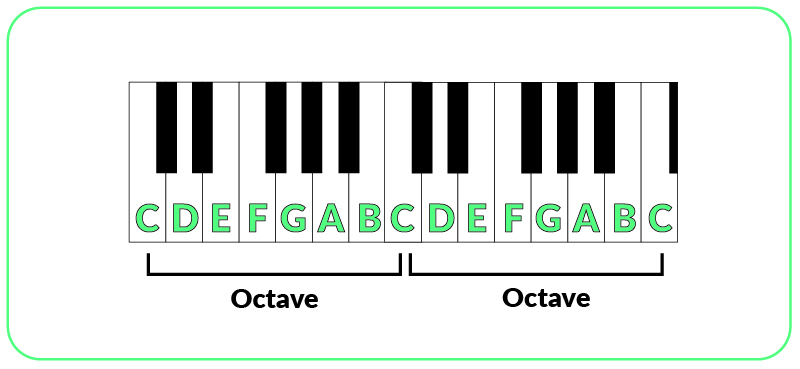
An octave on a piano is the distance from one note to the next note with the same letter name, higher or lower. For example, from C4, known as middle C, to C5 is one octave. That distance contains 12 half steps and 13 piano keys when both C notes are counted.
If you play both notes together, they sound like the same type of note at different heights. The higher note has twice the frequency of the lower note. This simple pattern helps shape scales, chords, melodies, and piano layouts.

How Many Keys Are in a Piano Octave?
One piano octave contains 12 semitones, also called half steps.
On a piano, those 12 half steps are played across:
- 7 white keys
- 5 black keys
- 13 keys when you count both notes at the ends
For example, the octave from C4 to C5 includes:
| Step | Note |
|---|---|
| 1 | C4 |
| 2 | C♯4 or D♭4 |
| 3 | D4 |
| 4 | D♯4 or E♭4 |
| 5 | E4 |
| 6 | F4 |
| 7 | F♯4 or G♭4 |
| 8 | G4 |
| 9 | G♯4 or A♭4 |
| 10 | A4 |
| 11 | A♯4 or B♭4 |
| 12 | B4 |
| 13 | C5 |
The first and last notes have the same letter name: C. The notes between them create the 12-step distance called an octave.
Why are there 13 keys but 12 steps?
The number of keys and the number of spaces between keys are different.
Think of a short staircase. If a staircase has 13 steps, there are 12 gaps from the first step to the last. Piano octaves work in the same way:
- 13 keys are touched if you include both end notes.
- 12 half steps separate the two notes.
- One octave is the full distance.
This is why a player may count either 12 or 13, depending on what they are measuring.

What Does an Octave Sound Like?
An octave sounds like the same note placed higher or lower. Play C4 and C5 together, and the two notes blend well because their frequencies have a simple 2-to-1 relationship.
C4 has a frequency of about 261.63 hertz in standard equal temperament. C5 has a frequency of about 523.25 hertz. The higher C vibrates twice as fast as the lower C.
This does not mean the two notes sound identical. One is higher in pitch. But they share the same letter name and have a strong sense of unity.
That is why singers, piano players, and composers often describe an octave as a repeated version of a note. It is like seeing the same color in a lighter shade.


Why do octave notes share the same letter name?
The musical alphabet repeats after seven letter names:
A, B, C, D, E, F, G
After G, the pattern starts again at A. The note names repeat, but the pitch moves higher or lower.
For example:
- C4 to C5 is one octave.
- G3 to G4 is one octave.
- A4 to A5 is one octave.
- E2 to E3 is one octave.
The number tells you which register, or pitch range, the note belongs to. The letter tells you the note name.
Octave versus unison
Two notes with the same pitch form a unison. For example, two instruments playing the same C4 play in unison.
Two notes with the same letter name but a 12-half-step gap form an octave. C4 and C5 are not the same pitch, but they are the same note class at different heights.

How to Find an Octave on a Piano
You can find an octave by starting on any key and moving 12 half steps in either direction.
Follow these steps:
- Pick any piano key.
- Count the starting key as your first note, but not as a step.
- Move one key at a time, including black and white keys.
- Stop when you reach the next note with the same letter name.
- Check that you moved 12 half steps.
For example, start on F:
- F to F♯ is 1 half step.
- F♯ to G is 2 half steps.
- Continue across every key.
- The next F is 12 half steps away.
You can also use the key pattern. Find any C by looking for the white key just to the left of a group of two black keys. The next C is one octave higher.
Finding middle C
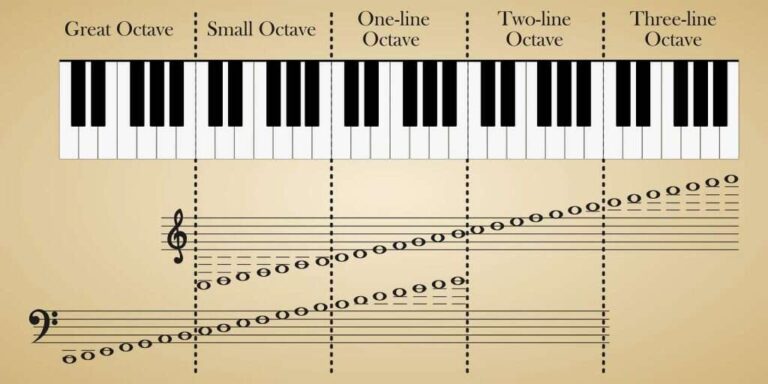
Middle C is usually labeled C4 in scientific pitch notation. On a standard 88-key piano, it sits near the center of the keyboard.
It is the first C above the two black keys closest to the middle of the piano. On a full-size piano, middle C is the 40th key from the left.
Some music systems label middle C as C3 instead of C4. This difference comes from the numbering system used by the software, instrument, or musical tradition. The physical note is the same.


Octaves above and below middle C
Using the common scientific pitch system:
- C3 is one octave below middle C.
- C4 is middle C.
- C5 is one octave above middle C.
- C6 is two octaves above middle C.
- C2 is two octaves below middle C.
The number changes when the note name changes from B to C. For example, B3 is just below C4, while C4 begins the next numbered octave.
How Octaves Relate to the 88 Keys on a Piano
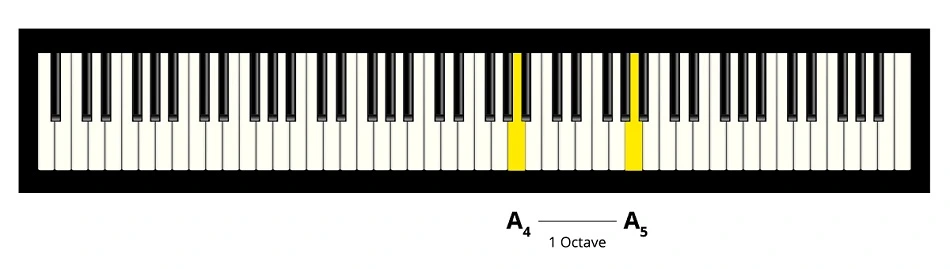
A standard 88-key piano ranges from A0 to C8. It does not contain exactly seven complete octaves.
The full range is:
- A0 to A1: part of an octave
- A1 to A2: one full octave
- A2 to A3: one full octave
- A3 to A4: one full octave
- A4 to A5: one full octave
- A5 to A6: one full octave
- A6 to A7: one full octave
- A7 to C8: part of an octave
Together, this gives a range of seven complete octaves plus a minor third.
Another way to state the range is:
- 88 total keys
- 52 white keys
- 36 black keys
- 87 half-step spaces from A0 to C8
The number of complete octaves depends on where you start counting. The piano has more than seven octaves, but the lowest and highest parts are incomplete.
Do all pianos have 88 keys?
No. Many pianos have fewer keys.
Common examples include:
- 61-key keyboards
- 76-key stage keyboards
- 88-key digital pianos
- Small children’s keyboards with fewer keys
A keyboard can still contain several octaves even when it has fewer than 88 keys. A 61-key keyboard has 60 half-step spaces from its first key to its last, but its exact octave range depends on the starting and ending notes.
Some digital instruments also offer an octave shift function. This moves the sound up or down by one or more octaves without moving your hands to a new part of the keyboard.

Why Octaves Matter in Piano Playing
Octaves matter because they help you read music, build chords, move melodies, and understand the keyboard.
Octaves help you read the keyboard
The same seven-note pattern repeats across the piano. Once you learn the notes in one octave, you can find the same notes in other octaves.


For example, if you know where C, D, and E are near middle C, you can find every other C, D, and E by using the repeating black-key pattern.
Octaves expand a melody
A melody can use the same note name in different ranges. A composer may write a tune near middle C, then repeat it one octave higher to make it sound brighter.
A piano player may also move a melody down an octave to fit a singer’s voice. The notes keep the same basic shape, but the pitch range changes.
Octaves build fuller chords
Pianists often double a chord note at the octave. A left hand might play a low C while the right hand plays a higher C as part of a chord.
This can make the music sound wider without changing the chord’s basic identity. The effect is common in pop, rock, classical, jazz, and film music.
Octaves support scales and finger patterns
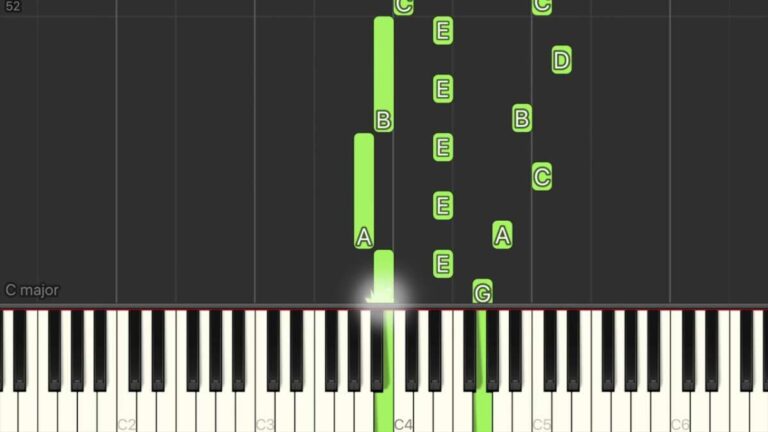
Most major and minor scales repeat their starting note one octave higher. For example, the C major scale runs from C4 to C5:
C, D, E, F, G, A, B, C
The first and last C mark the octave boundary. Many piano exercises use this span because it covers a complete seven-note scale.
Octave, Scale, and Interval: What Is the Difference?
An octave is an interval, which means the distance between two notes. A scale is a series of notes arranged in order.
These terms describe different things:
| Term | Meaning | Example |
|---|---|---|
| Note | One pitch | C4 |
| Half step | The smallest usual piano distance | E to F |
| Whole step | Two half steps | C to D |
| Interval | The distance between two notes | C to G |
| Octave | An interval of 12 half steps | C4 to C5 |
| Scale | A planned series of notes | C major: C-D-E-F-G-A-B-C |
An octave is not a scale by itself. A C major scale happens to span one octave, but it uses only eight note names while the piano contains 13 keys in that range.
Is an octave always from C to C?
No. An octave can start on any note.
Examples include:
- D3 to D4
- E4 to E5
- F♯2 to F♯3
- B4 to B5
C-to-C is often used in examples because the piano’s black-and-white pattern makes C easy to find. It is not the only type of octave.


How to Practice Octaves Safely
To practice piano octaves, start with relaxed hands and a slow speed. An octave spans eight letter names, so it may feel wide for smaller hands.
Try this simple exercise:
- Play C4 with your right thumb.
- Play C5 with your right fifth finger.
- Release the keys.
- Repeat slowly.
- Move to D4 and D5.
- Continue through the notes you can reach without strain.
Keep your wrist level and avoid forcing your hand open. Your fingers should land on the keys with control, not with a hard stretch.
For left-hand practice, use the fifth finger on the lower note and the thumb on the higher note. Again, stay slow and relaxed.
Stop if you feel pain, numbness, or tingling. Normal effort can feel tiring, but sharp pain is a warning to rest and review your technique with a qualified piano teacher or clinician.
Octave chords
An octave chord uses the same note name twice at different pitches. For example:
- Left hand: C3 and C4
- Right hand: C4 and C5
You can practice octave chords with a major scale, a bass line, or a simple rhythm. Begin with light pressure. Playing loud does not require hitting the keys as hard as possible.

Common Mistakes About Piano Octaves
Mistake 1: Counting only the white keys
A piano octave includes black keys as well as white keys. From C to the next C, there are seven white keys and five black keys.
If you count only C, D, E, F, G, A, B, and the next C, you are counting the letter names in the scale, not all the piano keys.
Mistake 2: Calling 13 keys “13 steps”
There are 13 keys from one C to the next C when both Cs are included. The distance is still 12 half steps.
The first key is a starting point. The next 12 keys show the movement from that point to the next octave.
Mistake 3: Thinking every C is middle C
Only one C is middle C. Other Cs are higher or lower.
Middle C is C4 in the common scientific pitch system. C3, C5, and C6 are also Cs, but they sit in different octaves.
Mistake 4: Assuming every piano starts at C
A standard 88-key piano starts at A0 and ends at C8. The first key is not C.
This is why the low end and high end do not form complete octaves.
Mistake 5: Believing an octave has the same physical width on every instrument
The musical distance stays the same, but the physical key size may vary. A full-size acoustic piano, compact digital piano, and small keyboard may use different key dimensions.
The sound interval is still 12 half steps, even when the hand stretch feels different.

Quick Takeaways
- An octave is the distance between one note and the next note with the same letter name.
- A piano octave contains 12 half steps.
- There are 13 keys from one end note to the next when both end keys are counted.
- A standard 88-key piano covers A0 to C8.
- Middle C is commonly labeled C4.
- Octave notes have a 2-to-1 frequency relationship.
- An octave can start on any note, not just C.
- Octaves help with scales, chords, melodies, bass lines, and piano practice.
Frequently Asked Questions
Is an octave 8 notes or 12 notes?
An octave contains eight letter names when you count the starting and ending notes, such as C-D-E-F-G-A-B-C. It contains 12 half steps and 13 piano keys when both end keys are included.
How many octaves are on an 88-key piano?
An 88-key piano covers seven complete octaves plus a minor third. Its full range is A0 to C8.
Is middle C one octave above C?
No. Middle C is C4. The C one octave above it is C5. The C one octave below it is C3.
Can an octave begin on a black key?
Yes. Any note can begin an octave. For example, F♯ to the next F♯ is one octave.
Why do octave notes sound similar?
Their frequencies have a 2-to-1 relationship. The higher note vibrates twice as fast as the lower note, which gives both notes a strong sense of connection.
How do I count an octave on a piano?
Start on any key and move 12 keys to the right or left, counting each move as one half step. The ending key will have the same letter name as the starting key.
Conclusion
An octave on a piano is a 12-half-step interval between two notes with the same letter name. From C4 to C5 is one clear example, but the same idea works from any note.
To find one, choose a key and move 12 half steps. To understand one musically, listen for the same note quality at a higher or lower pitch. Once this pattern is clear, the repeating layout of the piano becomes much easier to read and use.

Senior Music Reviewer
Alex Carter is a seasoned music reviewer with over a decade of experience in the world of sound and instruments. Passionate about helping musicians and enthusiasts make informed choices, he brings sharp insights and in-depth knowledge to every review. From classical instruments to modern gear, Alex combines technical expertise with a love for music to deliver content that resonates with readers.
As a Senior Music Reviewer and expert author on Tuneluma.com, Alex is dedicated to sharing honest evaluations, practical advice, and thoughtful commentary to guide readers in their musical journey.