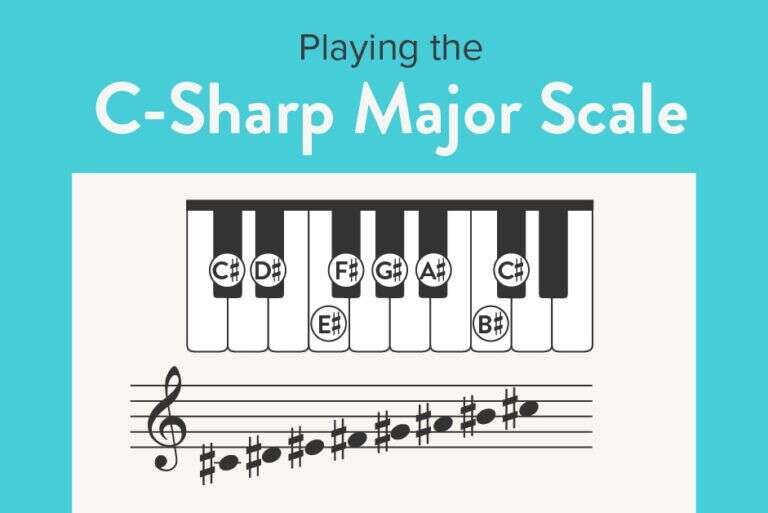
What Is A Sharp Major Scale Piano: Easy Guide
A sharp major scale on piano uses one or more sharp notes and follows the major scale pattern of whole and half steps.
If you are asking what is a sharp major scale piano, you are likely learning key signatures, finger patterns, or piano scales. This guide explains the notes, theory, fingering, common mistakes, and simple practice methods so you can play sharp major scales with confidence.
What Is a Sharp Major Scale on Piano?
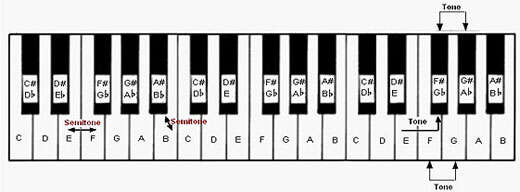
The phrase what is a sharp major scale piano usually refers to a major scale that includes sharp notes. A sharp raises a natural note by one half step. On a piano, that usually means moving to the black key just to the right of a white key.
For example:
• F becomes F♯
• C becomes C♯
• G becomes G♯
• D becomes D♯
A major scale always follows this pattern:
• Whole step
• Whole step
• Half step
• Whole step
• Whole step
• Whole step
• Half step
On a piano, a whole step skips one key. A half step moves to the very next key, whether it is black or white.
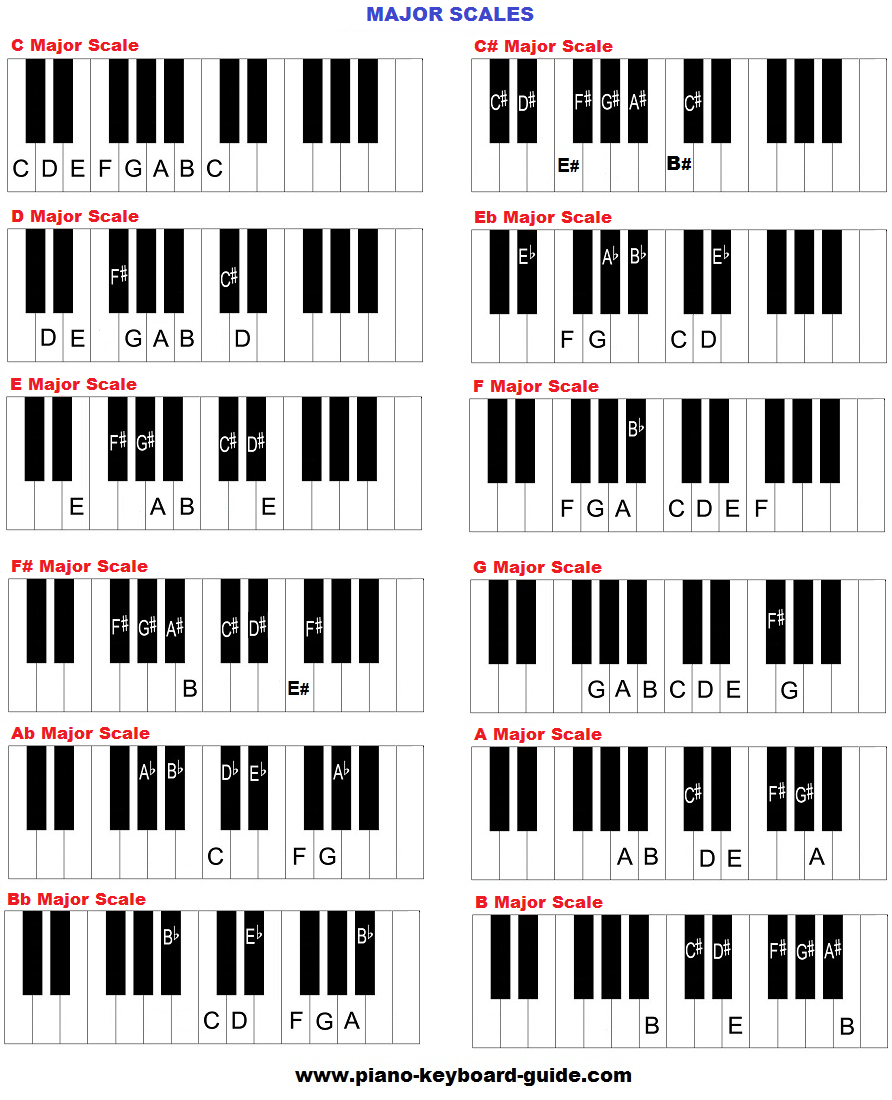
The term sharp major scale piano is not the formal name of one single scale. It describes major scales that use sharp symbols in their notes or key signatures. Some scales have one sharp, while others have several.

Major Piano Scales That Use Sharps
Several major scales use sharps. The number of sharps increases in a set order called the circle of fifths.
Here are the main sharp major scales:
| Major scale | Sharps in the key signature | Sharp notes |
|---|---|---|
| G major | 1 | F♯ |
| D major | 2 | F♯, C♯ |
| A major | 3 | F♯, C♯, G♯ |
| E major | 4 | F♯, C♯, G♯, D♯ |
| B major | 5 | F♯, C♯, G♯, D♯, A♯ |
| F♯ major | 6 | F♯, C♯, G♯, D♯, A♯, E♯ |
| C♯ major | 7 | F♯, C♯, G♯, D♯, A♯, E♯, B♯ |
G major is often the first sharp scale taught after C major. It contains only one black key, F♯, so it feels manageable for beginners.
The sharp order is always:
F♯, C♯, G♯, D♯, A♯, E♯, B♯
A useful memory phrase is “Father Charles Goes Down And Ends Battle.” Each word begins with the letter name of the next sharp.
The G Major Scale: The First Common Sharp Scale
G major is often the easiest answer when someone asks about a sharp major scale piano. Its notes are:
G, A, B, C, D, E, F♯, G
The scale has one sharp: F♯. Every other note is a white key.
For the right hand, a common fingering is:
- G
- A
- B
- C
- D
- E
- F♯
- G
For the left hand, use:
- G
- A
- B
- C
- D
- E
- F♯
- G
The thumb crosses after the third finger in the right hand. In the left hand, the middle fingers help create a smooth shape. Do not force the thumb under the hand. Let the wrist stay loose while the fingers move naturally.
A useful practice insight is to treat the scale as a smooth path, not as eight separate notes. Many players pause before the thumb crossing. That pause makes the scale sound uneven, even when every note is correct.
D Major, A Major, and E Major Scales
After G major, many students learn D major, A major, and E major. These scales add sharps in a clear pattern.
D major
D major contains:
D, E, F♯, G, A, B, C♯, D
Its key signature has F♯ and C♯. The right hand commonly uses 1, 2, 3, 1, 2, 3, 4, 5.
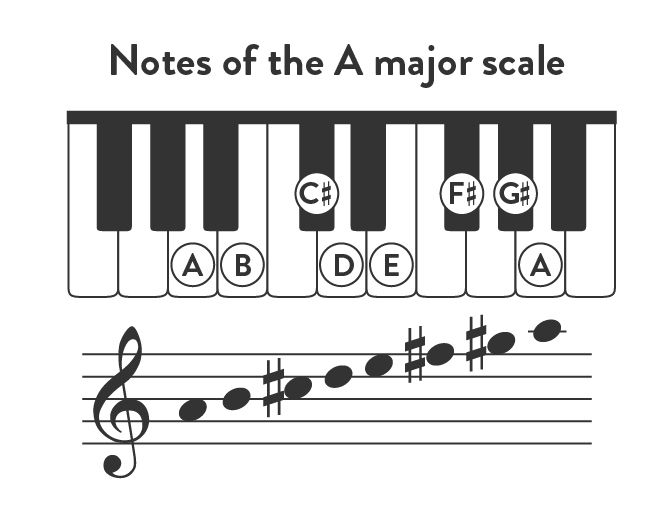
A major
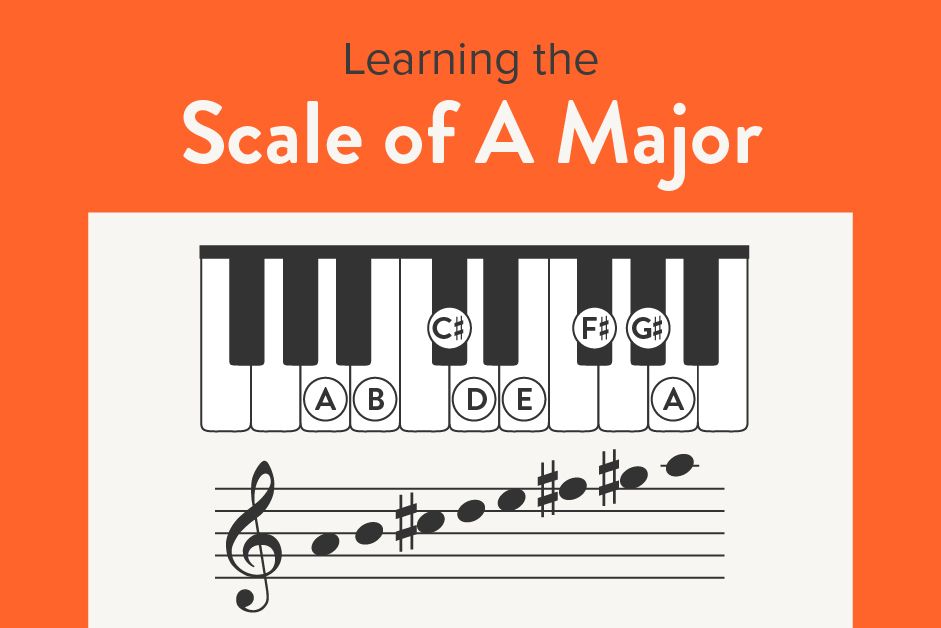
A major contains:
A, B, C♯, D, E, F♯, G♯, A
Its key signature has F♯, C♯, and G♯. The right-hand fingering is usually 1, 2, 3, 1, 2, 3, 4, 5.
E major
E major contains:
E, F♯, G♯, A, B, C♯, D♯, E
Its key signature has four sharps. E major uses many black keys, but those black keys can help the hand fit the keyboard well.
The important lesson in sharp major scale piano practice is that black keys are not always harder. They can give your fingers useful space and support. The real challenge is learning the correct notes and keeping the hand relaxed.
F-Sharp Major and C-Sharp Major
F♯ major and C♯ major contain many sharps. They may look difficult at first, but their finger patterns are often comfortable because the hand naturally rests around the black keys.
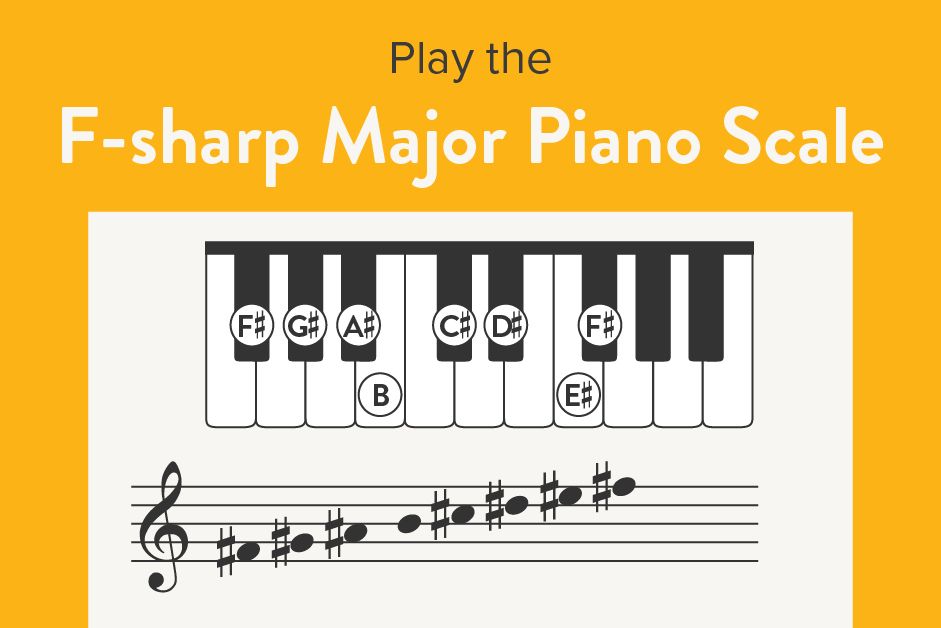
F♯ major contains:
F♯, G♯, A♯, B, C♯, D♯, E♯, F♯
Notice that E♯ sounds like F on a piano. It is still written as E♯ because each letter name must appear once in a major scale.
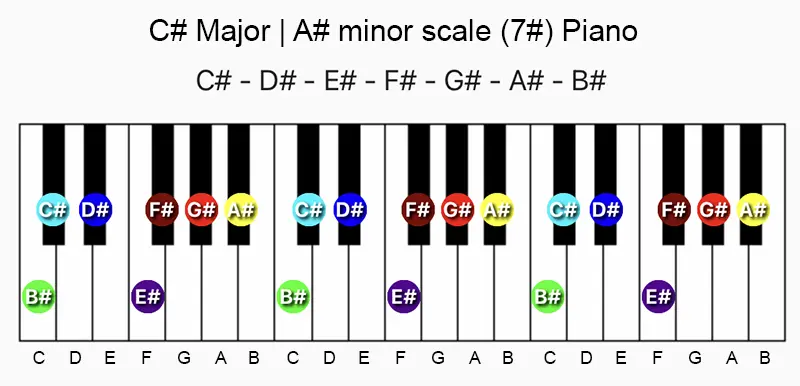
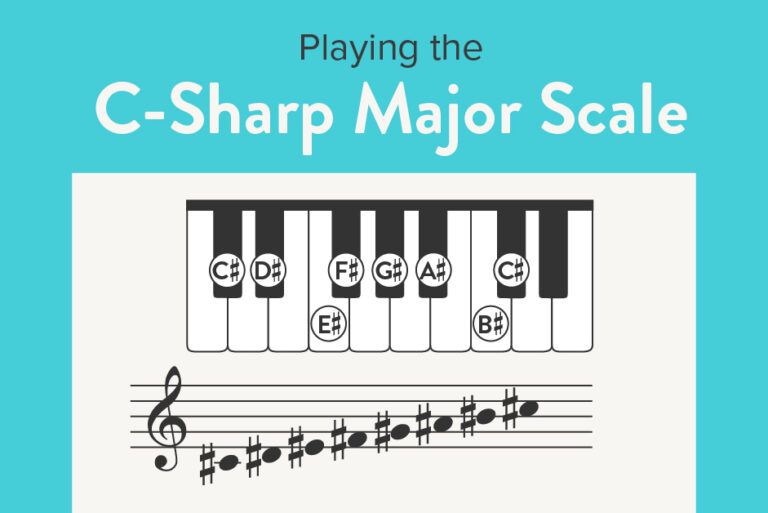
C♯ major contains:
C♯, D♯, E♯, F♯, G♯, A♯, B♯, C♯
B♯ sounds like C on the piano. This is called an enharmonic spelling. The notes sound the same, but the spelling shows the scale’s musical structure.
When learning what is a sharp major scale piano, this point matters. A scale is not only a group of sounds. It is also a written system that shows the role of each note.
How to Find Any Sharp Major Scale
You can build a sharp major scale without memorizing every note. Start with the root note and apply the major scale pattern.
Follow these steps:
- Choose the starting note.
- Move up a whole step.
- Move up another whole step.
- Move up a half step.
- Move up a whole step.
- Move up a whole step.
- Move up a whole step.
- Move up a half step to the octave.
For example, start on D:
• D to E is a whole step
• E to F♯ is a whole step
• F♯ to G is a half step
• G to A is a whole step
• A to B is a whole step
• B to C♯ is a whole step
• C♯ to D is a half step
This creates the D major scale.
A common mistake is to use only the black keys marked with sharps. The scale pattern decides which notes belong in the scale. Some sharp major scales also include white keys, and some include unusual spellings such as E♯ and B♯.
Piano Fingering for Sharp Major Scales
Correct fingering helps you play a sharp major scale piano smoothly. It also prepares your hand for arpeggios, chords, and fast passages.
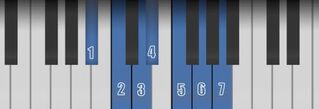
For many major scales, the right hand follows a pattern that includes a thumb crossing after the third finger. The left hand often uses a different crossing pattern.
General tips include:
• Keep the fingers close to the keys.
• Avoid lifting the fingers too high.
• Keep the thumb relaxed.
• Move the arm slightly instead of twisting the wrist.
• Practice each hand alone before combining them.
• Use a slow metronome and increase speed gradually.
Do not judge your technique only by speed. A slow, even scale builds better control than a fast scale with uneven accents.
One practical method is to play the scale in groups of two or four notes. Listen for equal volume and timing. Then connect the groups until the scale feels like one long musical line.
How to Practice a Sharp Major Scale Piano
A short, focused routine works better than rushing through every scale. Even five minutes can help if you practice with care.
Try this routine:
- Name the scale and its sharps.
- Play the scale slowly with the right hand.
- Play it slowly with the left hand.
- Play both hands together.
- Play the scale in contrary motion if you know the pattern.
- Practice three or four repetitions with a steady beat.
- Finish by playing the scale softly and evenly.
Use a metronome when your notes are correct. Start at a speed that allows you to play without tension. Increase the tempo only when your rhythm, fingering, and tone remain stable.
I often return to one simple lesson when practicing scales: accuracy comes before speed. Students who rush tend to memorize their mistakes. Slow practice gives the brain a clean pattern to remember.
You can also vary the practice:
• Play one octave, then two octaves.
• Play quietly, then at a medium volume.
• Use different rhythms.
• Pause slightly on the first note of each group.
• Practice with eyes on the music, then with eyes on the hands.
Common Mistakes to Avoid
Many problems with sharp major scale piano playing come from confusion about notes or fingering. The mistakes are easy to fix once you know what to watch for.
Forgetting the sharp notes
A player may remember the scale’s starting note but forget one sharp in the middle. Say the notes aloud before playing.
Using the wrong note name
E♯ and B♯ can sound like white keys, but they are still written as sharps in certain scales. Correct spelling matters when reading music or studying harmony.
Keeping the hand stiff
Tension often appears when the thumb crosses under the hand. Relax the wrist and allow a small arm movement.
Playing too fast
Fast practice can hide uneven rhythm and weak finger control. Reduce the tempo until every note sounds clear.
Using incorrect fingering
Random fingering may work at a slow speed but usually fails when you play faster. Write the fingering above the notes and repeat it consistently.
Ignoring tone
A scale is not only a technical exercise. Play it with a smooth tone and listen for balance between the fingers.
Why Sharp Major Scales Matter
Learning what is a sharp major scale piano helps you understand more than scales. It supports key signatures, chord building, melody reading, improvisation, and transposition.
A major scale gives you the notes used to build chords in that key. For example, the notes of D major help create the D major, E minor, F♯ minor, G major, A major, B minor, and C♯ diminished chords.
Sharp major scales also appear in many songs and piano pieces. A strong understanding of these keys makes it easier to read music without stopping to identify every sharp symbol.
The benefits include:
• Better knowledge of the keyboard
• Stronger finger control
• Faster music reading
• Improved chord understanding
• Easier improvisation
• More confidence in different keys
• Better preparation for advanced piano study
Scales may feel repetitive, but they are like walking routes for your fingers. Once the route is familiar, your attention can move toward expression and musical ideas.
Sharp Major Scales Compared With Flat Major Scales
Sharp and flat major scales follow the same major scale pattern. The difference is how the notes are written and which key signature they use.
For example, C♯ major and D♭ major sound the same on a standard piano. They are enharmonic keys, but they are spelled differently.
Sharp keys usually include:
• G major
• D major
• A major
• E major
• B major
• F♯ major
• C♯ major
Flat keys usually include:
• F major
• B♭ major
• E♭ major
• A♭ major
• D♭ major
• G♭ major
• C♭ major
In real music, composers choose the spelling that makes the piece easier to read. A pianist should learn both sharp and flat key signatures because either one may appear in sheet music.
Frequently Asked Questions About What Is a Sharp Major Scale Piano
What is a sharp major scale piano?
A sharp major scale on piano is a major scale that contains one or more sharp notes. It follows the whole-step and half-step pattern used by every major scale.
Which major scale has one sharp?
G major has one sharp, F♯. Its notes are G, A, B, C, D, E, F♯, and G.
What is the order of sharps in a key signature?
The order is F♯, C♯, G♯, D♯, A♯, E♯, and B♯. This order stays the same as more sharps are added.
Is C-sharp major hard to play on piano?
C♯ major can look difficult because it has seven sharps. However, its fingering can feel natural because most of the notes are black keys.
Why does F-sharp major use E-sharp instead of F?
E♯ is used because each letter name must appear once in a major scale. E♯ sounds like F on the piano, but the correct spelling shows the scale’s musical structure.
Should beginners learn sharp major scales?
Yes. Beginners can start with G major and then move through D, A, and E major. Learning these scales improves reading, technique, and understanding of key signatures.
Conclusion
A sharp major scale piano is a major scale that includes sharp notes and follows a fixed pattern of whole and half steps. Common examples include G, D, A, E, B, F♯, and C♯ major.
Start with G major, learn the sharp order, use reliable fingering, and practice slowly with a steady beat. Once the notes feel familiar, apply the scales to chords, songs, and improvisation. Choose one sharp major scale today, practice it for five focused minutes, and explore more piano theory as your confidence grows.

Senior Music Reviewer
Alex Carter is a seasoned music reviewer with over a decade of experience in the world of sound and instruments. Passionate about helping musicians and enthusiasts make informed choices, he brings sharp insights and in-depth knowledge to every review. From classical instruments to modern gear, Alex combines technical expertise with a love for music to deliver content that resonates with readers.
As a Senior Music Reviewer and expert author on Tuneluma.com, Alex is dedicated to sharing honest evaluations, practical advice, and thoughtful commentary to guide readers in their musical journey.