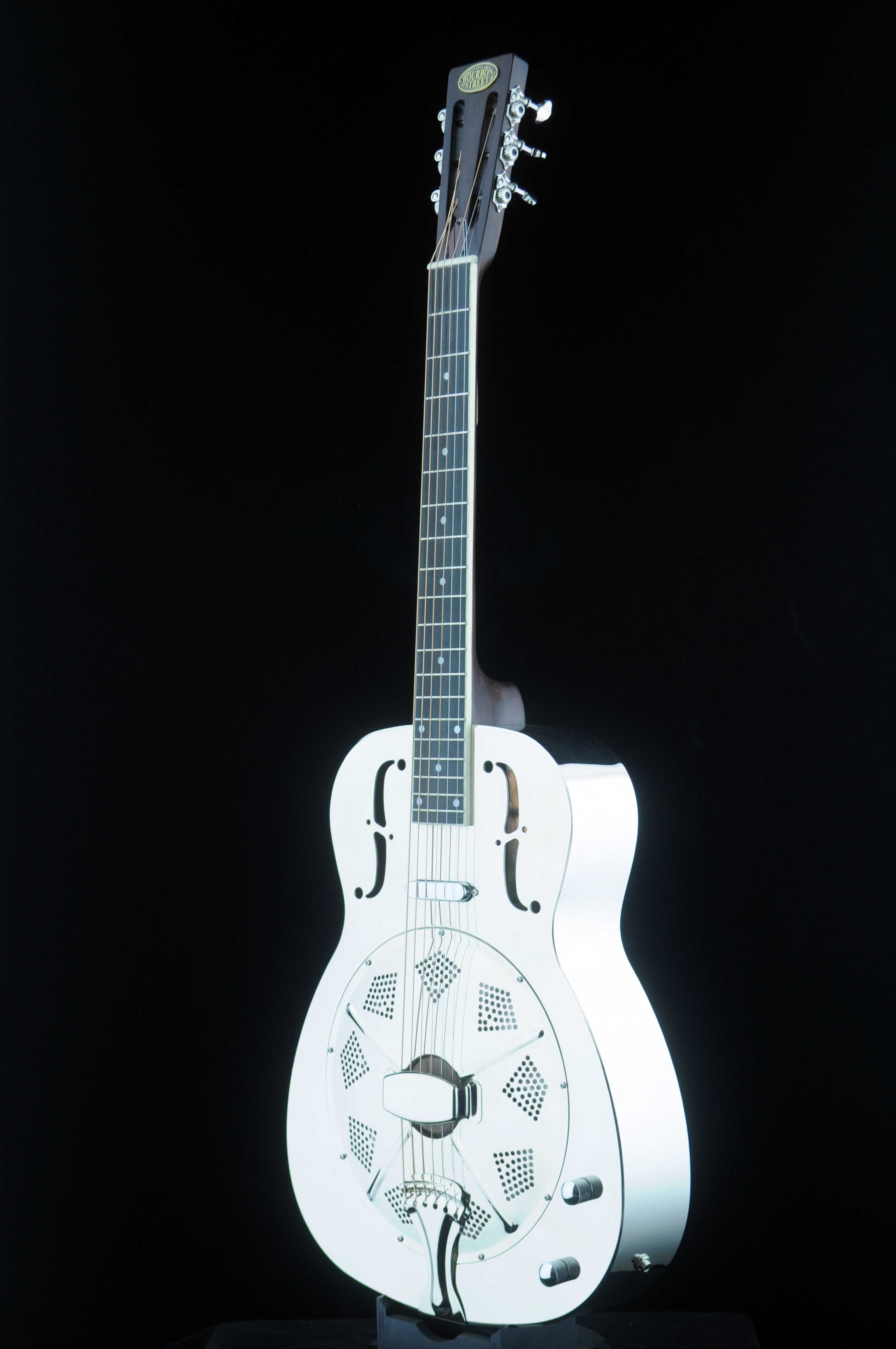
A resophonic guitar is an acoustic guitar that uses one or more metal cones to make and project sound. Instead of relying only on a wooden soundboard, the strings drive a cone called a resonator. The result is a loud, sharp, and often metallic tone.
Across the United States, resophonic guitars are closely linked with blues, bluegrass, country, gospel, and slide guitar. You may also hear them called resonator guitars, Dobros, or simply resos. These names overlap, but they do not always mean the exact same design.
What Is a Resophonic Guitar?
A resophonic guitar is a stringed instrument with a metal resonator cone built into its body. The cone acts somewhat like a small speaker. It receives the string vibration through a bridge and turns that vibration into sound.
A standard acoustic guitar sends string energy through its wooden top. A resophonic guitar sends much of that energy into a thin metal cone. This gives the instrument its strong volume and distinctive voice.
The term resophonic guitar usually describes the instrument family as a whole. Resonator guitar is the more common general name in the United States.
The word Dobro needs more care. Dobro began as a brand name and is now widely used in casual speech for certain resonator guitars, especially square-neck models used for lap-style playing. Not every resophonic guitar is a Dobro.
A resophonic guitar may have:
- A metal or wooden body
- One, three, or sometimes more resonator cones
- A round neck for normal guitar playing
- A square neck for lap-style playing
- A biscuit, spider, or tricone bridge system
- Acoustic, electric, or acoustic-electric output
The main feature is the resonator system, not the body material, playing position, or brand.

How Does a Resophonic Guitar Work?
A resophonic guitar works by transferring string vibration to a thin metal cone. The cone moves air inside the body and produces the instrument’s loud, focused sound.
The basic sound path is:
- You pluck or pick a string.
- The string vibrates over the bridge.
- The bridge transfers that vibration to the resonator cone.
- The cone vibrates inside the body.
- The body helps project the sound outward.
The cone is often shaped like a shallow speaker. It is light and flexible, so it can respond quickly to string movement. This creates more cutting power than many players expect from an acoustic instrument.
A resophonic guitar does not simply make a regular acoustic guitar louder. The cone changes the tone as well. The sound may be bright, nasal, dry, metallic, or slightly rough. The exact result depends on the cone type, bridge design, body material, strings, setup, and playing style.
The role of the bridge
The bridge is the contact point between the strings and the resonator system. Its design affects both response and tone.
Common bridge systems include:
- Biscuit bridge: A small wooden piece sits on the center of the cone. Biscuit models often have a direct, punchy sound.
- Spider bridge: A metal bridge spreads string pressure around the cone. Spider models are common in bluegrass and lap-style playing.
- Tricone bridge: Three smaller cones work together. Tricones often have a smoother, more complex tone.
These descriptions are useful general guides, not strict rules. Construction quality and setup can change the result.
Main Parts of a Resophonic Guitar
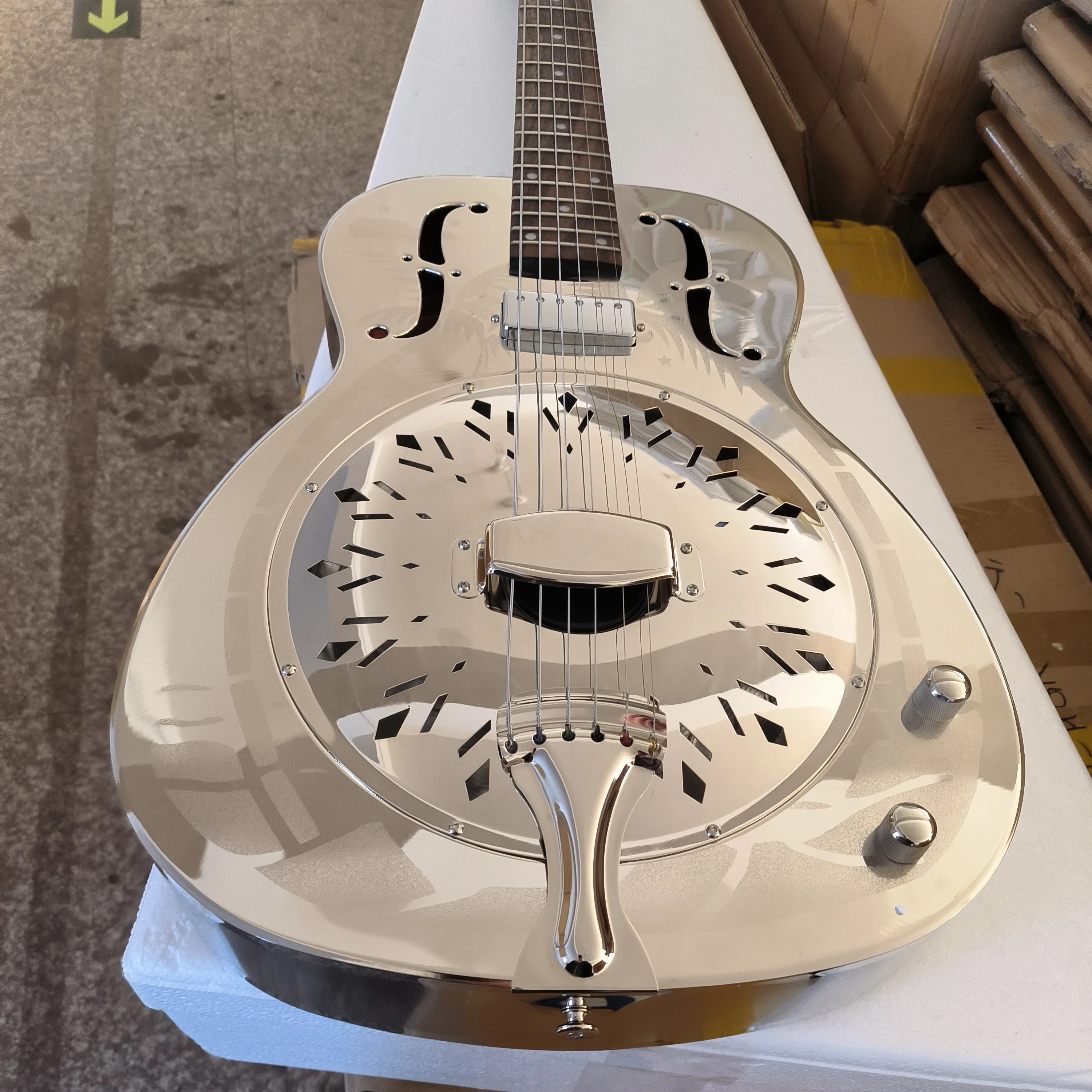
The cone, bridge, body, neck, and tailpiece all affect how a resophonic guitar feels and sounds. Small design changes can make one model suit slide blues while another works better for bluegrass.
Resonator cone
The cone is the heart of the instrument. It is usually made from thin metal and sits beneath a cover plate or grille.
A damaged, loose, or poorly fitted cone can cause:
- Buzzing
- Weak volume
- Uneven notes
- Harsh overtones
- Poor sustain
The cone is delicate. Avoid pressing on it or removing the cover plate unless you know how the instrument is built.
Body
Resophonic guitars may use steel, brass, wood, or other materials. A metal body often gives a bright and direct sound. A wood body may offer a warmer response while still keeping the clear character of a resonator.
Body material does not tell the whole story. The cone, bridge, neck angle, and setup may matter just as much.
Neck
A round-neck resophonic guitar can be held like a standard acoustic guitar. You can fret notes with your fingers and play chords in the usual way.
A square-neck resophonic guitar rests across your lap. Its strings sit higher above the fingerboard, so you play it with a steel bar rather than pressing the strings to the frets.
Do not buy a square-neck model if you want to play it like a normal acoustic guitar. The high action makes standard fretting difficult or impractical.
Tailpiece and cover plate
The tailpiece anchors the strings at the lower end of the body. The cover plate protects the cone and may also include openings that allow sound to escape.
These parts can affect the instrument’s feel, but they should not be changed casually. Incorrect parts or excess pressure may harm the cone or alter the setup.
Pickup
Some resophonic guitars include a magnetic pickup, piezo pickup, or internal microphone. Others are fully acoustic.
A pickup can make the guitar easier to use on stage, but it does not make every amplified setup simple. Resonator guitars can produce feedback, especially at high volume. A qualified guitar technician can help with pickup installation and feedback control.
What Does a Resophonic Guitar Sound Like?
A resophonic guitar often sounds louder, sharper, and more metallic than a standard flat-top acoustic guitar. Its tone can cut through a band without heavy strumming.
Players often describe the sound as:
- Metallic
- Nasal
- Bright
- Dry
- Punchy
- Vocal-like
- Sustain-rich
- Slightly gritty
The sound changes with the playing method. Fingerpicking may produce clear, separate notes. A slide can create long, singing tones. A heavy pick attack can make the instrument sound aggressive and sharp.
A resonator guitar is not automatically louder in every setting. A poor setup, dead strings, damaged cone, or weak bridge connection can reduce its volume. Room size and playing technique also matter.
Why slide players use resophonic guitars
The cone responds well to slide playing because it produces a strong fundamental note with noticeable sustain. The metal slide glides over the strings without pressing them against the frets.
For slide guitar, players often use:
- Open D tuning: D–A–D–F#–A–D
- Open G tuning: D–G–D–G–B–D
- Open E tuning: E–B–E–G#–B–E
Open tunings let a straight slide create full chords across the strings. Open E and some other higher tunings place more tension on the neck and strings, so beginners may prefer open D or open G.
A slide does not hide poor intonation. Your fretting hand normally sets the note against a fret. With a slide, you must place the bar directly above the fret and control pressure carefully.
What Are the Main Types of Resophonic Guitar?
The main types are biscuit-bridge, spider-bridge, and tricone guitars. Round-neck and square-neck designs are another important way to classify them.
| Type | Typical design | Common use | General tonal character |
|---|---|---|---|
| Biscuit | One cone with a small wooden biscuit bridge | Blues, slide, roots music | Direct, dry, punchy |
| Spider | One cone with a metal spider bridge | Bluegrass, country, lap playing | Strong, clear, projecting |
| Tricone | Three smaller cones | Blues, jazz, roots music | Smooth, complex, balanced |
| Round-neck | Conventional guitar neck | Fretted playing and slide | Flexible for mixed techniques |
| Square-neck | Raised strings and flat neck | Lap-style playing | Designed for bar control |
These are broad categories. Two guitars with the same bridge type can still sound very different because of their materials, cone design, scale length, and setup.
Biscuit-bridge models
In a biscuit design, a small wooden biscuit transfers vibration from the strings to the center of the cone. This direct connection often gives the guitar a strong attack.
Biscuit models are a common choice for blues players who want a raw, focused sound. They can also work well for fingerstyle and bottleneck slide.
Spider-bridge models
A spider bridge sits around the cone and transfers string energy across a wider area. This design is strongly associated with bluegrass and lap-style resonator playing.
Spider-bridge guitars often have a powerful and open response. They are popular with players who need clear notes in an acoustic ensemble.
Tricone models
A tricone uses three cones rather than one. The design can produce a more blended and complex sound.
Tricones often appeal to players who want a smoother tone for blues, jazz, country, or roots music. They may respond differently from single-cone models, so choosing between them is mainly a matter of musical need and personal taste.
Resophonic Guitar vs. Regular Acoustic Guitar
The main difference is how each instrument turns string vibration into sound. A regular acoustic guitar uses a wooden top and internal air movement. A resophonic guitar uses a metal cone as its primary sound-producing element.
| Feature | Regular acoustic guitar | Resophonic guitar |
|---|---|---|
| Main sound source | Wooden soundboard | Metal resonator cone |
| Tone | Warm, broad, familiar | Bright, focused, metallic |
| Volume response | Depends on body and top design | Strong projection from the cone |
| Slide use | Possible | Especially well suited |
| Typical setup | Standard guitar action | May use higher action |
| Lap-style use | Uncommon | Common on square-neck models |
| Maintenance | Familiar acoustic care | Extra cone and bridge care |
A resophonic guitar is not always a replacement for a regular acoustic guitar. It fills a different role.
Choose a regular acoustic if you mainly want:
- Warm chord strumming
- Traditional fingerstyle
- A familiar beginner instrument
- Easy access to common lessons and accessories
Choose a resophonic guitar if you mainly want:
- Slide guitar
- Bluegrass or roots music
- A bright, cutting tone
- Lap-style playing
- A distinct acoustic voice
Some players own both because the instruments serve different musical purposes.
How to Choose a Resophonic Guitar
Choose a resophonic guitar based on your playing position, musical style, bridge type, body material, and need for amplification. The first decision is whether you want a round-neck or square-neck model.
1. Decide how you will hold it
Choose a round-neck model if you want to:
- Play normal chords
- Fret notes with your fingers
- Use slide as an added technique
- Switch between standard guitar and resonator playing
Choose a square-neck model if you want to:
- Play while seated with the guitar on your lap
- Use a steel bar
- Focus on bluegrass, gospel, country, or lap-style music
- Keep the strings high above the fingerboard
This decision matters more than the finish or decorative details.
2. Choose the bridge style
A biscuit model may suit dry blues and direct slide work. A spider model may suit bluegrass and lap playing. A tricone may suit players who want a smoother and more layered voice.
If possible, listen to recordings of each type before buying. Tone descriptions can guide you, but your ears should make the final choice.
3. Consider body material
Metal bodies often deliver a bright and immediate sound. Wood bodies can offer a softer and warmer character.
Body material also affects weight, feel, and maintenance. Metal bodies may show dents and finish wear clearly. Wood bodies need care similar to other acoustic instruments, including protection from extreme dryness and rapid humidity changes.
4. Check the action and neck setup
Action is the distance between the strings and the fingerboard. Higher action can help slide playing because the slide is less likely to strike the frets. It can also make normal fretting harder.
For a round-neck guitar, look for a setup that matches your technique. If you want to mix fretting and slide, extremely high action may become frustrating.
5. Decide whether you need a pickup
An acoustic-only model works well for home practice, small sessions, and natural recording. A pickup can help with rehearsals and live shows.
Ask how the pickup is installed and how the guitar is meant to be amplified. Resonator guitars may need different equalization and feedback control from regular acoustic guitars.
6. Inspect a used instrument carefully
Before buying a used resophonic guitar, check:
- Cone buzzes or rattles
- Loose cover-plate screws
- Cracks near the neck joint
- A lifting or damaged bridge
- Excessive neck movement
- Uneven or very high action
- Rust or corrosion
- Pickup noise
- Missing hardware
- Signs of impact around the cone
A repair shop that knows resonator guitars can inspect the cone and neck angle. General acoustic-guitar experience helps, but resonator construction has its own risks.
How to Care for a Resophonic Guitar
Care for a resophonic guitar by protecting the cone, controlling humidity, using the correct strings, and avoiding unnecessary adjustments.
Protect the cone
The cone is thin and can be damaged by pressure. Do not place heavy objects on the cover plate. Do not press down on the cone through the openings.
If the guitar develops a new rattle, stop tightening random screws. A loose screw may be the cause, but overtightening can distort the cover plate or affect the cone.
Control humidity
Wood-bodied instruments are sensitive to very dry or very damp conditions. Rapid changes can affect the body, neck, and glue joints.
Keep the guitar in a case when practical. Use a suitable case humidifier only when the product is designed for guitars and the humidity level calls for it. Do not let water touch the cone or place a wet item inside the body.
Use suitable strings
Resonator guitars need strings that match the design and manufacturer’s recommendations. String gauge affects tension, volume, action, and neck stress.
Square-neck models often use heavier strings than round-neck models, but the correct gauge depends on the instrument. Check the maker’s specifications before changing to a much heavier set.
Get professional setup work
A technician can adjust:
- Neck relief
- Nut height
- Bridge contact
- Action
- Cone seating
- Intonation
- Pickup balance
Do not adjust the cone or spider bridge as if it were a normal acoustic saddle. Small changes can affect the entire instrument.
Common Resophonic Guitar Mistakes
The most common mistakes involve confusing body style with playing style, using the wrong strings, and treating the cone like a standard acoustic guitar component.
Mistake 1: Buying a square-neck model for normal fretting
A square-neck guitar is built for lap playing. Its high strings are not meant for normal finger fretting.
Better approach: Choose a round-neck model if you want standard chords and fretted melodies.
Mistake 2: Assuming every resonator sounds the same
Bridge type, cone design, body material, and setup all change the sound.
Better approach: Compare biscuit, spider, and tricone recordings or instruments before making a decision.
Mistake 3: Using a heavy hand on the slide
Pressing harder does not always create a better note. It can pull notes sharp and cause unwanted contact with the frets.
Better approach: Rest the slide lightly on the strings and place it directly above the fret.
Mistake 4: Installing random strings
A string set with the wrong tension may change the setup or place stress on the instrument.
Better approach: Start with the manufacturer’s recommended gauge and material.
Mistake 5: Tightening every rattle
Resonator guitars can develop noises from the cone, cover plate, bridge, tailpiece, or loose hardware. Tightening the wrong part may make the problem worse.
Better approach: Identify where the noise occurs and have a qualified repair technician inspect it if the cause is unclear.
Mistake 6: Expecting a normal acoustic amplifier sound
A resonator guitar may need different amplification settings. Too much volume or low-end boost can create feedback.
Better approach: Begin with moderate volume, reduce bass if needed, and move the guitar away from the speaker.
Frequently Asked Questions
Is a resophonic guitar the same as a resonator guitar?
In most cases, yes. Resophonic guitar and resonator guitar describe the same broad family of instruments. The term Dobro may refer more specifically to certain branded or square-neck designs, so it is not always a precise synonym.
Can you play a resophonic guitar without a slide?
Yes. You can play a round-neck resophonic guitar with your fingers, a pick, or a slide. Many players combine normal fretting with slide techniques. A square-neck model is designed mainly for lap-style bar playing.
Is a resophonic guitar good for beginners?
It can be, but it depends on your goal. A round-neck model can work for a beginner who wants slide, blues, bluegrass, or roots music. A standard acoustic guitar may be easier if you mainly want common chord lessons and general strumming.
Does a resophonic guitar use regular acoustic-guitar strings?
Some round-neck models use string sets similar to acoustic-guitar strings, but the correct gauge and material depend on the instrument. Square-neck models often use heavier strings. Always check the manufacturer’s recommendations before changing string tension.
Why is my resonator guitar buzzing?
Possible causes include a loose cover plate, poor cone seating, a damaged cone, bridge movement, string contact, or loose hardware. Start by checking for obvious loose parts without forcing them. If the buzz remains, have a resonator repair technician inspect the guitar.
Conclusion
A resophonic guitar is an acoustic instrument that uses a metal resonator cone instead of relying only on a wooden soundboard. That design creates a bright, projecting tone that suits slide guitar, blues, bluegrass, country, gospel, and other roots styles.
The most useful buying question is not “Which one looks best?” It is “How do I plan to play it?” Choose a round neck for standard fretting and mixed techniques. Choose a square neck for lap-style bar playing. Then compare biscuit, spider, and tricone designs to find the voice that fits your music.

Senior Music Reviewer
Alex Carter is a seasoned music reviewer with over a decade of experience in the world of sound and instruments. Passionate about helping musicians and enthusiasts make informed choices, he brings sharp insights and in-depth knowledge to every review. From classical instruments to modern gear, Alex combines technical expertise with a love for music to deliver content that resonates with readers.
As a Senior Music Reviewer and expert author on Tuneluma.com, Alex is dedicated to sharing honest evaluations, practical advice, and thoughtful commentary to guide readers in their musical journey.