Introduction
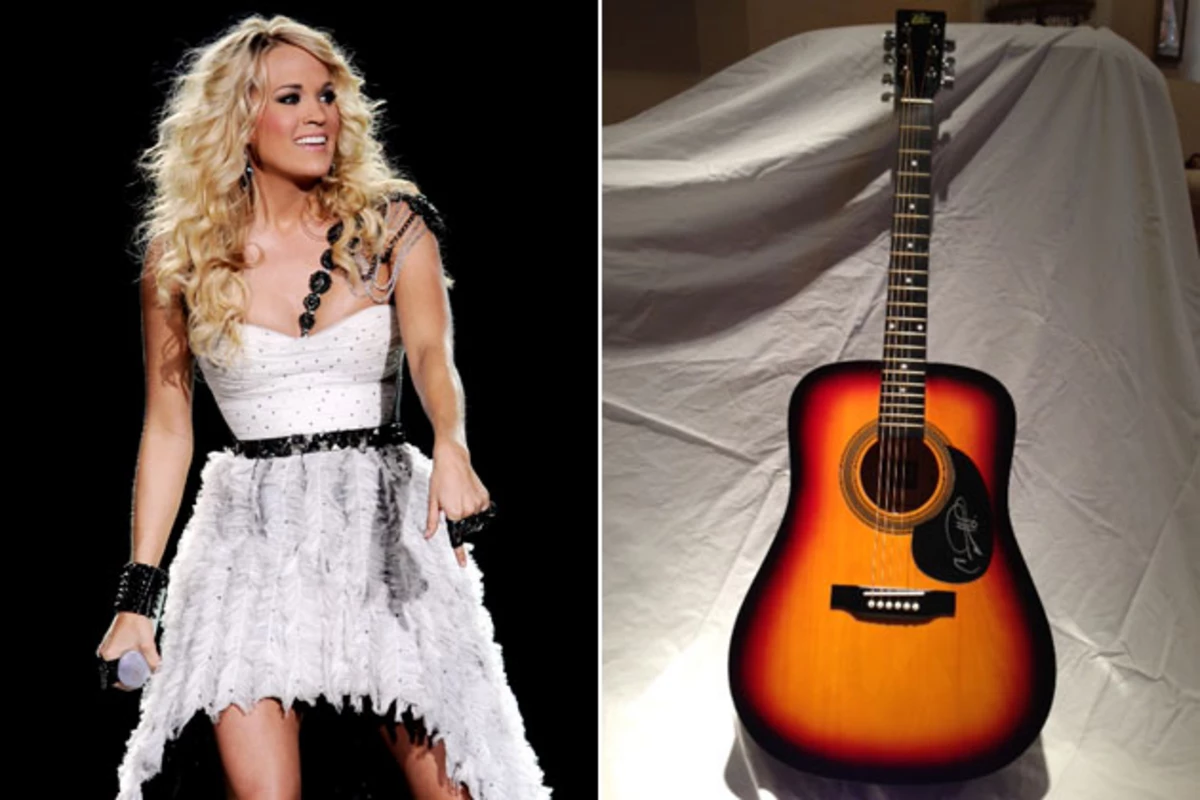
Yes, Carrie Underwood does play guitar. The Oklahoma-born country singer has played acoustic guitar during live shows, television appearances, and more relaxed performance sets. Still, guitar is not her main stage role. She is best known as a lead singer, songwriter, and powerful live performer.
Seeing her hold a guitar can raise a fair question: is she truly playing, or is it only part of the show? Public performances show that she can play guitar, but she does not use it in every song or at every concert.
This guide explains what is documented, how often she plays, what kind of guitar she uses, and how her guitar skills fit into her career.


The short answer: Carrie Underwood plays acoustic guitar
Carrie Underwood plays guitar, mainly acoustic guitar. She has used it in live performances and stripped-down versions of her songs.
Her guitar playing is usually part of a broader performance. Her voice remains the main focus. Unlike artists whose concerts center on guitar work, Underwood often moves between vocal numbers, full-band songs, and a few moments where she adds guitar.
That means two statements can both be true:
- Carrie Underwood can play guitar.
- Carrie Underwood is not mainly known as a professional guitarist.
A singer does not need to play guitar on every song to be a real guitar player. Many country artists use an instrument for selected songs, writing sessions, acoustic sets, or special performances.
What evidence shows that she plays guitar?
The clearest evidence comes from recorded performances in which Underwood holds and plays an acoustic guitar while singing. These appearances are stronger evidence than a photograph of her holding an instrument because the performance shows her playing in time with the song.
She has been seen with an acoustic guitar in settings such as:
- Television performances
- Acoustic or unplugged-style sets
- Live concert segments
- Informal music appearances
- Songwriting and rehearsal settings
Some of her performances place the guitar low in the mix. In those cases, the instrument supports the rhythm while the band carries much of the musical arrangement. That does not make the playing fake. It simply means the guitar may not be the main instrument in the full production.
There is also a practical reason to view some clips with care. Large country concerts often use several musicians, layered sound, and backing tracks. A short video may not show every detail of the arrangement. The safest conclusion is that Underwood does play guitar, while the exact level of her contribution may vary from performance to performance.

What kind of guitar does Carrie Underwood play?
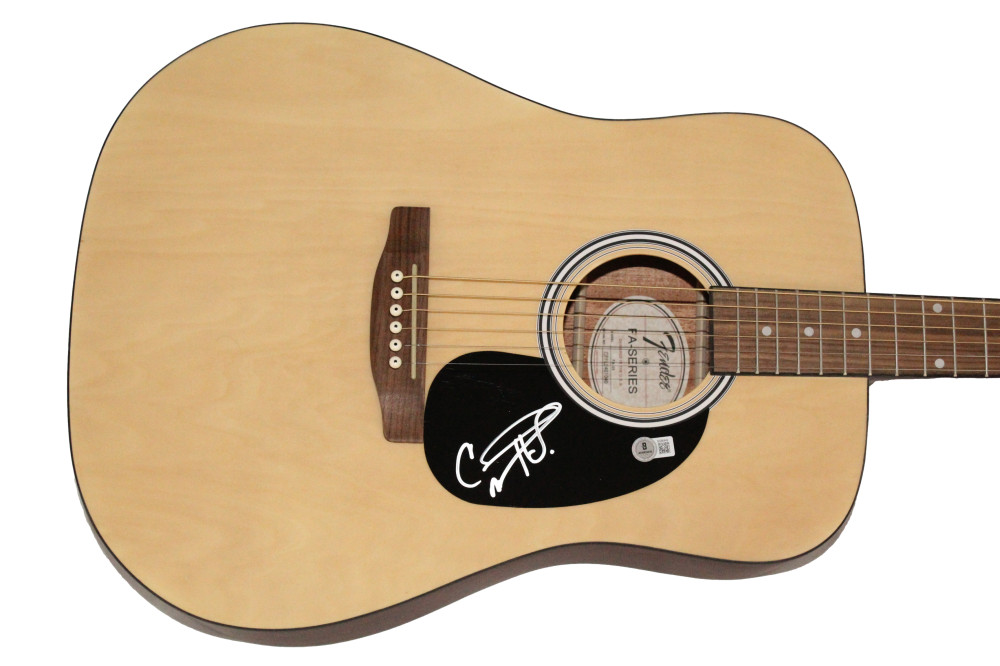
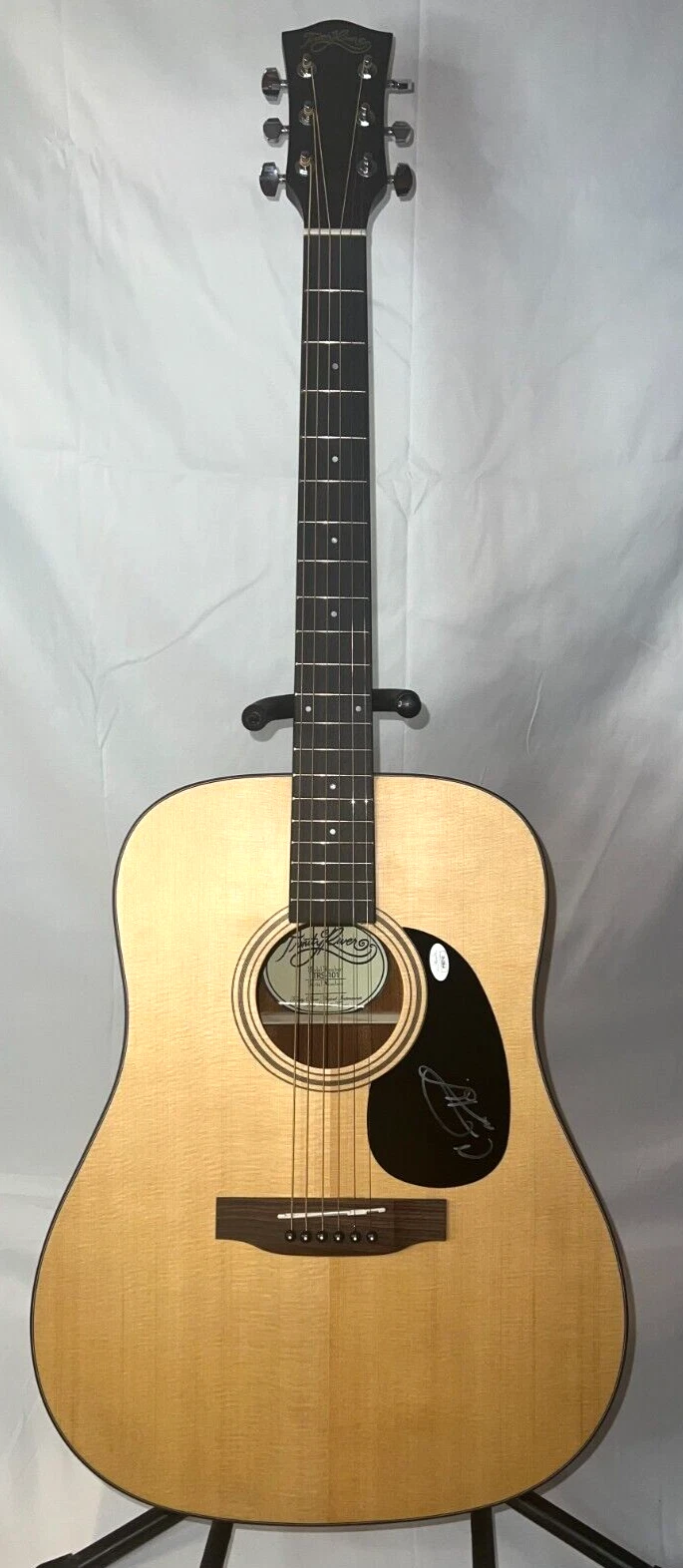
Carrie Underwood is most often associated with acoustic guitar in public performances. Acoustic guitars produce their own sound without needing a separate amplifier, though stage microphones and pickup systems are common in concerts.


She has appeared with different acoustic guitar styles and finishes over the years. A guitar’s brand or appearance can change from one event to another. For that reason, it is not accurate to assume that every guitar she uses is the same model.
Her role also affects the guitar setup. A touring artist may use:
- A stage acoustic guitar with an internal pickup
- A spare guitar for fast changes
- A guitar set up for a particular song
- A cutaway acoustic guitar for easier access to higher frets
- A guitar selected to match the band’s sound and stage design
The important point is the instrument category, not a single model. Public evidence supports the conclusion that she plays acoustic guitar. It does not establish that she uses one fixed guitar for all performances.

Does Carrie Underwood play guitar during concerts?
Yes, but not necessarily during every concert or every song.
A major country concert has many moving parts. The singer may need to focus on choreography, costume changes, audience interaction, and difficult vocal passages. A guitar can limit movement, so artists often use it only when it helps the song.
Underwood’s guitar appearances tend to fit songs or moments that benefit from a more personal, acoustic feel. Her larger productions may include:
- Full-band country arrangements
- Dance-focused songs
- Vocal ballads
- Acoustic interludes
- Special guest performances
A concert set list can also change. A festival performance may be shorter than an arena show. A television appearance may use a custom arrangement. A charity event may feature a simple acoustic version rather than the full touring production.
So, if you are attending a Carrie Underwood show, do not assume she will play guitar for the entire set. Expect her to use it selectively.

Is Carrie Underwood a trained guitarist?
Public performances show that Underwood can play guitar, but they do not provide enough evidence to describe her as a formally trained guitar specialist.
There is a difference between these claims:
-
She plays guitar.
This is supported by her live and recorded appearances. -
She writes songs with guitar.
This may happen, but each songwriting claim needs direct support from an interview or songwriting credit. -
She is a highly advanced guitarist.
Public performance clips alone do not prove this. -
She received formal guitar training.
This should not be assumed without a reliable statement from Underwood or an official biography.


Many singers learn enough guitar to support their voice, write songs, or perform a few arrangements. That skill can be useful without making the artist a lead guitarist.
Underwood’s public career centers on singing. Her vocal range, control, and dramatic delivery remain the main reasons she is recognized as a country music star.

Does she play guitar on her recordings?
A studio recording may include guitar played by the singer, a session musician, or both. Album credits are the best way to confirm who played on a specific track.
It is not safe to assume that Carrie Underwood played guitar on a recording simply because she plays guitar live. Studio albums often use professional musicians who specialize in acoustic, electric, steel, or baritone guitar.
To verify a particular song, check:
- The official album credits
- The physical album booklet
- The label’s credit information
- A trusted music-credit database
- An interview about the song’s recording
Credits can differ between an original album, a live version, a deluxe edition, and a radio edit. Always match the credit to the exact release.
This distinction matters because “Carrie Underwood plays guitar” describes her ability and public performance history. It does not automatically mean she played guitar on every studio track.

Does Carrie Underwood play electric guitar?
There is stronger public evidence for Underwood playing acoustic guitar than for her regularly playing electric guitar.
She may appear with different instruments in special performances, but a single image or short clip is not enough to identify the instrument or confirm how much she played. Electric guitar also covers many styles, from clean rhythm parts to technical lead work.
The careful answer is:
- She is documented playing acoustic guitar.
- She may use other guitar types in selected settings.
- She is not widely presented as an electric-guitar specialist.
- Specific claims about an electric guitar performance should be checked against the full video and performance credits.
This avoids a common mistake: treating any guitar-shaped instrument as proof of a particular playing style or skill level.


Why does Carrie Underwood not play guitar in every performance?
The main reason is that guitar is only one part of a large live show.
A performer may leave the guitar behind when a song requires:
- More movement across the stage
- Choreography
- Handheld microphone work
- Interaction with the crowd
- A costume change
- Strong visual effects
- A different vocal arrangement
A guitar can also affect posture and movement. For an artist known for powerful vocal delivery, removing the instrument may allow more freedom during demanding songs.
This does not mean the guitar is decorative when she uses it. It means the instrument serves the arrangement. In an acoustic song, it can create a close, direct mood. In a large production number, the band may provide a fuller sound while Underwood focuses on singing.

How to tell whether Carrie Underwood is really playing guitar in a video
If you want to check a performance yourself, use a few simple signs.
1. Watch the fretting hand
The hand on the neck should move between chord shapes or notes. Look for changes that match the song.
2. Watch the strumming hand
The picking or strumming hand should move in a steady pattern. It may use light strokes that are hard to see from a distance.
3. Compare the guitar with the audio
The guitar does not always stand out in a full mix. Listen for rhythm changes that line up with her hand movements.
4. Check the full performance
A short social media clip may hide the band, stage monitors, or instrument changes. A complete broadcast or official performance gives better context.
5. Look for official credits when needed
If your question concerns a studio recording, use album credits rather than relying on a video appearance.
These checks cannot reveal every part of a live production. They can, however, help separate a real playing performance from a photo opportunity or a heavily layered arrangement.

Carrie Underwood’s guitar playing compared with her main musical role
| Area | What the public record supports |
|---|---|
| Main role | Country singer and live vocalist |
| Guitar type most associated with her appearances | Acoustic guitar |
| Use of guitar | Select live, television, and acoustic performances |
| Guitar on every song | Not established |
| Guitar on every concert | Not established |
| Public identity as a lead guitarist | Not established |
| Strongest evidence | Video of her playing during a performance |
The table shows the key distinction. Underwood is a singer who also plays guitar, not a guitarist who happens to sing.
That distinction does not reduce her musicianship. Many successful artists use instruments as part of their creative work without making instrumental performance their central identity.


Common misconceptions about Carrie Underwood and guitar
“She only holds the guitar for show”
That claim goes too far. Recorded performances show her strumming and using the instrument in a musical setting. It is fair to question the exact audio mix, but not to dismiss every appearance as pretend playing.
“If she does not play guitar on every song, she cannot play”
That is also incorrect. Guitar use depends on the song, stage design, and arrangement.
“She must have played guitar on every recording”
Live ability does not prove a studio credit. Album notes are needed for that claim.
“Playing simple chords does not count”
Basic chord playing is still guitar playing. It may not show advanced lead technique, but it can support a song and a vocal performance.
“A guitar appearance proves she is a professional guitarist”
That conclusion is too broad. The evidence supports guitar playing, but not a claim that she has the same role or skill profile as a full-time lead guitarist.
Sources and evidence to check
This article separates documented performance evidence from claims that require more proof. Useful places to verify the topic include:
- Carrie Underwood’s official website and official social channels for current performance material
- Official television network video archives for broadcast appearances
- Carrie Underwood’s official YouTube material for released performance videos
- Album liner notes and label credits for studio musician information
- Billboard and Grammy artist pages for career context
- Country Music Television coverage for country music performances and interviews
When checking a clip, confirm the date, song, venue, and whether it is a live, rehearsed, acoustic, or television arrangement. A performance video can establish that Underwood played guitar at that moment. It cannot, by itself, establish her complete training history or every recording credit.
FAQs
Did Carrie Underwood learn guitar before becoming famous?
Public appearances confirm that she plays guitar, but a complete and well-sourced account of when she began learning is not always provided. Avoid treating unsourced fan claims as a firm timeline.
Does Carrie Underwood write songs on guitar?
She is a songwriter, and guitar can be useful during songwriting. However, a claim about a specific song should be tied to a direct interview, official credit, or reliable songwriting account.
Does she play guitar while singing?
Yes. Her acoustic performances show her playing and singing at the same time. The complexity of the guitar part can vary by song.
Does Carrie Underwood play guitar on stage at every show?
Not necessarily. Her use of guitar depends on the set list, arrangement, venue, and production needs.
Is Carrie Underwood better known as a singer or guitarist?
She is far better known as a singer. Guitar is a supporting skill in her public performances, while her voice is the central part of her musical identity.


Conclusion
Carrie Underwood does play guitar, especially acoustic guitar. Video performances support that answer. She uses the instrument selectively rather than making it the center of every show.
The most accurate description is simple: Carrie Underwood is a country singer and songwriter who also plays guitar. Her guitar appearances add an intimate touch to some performances, but they do not define her career.
If you want to verify a particular claim, check the full performance video for live playing and the official album credits for studio work.

Senior Music Reviewer
Alex Carter is a seasoned music reviewer with over a decade of experience in the world of sound and instruments. Passionate about helping musicians and enthusiasts make informed choices, he brings sharp insights and in-depth knowledge to every review. From classical instruments to modern gear, Alex combines technical expertise with a love for music to deliver content that resonates with readers.
As a Senior Music Reviewer and expert author on Tuneluma.com, Alex is dedicated to sharing honest evaluations, practical advice, and thoughtful commentary to guide readers in their musical journey.