What Is A Guitar Bridge: A Simple Guide For Beginners
A guitar bridge anchors the strings, transfers vibration, and helps set the instrument’s tone, feel, and tuning.
If you have ever wondered what is a guitar bridge, you are looking at one of the most important parts of the instrument. The bridge may seem like a simple piece of wood or metal, but its design affects string height, intonation, sustain, comfort, and even how your guitar responds to each note. This guide explains the parts, types, setup, common problems, and practical care tips that help players make better choices.
What Is a Guitar Bridge?
A guitar bridge is the part of the instrument that holds the strings in place on the body. It sits opposite the headstock and works with the nut to define the vibrating length of each string.
On an acoustic guitar, the bridge is usually glued to the soundboard. On an electric guitar, it may be screwed, bolted, or mounted into the body. In both cases, the bridge transfers string vibration into the guitar, much like a speaker turns an electrical signal into sound.
To understand what is a guitar bridge, picture it as the guitar’s anchor point. The tuning machines pull the strings from one end, while the bridge keeps the other end secure and stable.
A guitar bridge usually supports or includes:
- A saddle that sets string height and intonation
- String pins or posts that hold the strings
- Mounting hardware or adhesive
- Adjustment screws on many electric models
- A contact point that transfers vibration to the body
A bridge does not work alone. The nut, neck, fretboard, pickups, body, strings, and setup all affect the final sound. Still, the bridge is one of the main points where string energy enters the instrument.
What Does a Guitar Bridge Do?
The main job of a guitar bridge is to hold the strings at the correct height and position. It also sends string energy into the guitar body, which helps create volume, tone, and sustain.
Here are the key functions of a guitar bridge:
It Holds the Strings
The bridge keeps each string fixed at the body end of the guitar. This prevents the strings from shifting while you play, bend notes, or use a tremolo arm.
Acoustic guitars often use bridge pins. Electric guitars may use string posts, ferrules, locking saddles, or a stop tailpiece. Each design holds the strings in a slightly different way.
It Sets String Height
The bridge and saddle help control action, which is the distance between the strings and the frets. If the action is too high, the guitar may feel stiff. If it is too low, the strings may buzz against the frets.
A small change in saddle height can make a large difference. This is why bridge adjustments should be made slowly and with the right tools.
It Controls Intonation
Intonation describes how accurately a guitar plays across the fretboard. A string may be perfectly tuned when open but sound sharp or flat when fretted higher up the neck.
The bridge position and saddle shape compensate for this natural effect. Electric guitar bridges often allow each string to move forward or backward. Acoustic guitar saddles usually use a carefully angled or compensated shape.
It Transfers Vibration
When you pluck a string, it vibrates between the nut and the saddle. The saddle passes much of that energy into the bridge, and the bridge passes it into the guitar body.
On an acoustic guitar, the soundboard and air chamber amplify this vibration. On an electric guitar, the strings disturb the magnetic field around the pickups, while the bridge adds mechanical support and can influence sustain and feel.
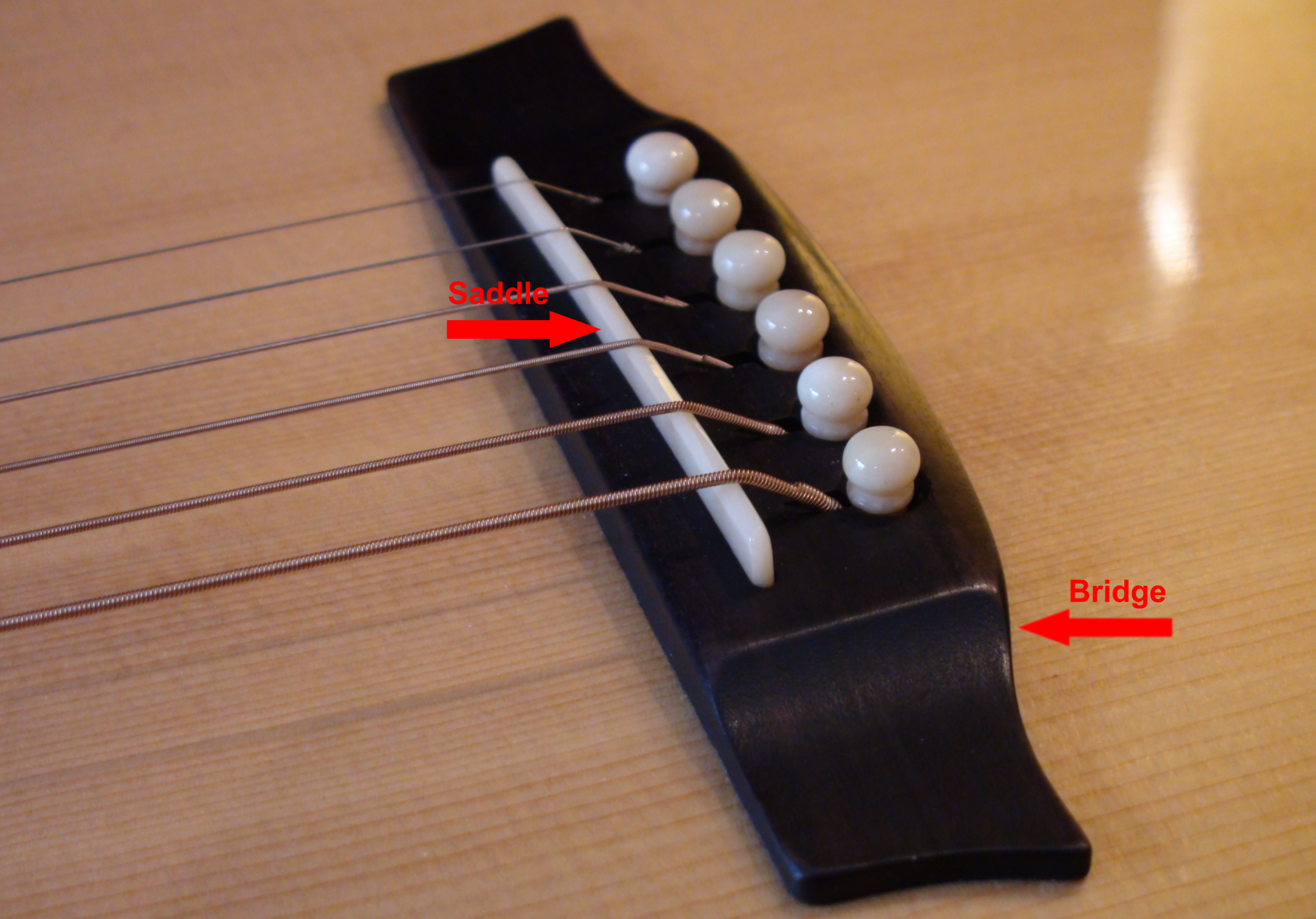
Main Parts of a Guitar Bridge
Understanding the parts makes it easier to understand what is a guitar bridge and how to maintain one. Bridge designs vary, but several parts appear again and again.
Saddle
The saddle is the raised strip that the strings cross. It is often made from bone, synthetic material, metal, or a hard composite.
The saddle affects:
- String height
- Intonation
- String spacing
- Tone
- Energy transfer
On an acoustic guitar, the saddle is usually removable. A technician can lower it to reduce action, but removing too much material can cause buzzing or weak tone.
Bridge Plate
The bridge plate is found inside many acoustic guitars, directly under the bridge. It supports the string ball ends and spreads string tension across the soundboard.
A damaged bridge plate can cause loose pins, poor string seating, or a rattling sound. It is not easy to inspect without looking inside the guitar, so serious damage often needs professional repair.
Bridge Pins
Bridge pins hold the ball end of each acoustic guitar string against the bridge plate. They are commonly made from plastic, bone, wood, or metal.
Pins do not usually create dramatic tone changes by themselves. However, loose or poorly fitted pins can cause buzzes, weak string contact, and tuning problems.
Saddles and Intonation Pieces
Many electric guitar bridges have separate saddles for each string. These small parts may include height screws and intonation screws.
This design lets you adjust each string for:
- Individual string height
- String radius
- Intonation
- Spacing
- Contact pressure
Mounting Hardware
Electric bridges may attach with screws, studs, posts, or a larger metal plate. The hardware must remain secure, but it should not be overtightened.
Overtightening can strip screw holes, damage the finish, or limit proper adjustment. A firm fit is enough.

Types of Guitar Bridges
The answer to what is a guitar bridge changes slightly depending on the guitar type. Acoustic and electric guitars use different bridge systems because they create and project sound in different ways.
Acoustic Guitar Bridge
An acoustic guitar bridge is normally a wooden plate glued to the soundboard. The saddle sits inside a slot across the bridge, and bridge pins secure the strings.
Common acoustic bridge shapes include:
- Standard flat-top bridge
- Classical guitar tie-block bridge
- Belly bridge
- Compensated bridge
- Pinless bridge
Acoustic bridges must balance strength and flexibility. They carry high string tension while allowing the top to vibrate freely.
Classical Guitar Bridge
A classical guitar usually has a tie-block bridge. Nylon strings are tied around the bridge instead of using bridge pins.
Classical guitar bridges need careful string knots. A poor knot can slip, scratch the soundboard, or cause the string to sit at the wrong angle.
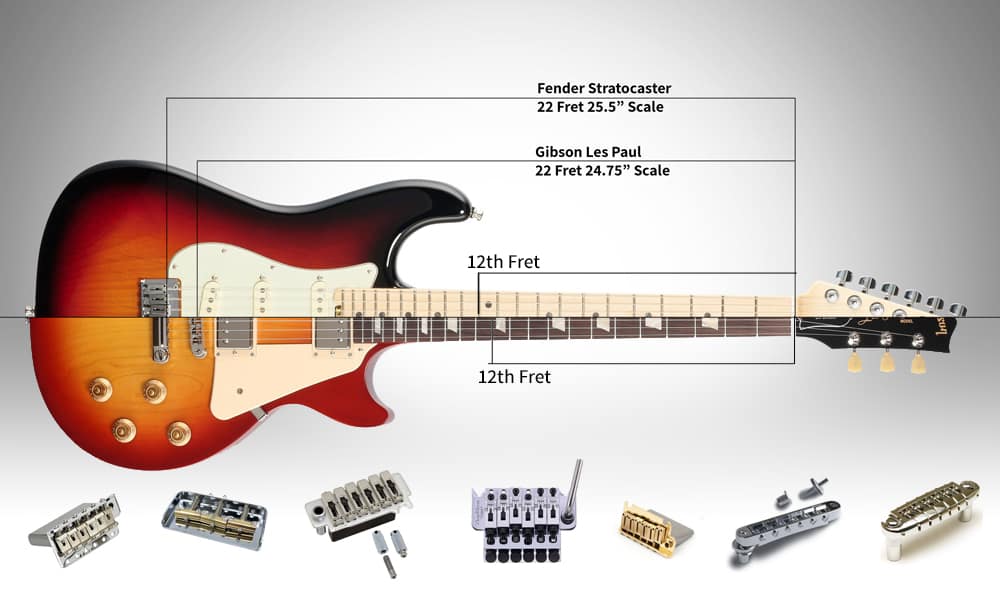
Fixed Electric Guitar Bridge
A fixed bridge stays in one position. It is simple, stable, and often easy to maintain.
Examples include:
- Wraparound bridges
- Tune-o-matic bridges
- Hardtail bridges
- String-through-body bridges
Fixed bridges are popular with players who want strong tuning stability and a straightforward setup.
Tremolo or Vibrato Bridge
A tremolo bridge allows the player to raise or lower pitch by moving an arm. Many players call this a whammy bar bridge.
Common designs include:
- Synchronized tremolo
- Two-point tremolo
- Locking tremolo
- Bigsby-style vibrato
These systems can create expressive pitch movement, but they may need more careful setup. Spring tension, bridge angle, nut friction, and string balance all matter.
Floating Bridge
A floating bridge is not permanently fixed to the guitar body. It rests on the top and is held in place by string tension.
Many hollow-body electric guitars use floating bridges. They can offer a warm response, but they may move if the strings are removed or if the instrument receives a hard impact.

Guitar Bridge Materials and Their Effects
Bridge materials influence durability, appearance, feel, and vibration transfer. However, material alone does not determine tone. The design, fit, mass, body wood, strings, and setup also matter.
Wood
Acoustic guitar bridges often use rosewood, ebony, or similar hardwoods. Wood keeps the bridge light while offering enough strength for string tension.
A dense wood may feel firm and focused. A lighter bridge may allow more top movement. These effects are real, but they can be subtle compared with the influence of the soundboard and overall construction.
Bone
Bone is common for acoustic saddles and nuts. It is hard, durable, and can provide a clear transfer of vibration when fitted correctly.
A poorly shaped bone saddle will not improve a guitar. Fit and contact matter more than the label on the material.
Plastic and Synthetic Materials
Synthetic materials are affordable and consistent. Many factory guitars use them successfully.
Modern composite materials can offer good wear resistance and stable performance. A well-made synthetic saddle can outperform a poorly fitted bone saddle.
Metal
Electric guitar bridges often use steel, brass, aluminum, or zinc alloys. Metal bridges can provide strong durability and precise adjustment.
A heavier bridge may add stability and sustain, while a lighter design may feel more lively. These descriptions are general, not rules. The complete guitar determines the result.
In my own setup work, I have found that correct contact and clean adjustment usually matter more than replacing a bridge with a more expensive material. A loose saddle or tilted bridge causes more trouble than an ordinary material.

How the Bridge Affects Tone and Playability
The bridge has a direct effect on how a guitar feels and responds. It does not create tone by itself, but it shapes how energy moves through the instrument.
A well-fitted bridge can help provide: