Should I Stay Or Should I Go Guitar Tab: Easy Guide
The best should i stay or should i go guitar tab combines simple power chords with a lively, syncopated rhythm.
The Clash made “Should I Stay or Should I Go” feel easy, but its energy comes from timing, muted strums, and sharp chord changes. A clear should i stay or should i go guitar tab can help you learn the main riff, rhythm parts, and song structure without getting lost on the fretboard. This guide explains how to read the tab, choose the right guitar tone, avoid common mistakes, and practice the song with confidence.

What Makes the Should I Stay or Should I Go Guitar Tab Special?
The song is built around a direct rock sound. It does not rely on long solos or complex jazz chords. Instead, it uses tight rhythm guitar, repeated figures, and strong accents.
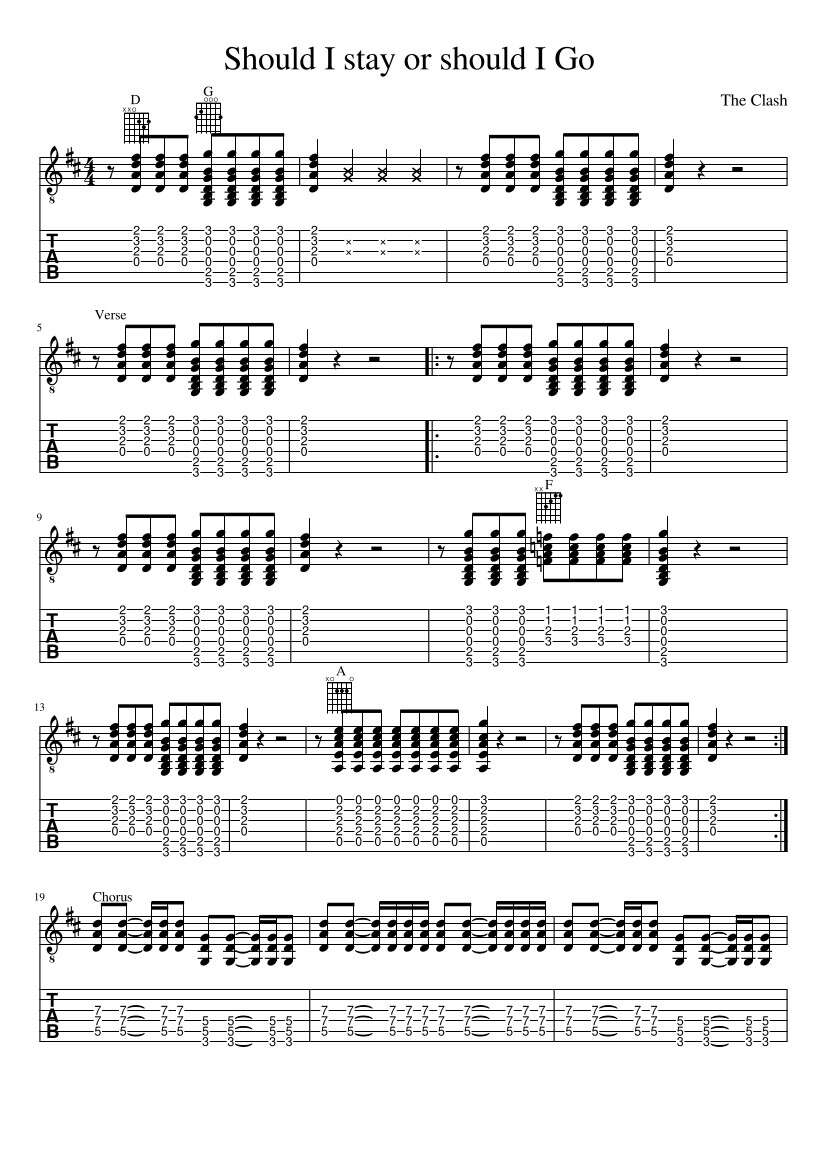
A good should i stay or should i go guitar tab usually shows three important parts:
• The main guitar riff, which gives the song its identity
• Power chords or simplified chord shapes for rhythm playing
• Muted and accented strums that create the song’s bounce
The tab may look simple at first. The real challenge is making each note sound controlled. The Clash used space as part of the music. Some strokes should ring, while others should sound short and punchy.
This is why copying the notes alone may not sound right. You also need the feel. Think of the riff as a conversation between the guitar and the drums. The guitar speaks in short bursts, then leaves room for the beat.
How to Read a Should I Stay or Should I Go Guitar Tab
Guitar tablature uses six horizontal lines. Each line represents a guitar string.
• The top line represents the high E string
• The bottom line represents the low E string
• Numbers show which fret to play
• A 0 means you play the string open
• An “x” usually means a muted or percussive stroke
• Chord names above the tab show the harmony
A should i stay or should i go guitar tab may also use symbols such as palm-mute marks, slides, or hammer-ons. These symbols can vary from one tab source to another, so check the legend on the page before you begin.
For this song, rhythm marks matter as much as fret numbers. If the tab shows repeated muted strokes, do not ignore them. They help create the tight, choppy sound heard in the recording.
Start by reading one small phrase. Play it slowly. Then repeat it until your fretting hand and picking hand move together. This method is much more effective than trying to play the entire tab at full speed.

The Main Chords and Shapes
Many versions of a should i stay or should i go guitar tab use basic rock chord shapes. Power chords are often the easiest choice because they sound strong and remain clear with distortion.
A power chord contains:
• The root note
• The fifth
• Sometimes a higher root note
Power chords are useful here because they avoid the extra notes found in full major or minor chords. They also make fast changes easier.
You can play the song with either:
• Two-note power chords for a lean, aggressive sound
• Three-note power chords for a fuller sound
• Open-position chords for a simpler acoustic version
If you are new to rock guitar, begin with the simplest shapes. Focus on clean movement between chords. Once the changes feel easy, add the higher octave or try the fuller shapes shown in your should i stay or should i go guitar tab.
Do not squeeze the neck too hard. A relaxed fretting hand will help you change chords faster. It will also reduce hand strain during repeated practice.
Rhythm and Strumming Tips
The rhythm is the heart of this song. You can play the correct chords and still miss the style if your strumming is too smooth or too even.
Try these steps:
-
Play only downstrokes at a slow tempo.
-
Add muted strokes between the main accents.
-
Count steady eighth notes while keeping your arm moving.
-
Accent the stronger beats without hitting every stroke too hard.
-
Raise the tempo only after the pattern feels relaxed.
A useful practice trick is to mute all the strings with your fretting hand. Then play the rhythm without worrying about chord changes. This lets you train the picking hand first.
Your strumming arm should act like a pendulum. It should keep moving even when some strokes do not produce a clear chord. That constant motion helps you stay in time.
A should i stay or should i go guitar tab can show the notes, but it cannot fully show the attitude of the performance. Listen to the track while you practice. Notice how the guitar locks into the drums rather than rushing ahead.

Choosing the Right Guitar Tone
You do not need expensive equipment to get close to the song’s sound. A basic electric guitar, a small amplifier, and moderate overdrive are enough for practice.
Use these starting points:
• Select the bridge pickup for a sharper attack
• Set gain at a moderate level
• Keep bass controlled so the chords stay clear
• Add enough midrange to give the guitar body
• Use limited reverb
Too much distortion can hide mistakes. It may feel powerful, but it often turns separate notes into a noisy blur. Start with less gain than you think you need.
For an acoustic version, use firm downstrokes and slightly mute the strings with your palm. An acoustic guitar will not copy the original tone, but it can reveal timing problems very clearly.
If your guitar sounds thin, do not immediately add more gain. First check your picking strength, tuning, and chord pressure. Good technique usually improves the sound more than another effect pedal.
A Simple Practice Plan
A structured plan will help you learn the should i stay or should i go guitar tab faster and with less frustration.
Step 1: Tune Carefully
Use standard tuning unless your chosen tab clearly says otherwise. Check your tuning again after several minutes of playing, especially if you use heavy strumming.
Step 2: Learn the Main Riff
Practice the main figure by itself. Use a slow metronome. Aim for even timing rather than speed.
Step 3: Add Muting
Once the notes are comfortable, add the muted strokes. Keep your fretting hand loose enough to stop the strings without pressing them fully.
Step 4: Practice the Chord Changes
Move between two chords at a time. Count four beats per chord, then shorten the gap as your control improves.
Step 5: Join the Sections
Combine the riff, verse pattern, and chorus pattern. Do not worry about playing the entire song perfectly on the first day.
Step 6: Play With the Recording
Use the original track at a reduced speed if possible. This will help you learn where the guitar sits in the arrangement.
Step 7: Record Yourself
A phone recording can reveal rushed changes, weak accents, and unwanted string noise. This simple step often improves practice more than another hour of playing alone.

Common Mistakes to Avoid
Many players struggle with this song for the same reasons. The notes are not usually the main problem. Control and timing cause more trouble.
• Playing every strum at the same volume
• Using too much distortion
• Rushing the chord changes
• Letting open strings ring by accident
• Ignoring muted strokes
• Practicing only at full speed
• Copying a tab without checking its tuning or version
Different online tabs may show different fingerings. That does not always mean one is wrong. Some tabs simplify the original part, while others try to capture small details from the recording.
Before trusting a should i stay or should i go guitar tab, compare it with the song. If the tab feels awkward, check whether it uses the correct tuning and section. User-submitted tabs can contain errors, so your ears remain an important guide.
One practical lesson applies to almost every rock song: slow practice is not a punishment. It is where accuracy is built. Speed should be the result of relaxed movement, not force.
How to Use Legal and Reliable Tabs
Tabs for popular songs are often shared online, but not every version is accurate or properly licensed. Look for reputable music publishers, official songbooks, or authorized digital sheet music services when possible.
A reliable tab should include:
• The song’s tuning
• Chord names or rhythm marks
• Clear section labels
• A tempo or recording reference
• Consistent notation
Be careful with pages that promise a perfect tab but provide no information about the arrangement. Some versions show only basic chords. Others focus on the main riff and leave out the rhythm guitar.
That is not always a problem. A simplified should i stay or should i go guitar tab may be ideal for a beginner. Just understand what it includes before you start learning it.
This article does not reproduce a complete copyrighted tab. Instead, it explains the technique, structure, and practice method so you can use an authorized tab safely and effectively.

Acoustic and Beginner-Friendly Versions
You can play a simplified version of the song on acoustic guitar. Begin with the chord progression and use steady downstrokes. Keep the pattern simple until the changes feel natural.
Beginners can also use a two-stage approach:
-
Learn the chord shapes without the original rhythm.
-
Add the muted accents after the chord changes become comfortable.
This approach removes pressure. You first learn where your fingers go. Then you learn how the right hand creates the groove.
If full power chords hurt your hand, use lighter pressure and shorter practice sessions. A clean sound is helpful, but pain is not a sign of progress. Stop if you feel sharp pain, and check your posture and hand position.
The best should i stay or should i go guitar tab for a beginner is not always the most detailed one. Choose a version that matches your current skill. You can move to a fuller arrangement later.
How Long Does It Take to Learn?
The answer depends on your experience and your practice habits. A beginner may learn the basic chords in a few sessions. A confident performance may take several weeks of regular practice.
Practice for 10 to 20 minutes at a time. Short sessions often work better than one long session because your hands stay fresh and your attention remains sharp.
Track three goals:
• Clean chord changes
• Steady rhythm
• Fewer unwanted sounds
Do not measure progress only by speed. If you can play slowly with good timing, you are moving in the right direction. The tempo will improve as your movements become more natural.
Frequently Asked Questions About Should I Stay or Should I Go Guitar Tab
What tuning is used for the should i stay or should i go guitar tab?
Many standard versions use standard tuning, which is E A D G B E. Always check the tuning listed on your specific tab because arrangements can differ.
Is should i stay or should i go easy to play on guitar?
The basic chords and riff are accessible to many beginners. The muted rhythm and tight timing require extra practice, but the song is a good introduction to classic punk rock guitar.
Should I use power chords or open chords?
Power chords usually sound closer to the electric guitar style and work well with distortion. Open chords are easier for some beginners and suit acoustic arrangements.
What guitar effects do I need?
You mainly need moderate overdrive or distortion. A bridge pickup, limited reverb, and clear midrange can help you approach the classic sound without complicated equipment.
Why does my version not sound like the recording?
The issue may be timing, muting, tone, or the arrangement itself. Check your rhythm first, then compare the tuning, chord shapes, and effects used in your should i stay or should i go guitar tab.
Can I learn the song without reading tab?
Yes. You can learn it from chord charts, video lessons, or careful listening. Tab is helpful because it shows fret positions, but rhythm and listening skills remain essential.
Conclusion
Learning the should i stay or should i go guitar tab is less about playing difficult notes and more about capturing tight rhythm, clean accents, and punk rock energy. Start with the main riff, use simple chord shapes, practice muted strums, and increase speed only when your timing feels steady.
Choose a clear and authorized tab, listen closely to the recording, and record your progress. With regular practice, you can turn a simple set of chords into a confident performance. Explore more guitar lessons, share your progress, and keep building your rhythm skills one song at a time.

Senior Music Reviewer
Alex Carter is a seasoned music reviewer with over a decade of experience in the world of sound and instruments. Passionate about helping musicians and enthusiasts make informed choices, he brings sharp insights and in-depth knowledge to every review. From classical instruments to modern gear, Alex combines technical expertise with a love for music to deliver content that resonates with readers.
As a Senior Music Reviewer and expert author on Tuneluma.com, Alex is dedicated to sharing honest evaluations, practical advice, and thoughtful commentary to guide readers in their musical journey.