Introduction
A wild turkey’s drumming sounds like a deep, short “thump,” “pfft,” or soft boom that may seem more like a vibration than a bird call. It is made by a male turkey, called a gobbler or tom, when he rapidly moves his wings against his body. The sound is low, muted, and hard to locate.
In the United States, hunters and bird watchers often hear turkey drumming in spring, when male wild turkeys display for hens. You may hear it as a faint “whump-whump” from nearby brush, even when the turkey is hidden.

What does turkey drumming sound like?
Turkey drumming sounds like a quick, low-frequency burst. Many people compare it with:


- A soft bass drum
- A muffled “thump”
- Air popping from a small paper bag
- A distant engine pulse
- A low “pfft” followed by a faint wing rush
The sound is not a clear note like a gobble. It does not carry as far, and thick woods can make it seem even softer.
A turkey may drum once, repeat the sound several times, or produce a rapid series of low pulses. The exact sound changes with distance, cover, wind, and the bird’s display. From far away, you may feel or sense the sound before you clearly hear it.
A simple sound pattern
A rough written version might look like this:
Whump… whump-whump… pfft
This spelling is only an aid. Turkey drumming is difficult to represent with words because much of the sound is low and felt as vibration.
The sound may also blend with other noises. Wing movement, leaves, scratching, wing beating, and the turkey’s spit-and-drum display can occur close together. What sounds like a single “thump” may be part of a larger courtship display.
How does a turkey make the drumming sound?
A male turkey creates drumming by moving his wings quickly while holding his body in a display posture. The wing feathers and air movement produce the deep pulse. The turkey does not make the sound with its voice box in the same way it makes a gobble.
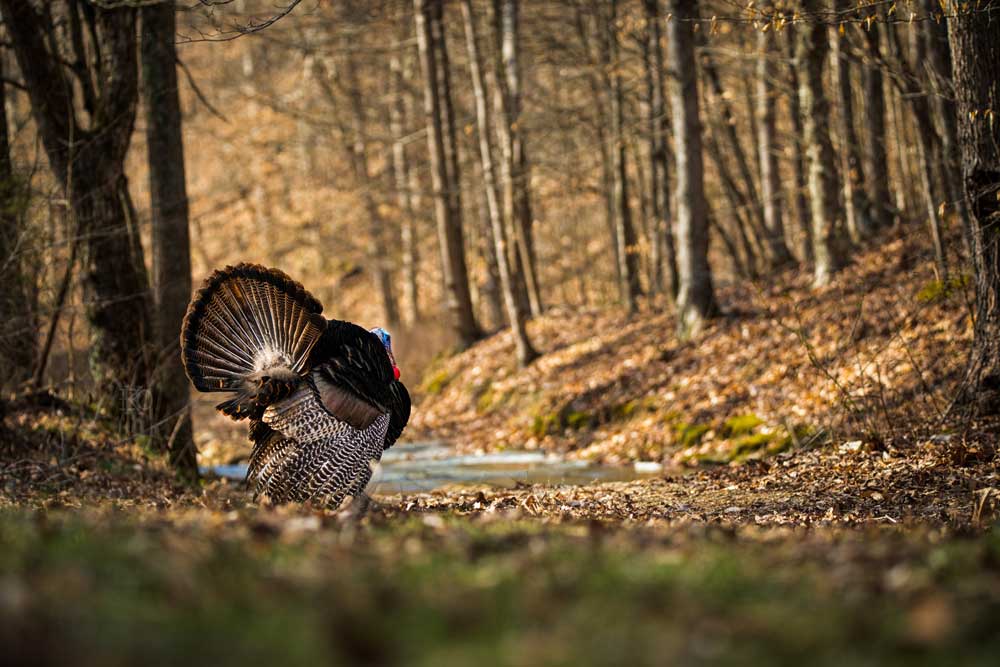
Drumming usually occurs during strutting, a courtship display in which the tom:
- Fans his tail
- Lowers and puffs his body feathers
- Holds his wings low
- Raises his body feathers
- Walks slowly near hens or rival males
The sound is often paired with spitting, a short burst of air that sounds like “tss” or “pfft.” A turkey may spit and drum so close together that listeners describe the whole display as one sound.
This behavior is most often linked with male wild turkeys, especially during the spring breeding season. However, wild turkeys can display at other times, and the exact timing varies by weather, daylight, location, and breeding activity.


Turkey drumming vs. other turkey sounds
Turkey drumming is easy to confuse with other sounds. The best way to identify it is to compare its pitch, volume, and pattern with known turkey calls.
| Turkey sound | What it sounds like | Main use or context |
|---|---|---|
| Drumming | Deep, muffled thump or vibration | Courtship display by a male |
| Gobble | Loud, rolling call: “gobble-gobble” | Male response, breeding, flock contact |
| Spit | Short, sharp “pfft” or “tss” | Often paired with drumming |
| Cluck | Soft, short note | Contact or reassurance |
| Purr | Low rolling sound | Calm contact or contentment |
| Putt | Sharp, quick note | Alarm or alert behavior |
| Kee-kee | High, clear whistle-like call | Lost young turkey or fall flock contact |
| Wing beats | Flapping or rushing air | Flight, alarm, landing, or movement |
Drumming and gobbling are not the same
A gobble is loud and carries well. It is a vocal call that can be heard across open fields and wooded valleys. Drumming is quieter, lower, and more local.
If you hear a loud call from far away, it is more likely a gobble. If you hear a soft pulse close by but cannot see the bird, it may be drumming.
Drumming and wing beats are not the same
Wing beats sound like obvious flapping or rushing air. Drumming sounds more like a compact bass pulse. A strutting tom may produce both sounds, so the difference is not always clear.
The setting helps. A turkey flying from a tree or crossing a clearing will make strong wing noise. A turkey standing and displaying may produce a low drum with little visible movement.
Drumming and an owl or woodpecker sound are not the same
Some woodland sounds can seem similar at first. A barred owl, a distant woodpecker, or a vehicle may create a low pulse. Turkey drumming usually has an irregular, close-range pattern and often comes with rustling, scratching, or a faint spit.
Where and when are you most likely to hear turkey drumming?
You are most likely to hear turkey drumming when a male wild turkey is strutting near hens. In much of the United States, that means early morning during the spring breeding season, although the behavior is not limited to one time or one month.
Good places to listen include:
- Open woodland edges
- Brushy fields
- Oak and mixed hardwood forests
- Clearings near roost trees
- Logging roads
- Ridges and field borders
- Areas with turkey tracks, droppings, or loose feathers
A strutting turkey may stay in one small area for several minutes. Listen from cover and avoid sudden movement. The sound can seem to come from the wrong direction because low tones travel through the ground, leaves, and tree trunks.
Weather also matters. Calm conditions make a faint drum easier to notice. Wind can hide it, while wet leaves may reduce the sharp rustle that helps you locate the bird. Soft ground and dense vegetation can make the sound seem duller.

How to identify turkey drumming in the field
Use the sound together with behavior and habitat. One low thump is not enough for a certain identification.
1. Listen for a low, muted pulse
Focus on the lowest part of the sound. Turkey drumming is usually not sharp or ringing. It may feel more like a small pressure change than a normal bird call.
2. Check for repeated pulses
A displaying tom may drum more than once. The pauses may be uneven. You might hear one pulse, a short pause, and then two or three more.
3. Look for a strutting turkey
If you can see the bird, look for:


- A fully fanned tail
- A puffed, rounded body
- Drooping wings
- A lowered head
- Slow, deliberate steps
- A red, blue, or pale head that changes color
A hen may stand nearby, though a male can also strut when no hen is visible.
4. Watch for related signs
You may notice:
- A soft “pfft”
- Wing feathers brushing leaves
- A faint dragging sound
- Scratching
- Quiet clucks or purrs
- Dust or loose soil moving beneath the bird
5. Rule out nearby mechanical sounds
A distant truck, generator, farm machine, or aircraft can create a low thump. Mechanical sounds are often more regular and continue for longer. Turkey drumming is usually brief and linked with natural movement.
Can you hear turkey drumming on a recording?
Yes, but many recordings do not capture it well. Smartphone microphones often reduce very low frequencies, and wind noise can cover the sound. The recording may make drumming seem like a faint click or dull bump instead of the deep pulse heard in the field.
When searching for examples, use terms such as:
- “Wild turkey drumming sound”
- “Tom turkey spit and drum”
- “Turkey strut drumming”
- “Wild turkey courtship sounds”
- “Turkey drumming and spitting”
A useful recording should identify the species, the behavior, and whether the audio includes spitting or wing movement. Do not assume every “turkey sound” recording contains drumming; many feature only gobbles, clucks, or alarm calls.
Recordings also have limits. They can help train your ear, but they cannot show how quiet or directional the sound is in a real forest.

Why is turkey drumming so hard to hear?
Turkey drumming is difficult to hear for three main reasons.
First, it is quieter than a gobble. The sound is meant for close-range display, not long-distance flock communication.
Second, much of its energy is low in pitch. Human hearing and small microphones do not always pick up low sounds equally well.
Third, the sound is often blocked by terrain and vegetation. Leaves, brush, hills, and tree trunks can weaken or scatter the pulse.
Age, hearing sensitivity, and background noise also affect what you notice. A person standing close to a strutting tom may hear drumming clearly, while someone 50 yards away may hear only leaves moving.
Do not rely on drumming alone to estimate distance. Low sounds can travel through the ground and make the source seem closer or farther away than it is.
Is turkey drumming a call?
No. Turkey drumming is better described as a nonvocal display sound rather than a conventional call.


A gobble, cluck, purr, and putt are vocal sounds produced by the turkey’s respiratory and vocal systems. Drumming comes from the movement of the wings and body during strutting.
This difference matters because drumming does not work like a normal turkey call. A tom may drum without answering another turkey. It may also drum while remaining almost silent vocally.
The sound still communicates. It forms part of the male’s breeding display and may help attract hens or signal his presence to other males.
Do female turkeys drum?
The classic spit-and-drum display is associated with male wild turkeys. Hens do not normally produce the full strutting display seen in adult males.
A hen can make many other turkey sounds, including clucks, purrs, yelps, and alarm notes. She may also move her wings or create rustling sounds, but that does not mean she is drumming.
Young turkeys can make unusual sounds as they grow. If a sound does not match the behavior of an adult tom, consider other explanations before identifying it as drumming.
Is turkey drumming a sign that a turkey is nearby?
Usually, yes. Drumming is a close-range sound, so it often means a displaying male is within sight or within a short distance. Dense brush can hide him, however, and the sound may travel in an unexpected direction.
Move slowly and scan likely cover. Look for a fan, dark body shape, moving head, or wing tips. Avoid walking directly toward the sound if you are watching wildlife, because sudden movement can stop the display.
During a legal hunt, follow the rules for your state, season, land type, firearm or archery equipment, and use of calls. Do not use recorded turkey sounds unless local regulations clearly allow them. Some states restrict electronic calls or recorded audio, and regulations can change.
What should you do if you hear drumming?
If you are bird watching, pause and listen. Keep your movement slow, stay downwind when possible, and scan open edges near brush or timber.
If you are hunting, identify the bird and your target before taking any action. Never shoot at a sound, movement, or obscured shape. Make sure you know what is beyond the target, and follow all state and federal hunting rules.
If you are unsure whether the sound is turkey drumming, wait for more evidence. A gobble, strut, fan, tracks, or visual confirmation can help. When the sound remains unclear, treat the identification as uncertain.

Common mistakes when identifying turkey drumming
Mistaking a gobble for a drum
A gobble is louder, more vocal, and usually has a rolling quality. Drumming is lower, shorter, and more muted.


Expecting a loud sound
Many people listen for a miniature drumbeat. In the field, the sound may be barely audible. A faint vibration can still be genuine drumming.
Treating every wing sound as drumming
Flapping, gliding, landing, and scratching can all create wing noise. Look for strutting behavior before making a firm identification.
Using only one clue
Sound, habitat, season, and behavior work best together. A single low noise in the woods is not proof of a turkey.
Playing recordings without checking regulations
Electronic calls and playback rules differ across the United States. Check the current regulations for the state and wildlife management area where you plan to listen or hunt.
Frequently asked questions
What does a turkey drumming sound like in words?
It may sound like “whump,” “thump,” “pfft,” or “whump-whump.” The sound is deep, soft, and brief. It often feels more like a vibration than a clear bird call.
Do turkeys drum before they gobble?
They can, but there is no fixed order. A tom may drum, spit, gobble, or strut silently. Drumming is part of courtship behavior, while gobbling is a vocal display and communication call.
How far away can you hear turkey drumming?
There is no dependable distance. It is normally heard much closer than a gobble, but wind, terrain, vegetation, and background noise can change the range. A person may hear it from nearby cover but miss it across an open field.
What time of day do turkeys drum?
Morning is a common time to observe spring strutting, especially after turkeys leave their roosts. Males can also drum later in the day. Weather, breeding activity, and local conditions affect when it occurs.
Can a turkey drum without strutting?
Drumming is strongly linked with strutting, but you may hear the sound before you see the bird fully display. If there is no sign of a male turkey, keep the identification tentative and rule out wing noise or a non-turkey source.
Conclusion
Turkey drumming sounds like a low, muffled thump or soft vibration made by a male wild turkey during a strutting display. It is quieter and less distinct than a gobble, and it may occur with spitting, wing movement, and other courtship sounds.
To identify it, listen for repeated low pulses and look for a puffed, fanned, slow-moving tom near woodland edges or clearings. When the sound is unclear, use behavior and habitat as supporting clues, and follow all applicable wildlife and hunting rules.
Sources and further reading
- Cornell Lab of Ornithology: Wild Turkey
- National Wild Turkey Federation: Turkey behavior and sounds
- National Park Service: Wild turkey information
- Your state wildlife agency’s current wild turkey regulations and species guide

Senior Music Reviewer
Alex Carter is a seasoned music reviewer with over a decade of experience in the world of sound and instruments. Passionate about helping musicians and enthusiasts make informed choices, he brings sharp insights and in-depth knowledge to every review. From classical instruments to modern gear, Alex combines technical expertise with a love for music to deliver content that resonates with readers.
As a Senior Music Reviewer and expert author on Tuneluma.com, Alex is dedicated to sharing honest evaluations, practical advice, and thoughtful commentary to guide readers in their musical journey.