How To Read Drum Notation: Easy Step-By-Step Guide
Drum notation is a simple map that tells you which drum to hit and when.
I’ve taught drummers and played in bands for years, so I know how confusing sheet music can feel at first. This guide will show you how to read drum notation clearly and quickly. You’ll learn the staff layout, note placement, rhythmic values, dynamics, and practical practice tips. Read on and you’ll turn notation from a mystery into a tool you can use every day.
Why drum notation matters for drummers
Reading drum notation gives you access to songs, charts, and lessons worldwide. It makes learning faster and keeps bands tight. Knowing how to read drum notation also helps you write parts and communicate ideas with other musicians.

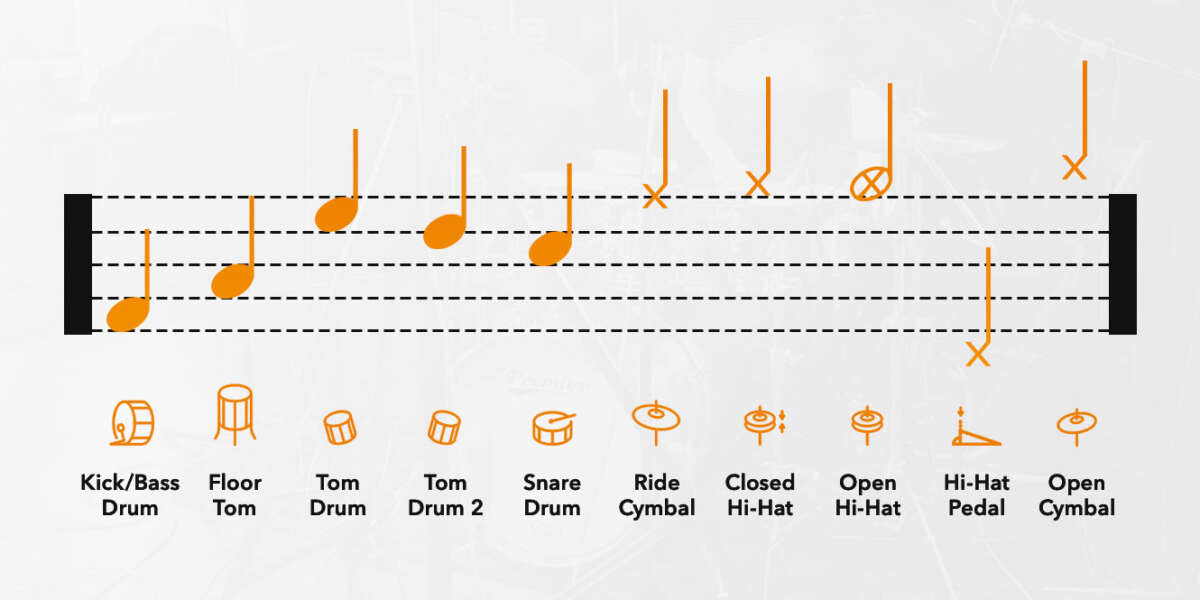
Drum staff and how to read drum notation
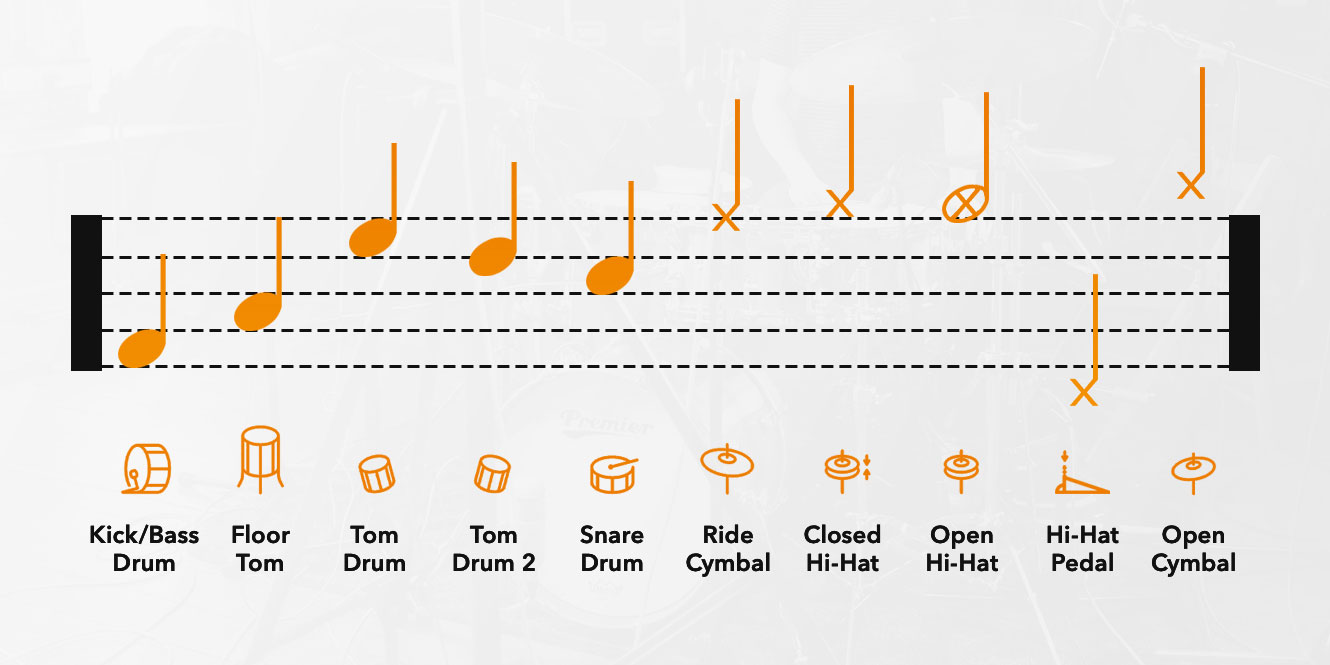
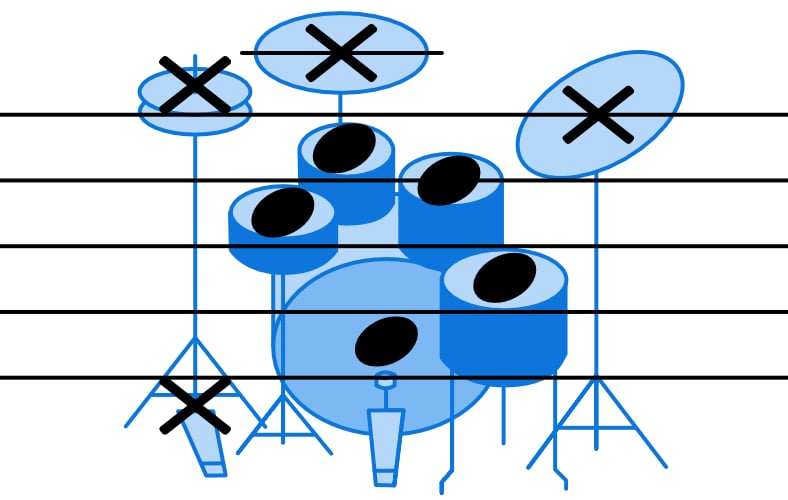
The drum staff uses five lines like standard music, but it shows drums and cymbals instead of pitches. You usually see a percussion clef or no clef at all; the important part is placement. Each line or space stands for an instrument. Once you learn the map, you can read any drum chart.
Noteheads, stems, and placement on the staff
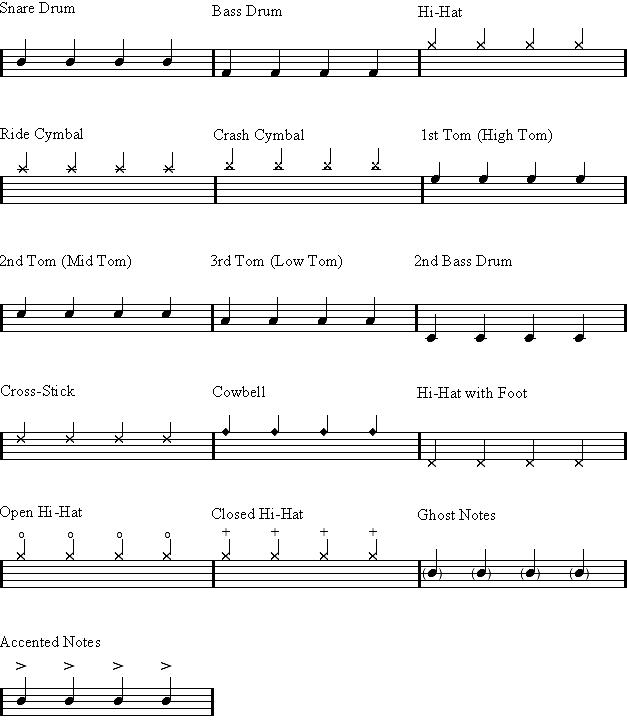
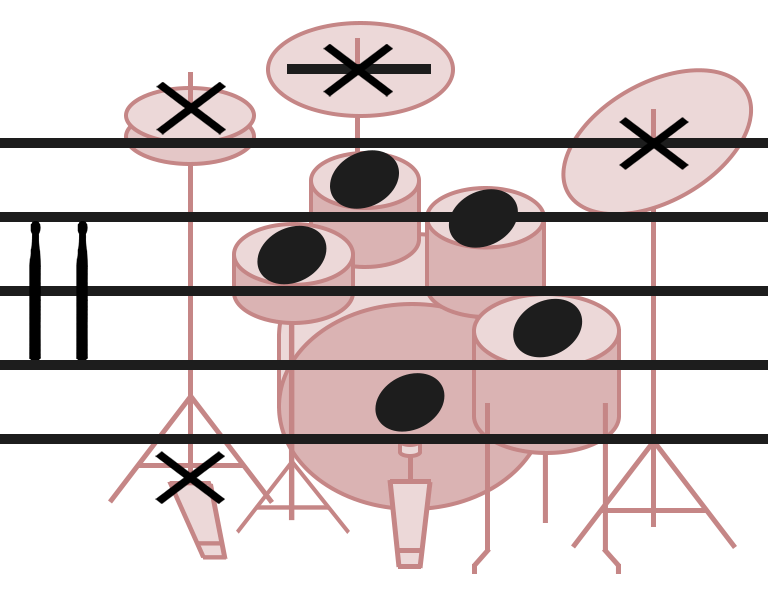
Noteheads show the instrument. Stems and flags show the rhythm. Here is a simple map for a common drum kit:
- Top space or line shows cymbals like crash and ride.
- Space or line below that is usually the hi-hat.
- Middle line or space is the snare drum.
- Lower lines and spaces are toms.
- Bottom space or ledger line is the bass drum.
Different charts can swap placements, so always check the legend on the page. I see many students assume a map and misread parts; always confirm the chart key first.
Source: drumeo.com
Rhythmic values, rests, and counting
Rhythm in drum notation works like other music. Notes with stems and flags tell you the beat value:
- Whole notes last four beats in common time.
- Half notes last two beats.
- Quarter notes are one beat.
- Eighth notes have one flag or a single beam and equal half a beat.
- Sixteenth notes have two flags or double beams and equal a quarter beat.
Rests match those same values. Count out loud: "1 and 2 and" for eighths, "1 e & a" for sixteenths. Counting aloud is one of the fastest ways to internalize how to read drum notation.

Source: schoolofrock.com
Subdivisions, feel, and how to read drum notation for groove
Groove depends on where you place notes inside the beat. Subdivisions give the feel:
- Straight eighths sit evenly: 1 & 2 &.
- Swing or triplet feel uses three parts per beat: 1 (trip) let.
- Syncopation moves accents off the strong beats.
When you read notation, mark the subdivision under the staff if it helps. I mark sixteenth-note groupings for tricky grooves. This simple habit makes reading grooves much easier.
Source: freedrumlessons.com
Dynamics, accents, and articulations in drum notation
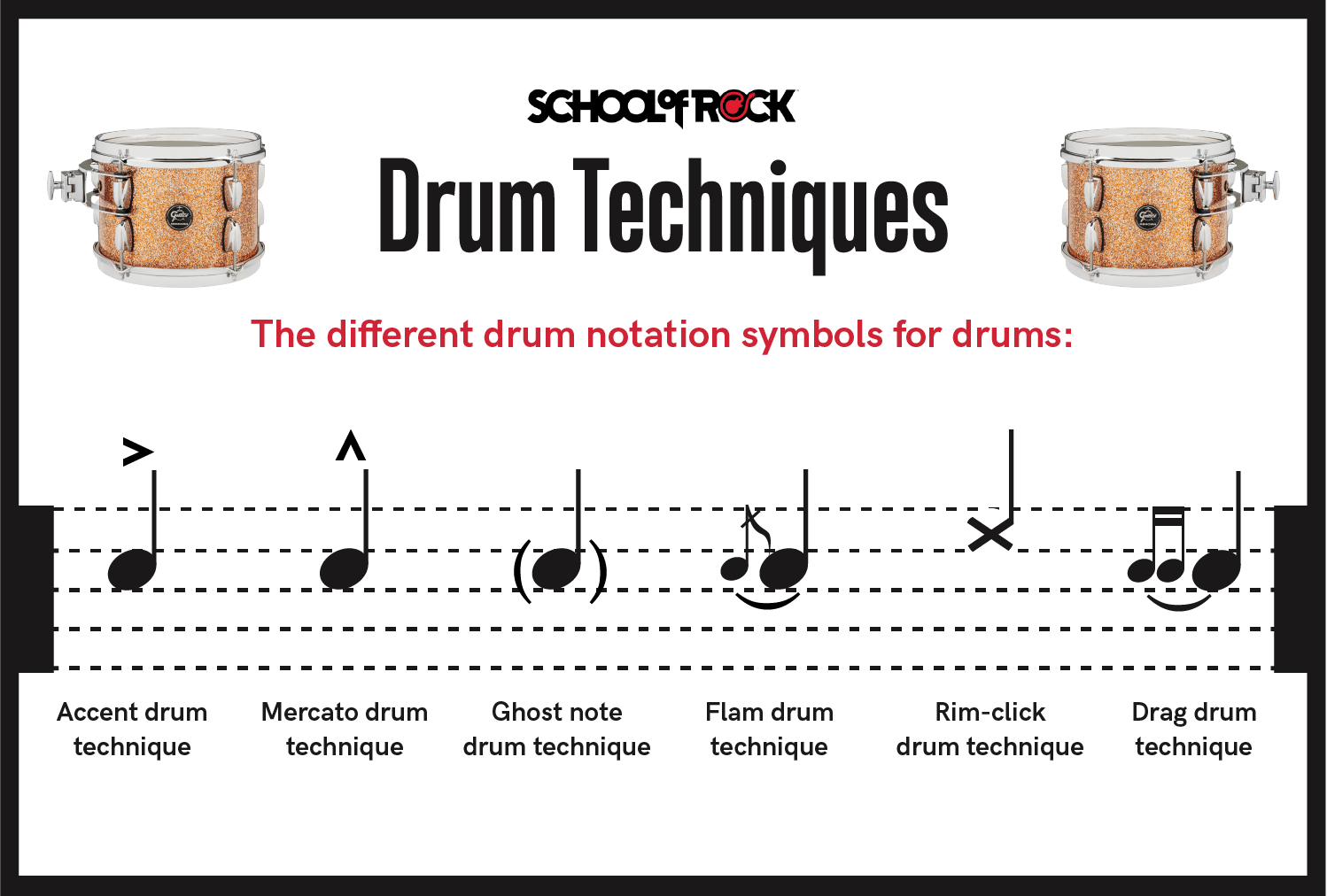
Dynamics tell you how loud to play. Accent marks, ghost notes, and articulations shape your groove:
- Accent > means play that note louder.
- Parentheses or smaller noteheads show ghost notes (soft hits).
- Flam is a grace note followed by a main note.
- Rimshot and cross-stick have specific labels or symbols.
Read these marks slowly and play them with control. Dynamics are what make a beat musical, not just correct.

Source: onlinedrummer.com
Reading grooves and fills: practical examples
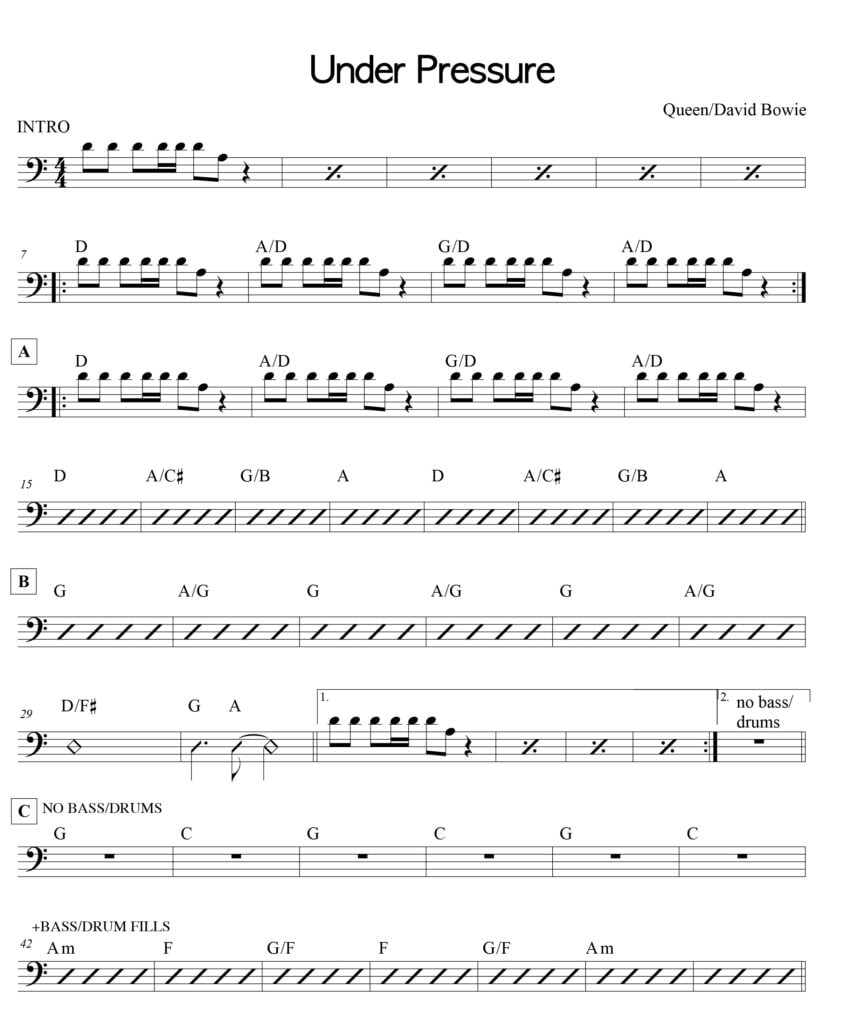
Start with a basic rock beat on paper: hi-hat eighths, snare on 2 and 4, bass drum on 1 and 3. Then add fills that use toms or snare ghost notes. Break a bar into smaller parts and practice hands first, then add feet. My tip: clap the groove, then play it slowly at the kit. That makes the translation from notation to sound much clearer.
Practice strategies to learn how to read drum notation
Practice in short, focused sessions. Try these steps:
- Sight-read one line a day from a drum book.
- Count out loud and clap subdivisions before you play.
- Use a metronome at slow tempos and increase gradually.
- Transcribe small parts from songs into notation to build reading and listening skills.
I once spent 10 minutes daily on sight-reading for a month and doubled my reading speed. Small, steady practice beats marathon sessions.
Source: drumeo.com
Common mistakes and how to avoid them when you learn how to read drum notation
Many drummers mix up line placement, ignore rests, or rush counting. Fixes are simple:
- Verify the chart key for instrument placement.
- Mark counts and subdivisions on the sheet.
- Slow down and keep the metronome steady.
Avoid learning by feel only. Notation is the shared language that keeps bands tight.
Tools and resources to support how to read drum notation
Use apps, notation editors, and method books to practice. Look for:
- Drum method books with progressive exercises.
- Notation software that plays back your parts.
- Apps with sight-reading drills and metronomes.
I use a notation editor to write short transcriptions. Hearing your written part helps you check accuracy quickly. Trusted resources make learning faster and keep your work accurate.
Frequently Asked Questions of how to read drum notation
What does each line on a drum staff represent?
Each line or space can represent a different drum or cymbal. The exact map varies by chart, so check the legend on the music to confirm which instrument each line or space means.
How do I count sixteenth notes in drum notation?
Count sixteenth notes as "1 e & a, 2 e & a" with one beat per count. Clap or speak those syllables while playing to lock the subdivision into your body.
How do ghost notes look in drum notation?
Ghost notes are shown as smaller noteheads or in parentheses. They are played very softly to add texture without overpowering the main beats.
Can I learn drum notation without knowing music theory?
Yes. Basic drum notation focuses on rhythm and placement, not pitch. Learning counting, subdivisions, and instrument map gives you most of what you need.
How do I practice reading drum notation quickly?
Practice short sight-reading exercises daily, clap subdivisions, and use a metronome. Slow practice and consistent repetition build speed and accuracy.
Conclusion
You can learn how to read drum notation with steady, focused practice. Start by learning the staff map, counting rhythms, and recognizing dynamics. Use short daily drills, check charts for legends, and transcribe simple parts from songs. Get comfortable reading and you’ll join a global musical language that helps you play, write, and communicate better. Try a ten-minute sight-reading habit this week, and leave a comment about your progress or questions.

Senior Music Reviewer
Alex Carter is a seasoned music reviewer with over a decade of experience in the world of sound and instruments. Passionate about helping musicians and enthusiasts make informed choices, he brings sharp insights and in-depth knowledge to every review. From classical instruments to modern gear, Alex combines technical expertise with a love for music to deliver content that resonates with readers.
As a Senior Music Reviewer and expert author on Tuneluma.com, Alex is dedicated to sharing honest evaluations, practical advice, and thoughtful commentary to guide readers in their musical journey.