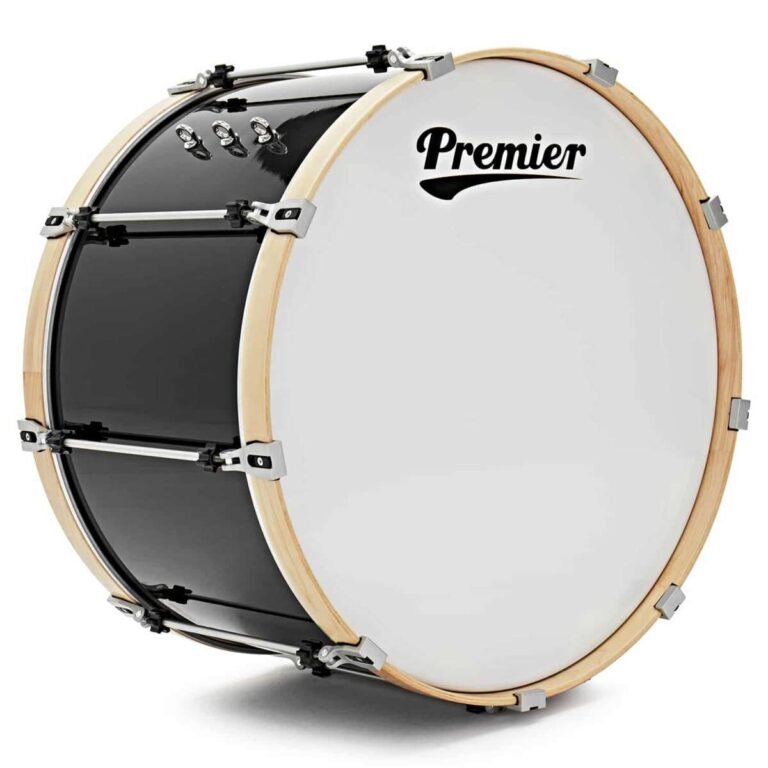
In the United States, snare drums appear in school bands, marching lines, concert halls, drum kits, and military ensembles. Although they look simple, a snare drum combines several materials to create its sharp attack and crisp buzz.
Most snare drums are made from a wood, metal, or composite shell, with metal hardware, plastic or animal-skin heads, and metal snare wires. Each material changes the drum’s tone, volume, weight, durability, and response.

What is a snare drum made of?
A snare drum has five main material groups:
- The shell — the round body of the drum.
- The drumheads — the striking and resonant surfaces.
- The snare wires — the wires beneath the bottom head.
- The hardware — rims, tension rods, lugs, throw-off systems, and fittings.
- The finish and small parts — coatings, badges, washers, gaskets, and fasteners.
The shell has the largest effect on the drum’s basic voice. The heads and snare wires shape its attack and buzz. The hardware controls tuning and keeps the drum stable under tension.
Most modern snare drums use maple, birch, beech, mahogany, steel, brass, aluminum, copper, acrylic, or fiberglass. The best material depends on the player’s setting. A marching drummer may need projection and strength, while a jazz player may prefer a lighter, more open sound.
What are snare drum shells made of?
Snare drum shells are usually made from wood, metal, acrylic, or a reinforced composite. Each shell type has different physical traits, but the final sound also depends on shell thickness, bearing edges, diameter, depth, hoops, heads, and tuning.
Wood shells
Wood remains one of the most common snare drum shell materials. Drum makers form wood shells in two main ways:
- Ply shells: Several thin wood layers are bent and glued together.
- Solid or stave shells: A thicker shell is built from solid sections of wood.
Common woods include:
- Maple: Often used for a full, balanced tone with strong projection.
- Birch: Known for a focused attack and clear high-end response.
- Mahogany: Often produces a warmer and darker voice.
- Beech: Can offer a firm attack and balanced midrange.
- Oak: Usually provides a strong, dense response.
- Poplar and other softer woods: Common in some affordable drums and student models.
These descriptions are useful starting points, not fixed rules. A thin birch shell and a thick birch shell will not sound the same. A wood shell with die-cast hoops may sound more controlled than a similar shell with lighter triple-flange hoops.
Wood shells often suit players who want warmth, body, and a more natural ring. They are common in drum kits, concert settings, and many general-purpose snare drums.
Metal shells
Metal shells are made from materials such as:
- Steel
- Brass
- Aluminum
- Copper
- Bronze
Metal shells can produce a strong attack and clear projection. They are common in marching, rock, pop, concert, and recording settings.
Steel often gives a bright, sharp sound with strong cutting power.
Brass commonly adds warmth while keeping a lively attack.
Aluminum is often associated with a dry, controlled sound and moderate weight.
Copper can provide a darker, rich tone with a distinctive visual appearance.
Bronze may offer a powerful sound with broad overtones.
A metal shell may be rolled and welded, spun from a sheet, or formed through another manufacturing process. The construction method matters. A welded shell and a seamless shell made from the same metal may respond differently.
Acrylic shells
Acrylic is a clear or colored plastic material. Acrylic snare drums are known for their striking appearance, but the material also affects the sound.
Acrylic shells often produce:
- Bright attack
- Strong projection
- Clear note definition
- A relatively even response
Acrylic is not the same as glass. It can crack or chip if handled roughly, drilled poorly, or exposed to damaging impact. It also shows dust, fingerprints, and scratches more easily than many opaque finishes.
Composite shells
Some snare drums use fiberglass, carbon fiber, or other composite materials. A composite combines more than one material to create a shell with specific strength, weight, or tonal goals.
Composite shells may be useful when a maker wants:
- Low weight
- High resistance to moisture
- Consistent shape
- Strong projection
- A distinct attack
The word “composite” covers many different formulas. It does not describe one single sound. Always check the exact material and construction method.

What are snare drum heads made of?
Most modern snare drum heads use plastic film, usually a form of polyester film. The top head is called the batter head. The bottom head is called the resonant head or snare-side head.
Batter heads
The batter head receives the stick удар and takes most of the wear. Modern batter heads may be:
- Single-ply
- Two-ply
- Coated
- Clear
- Textured
- Reinforced with a center dot or ring
A single-ply head is often more open and sensitive. A two-ply head can provide more durability and control. A coated head may create a softer feel and a less glassy attack than a clear head.
The coating is usually placed on the playing surface. It can also help brushes create sound, which is why coated heads are common in jazz, concert, and acoustic drum settings.
Resonant heads
The resonant head sits on the bottom of the shell. It is usually thinner than the batter head. Its job is to vibrate with the shell and respond to the snare wires.
A snare-side head is often made from thin polyester film. It must be strong enough to hold tension but thin enough to respond quickly to the wires.
Using a heavy head on the snare side can reduce sensitivity. Using a very thin batter head may increase response but can shorten its working life if played hard.
Animal-skin heads
Traditional drumheads were made from animal skins, such as calfskin or goatskin. Some modern orchestral and period-style drums still use natural skin heads.
Natural skin can provide a warm and complex tone. However, it reacts to temperature and humidity. Moist conditions can loosen the head, while dry conditions can tighten it or make it more fragile.
Plastic heads are more stable for most American school, stage, studio, and marching use. Natural skin remains valuable when a player wants its particular feel and sound and can manage its changing tension.

What are snare wires made of?
Snare wires are usually made from steel wire. They sit against the bottom head and vibrate when the batter head moves.
A snare unit may contain:
- Straight metal wires
- Coiled wires
- Cable-style strands
- A mix of wire and cable
- A synthetic or gut-style material in specialty designs
The wires may be arranged in different lengths and patterns. Some units use a narrow group of wires for a dry response. Others use a wider group for more buzz and sensitivity.
The snare wires are attached to the drum by end plates, straps, cords, or specialized fittings. A throw-off lever moves the wires on and off the resonant head. A butt plate on the opposite side holds the other end in place.
When the snares are too loose, the drum may sound noisy or slow to respond. When they are too tight, the wires may choke the drum and reduce its natural tone. Correct tension depends on the drum, head, tuning, and playing style.

What is snare drum hardware made of?
Snare drum hardware is mostly metal, although some parts use plastic, rubber, nylon, or fabric.
Hoops
Hoops hold the heads in place and help transfer tension around the shell. Common types include:
- Triple-flange hoops: Often lighter and more open sounding.
- Die-cast hoops: Usually heavier and more rigid.
- Wood hoops: Used on some specialty and concert drums.
- Steel or brass hoops: Found on various drum designs.
Heavier hoops can make tuning feel more stable and may reduce some overtones. Lighter hoops may allow more ring and a more open response.
Lugs and tension rods
Lugs attach to the shell and receive the tension rods. Tension rods pass through the hoop and tighten the head.
These parts are commonly made from steel, zinc-based metal, brass, or other durable alloys. Their job is mechanical, so even small quality differences can affect tuning stability and service life.
Throw-off and butt plate
The throw-off controls the snare wires. The butt plate anchors the opposite end.
These parts need to move smoothly and hold their position. A loose throw-off can cause rattling. A damaged strap or cord can make the wires sit unevenly on the head.
Gaskets, washers, and straps
Small parts also matter. Rubber or plastic gaskets can reduce shell contact and prevent rattles. Washers spread pressure under tension rods. Nylon straps and cords connect the snare wires to the hardware.

How do snare drum materials change the sound?
Materials influence sound, but they do not work alone. The main sound variables are:
- Shell material
- Shell thickness
- Shell depth and diameter
- Bearing-edge shape
- Head type
- Hoop type
- Snare-wire design
- Tuning
- Stick choice
- Playing technique
- Room acoustics
The same shell can sound very different with a thin coated head compared with a thick clear head. Tuning can also change the result more than a small change in shell wood.
| Material or part | Common effect | Practical strength | Common limitation |
|---|---|---|---|
| Maple shell | Full and balanced tone | Works across many styles | May sound too broad for players seeking a very dry voice |
| Birch shell | Focused attack | Clear in amplified settings | Can sound less warm to some players |
| Mahogany shell | Warm, darker character | Useful for vintage-style tones | May need more help to cut through loud groups |
| Steel shell | Bright, powerful attack | Strong projection | Can produce more ring than desired |
| Brass shell | Warm but lively response | Flexible for stage and studio use | Often heavier than aluminum |
| Aluminum shell | Dry, controlled voice | Useful when less ring is wanted | May sound less rich to players seeking warmth |
| Acrylic shell | Clear attack and visual impact | Consistent and distinctive | Can scratch, crack, or show damage |
| Coated batter head | Softer attack and brush response | Useful for acoustic playing | Coating wears over time |
| Two-ply batter head | More control and durability | Good for hard playing | May reduce sensitivity |
| Steel snare wires | Crisp buzz and quick response | Common and easy to replace | Incorrect tension can create unwanted noise |
These are general tendencies, not guarantees. Shell design and setup can outweigh the material label.

Which snare drum material is best for your use?
There is no single best material for every drummer. Choose based on sound, setting, weight, durability, and maintenance.
For a school or beginner drum
A wood or steel snare with standard plastic heads is often practical. Replacement heads and snare wires are widely available. The most useful features are stable hardware, even bearing edges, and easy tuning.
For marching band
Marching drums often use strong wood, metal, or synthetic shells. Projection, durability, and weight matter. A marching snare may also use specialized high-tension heads and hardware that differ from a drum-kit snare.
Do not assume a standard drum-set snare can handle marching tension. Check the manufacturer’s design and tension limits.
For concert band or orchestra
A concert snare often uses a sensitive shell, thin resonant head, and responsive snare wires. Wood can provide warmth, while metal can add projection and clarity.
Concert players may need a broad dynamic range. The drum should respond quietly as well as loudly.
For jazz
Many jazz players choose wood or brass shells, coated heads, and lighter hoops. These combinations can provide a softer attack and useful brush response.
This is a preference, not a rule. Some jazz players use aluminum, steel, or modern composite drums.
For rock and amplified music
A steel, brass, maple, or birch shell may provide the attack needed to remain clear beside guitars and bass. A two-ply head can help when the drummer plays with force.
The right microphone and tuning may matter as much as the shell material in a loud band.

How are snare drums built?
Manufacturers build snare drums in several ways, but the basic process follows a clear pattern.
-
The shell is formed.
Wood may be bent into plies, joined from staves, or shaped as a solid shell. Metal may be rolled, welded, or formed as a seamless piece. Acrylic and composites are molded or shaped. -
The shell is cut and drilled.
The maker creates openings for the lugs, throw-off, butt plate, air vent, and badges. Accuracy matters because uneven spacing can affect hardware alignment. -
The bearing edges are shaped.
A bearing edge is the part of the shell that touches the drumhead. A smooth, even edge helps the head seat and tune properly. -
The shell receives a finish.
Finishes may include lacquer, stain, wrap, powder coating, plating, or a clear protective layer. -
The hardware is installed.
Lugs, hoops, tension rods, throw-off systems, and other parts are fitted to the shell. -
The heads and snare unit are added.
The maker fits the batter head, resonant head, and wires, then checks alignment and tension.
A drum can use excellent materials and still perform poorly if the edges are uneven, the hardware is misaligned, or the snare wires do not sit flat.

Common misconceptions about snare drum materials
“The shell material determines everything.”
It does not. Heads, tuning, hoops, shell size, and playing technique can change the sound dramatically.
“Metal drums are always louder than wood drums.”
Not always. Projection depends on the entire design and the way the drum is played. A well-designed wood drum can project strongly.
“A heavier drum is always better.”
Weight can come from thick shells, heavy hoops, dense hardware, or metal construction. A heavier drum may feel stable, but it can be tiring to carry. Weight alone does not prove quality.
“Plastic means cheap.”
Modern plastic film is a key part of professional drumheads. Its stability and consistency make it useful for demanding players.
“Natural skin heads never change.”
They can change with heat and humidity. A natural head may need more frequent tuning than a plastic head.
“More snare wires always mean more sensitivity.”
A wider wire set may produce more buzz, but response also depends on head tension, wire tension, alignment, and the condition of the resonant head.

How to care for different snare drum materials
Basic care helps every snare drum last longer.
- Keep the drum in a padded case or bag during transport.
- Wipe fingerprints and moisture from metal parts.
- Store wood drums away from extreme heat and damp conditions.
- Avoid rapid temperature changes when possible.
- Check for loose tension rods, rattling hardware, or uneven wires.
- Replace worn heads before they lose reliable tuning.
- Do not over-tighten the snare wires.
- Use manufacturer guidance before applying polish or cleaner.
- Keep acrylic shells away from harsh solvents and abrasive cloths.
- Inspect natural skin heads for signs of stretching, cracking, or moisture damage.
Never use household chemicals on a drum without checking that they are safe for the finish. When a shell is cracked, a bearing edge is damaged, or a mounting point is loose, have the drum checked by a qualified drum repair technician.

Key takeaways
- The shell is usually made from wood, metal, acrylic, or composite material.
- Common shell woods include maple, birch, mahogany, beech, and oak.
- Common metal shells include steel, brass, aluminum, copper, and bronze.
- Modern drumheads usually use polyester film.
- Traditional and specialty heads may use calfskin or other natural skin.
- Snare wires are usually made from steel.
- Hoops, lugs, tension rods, and throw-off systems are mainly metal.
- Shell material affects tone, but heads, tuning, hoops, and technique matter just as much.
- The best material depends on the player’s sound, setting, weight needs, and maintenance preferences.
Frequently asked questions
Are snare drums made of real wood?
Many are. Maple, birch, mahogany, beech, and oak are common examples. Some wood shells use several thin plies, while others use solid or stave construction.
Are snare drums made of metal?
Yes. Steel, brass, aluminum, copper, and bronze are all used. Metal snares often have strong attack and projection, but their exact tone depends on thickness, construction, hoops, heads, and tuning.
What are snare drum wires made of?
Most are made from steel. Specialty snare units may use cable, synthetic strands, or other materials.
What is the plastic on a snare drum called?
The plastic surface is the drumhead. Most modern heads use polyester film. The top is the batter head, and the bottom is the resonant or snare-side head.
Which snare drum material sounds the best?
No material sounds best in every situation. Wood often suits players who want warmth and body. Steel can provide bright attack and projection. Brass may balance warmth with energy, while aluminum can offer a drier response.
Can a snare drum shell be repaired?
Some damage can be repaired, but the correct method depends on the material and location. Small finish damage may be cosmetic. Cracks, warped shells, damaged bearing edges, and loose hardware mounts should be assessed by a drum repair professional.
Conclusion
Snare drums are made from a combination of materials rather than one material alone. The shell may be wood, metal, acrylic, or composite. The heads are usually polyester film, the wires are generally steel, and the tuning hardware is mainly metal.
When choosing a snare, start with the sound and setting you need. Then consider shell material, head type, weight, durability, and ease of maintenance. That approach is more reliable than choosing a drum based on shell material alone.
Sources and further reading
- Smithsonian National Museum of American History: Musical Instruments
- Drumhead information from Remo
- Drumhead information from Evans
- Snare drum and hardware information from Ludwig Drums

Senior Music Reviewer
Alex Carter is a seasoned music reviewer with over a decade of experience in the world of sound and instruments. Passionate about helping musicians and enthusiasts make informed choices, he brings sharp insights and in-depth knowledge to every review. From classical instruments to modern gear, Alex combines technical expertise with a love for music to deliver content that resonates with readers.
As a Senior Music Reviewer and expert author on Tuneluma.com, Alex is dedicated to sharing honest evaluations, practical advice, and thoughtful commentary to guide readers in their musical journey.