Introduction
CB Drums can be a good choice for a beginner in the United States, but it is not usually a top choice for advanced players or serious gigging. Most CB kits sit in the low-cost part of the drum market. They can help a new player learn basic technique without spending much money, especially when bought used at a fair price.
The main issue is consistency. CB Drums has sold different kits over time, and the quality can vary by model, age, condition, and included hardware. A well-kept used CB drum set may offer good value, while a damaged kit with weak stands and missing parts may cost more to fix than it is worth.
What Is CB Drums?
CB Drums is a budget drum brand known mainly for beginner and entry-level drum sets. In the US market, you may also see the name written as CB Percussion or listed simply as CB drums.
The brand has appeared on acoustic drum kits, junior sets, electronic drum products, hardware, and accessories. Since older and newer kits may differ, the logo alone does not tell you the full quality of a set.
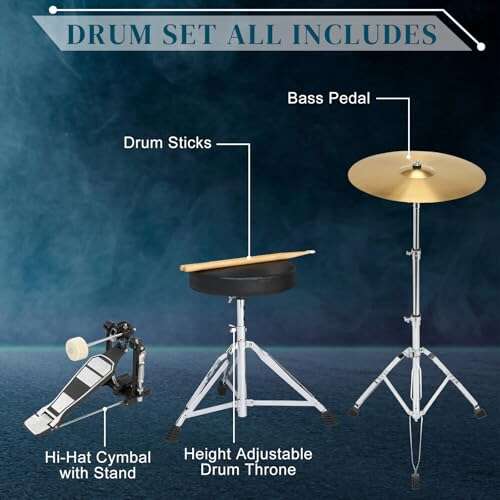
A CB kit usually includes some combination of:
- Bass drum
- Bass drum pedal
- Rack toms
- Floor tom
- Snare drum
- Hi-hat stand
- Cymbal stand
- Hi-hat cymbals
- Crash or ride cymbal
- Drum throne
The included cymbals, pedals, and stands often determine whether the kit feels useful. A shell pack with good drums but weak hardware may not be a good deal. The reverse can also happen.
Who is CB Drums made for?
CB Drums is mainly aimed at:
- Children and new players
- Adults learning at home
- Families buying a first drum set
- School or church practice rooms with a small budget
- Buyers seeking a low-cost used kit
It is less suited to:
- Touring musicians
- Studio players who need a clear, controlled sound
- Drummers who need strong hardware for frequent transport
- Players who already know their preferred shell sizes and cymbal types
Are CB Drums Good for Beginners?
Yes, CB Drums can work well for beginners if the kit is complete, stable, and priced correctly. A new player can learn grip, timing, coordination, fills, and basic songs on an entry-level CB set.
The drums do not need to sound like a professional kit for a student to build skill. Good practice habits matter more at the start than expensive shells. However, poor hardware can make learning frustrating.
Check these parts before buying:
- Bass drum pedal: It should move smoothly and return without sticking.
- Hi-hat stand: The pedal should open and close the cymbals with steady motion.
- Drum throne: It must lock firmly and support the player safely.
- Tom mounts: They should hold the toms without slipping.
- Snare stand: It should support the snare without wobbling.
- Cymbal stands: They should stay upright and tighten properly.
- Drumheads: They should not have deep dents, tears, or loose collars.
A beginner can replace heads and cymbals later. Replacing several stands at once can quickly erase the savings.
The biggest beginner benefit
The main benefit is access. A low-cost kit lets a student start now instead of waiting for a large budget.
The biggest beginner drawback
The main drawback is that cheap kits often include basic hardware and cymbals. These parts may feel unstable or sound harsh. That does not make the kit unusable, but it can limit comfort and sound quality.
How Does CB Drums Compare With Other Beginner Brands?
CB Drums competes with other entry-level brands such as Ludwig’s beginner lines, Pearl’s lower-cost kits, Tama’s entry-level sets, Sound Percussion, Gammon, and used kits from larger makers.
The comparison depends on the exact model and price. A brand-new CB kit may not be a better buy than a used Pearl or Tama kit at the same cost. Larger brands often offer easier access to replacement parts, manuals, and long-term upgrades.
| Buyer need | CB Drums may fit | A larger established brand may fit better |
|---|---|---|
| Lowest possible starting cost | Yes | Sometimes |
| Used-market value | Depends on condition | Often more predictable |
| Replacement parts | May require careful matching | Usually easier to identify |
| Long-term upgrading | Limited by model | Often more flexible |
| Regular gigging | Usually not ideal | Better hardware options exist |
| Child’s first kit | Often suitable | Also suitable |
| Recording or studio work | Usually needs upgrades | Better shells and hardware help |
This does not mean every Pearl, Tama, Ludwig, or other major-brand kit is better. A worn-out name-brand kit can be worse than a clean CB set. Condition, setup, and price matter more than the badge alone.
CB Drums versus a used name-brand kit
A used name-brand kit is often the stronger long-term buy when:
- The shells are round and free from major damage.
- The hardware is complete.
- The kit has standard sizes.
- Replacement parts are easy to find.
- The price is close to a CB kit.
A CB kit may be the better choice when it is clean, complete, and much cheaper. It can also make sense when the buyer needs a basic practice set and does not plan to perform.
How Good Do CB Drums Sound?
CB Drums can produce a usable sound, but the stock sound is usually basic rather than refined. The final tone depends on the drumhead condition, tuning, room, microphone placement, and cymbals.
A drum set is not a single sound source. It is a group of parts. The snare and cymbals often reveal the budget level more clearly than the tom shells.
You can often improve the sound by:
- Replacing worn drumheads
- Tuning each drum evenly
- Using a drum key and checking lug tension
- Adding a small amount of muffling when needed
- Replacing harsh stock cymbals
- Placing the kit on a stable rug
- Keeping the drums away from extreme heat and moisture
Fresh heads may cost a meaningful part of the kit’s used value. Before upgrading, compare the cost of heads, cymbals, and hardware with the price of a better used set.
Are CB drums loud?
Yes. Acoustic CB drums can be loud enough to disturb people in nearby rooms or homes. Drum volume is a practical issue for many US buyers, especially those in apartments or shared housing.
Do not rely on headphones to reduce the sound of an acoustic kit. Headphones only reduce what the player hears. They do not make the drums quiet for neighbors.
For lower volume, consider:
- Mesh heads
- Practice pads
- Low-volume cymbals
- A dedicated practice room
- An electronic kit with headphones
Use hearing protection when playing at high volume. A well-fitted set of musician earplugs or earmuffs can reduce sound exposure while allowing the player to hear the kit.
Is CB Drums Durable?
CB Drums can last for years with light home use, but durability depends heavily on the hardware and care. A beginner who practices a few times each week may get good service from a sound kit. Frequent transport, hard playing, or regular performances may expose weak points sooner.
Look closely at the following areas:
Shells
Check for:
- Cracks
- Severe dents
- Water damage
- Loose wrapping
- Separating seams
- Out-of-round bearing edges
The bearing edge is the part of the shell that touches the drumhead. Damage in this area can make tuning difficult.
Lugs and tension rods
Make sure each lug works and each tension rod turns normally. Missing or stripped parts can be difficult to match on an older kit.
Hardware
Open and close every stand. Test the locks, wing nuts, feet, and tubes. A stand that slips during playing can be unsafe and frustrating.
Cymbals
Small keyholing may not stop a cymbal from working, but cracks near the edge or bell can spread. Do not buy cracked cymbals unless you understand the repair and replacement cost.
Pedals
The bass drum pedal should have a smooth stroke. Check the spring, chain or strap, footboard, beater, and clamp. A poor pedal can make basic bass drum practice harder.
Buying a Used CB Drum Set: A Practical Checklist
Inspect a used CB kit in person whenever possible. Photos can hide shell damage, missing hardware, and badly worn heads.
Use this order:
- Confirm what is included. Ask for a complete list of drums, stands, pedals, cymbals, throne, and hardware.
- Check the shells. Look inside and outside each drum for cracks, swelling, and separation.
- Inspect the bearing edges. Run a finger lightly along the edge. It should feel even and smooth.
- Test every stand. Extend, lock, and gently move each stand.
- Test the pedals. Look for smooth action and secure clamps.
- Check the drumheads. Deep dents are signs of wear and may require replacement.
- Inspect cymbals for cracks. Pay close attention to the edge and center hole.
- Confirm the kit has standard parts. Standard-size heads and common stands are easier to replace.
- Ask why it is being sold. The answer is not proof, but it can reveal how the kit was used.
- Play each drum if possible. Listen for rattles, buzzing, and unstable mounts.
Signs of a good deal
A used CB kit is more attractive when it has:
- Straight shells
- Working lugs
- Complete hardware
- A usable bass pedal
- No cracked cymbals
- Minimal rust
- Fresh or serviceable heads
- A price well below a comparable used kit from a major brand
Signs to walk away
Be cautious when:
- Several stands are missing
- The bass drum pedal does not work
- The shells show water damage
- Tension rods are seized
- The cymbals are cracked
- The seller cannot identify the included parts
- The kit needs heads, cymbals, pedals, stands, and a throne
A cheap drum set can become expensive one replacement at a time.
What Upgrades Make the Biggest Difference?
Tune the drums and improve the weakest part first. Do not replace every part at once.
A sensible upgrade order is:
- Drum key and proper setup
- New batter heads if the current heads are damaged
- Better bass drum pedal if the original pedal feels unstable
- Better snare head or snare drum
- More comfortable drum throne
- Better hi-hat cymbals
- Better crash and ride cymbals
- Stronger stands if the originals slip or wobble
Cymbals can be a major weakness in inexpensive drum sets. A basic stock cymbal may sound thin or harsh even when the shells are acceptable.
A new throne is also worth attention. The player sits on it for the entire session, and an unstable throne can affect posture and control.
Do not upgrade parts that already work well. If the bass pedal is smooth and the stands are stable, spend the money on the part that limits sound or comfort.
Can You Use CB Drums for Live Shows or Recording?
You can use CB Drums for small live shows or basic recording, but the kit may need upgrades and careful setup. The question is not whether the drums can make sound. The question is whether the kit stays stable, tunes well, and produces the sound the situation requires.
For a small live performance, check:
- The bass pedal stays attached.
- Tom mounts do not slip.
- Cymbal stands support the cymbals.
- The throne locks securely.
- The snare produces a clear backbeat.
- All parts fit in the vehicle without damage.
For recording, room sound and tuning become more important. Budget shells may record acceptably, but poor heads, noisy hardware, and harsh cymbals can create extra work.
A recording engineer may improve the result with microphone choice, placement, equalization, and careful editing. Those tools cannot fully repair cracked shells, unstable stands, or badly damaged cymbals.
For regular gigging, a more robust used kit from an established manufacturer is often the safer investment. Parts are usually easier to identify, and the hardware may better withstand transport.
Is CB Drums Worth Buying New?
Buy a new CB kit only when the price is low, the return policy is clear, and the complete package meets your needs. A new kit gives you clean parts and may include some form of seller support. It does not automatically provide better long-term value.
Before buying new, compare:
- The full kit price
- Shipping charges
- Included cymbals
- Included throne and pedals
- Return terms
- Warranty terms
- Availability of replacement heads and hardware
- The price of used kits from larger brands
Some low-cost sets look complete in photos but include very basic cymbals or thin hardware. Read the exact contents, not just the number of drums shown in the image.
If the new price is close to a used kit from Pearl, Tama, Ludwig, Yamaha, or another established maker, compare both carefully. The used name-brand kit may offer better upgrade value.
CB Drums Pros and Cons
Pros
- Low starting cost
- Suitable for basic home practice
- Can support beginner lessons
- Often available on the US used market
- Replacement heads may be possible when the sizes are standard
- A clean kit can provide good value for a first-time player
Cons
- Quality varies by model and production year
- Stock cymbals may sound weak
- Hardware may feel light
- Replacement parts can be harder to identify
- Resale value may be lower than major brands
- Some kits need upgrades before they are ready for frequent performance
The balance is simple: CB Drums can lower the cost of starting, but a larger brand may lower the cost of upgrading later.
Who Should Buy CB Drums?
CB Drums makes sense for:
- A child beginning lessons
- An adult testing whether drums are a good hobby
- A home practice kit
- A low-cost school or community setup
- A buyer who finds a complete used kit at a strong price
- A player who already owns better cymbals or hardware
You may want another option if:
- You need dependable hardware for weekly shows
- You plan to record often
- You want a kit that can grow with you for many years
- The CB kit is missing several major parts
- The price is close to a better used name-brand set
A simple decision rule
Buy the CB kit when it is complete, structurally sound, stable, and clearly cheaper than the alternatives.
Skip it when the low price comes from missing pedals, cracked cymbals, damaged shells, or unreliable stands.
Key Takeaways
- CB Drums is a reasonable entry-level brand, not usually a professional one.
- The exact model and condition matter more than the name.
- A complete used CB kit can be a smart beginner purchase.
- Check the hardware, pedals, cymbals, shells, and drumheads before buying.
- Tuning and fresh heads can improve the sound.
- A used kit from a larger brand may offer better long-term value.
- Do not pay a premium for a CB kit with missing or damaged parts.
Frequently Asked Questions
Is CB Drums a real brand?
Yes. CB Drums has been sold as a budget drum and percussion brand. Older and newer products may differ, so buyers should judge the exact model rather than relying only on the brand name.
Are CB Drums good for kids?
They can be. A CB kit may suit a child who is starting lessons, provided the throne and hardware are stable and the drum sizes fit the player. A junior kit may be better for a very young child than a full-size set.
Can you replace CB drumheads?
Often, yes, if the drums use standard head sizes. Measure the drum and confirm the correct replacement before ordering. Do not assume that a head from one CB model will fit every other CB model.
Are CB Drums better than Gammon or Sound Percussion?
There is no universal winner. These are budget-focused brands, and quality can vary by model. Compare the exact kit, hardware, condition, included parts, and price.
What is the best alternative to CB Drums?
A clean used kit from Pearl, Tama, Ludwig, Yamaha, or another established maker is often a strong alternative. The best choice depends on condition, size, completeness, and local price.
Should I buy a CB drum set for a beginner?
Buy one if it is complete, safe, easy to tune, and priced well. If it needs several major repairs, compare the total cost with a better used kit before deciding.
Conclusion
CB Drums is a fair beginner brand when the price and condition are right. It can provide a practical way to learn acoustic drums in a US home, school, or practice space. It is less convincing as a long-term choice for demanding performances, frequent transport, or serious recording.
The best next step is to inspect the exact kit. Test every stand and pedal, check the shells and cymbals, list the missing parts, and compare the total cost with a used kit from a larger brand. That simple check will tell you more than the CB logo alone.

Senior Music Reviewer
Alex Carter is a seasoned music reviewer with over a decade of experience in the world of sound and instruments. Passionate about helping musicians and enthusiasts make informed choices, he brings sharp insights and in-depth knowledge to every review. From classical instruments to modern gear, Alex combines technical expertise with a love for music to deliver content that resonates with readers.
As a Senior Music Reviewer and expert author on Tuneluma.com, Alex is dedicated to sharing honest evaluations, practical advice, and thoughtful commentary to guide readers in their musical journey.