A cheap violin usually costs $100 to $300 in the United States for a new beginner outfit. That price often includes the violin, bow, case, and rosin.
You can find used violins for $50 to $200, but many need repairs or a professional setup. Very low-cost violins under $100 may work for short-term use, yet they often have poor tuning, rough strings, and weak bows.
For most new players, a more useful budget is:
- $50–$100: Basic used violin or risky low-cost new model
- $100–$300: Entry-level beginner outfit
- $300–$600: Better student violin with improved setup
- $600–$1,000+: Stronger student instrument or advanced beginner model
The price depends on whether you buy new or used, the violin’s size, the quality of its setup, and whether accessories are included.

What Does “Cheap Violin” Mean?
A cheap violin is usually a beginner instrument made with low-cost materials and mass production. It is not always a bad violin. However, low price often means less careful finishing, basic strings, and limited quality control.
In the USA, sellers use several terms for low-cost violins:
- Beginner violin: Made for a new player.
- Student violin: Built for regular study and lessons.
- Factory-made violin: Produced in large numbers, often at a lower cost.
- Violin outfit: A violin sold with a bow, case, and rosin.
- Fractional violin: A smaller violin for a child.
- Full-size violin: Also called a 4/4 violin, usually for teens and adults.
The phrase “cheap violin” does not describe one exact quality level. A $150 violin with a good setup may be easier to play than a $250 violin that was poorly adjusted.
Cheap Violin Prices in the USA
The table below shows common retail and used-market ranges. These are practical estimates, not fixed prices. Sales, brand, location, shipping, and seasonal demand can change the final cost.
| Violin type | Typical USA price | What to expect |
|---|---|---|
| Very low-cost new outfit | Under $100 | Basic parts; setup may be poor |
| Entry-level new outfit | $100–$300 | Suitable for many first-time learners |
| Better student outfit | $300–$600 | Usually better strings, fittings, and setup |
| Used beginner violin | $50–$200 | May need repairs or new strings |
| Used student violin | $200–$600 | Can offer good value if inspected |
| Advanced student violin | $600–$1,000+ | Better response, tone, and durability |
| Violin alone | $80–$500+ | May not include bow, case, or rosin |
A low price does not guarantee a useful bargain. The most important question is whether the violin can hold its tuning, produce a clear sound, and respond to normal bow pressure.
Retailers such as Fiddlershop, Shar Music, and Kennedy Violins show how beginner and student instruments vary by price and included accessories. Prices change, so check the current listing before you buy.

How Much Does a Beginner Violin Outfit Cost?
A beginner violin outfit usually costs $100 to $300 in the USA. An outfit normally includes:
- Violin
- Bow
- Hard or soft case
- Rosin
- Sometimes a shoulder rest
The word “outfit” matters. A violin listed at $150 may include everything needed to start. Another violin listed at $150 may include only the instrument.
Buying each part separately can cost more:
| Item | Common low-cost range |
|---|---|
| Beginner violin | $80–$250 |
| Beginner bow | $20–$100 |
| Case | $30–$100 |
| Rosin | $5–$20 |
| Shoulder rest | $15–$50 |
| Replacement strings | $20–$80 |
| Basic setup | $50–$150 |
These ranges overlap because quality varies. A cheap outfit can be the better deal if the bow and case are usable. Still, included accessories may be very basic.
A beginner should not spend the entire budget on the violin alone. A violin with a poor bow can feel hard to play, even when the instrument itself is acceptable.
The Hidden Cost of a Cheap Violin
The purchase price is only part of the cost. A cheap violin may need extra work before it plays well.
Common additional costs include:
- Professional setup: $50–$150
- New strings: $20–$80
- Better bow: $50–$200
- Shoulder rest: $15–$50
- Lesson materials: $10–$40
- Private lessons: Often $30–$100 or more per lesson, depending on the teacher and location
A setup may include bridge adjustment, peg fitting, fingerboard inspection, string replacement, and general adjustment. The exact work depends on the instrument.
For example, a $75 violin that needs $125 of repairs may cost more than a $200 violin that is ready to play. That is why the lowest sticker price is not always the lowest total cost.
A simple cost example
Suppose you buy:
- Used violin: $100
- New strings: $40
- Setup: $100
- Shoulder rest: $25
Your total is $265.
A new $250 beginner outfit may be the better choice if it already has a playable setup and includes a case and bow.

Is a $50 or $100 Violin Worth Buying?
A $50 violin can be worth buying when it is used, complete, and checked by a teacher or violin shop. It can also be a poor purchase if the neck is loose, the bridge is warped, or the pegs do not work.
A $100 new violin may be usable for casual practice. It is less likely to offer strong tone or long-term durability than a better student model.
Before buying a very cheap violin, check these points:
- The neck should be firmly attached.
- The bridge should stand upright.
- The fingerboard should not be badly warped.
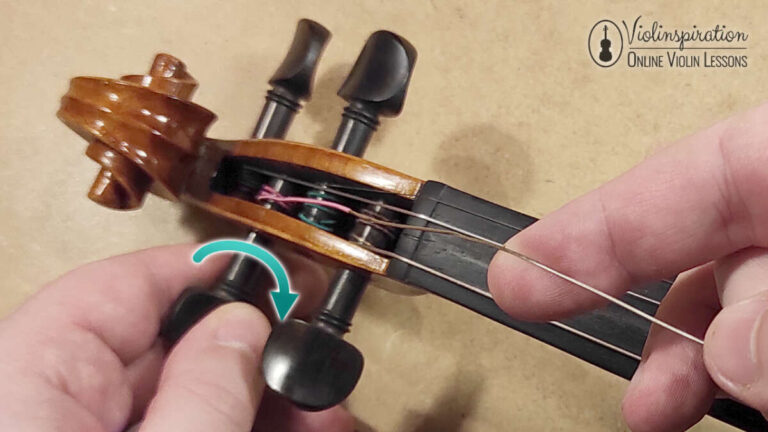
- The tuning pegs should turn and hold.
- The tailpiece should be secure.
- The fine tuners should move smoothly.
- The bow should have straight wood and intact hair.
- The case should protect the instrument.
- There should be no major cracks near the bridge or sound post.
A small finish mark is usually less serious than a loose neck or open crack. Structural repairs can cost more than the violin is worth.
New vs. Used: Which Cheap Violin Is Better?
A used violin can provide better value, but a new violin offers a clearer return policy and less uncertainty. The right choice depends on who can inspect it.
Choose new when:
- You are buying without help.
- You need a return window.
- You want an included case and bow.
- You cannot identify structural damage.
- You need a violin for a child who may soon change sizes.
Choose used when:
- A teacher or violin shop can inspect it.
- The seller allows a trial period.
- The instrument has a known maker or shop history.
- The price leaves room for setup and repairs.
- You can test the tuning and playability.
Online marketplaces can contain good deals, but photos do not reveal every problem. Ask for clear images of the bridge, scroll, pegbox, top, back, and neck. Ask whether the violin holds tune and whether it has cracks or repairs.
A local violin shop may charge more than a private seller. That higher price can include inspection, setup, and limited support.

What Size Violin Should You Buy?
The correct size affects comfort and playing control. Adults and many teens use a 4/4 full-size violin, but children often need smaller sizes.
Common sizes include:
- 1/16
- 1/10
- 1/8
- 1/4
- 1/2
- 3/4
- 4/4
Do not choose a child’s violin by age alone. Arm length and hand reach matter more. A music teacher or violin shop can help measure the player.
Many US music stores offer fractional violin rentals. Renting can make sense when a child may outgrow the instrument within a year or two.
Buying the wrong size can make the violin uncomfortable. It may also encourage poor posture and tense technique.
How to Choose a Cheap Violin That Is Playable
Use this simple buying process.
1. Set the full budget
Include the violin, bow, case, rosin, shoulder rest, shipping, tax, and possible setup work.
A realistic first budget is often $150 to $350 for a basic outfit plus small extras.
2. Decide between rental, new, and used
Renting is often practical for young children. A new outfit offers convenience. A used violin can offer value when a skilled person checks it.
3. Check what the listing includes
Look for clear details about:
- Violin size
- Bow
- Case
- Rosin
- Shoulder rest
- Strings
- Return policy
- Warranty
- Setup status
Avoid listings that use impressive words but give few specifications.
4. Check the return policy
A return period matters because a violin may look fine but play poorly. Read who pays return shipping and whether setup fees are refundable.
5. Get a teacher’s opinion
A teacher may notice problems with tuning, bow response, bridge height, or fingerboard shape. This small step can prevent a costly mistake.
6. Test the violin if possible
Play each string with open bows. Listen for buzzing, rattling, weak response, and uneven volume. Test the pegs and fine tuners. The violin should not fight every basic movement.
A cheap violin does not need a professional concert sound. It should, however, stay together, tune correctly, and respond well enough for a beginner to learn.

Common Mistakes When Buying a Cheap Violin
The most common mistake is choosing by price alone. A cheap violin can become expensive after repairs, new strings, and replacement accessories.
Other mistakes include:
- Buying a violin with no return policy
- Assuming every included bow is usable
- Ignoring the cost of a setup
- Choosing the wrong size
- Buying a decorative violin that is not made for playing
- Trusting stock photos instead of asking for real images
- Paying extra for words such as “professional” without clear proof
- Buying an electric violin when an acoustic violin is needed for lessons
- Forgetting that a violin needs regular tuning
- Skipping lessons and blaming the instrument for every problem
Be careful with extremely cheap online listings that promise a high-end violin for a very low price. The instrument may be a mass-produced beginner model using inflated marketing language.
Also avoid buying a damaged violin simply because it has an old label inside. A label does not prove the maker, age, or value.
Can You Learn on a Cheap Violin?
Yes. Many beginners can learn basic posture, bow control, rhythm, and simple songs on an affordable violin.
The instrument should meet a few basic conditions:
- It stays reasonably in tune.
- The strings sit at a usable height.
- The bridge is properly fitted.
- The bow grips the strings.
- The pegs and fine tuners work.
- The instrument has no major structural damage.
A cheap violin may limit tone quality and comfort. It should not make normal beginner actions unusually difficult.
If a teacher says the violin is holding back progress, ask for a second opinion before replacing it. Sometimes a setup or new strings solve the issue.
Key Takeaways
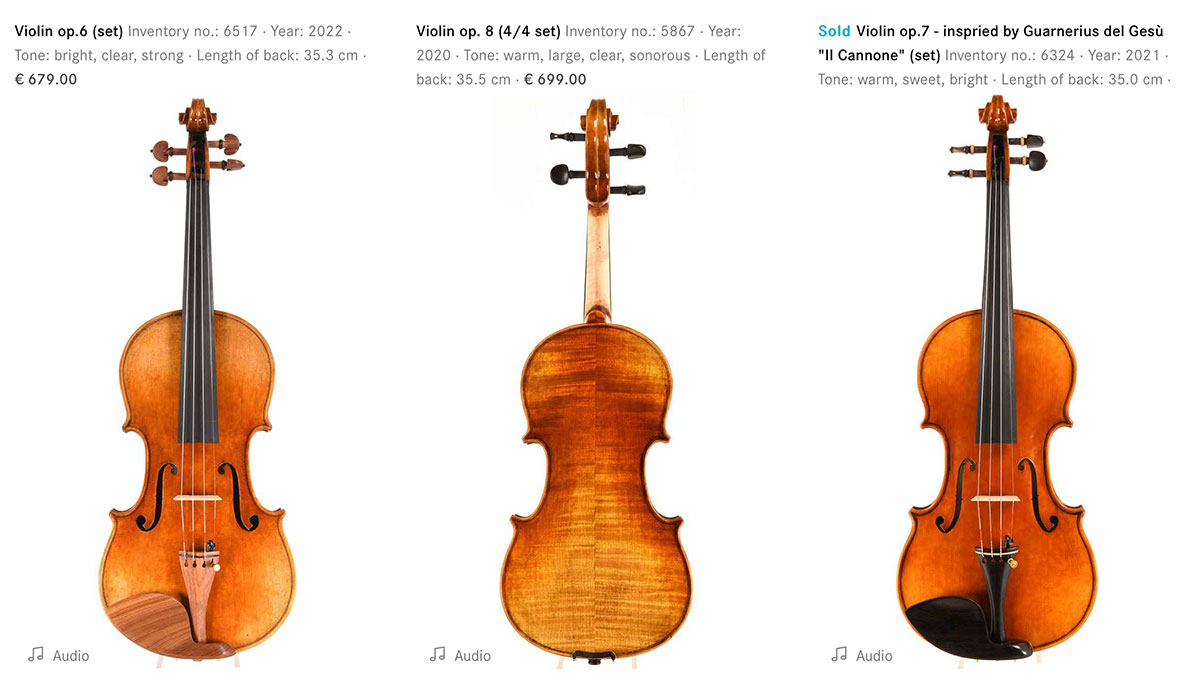
- A cheap new violin outfit in the USA usually costs $100–$300.
- A used violin may cost $50–$200, but it needs careful inspection.
- The lowest-cost instruments under $100 can have tuning and setup problems.
- A better student violin often costs $300–$600.
- Budget for strings, a shoulder rest, and possible setup work.
- For children, renting may cost less than buying the wrong size.
- A playable $200 violin is usually a better value than a damaged $75 violin.
- Ask a teacher or violin shop to check any used instrument before purchase.
Frequently Asked Questions
Is a $100 violin good for a beginner?
It can be. A $100 violin is more likely to work well when it comes from a reputable seller, includes a return policy, and has a usable setup. Very cheap instruments may need new strings or adjustment.
What is the cheapest violin worth buying?
For a new instrument, about $100 to $150 is a more realistic starting point than the lowest advertised price. For a used violin, value depends more on condition and setup than on the price tag.
Should I rent or buy a cheap violin?
Renting often makes sense for children who may need a larger size soon. Buying can make sense for an adult beginner or a committed student who expects to play for several years.
How much should I spend on my first violin?
Most adult beginners should consider $150 to $350 for a complete beginner outfit and basic accessories. Students who plan to study seriously may benefit from a $300–$600 instrument.
Does a cheap violin sound bad?
Not always. A cheap violin may sound acceptable after proper setup and string replacement. However, low-cost instruments often have less consistent tone, response, and build quality than better student violins.
Conclusion
A cheap violin in the USA costs about $100 to $300 when bought new as a beginner outfit. Used violins can cost less, but repairs may raise the final price.
For the best value, compare the total cost, not just the listing price. Confirm the size, inspect the bridge and neck, check the return policy, and ask a violin teacher or shop to evaluate the instrument. If the violin stays in tune and responds well, an affordable model can give a new player a solid start.

Senior Music Reviewer
Alex Carter is a seasoned music reviewer with over a decade of experience in the world of sound and instruments. Passionate about helping musicians and enthusiasts make informed choices, he brings sharp insights and in-depth knowledge to every review. From classical instruments to modern gear, Alex combines technical expertise with a love for music to deliver content that resonates with readers.
As a Senior Music Reviewer and expert author on Tuneluma.com, Alex is dedicated to sharing honest evaluations, practical advice, and thoughtful commentary to guide readers in their musical journey.