How To Read Drum Tabs: Quick Guide For Beginners
Read the lines, learn the symbols, count the beats — and play.
I’ve read and taught drum tabs for years, so I’ll walk you through how to read drum tabs clearly and quickly. This guide explains the layout, common symbols, rhythm counting, practical tips, and real examples. You’ll learn step-by-step how to turn a line of text into a groove on your kit.

Why learn how to read drum tabs?
Knowing how to read drum tabs gets you playing songs faster. Tabs give a direct map from text to kit. They help you learn beats, fills, and parts when sheet music is too dense. From simple rock beats to complex grooves, drum tabs speed practice and memorize parts.

Drum tab basics: layout and lines
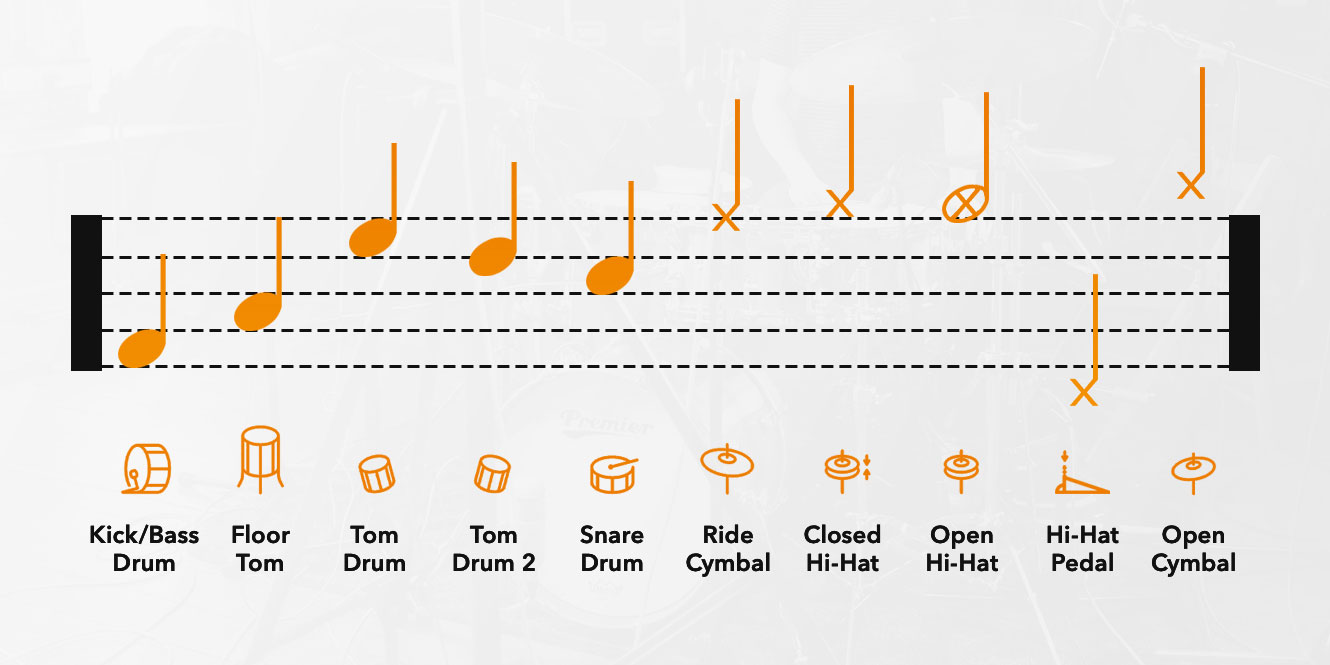
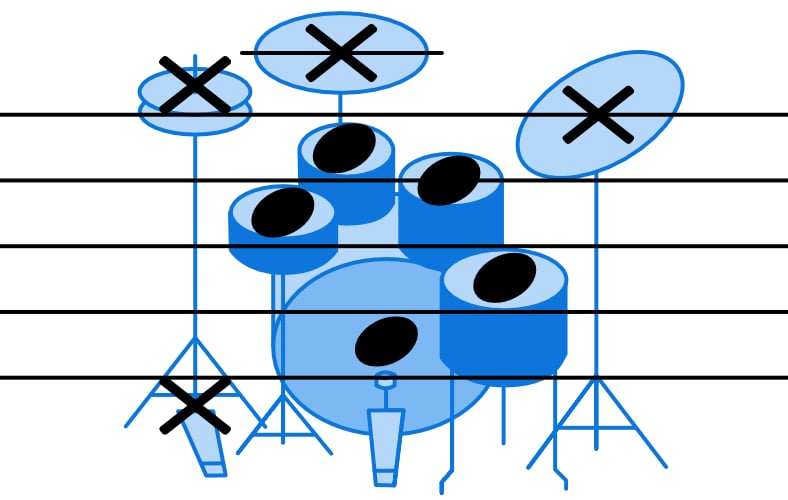
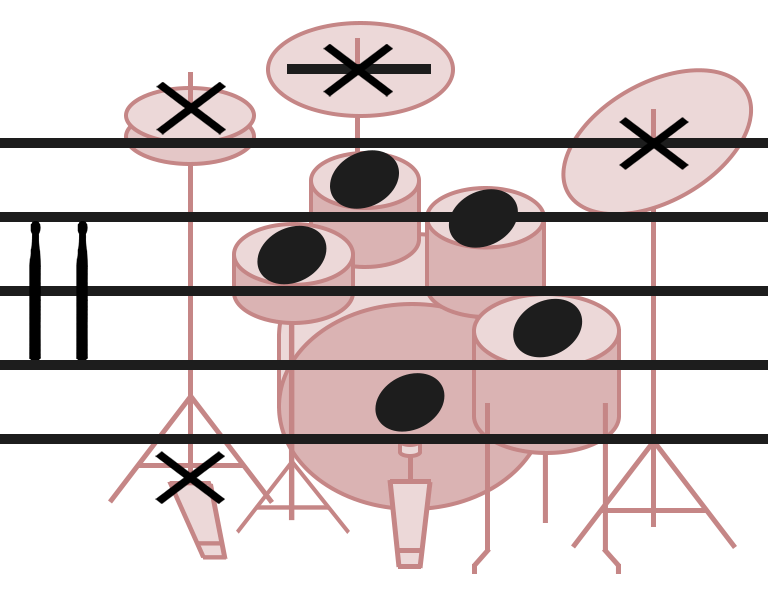
A drum tab is like a simplified map of the drum kit. Each horizontal line represents a part of the kit. The top lines usually show cymbals and hi-hat. The middle lines show snare and toms. The bottom line shows the bass drum. Most tabs show measures left to right. Simple tabs use one symbol per subdivision. This makes rhythm clear and fast to read.
Example simple tab (4/4, one bar):
CH|x-x-x-x-|  (Closed hi-hat)
SN|----o---|  (Snare on beat 3)
BD|o---o---|  (Bass on 1 and the & of 2)
Read left to right. Count the beat as you read. Play slowly first and build speed.
Common symbols and what they mean
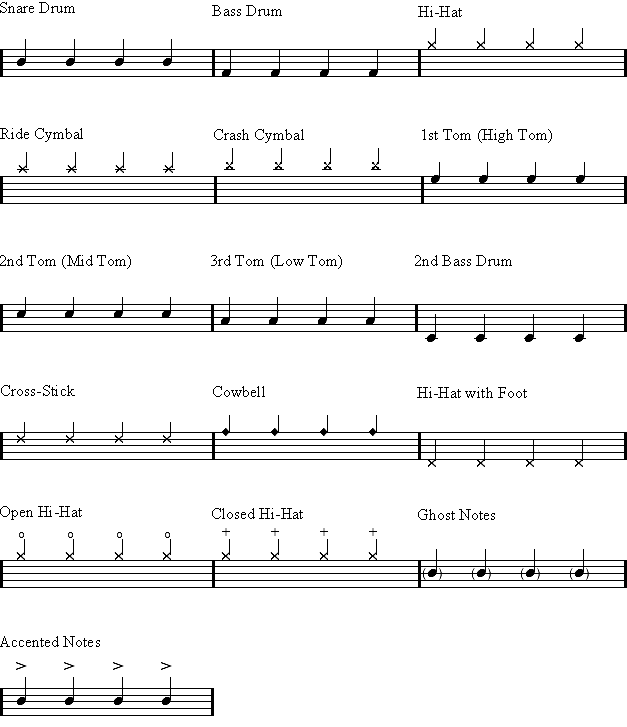
Different writers use small variations. These are the usual symbols you will see:
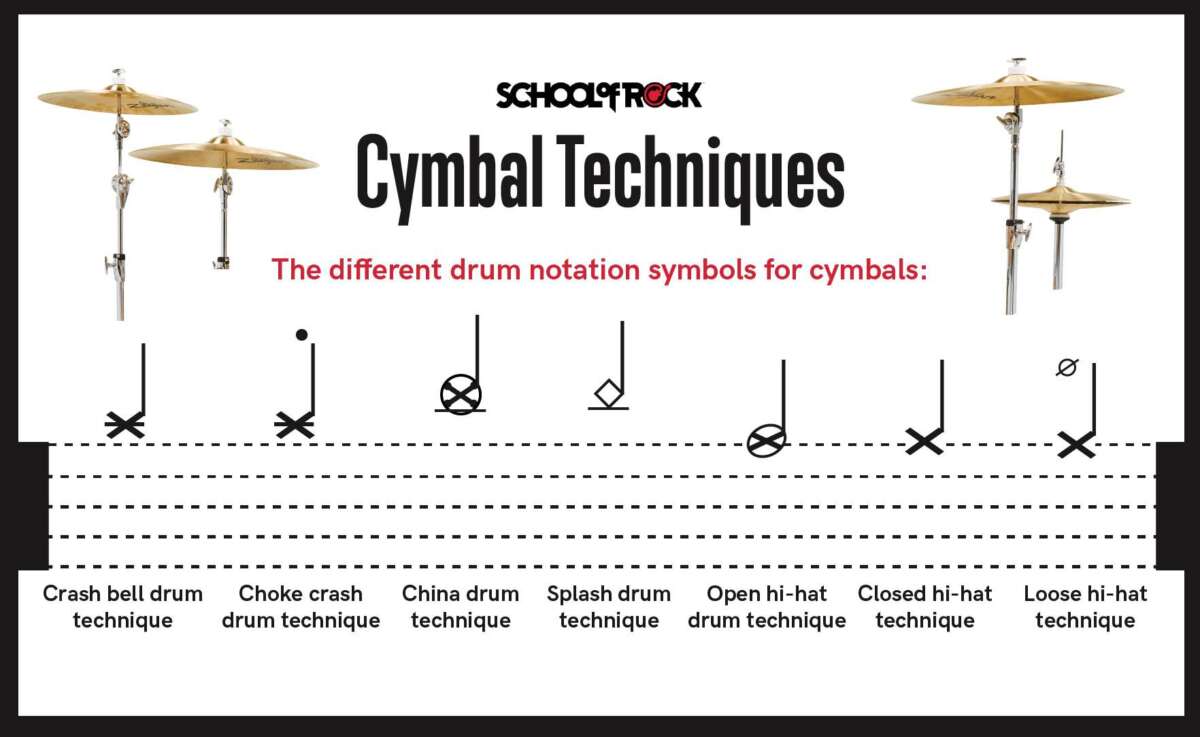
- x indicates a closed cymbal hit, usually hi-hat or ride.
- o indicates an open cymbal, such as open hi-hat or crash.
- R or SN indicates snare drum hits when used as a label.
- BD or K means bass drum or kick.
- Numbers or letters on lines label toms, like T1, T2, FT.
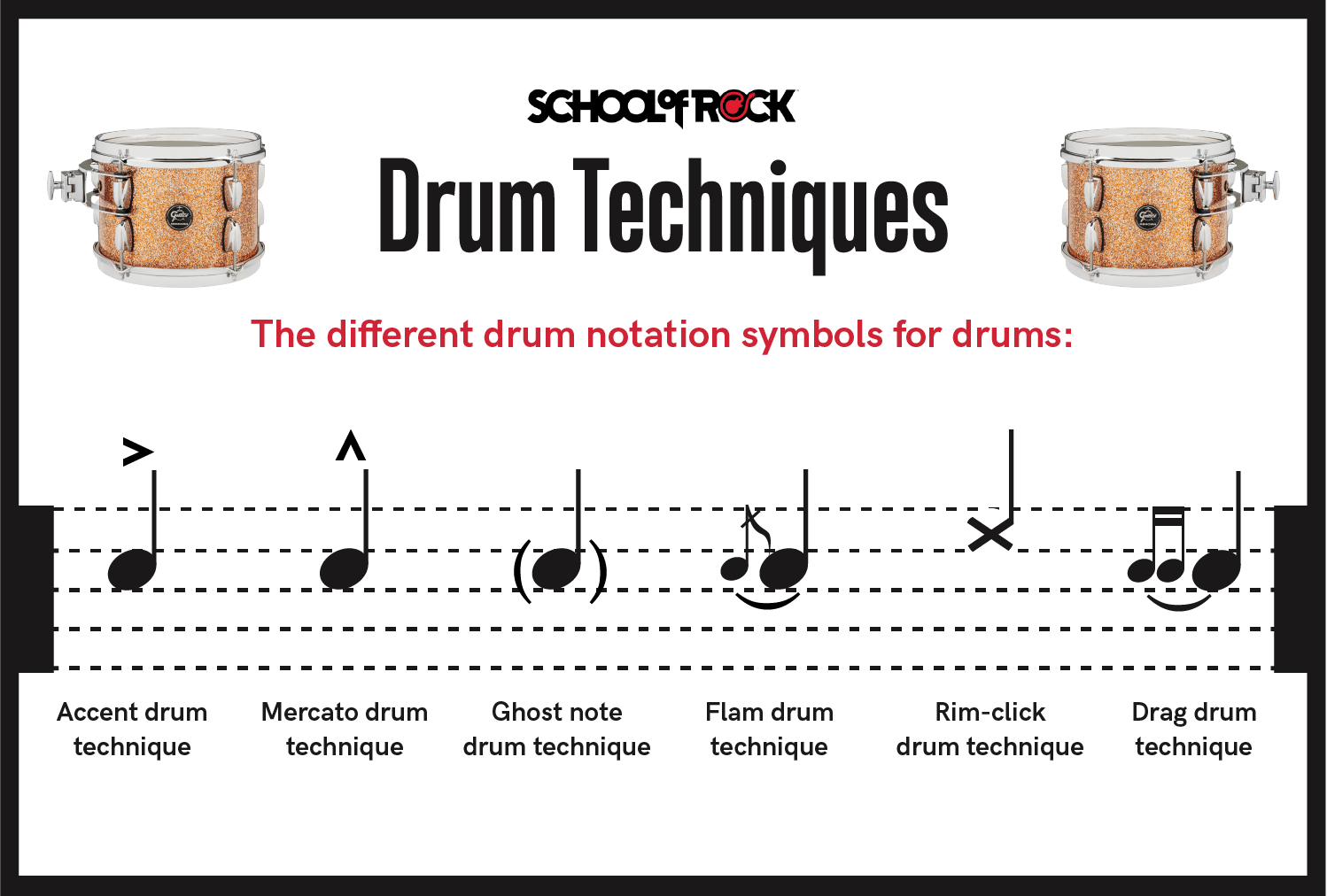
- Parentheses ( ) often show ghost notes or soft hits.
-
above a note or a capital letter marks an accent.
- fl or flam shows a flam. dr or drag indicates a drag.
- R and L can show sticking if included.
Tabs vary. Always check the key or legend above a transcription. If none exists, use common mapping: top = cymbals, middle = snare/toms, bottom = kick.
Reading rhythm and counting in drum tabs
Rhythm is the heart of drum tabs. Tabs show when hits happen in time. You must count and subdivide to interpret the symbols. Use counts like 1 e & a for sixteenth notes. Tap the pulse while reading the tab. Practice slowly and count out loud.
Example basic rock beat (4/4, eighth notes):
HH|x-x-x-x-|  (Hi-hat on all eighths)
SN|----o---|  (Snare on 2 and 4)
BD|o---o---|  (Kick on 1 and 3)
Count: 1 & 2 & 3 & 4 &. Play the hi-hat on every &. Put the snare on 2 and 4. This builds coordination and timing.
Stickings, dynamics, articulations, and notation quirks
Tabs sometimes include expressive details. Dynamics and stickings help feel and phrase the groove.
- R and L show which hand to use when written.
- Ghost notes are quiet snare taps. They are often shown in parentheses.
- Accents are louder hits and make phrasing clear.
- Flams, drags, and ruffs may be written as short abbreviations or special marks.
- Dynamics like p, mf, f can appear above bars.
Many tabs leave out sticking. If you see none, pick stickings that help balance your limbs. I often write R L patterns for tricky grooves. This makes learning faster and cleaner.

Common tab formats and variations
You will find drum tabs in several formats. Learn to spot them.
- Plain text tabs: simple, portable, shown in forums and lessons.
- Guitar Pro or DAW exports: more precise, with tempo and sound playback.
- Standard drum notation: classical staff notation for drums, more exact but steeper to learn.
- PDF transcriptions: may mix tab and standard notation.
Each format has pros and cons. Plain text is fast to read. Software exports let you hear the part. Learning to read multiple types increases your library of parts.
Practical steps to learn and practice reading drum tabs
Follow these steps when learning how to read drum tabs.
- Identify the kit mapping first. Know which line is which drum.
- Count the time signature and subdivision. Say 1 e & a or 1 & 2 &.
- Tap the pulse on one limb before adding others.
- Play slowly with a metronome and increase speed gradually.
- Isolate difficult limbs or fills and practice them alone.
- Mark accents, ghost notes, and sticking on the tab.
- Use software or audio to check how the part should sound.
- Transcribe a short bar of a song yourself to test skill.
Do this often. Repetition builds automatic reading skill. These steps work for beginners and experienced drummers alike.
Examples: reading a simple drum tab step-by-step
Let’s break one bar into steps. Here’s a common groove:
HH|x-x-x-x-|  (1 & 2 & 3 & 4 &)
SN|----o---|  (on 2 and 4)
BD|o---o---|  (on 1 and the & of 3)
Step 1: Count the bar quietly: 1 & 2 & 3 & 4 &.
Step 2: Tap hi-hat on every & with your foot or hand.
Step 3: Add bass drum on beat 1 and the & of 3.
Step 4: Add snare on beats 2 and 4.
Step 5: Play slowly and keep steady pulse. Increase tempo when clean.
I used this exact approach when learning a dozen pop songs. It made the parts click fast.

Mistakes to avoid and tips from my experience
I’ve taught students who made the same errors. Avoid these pitfalls.
- Trying to play too fast before the parts are clean.
- Ignoring dynamics and accents written in the tab.
- Assuming every tab maps the same kit. Always check labels.
- Neglecting the pulse and counting while reading.
- Copying stickings without testing which works for you.
My tip: slow practice with a metronome wins every time. Also, transcribe one short bar a day. It improves reading and listening together.
Frequently Asked Questions of how to read drum tabs
What is the easiest way to start reading drum tabs?
Start with one-line grooves. Identify the hi-hat, snare, and kick lines. Count 1 & 2 & and play slowly with a metronome.
How do I know which line is the snare in a tab?
Check the legend or top of the tab. If none exists, the snare is usually in the middle lines. Practice spotting the snare by finding hits on beats 2 and 4 in common rock and pop grooves.
Can drum tabs show dynamics and ghost notes?
Yes. Parentheses often mark ghost notes, and symbols like > or letters may show accents. Dynamics can also be written as p, mf, or f above the tab.
Are drum tabs accurate for learning songs?
Tabs are usually accurate for main parts and grooves. They can omit subtle nuance. Use audio or software as a reference to fine-tune your feel.
How long does it take to read drum tabs fluently?
With focused practice, basic fluency can take weeks. Complex reading and fast transcription skills take months. Regular daily practice speeds progress.
Should I learn standard drum notation too?
Standard notation gives more detail and lets you read a wider range of scores. Tabs are faster for many songs. Learning both gives you the most options.
Conclusion
Reading drum tabs is a practical skill that speeds learning and boosts performance. Start by mapping the kit, counting carefully, and practicing slowly with a metronome. Use tabs, audio, and transcription work together to build sight-reading and ear skills. Try transcribing one bar a day and play along with a song this week. If this guide helped, leave a comment, subscribe, or share the tab you’re working on and I’ll help you read it.

Senior Music Reviewer
Alex Carter is a seasoned music reviewer with over a decade of experience in the world of sound and instruments. Passionate about helping musicians and enthusiasts make informed choices, he brings sharp insights and in-depth knowledge to every review. From classical instruments to modern gear, Alex combines technical expertise with a love for music to deliver content that resonates with readers.
As a Senior Music Reviewer and expert author on Tuneluma.com, Alex is dedicated to sharing honest evaluations, practical advice, and thoughtful commentary to guide readers in their musical journey.