A good used violin has a healthy body, a clear voice, proper setup, and a price that matches its condition.
Learning how to buy a good used violin takes more than checking its color or age. As a practical guide, I will walk you through the same checks that violin teachers, players, and repair experts use: condition, sound, setup, history, value, and risk. With a calm inspection and a skilled second opinion, you can find an instrument that feels like a trusted partner rather than an expensive repair project.
Know What Makes a Used Violin Good
A good used violin does not need to be new, flawless, or made by a famous maker. It needs to be stable, playable, well repaired, and suited to your skill level.
When learning how to buy a good used violin, focus on these main qualities:


• The body has no serious structural cracks.
• The neck feels straight and secure.
• The bridge stands correctly and fits the top.
• The soundpost is in place and properly fitted.
• The pegs turn smoothly and hold their pitch.
• The fingerboard is smooth and properly shaped.
• The violin produces a clear, balanced sound.
• The price reflects the instrument’s condition and quality.
Small scratches are normal. Older violins often show signs of use. A few marks may tell a story, while an open seam, a repaired soundpost crack, or a warped neck may create a costly problem.
Think of a used violin like a used car. Paint marks are often harmless, but problems with the frame or engine matter much more.


Set a Realistic Budget
Your budget should include more than the violin’s asking price. A used violin may need new strings, bridge work, peg adjustment, or bow repairs before it is ready to play.
For many student instruments, a practical budget may look like this:
• Entry-level outfit: $200 to $600
• Better student violin: $600 to $1,500
• Serious intermediate instrument: $1,500 to $4,000
• Professional or antique violin: $4,000 and above
These ranges are broad. Brand, maker, condition, region, sound, and repair history can change the value greatly.
Set aside money for related costs:
• A reliable bow
• A protective case
• New strings
• Rosin
• Shoulder rest
• Professional setup
• Future repairs


One common mistake when deciding how to buy a good used violin is spending the entire budget on the instrument. A violin that costs $500 but needs $400 in work is not always a better deal than a ready-to-play violin priced at $750.

Choose a Safe Place to Buy
Where you buy matters almost as much as what you buy. A reputable violin shop usually gives you more protection than a private seller with limited knowledge.
Good places to look include:
• Established violin shops
• Luthiers and violin makers
• Teacher-recommended sellers
• School music programs
• Trusted orchestral musicians
• Reputable online dealers with return periods
• Local classified listings, if you can inspect the violin first
A shop may charge more than a private seller, but that price often includes setup, advice, and some form of return policy. Those services can save you money and stress.
Be careful with listings that use grand claims such as “rare Italian violin” or “concert master quality” without documents. A label inside the violin is not proof of its maker. Many old violins have copied labels, replacement parts, or incorrect descriptions.
If you are unsure how to buy a good used violin from a private seller, bring a teacher or luthier with you. A second set of trained eyes can spot issues that look invisible to a new player.


Inspect the Violin’s Body
A careful body inspection is one of the most important parts of how to buy a good used violin. Use bright, natural light if possible. Look inside the violin with a small flashlight, but never force tools into the instrument.
Check the top and back
Look for:
• Open cracks in the spruce top or maple back
• Long cracks near the bridge or soundpost
• Separations along the edges
• Bulging or sinking in the top
• Deep scratches that cross the wood
• Areas that look heavily sanded
A repaired crack is not always a reason to walk away. Skilled repairs can remain strong for many years. However, the location and quality of the repair affect the value.
A crack near the soundpost is more serious because that area carries strong pressure. Ask whether the crack was repaired, when it was repaired, and who completed the work.
Check the seams
The thin seams around the violin may open as humidity changes. A small open seam is often repairable and may not be expensive. Still, it should be repaired before it grows.
Do not try to glue an open seam at home. Common household glue can cause major problems for a luthier later.
Check the ribs and corners
The ribs should sit firmly against the top and back. Look for crushed corners, loose blocks, or deep damage from drops.
A violin with several structural repairs may still sound excellent. The key is knowing whether the repairs are stable and whether the price accounts for them.


Examine the Neck, Fingerboard, and Bridge
The neck and fingerboard affect comfort, tuning, and intonation. They also reveal whether the violin has received proper care.
Check the neck from the scroll toward the tailpiece. It should look centered and reasonably straight. A neck that leans to one side may need professional correction.
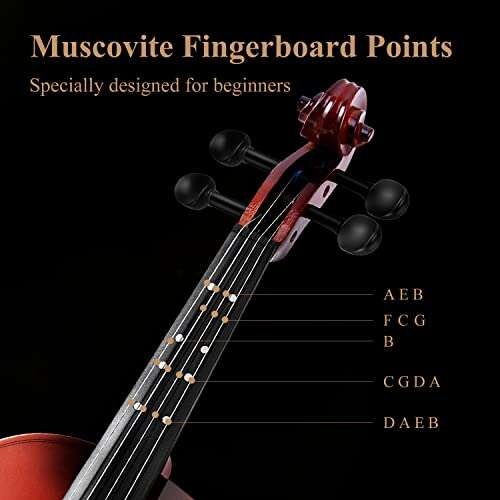
The fingerboard should have a smooth, even curve. It should not have deep grooves under the strings. Small marks can be fixed, but a badly worn fingerboard may require costly planing or replacement.
The bridge deserves close attention:
• It should stand upright, not lean sharply.
• Its feet should fit the top well.
• The strings should sit in clean grooves.
• The bridge should be centered between the inner f-holes.
• It should not look cracked, warped, or too thin.
A bridge is not a universal part. It must be cut for that specific violin. A poor bridge can make even a good violin sound weak or harsh.
When learning how to buy a good used violin, remember that setup work often matters more than appearance. A plain violin with excellent setup may outperform a beautiful violin that has been neglected.
Check the Pegs, Tailpiece, and Endpin
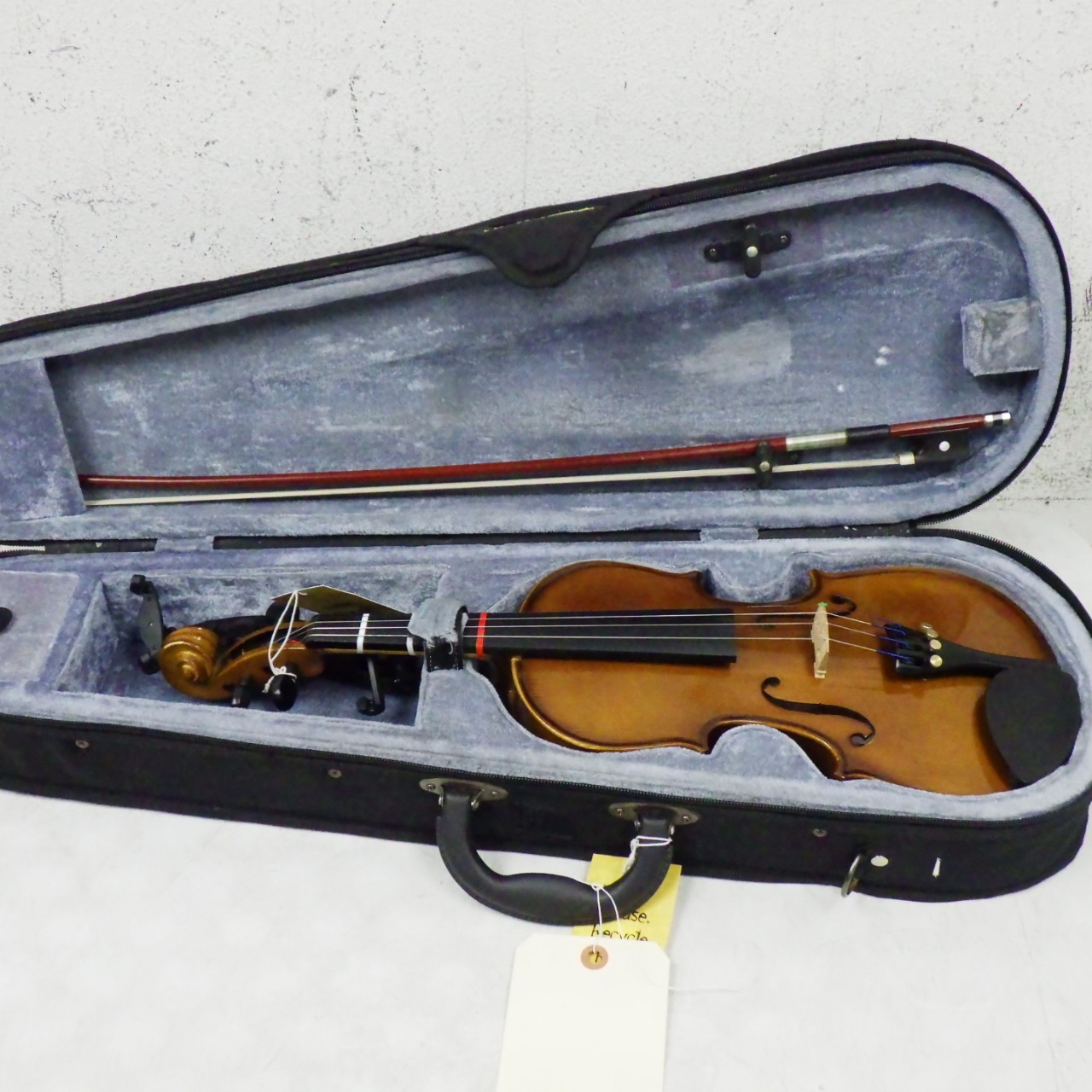
Tuning parts should work without excessive force. Turn each peg slowly and listen for slipping or sudden jumps.
Good pegs should:
• Turn smoothly


• Hold pitch
• Fit firmly in their holes
• Avoid cracking or deep wear
Pegs that slip may need adjustment or replacement. This is often repairable, but it adds to the real cost.
Inspect the tailpiece for cracks and poor alignment. Check the fine tuners as well. Some players prefer a single fine tuner, while beginners may find four fine tuners easier to use.
The endpin should sit securely and should not wobble. Also check the chin rest. It should not press hard against the violin’s edge or cause new cracks.
These details may seem small, but they affect daily comfort. The best answer to how to buy a good used violin includes both sound and ease of use.

Play the Violin Before You Buy
Never judge a used violin only by looking at it. If you are a beginner, ask your teacher or an experienced player to test it.
Play slow notes on each string. Listen for:
• A clear response
• Even volume across all strings
• Warmth without excessive dullness
• Brightness without harshness
• Good response in higher positions
• Few wolf tones
• No buzzing or rattling
Play both open strings and stopped notes. Test long bows, short bows, scales, and simple songs. A violin may sound attractive on one string but weak or nasal on another.
Try the instrument in a quiet room. Large music stores can make every violin sound bigger than it really is. If possible, ask another person to play while you listen from several feet away. Players often hear a different sound under the ear than listeners hear across a room.
Give the violin time to settle. New strings or recent adjustments can change its sound. One short test cannot reveal everything, but it can expose many problems.

Listen for Common Sound Problems
A good used violin should respond without a fight. You should not need extreme bow pressure to produce a normal note.
Watch for these warning signs:
• Persistent buzzing
• A weak or missing A string
• Harsh sound on every string
• Slow response under the bow
• A nasal tone that does not improve
• Large volume differences between strings
• Notes that choke in higher positions
Some sound problems come from setup, not from the violin itself. A luthier may correct them with bridge work, soundpost adjustment, new strings, or fingerboard work.
Still, do not assume every issue is cheap to fix. Ask a repair professional for an estimate before you buy. This is especially important when the instrument has cracks, old strings, or signs of poor storage.
The sound you want depends on your needs. A beginner may benefit from a clear and forgiving tone. An advanced player may want more color, power, and range. There is no single best sound for every musician.

Check the Violin’s Age and Label Carefully
The label inside a violin may show a name, place, and year. It may help identify the instrument, but it does not prove who made it.
Many violins carry labels that say “copy of” or refer to a famous maker. That can be normal. A copy is not automatically bad. In fact, many student and intermediate violins are made as copies of respected models.
Ask the seller for:
• The maker’s name
• The estimated date
• Repair records
• Previous ownership details
• Purchase documents
• Appraisal documents, if available
• Any insurance or inventory records
Be cautious when a seller claims that an instrument is centuries old without evidence. Wood age alone does not determine quality. A well-made modern violin may be more useful than an old violin with poor construction or serious damage.
If the violin has a valuable attribution, request an independent opinion. A qualified appraiser or luthier should inspect it before you pay a premium.

Have a Luthier Inspect It
A professional inspection is one of the safest steps in how to buy a good used violin. A luthier can see internal and structural problems that most players cannot.
Ask the luthier to check:
• Cracks and previous repairs
• Neck angle
• Fingerboard condition
• Bridge fit
• Soundpost placement
• Peg fit
• Nut and saddle
• Bass bar condition
• Varnish damage
• Signs of woodworm or moisture damage
• Estimated repair costs
Some shops include an inspection with the purchase. Others charge a separate fee. Either option can be worthwhile, especially for an older or expensive violin.
A teacher can help judge playability and sound. A luthier can judge construction and repair needs. These are different skills, so using both opinions gives you stronger protection.
Do not feel embarrassed about asking for time. A trustworthy seller should welcome a fair inspection.
Compare the Price With the True Value
Price comparison is not as simple as searching for the same brand online. Two violins with the same label can have very different sound, condition, setup, and repair history.
Compare similar instruments by looking at:
• Maker or workshop
• Age
• Condition
• Quality of repairs
• Sound and response
• Included accessories
• Setup quality
• Seller reputation
• Return policy
• Local market demand
Be careful with online auction prices. A high listing price does not prove value, and a low auction result may reflect hidden damage or poor description.
When working out how to buy a good used violin at a fair price, calculate the total cost. Add repairs, shipping, insurance, taxes, and professional setup before comparing offers.
A useful rule is simple: pay for the violin’s condition and performance, not for an impressive story.
Understand Online Buying Risks
Buying online can offer more choice, but it also removes your ability to test the violin in person. Photos may hide open seams, repaired cracks, worn fingerboards, and poor bridges.
Before buying online, confirm:
• A clear return period
• Who pays return shipping
• Whether the violin is insured during shipping
• The seller’s repair and appraisal policy
• High-resolution photos of all sides
• Photos of the label and scroll
• A detailed condition report
• A video showing each string being played
Ask direct questions. Avoid sellers who refuse to discuss cracks, repairs, setup, or returns.
Shipping also matters. A violin should be packed in a strong case with protection around the scroll and bridge. Extreme heat, cold, and sudden humidity changes can affect the instrument. Let a shipped violin rest at room temperature before opening it fully.
Online buying can work well, but it requires more caution than buying from a shop with an in-person trial.
Negotiate Without Taking Unfair Risks
Negotiation should be based on facts, not pressure. If the violin needs a new bridge, strings, or peg work, get a written repair estimate and use that information in your offer.
You might say:
“ I like the violin, but the bridge and pegs need work. Since the repair estimate is $250, can we adjust the price to reflect that cost?”
A fair seller may lower the price, complete the repairs, or include accessories. A seller who becomes angry about reasonable questions may not be worth the risk.
Avoid paying cash without a receipt for a costly instrument. Keep copies of messages, photos, appraisals, and repair records.
If the seller says, “Someone else is coming in five minutes,” slow down. Pressure is not proof of value. A good violin will still deserve a careful decision.
Use a Used Violin Buying Checklist
Before you make a final decision, review the instrument from every angle.
Condition checklist
• No serious open cracks
• No loose neck or damaged ribs
• No major distortion in the top or back
• Soundpost is present and stable
• Bridge is upright and well fitted
• Pegs turn and hold pitch
• Fingerboard is smooth and correctly shaped
• Tailpiece and endpin are secure
Playing checklist
• Each string responds clearly
• The sound is balanced
• There is no persistent buzzing
• The violin feels comfortable
• The neck and string spacing suit your hand
• The instrument works at both soft and loud volume
Purchase checklist
• The price includes expected repairs
• The seller provides a receipt
• The return terms are clear
• A teacher or luthier has inspected it
• The violin comes with suitable protection
• You are buying the instrument, not only the label
This checklist makes how to buy a good used violin much less confusing. It turns an emotional purchase into a clear process.
Common Mistakes to Avoid
Many buyers make the same errors because they focus on one attractive feature. A shiny finish, old label, or famous name can distract from serious problems.
Avoid these mistakes:
• Buying without playing the violin
• Trusting the label as proof of the maker
• Ignoring repair costs
• Choosing the oldest violin automatically
• Buying the cheapest instrument available
• Skipping a luthier inspection
• Assuming a high price means high quality
• Letting a seller rush the decision
• Using household glue for open seams
• Comparing only the brand and not the condition
I have found that the most costly mistake is often not a bad violin. It is a good violin bought without understanding its repair needs. A clear inspection can turn disappointment into a confident purchase.
Frequently Asked Questions About How to Buy a Good Used Violin
What should I check first when buying a used violin?
Start with cracks, open seams, neck alignment, bridge condition, and peg function. Then play the violin to judge its sound and response.
Is an old violin better than a new violin?
Not always. Age can add character and value, but construction, condition, setup, and sound matter more than age alone.
How much should I spend on a good used violin?
Spend according to your skill level and total budget, not just the instrument’s price. Remember to include a bow, case, strings, setup, and possible repairs.
Can a beginner buy a used violin safely?
Yes, especially with help from a teacher or luthier. A professional inspection can prevent a beginner from buying an instrument with costly hidden problems.
Is a repaired crack a deal breaker?
No. A clean, stable repair may be safe and common in older violins. Cracks near the soundpost, bass bar, or important joints need closer inspection and may reduce value.
Is it safe to buy a used violin online?
It can be safe if the seller offers clear photos, accurate details, a return period, and secure shipping. Avoid online sellers who hide repair history or refuse independent inspection.
Does the label prove who made the violin?
No. Labels can be copied, replaced, or used to describe a model rather than a maker. A qualified luthier or appraiser should confirm important claims.
Conclusion
Knowing how to buy a good used violin means looking beyond age, color, and labels. Check the structure, test the sound, review the setup, calculate repair costs, and ask a trusted teacher or luthier for help.
The right used violin should feel stable, comfortable, and inspiring. Take your time, compare several instruments, and choose the one that fits both your hands and your budget. Share your questions or experience with used violins, and keep exploring trusted music resources before you make your final choice.

Senior Music Reviewer
Alex Carter is a seasoned music reviewer with over a decade of experience in the world of sound and instruments. Passionate about helping musicians and enthusiasts make informed choices, he brings sharp insights and in-depth knowledge to every review. From classical instruments to modern gear, Alex combines technical expertise with a love for music to deliver content that resonates with readers.
As a Senior Music Reviewer and expert author on Tuneluma.com, Alex is dedicated to sharing honest evaluations, practical advice, and thoughtful commentary to guide readers in their musical journey.