Shipping a violin within the United States usually costs $40 to $150 for ground service when the instrument is already in a strong case. With professional packing, insurance, and faster delivery, the total often reaches $100 to $300 or more.
The final price depends on five main factors:
- Shipping distance
- Package size and weight
- Packing materials and labor
- Delivery speed
- The violin’s declared value and insurance needs
A valuable antique violin may cost more to ship because it needs custom packing, extra insurance, and careful handling. A student violin in a solid case may travel safely at a lower cost.


Typical Violin Shipping Costs in the United States
Most violins shipped within the continental USA fall into one of these price ranges:
| Shipping method | Typical shipping cost | Packing cost | Likely total |
|---|---|---|---|
| Ground, self-packed | $30–$90 | $0–$25 | $30–$115 |
| Ground, professionally packed | $40–$150 | $40–$125 | $80–$275 |
| Two-day service | $75–$200 | $40–$125 | $115–$325 |
| overnight service | $125–$350+ | $40–$125 | $165–$475+ |
| Specialty instrument shipping | $100–$300+ | $75–$250+ | $175–$550+ |
| Alaska or Hawaii | $80–$250+ | $40–$125 | $120–$375+ |
These are planning ranges, not guaranteed quotes. Carrier rates change by ZIP code, package size, fuel fees, peak-season charges, and the selected service.
A basic student violin often costs less to ship than a professional instrument. The package may be similar in size, but a high-value violin needs better protection and more insurance.
A realistic example
Suppose you ship a full-size violin from Chicago, Illinois, to Atlanta, Georgia. The violin is inside a shaped hard case, and the case is placed in a sturdy outer box.
A possible cost breakdown might look like this:
- Ground shipping: $55
- New shipping box and padding: $20
- Packing service: $50
- Declared-value coverage: $15
- Total: about $140
This is a hypothetical estimate. The actual price may be lower or higher after the carrier measures the packed box and checks the origin and destination ZIP codes.
What Changes the Price of Shipping a Violin?
The largest price changes usually come from package size, distance, packing quality, and value.
1. Package size and billable weight
Carriers may charge by actual weight or dimensional weight. Dimensional weight is based on the space a package takes up.
A carrier may calculate it with a formula similar to:
Length × width × height ÷ dimensional divisor
The divisor varies by carrier and service. A lightweight violin box can still cost more than expected if it is large and filled with protective material.


For example, a package that weighs 12 pounds may be billed as 18 pounds if the box takes up enough space.
2. Shipping distance
A violin sent across one state may cost less than one sent across the country. Ground service is often the most affordable option for domestic shipping.
Remote areas, Alaska, Hawaii, and some rural ZIP codes may add cost or reduce service choices. Shipping to a residential address can also differ from shipping to a business address.
3. Delivery speed
Ground shipping is usually the best value when the violin is not needed right away. Two-day and overnight services can cost much more.
Fast shipping also reduces the time the instrument spends in transit. That does not remove the risk of impact or temperature changes, so speed alone does not replace good packing.
4. Packing materials and labor
Packing costs vary widely:
- Bubble wrap and foam: about $10–$35
- A strong outer box: about $15–$50
- Double boxing: about $25–$80 in materials
- Professional packing: about $40–$150
- Custom wood or specialty packing: $100–$300 or more
A local music store may offer packing help. A shipping center may pack the violin for you, but ask what materials they will use and whether their packing service affects any carrier claim.
5. Violin value and insurance
Carrier liability is not always the same as full insurance. Some services include limited coverage, while others require you to declare a value and pay an added fee.
Ask these questions before shipping:
- Does the carrier cover musical instruments?
- Is coverage based on repair cost, replacement cost, or market value?
- Does the policy cover damage caused by poor packing?
- Are bows, cases, and accessories included?
- Are antique or fragile instruments excluded?
- Do you need receipts, an appraisal, or photos?
For an expensive violin, contact a specialty musical-instrument insurer. A standard carrier claim may not provide enough protection for a rare or high-value instrument.

How to Calculate Your Violin Shipping Cost
You can estimate the cost in four steps.
Step 1: Measure the packed box
Do not measure only the violin case. Measure the full package after adding padding and the outer box.
Record:
- Length
- Width
- Height
- Actual weight
- Origin ZIP code
- Destination ZIP code
Round measurements up as the carrier requires. A small difference in box size can change the billable weight.


Step 2: Compare ground and express rates
Use the carrier’s online rate calculator for the exact ZIP codes. Compare at least:
- USPS
- UPS
- FedEx
- A local music-store or specialty shipping service
Enter the same package size and weight each time. Otherwise, the quotes will not be comparable.
For most domestic shipments, start with ground service. Choose faster shipping only when timing matters or when a specialist recommends it.
Step 3: Add packing and coverage
Add the cost of:
- A rigid violin case
- An outer shipping box
- Foam or other padding
- Packing labor
- Declared-value coverage
- Signature confirmation
- Any pickup or residential fees
The lowest postage quote is not always the lowest total cost. A cheap shipment that arrives damaged can cost far more than careful packing.
Step 4: Keep a cost record
Save:
- The carrier quote
- Photos of the violin before packing
- Photos of the case and box
- The receipt
- The tracking number
- The declared value
- Any appraisal or proof of purchase
These records can help if you need to file a claim.
The Safest Way to Pack a Violin for Shipping
A violin should travel inside a hard case whenever possible. A soft gig bag alone does not provide enough protection for normal parcel handling.
1. Loosen the bow
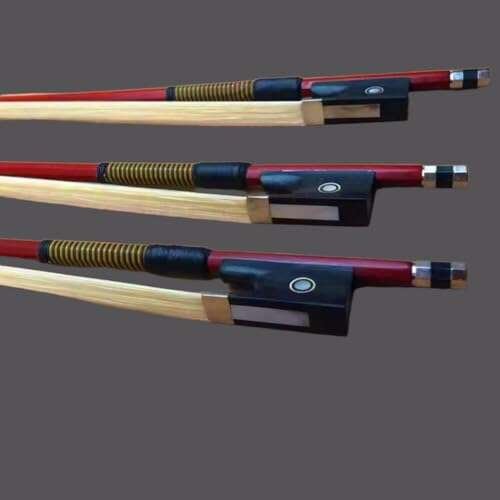
Loosen the bow hair before placing it in the case. Do not remove the hair from the bow.
Secure the bow so it cannot move inside the case. Use the bow holder if the case has one. Make sure the bow does not press against the violin.
2. Prepare the violin
Place the violin in its case and close the case gently. The instrument should not slide from side to side.
You can use soft, clean material to reduce movement around the instrument. Do not force thick padding under the bridge, tailpiece, or neck. Pressure in the wrong place can cause damage.
Avoid placing loose material where it can touch delicate varnish or fittings. Do not use newspaper, rough cloth, or materials that may transfer ink, moisture, or dye.
3. Protect the case
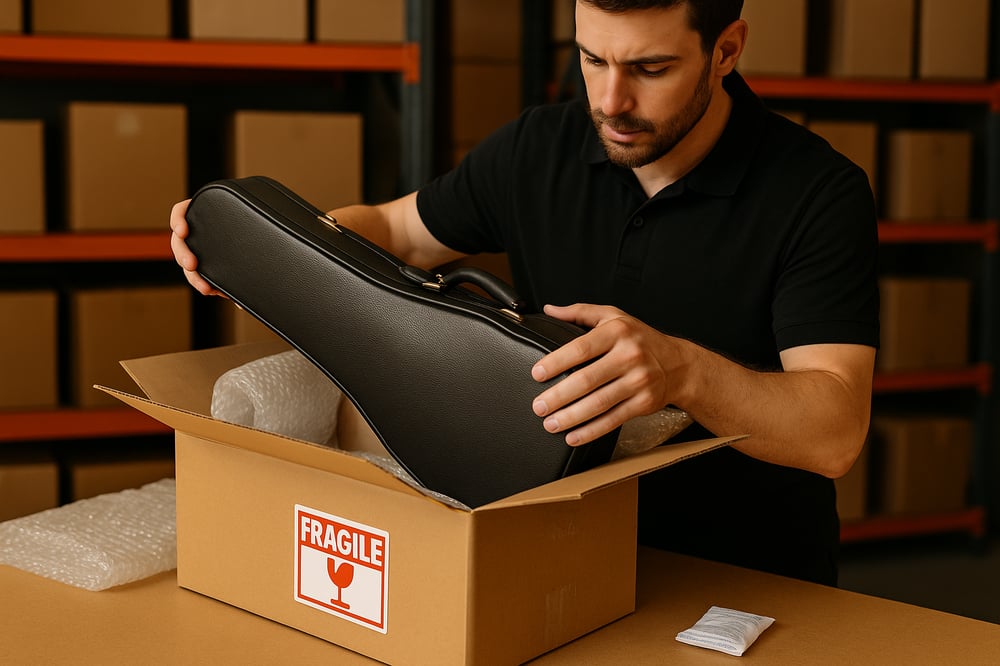
Wrap the closed case with a layer of bubble wrap or soft padding. The wrap should protect the case without forcing the lid open.
The case should fit inside a strong outer box with padding on every side. A double-box method gives more space between the case and outside impacts.


4. Fill empty space
The case must not move inside the outer box. Fill empty areas with firm padding.
Good choices may include:
- Foam sheets
- Air pillows
- Kraft paper
- Molded packing material
Do not use loose packing that collapses under pressure. Test the box by gently moving it. You should not hear or feel the case shifting.
5. Seal and label the box
Use strong packing tape on every seam. Reinforce the corners and the center seams.
Write the shipping and return addresses clearly. A “Fragile” label may help communicate the contents, but it does not replace internal protection. Packages can still be stacked or turned during transit.
6. Take photos before handing it over
Photograph:
- The violin from several angles
- The bridge and tailpiece
- The bow
- The inside of the case
- The padding
- The sealed box
- The shipping label
These photos document the condition and the packing process.

Should You Ship a Violin in a Case?
Yes. A violin should normally be shipped in a sturdy hard case, and that case should be placed inside a protective outer box.
The case protects the instrument from direct impact. The outer box absorbs some handling stress and creates room for padding.
A soft case may work for local transport by hand, but it is a poor choice for parcel shipping. If you do not have a hard case, consider borrowing or buying one before shipping. The extra cost is usually easier to justify than repairing a cracked instrument.
When a standard case may not be enough
Use specialty packing or ask a luthier for help when:
- The violin is antique
- The violin has known cracks or repairs
- The instrument is worth several thousand dollars or more
- The case is loose or damaged
- The violin must cross extreme heat or cold
- The shipment is international
- The violin has unusual dimensions
A professional may suggest a suspension case, custom foam, temperature control, or a specialty carrier.
Temperature and Humidity Risks
Temperature changes can affect wood, glue, varnish, and setup. Sudden changes may increase the risk of open seams, cracks, or changes in string and bridge position.
Do not leave a packed violin in a hot vehicle or in direct sun. In cold weather, allow the package to warm gradually before opening it. Avoid placing a cold violin directly beside a heater.


For valuable instruments, ask a luthier about humidity control. A case humidifier may help in dry conditions, but it must be used correctly. Too much moisture can also harm a wooden instrument.
If a violin arrives very cold or hot, let it rest in its closed case at room temperature before opening it. If you see a crack, loose seam, shifted bridge, or other damage, do not tune it. Photograph the condition and contact the carrier, seller, insurer, or luthier.

USPS, UPS, or FedEx: Which Is Cheapest?
No carrier is always the cheapest. The best option depends on the packed dimensions, ZIP codes, delivery time, and coverage.
USPS
USPS may be useful for smaller domestic packages and some rural destinations. It can offer convenient access through post offices and may work well for a properly packed violin case inside a box.
Check the current USPS service rules, package limits, and included coverage before paying. Do not assume that standard coverage equals the full value of the violin.
UPS
UPS offers several ground and air services and may be convenient for scheduled pickups. It is often used for larger boxed items, but rates depend heavily on dimensions and destination.
Ask about declared value, claim requirements, residential delivery, and any limits for fragile musical instruments.
FedEx
FedEx offers ground and express services. Its online quote tool can help compare delivery speeds and package costs.
As with other carriers, follow the packaging rules for the exact service. A claim may be denied if the package does not meet the carrier’s packing requirements.
Specialty musical-instrument services
A specialty shipper may cost more, but it can be a better fit for an expensive or fragile violin. The benefit may include:
- Advice on packing
- Better handling procedures
- Higher-value coverage options
- Help with claims
- Experience with instruments
For a low-value student violin, the extra fee may not be necessary. For a rare instrument, the added control may be worth the cost.

How Much Does It Cost to Ship a Violin Internationally?
International violin shipping often costs $150 to $500 or more, before possible customs charges, taxes, brokerage fees, or special insurance.
The price depends on:


- Destination country
- Box size and weight
- Air service
- Customs paperwork
- Declared value
- Import taxes
- Brokerage
- Insurance
- Restrictions on protected materials
A violin with an ebony fingerboard, fittings, or bow may raise questions about protected wood species. Rules vary by country and by the materials used. Some shipments may need documents related to the Convention on International Trade in Endangered Species, known as CITES.
Do not guess on customs forms. Describe the item accurately, state whether it is new or used, and use a truthful value. Incorrect information can cause delays, fines, seizure, or an invalid insurance claim.
Before sending an international violin shipment, check:
- The destination country’s import rules.
- The carrier’s musical-instrument restrictions.
- The insurance provider’s international coverage.
- The need for CITES or other documents.
- Who pays duties, taxes, and brokerage fees.
Common Mistakes That Increase Damage or Cost
Avoid these mistakes when preparing a violin shipment:
Using only a soft case
A soft case does not provide enough impact protection for parcel shipping.
Leaving the case loose in the box
A case that moves can strike the box walls. Fill all empty areas with firm padding.
Packing without measuring
Guessing the box size can lead to an incorrect quote. Measure the final sealed package.
Choosing the fastest service without checking coverage
Express shipping reduces transit time but may not include enough protection for a valuable instrument.
Overlooking the bow
A bow can break if it is loose inside the case. Secure it and keep it from touching the violin.
Taping the violin directly
Do not place adhesive tape on the violin, varnish, case lining, or bow.
Shipping a damaged violin without records
Photograph existing cracks, open seams, or repairs before packing. Otherwise, it may be hard to show when damage occurred.
Declaring an unrealistic value
An unusually low value can limit reimbursement and create customs problems. Use a fair, supportable value.

How to Save Money Without Cutting Protection
You can reduce the cost of shipping a violin without taking unsafe shortcuts.
- Use ground service when the delivery date allows it.
- Compare all-in quotes, not postage alone.
- Use a sturdy case you already own.
- Buy packing materials locally instead of paying high retail prices at a shipping counter.
- Avoid oversized boxes.
- Ship to a business address if that lowers the rate and is safe.
- Compare pickup and drop-off prices.
- Remove unnecessary accessories from the package.
- Ask a music store whether it offers discounted carrier rates.
- Buy insurance based on a documented value rather than an unsupported estimate.
Do not save money by skipping the hard case, using a weak box, or leaving space around the case.

What to Do If the Violin Arrives Damaged
If the package looks crushed, punctured, wet, or opened, photograph it before removing the contents.
Then:
- Keep the box, padding, labels, and packing materials.
- Photograph the violin and case from every angle.
- Do not repair, clean, tune, or alter the instrument.
- Notify the carrier promptly.
- Contact the seller or recipient if another party arranged shipping.
- Ask a qualified luthier to inspect the damage.
- File the claim using the carrier’s required documents.
A luthier can identify damage that is not obvious, such as an open seam, sound-post movement, bridge shift, or internal crack.
Carrier deadlines differ. Check the terms for the service used rather than waiting several weeks.

Frequently Asked Questions
Is it cheaper to ship a violin or take it on a plane?
For a domestic trip, carrying a violin on a plane may cost less than shipping it, but airline rules vary. A violin may count as a carry-on item if it fits safely in the approved space, or it may need a purchased seat. Check the airline’s current musical-instrument policy before traveling.
Can I ship a violin without a hard case?
You can, but it is not a safe choice for normal parcel handling. A hard case inside a padded outer box gives much better protection against impact and compression.
How much does it cost to ship a violin case alone?
A violin case alone may cost about $30 to $120 by ground within the continental USA, depending on size, weight, distance, and packaging. Oversized cases may cost more because of dimensional weight.
Should I loosen the violin strings before shipping?
A small amount of loosening may reduce tension during rough handling, but do not completely slacken the strings unless a luthier advises it. The bridge can shift or fall if string tension changes too much.
Can I insure a violin for its full value?
Sometimes, but coverage depends on the carrier, insurer, instrument type, declared value, appraisal, and policy terms. Confirm the coverage in writing before shipping. A specialty musical-instrument policy may be more suitable for a valuable violin.
Final Cost Estimate
For most domestic shipments in the United States, plan on:
- $40–$150 for ground postage
- $40–$125 for professional packing
- Additional coverage fees based on the violin’s value
- $80–$275 total for a typical protected shipment
A rare, fragile, oversized, or high-value violin may cost $300 to $550 or more when custom packing, express delivery, and specialty insurance are included.
The best next step is to pack or estimate the final package size, then compare exact quotes from USPS, UPS, FedEx, and a specialty instrument shipper. Choose the service that gives the right balance of price, protection, delivery time, and coverage—not simply the lowest advertised rate.

Senior Music Reviewer
Alex Carter is a seasoned music reviewer with over a decade of experience in the world of sound and instruments. Passionate about helping musicians and enthusiasts make informed choices, he brings sharp insights and in-depth knowledge to every review. From classical instruments to modern gear, Alex combines technical expertise with a love for music to deliver content that resonates with readers.
As a Senior Music Reviewer and expert author on Tuneluma.com, Alex is dedicated to sharing honest evaluations, practical advice, and thoughtful commentary to guide readers in their musical journey.