
Best Piano Bench For Bad Backs: Top Picks For Comfort
The best piano bench for bad backs combines adjustable height, firm padding, stable support, and a comfortable backrest.
If your lower back aches after one lesson, the bench may be part of the problem. A seat that is too low, too soft, or too far from the keys can make you twist and slump. I looked at these adjustable piano benches with a practical eye: seat height, back support, width, stability, padding, and ease of use. None replaces good posture or medical care, but the right bench can make practice feel less like a chore and more like a relaxed conversation with your piano.
Liquid Stands Adjustable Piano Bench

The Liquid Stands adjustable piano bench is a strong starting point for players who need more control over their sitting height. Its padded seat and built-in backrest create a more supported feel than a basic flat keyboard stool. I like this design for players who tend to slide forward or round the lower back during long practice sessions. The height adjustment also helps you find a position where your forearms can rest more naturally over the keys.
This bench is useful in a home studio, lesson room, or casual performance setup. The black cushion has a simple look that blends with most digital pianos and keyboard stands. A backrest cannot correct poor posture by itself, so I would still sit near the front half of the cushion and keep both feet steady on the floor. For many users, that small combination of support and height control makes it a practical candidate for the best piano bench for bad backs.
Pros:
- Adjustable height helps match different keyboards and players
- Backrest offers helpful support during longer sessions
- Padded seat reduces pressure from a hard stool
- Simple black finish suits most music rooms
- Useful for adults, students, and home musicians
- More supportive than many backless keyboard benches
Cons:
- Backrest may feel small for users who want full upper-back support
- Seat width may not suit every larger player
- Assembly and adjustment take some initial setup
My Recommendation
I recommend this model for pianists who want a standard-width bench with a backrest and adjustable height. It suits adults who practice for 30 minutes or more and students who need a stable seat as they grow. It is also a good choice when you want support without the bulk of a wide duet bench. If you prefer a familiar bench shape and a clean look, this is one of the more balanced options in this group. Check current stock and pricing before ordering, since marketplace availability can change.
HOMBYS Extra-Wide Duet Piano Bench
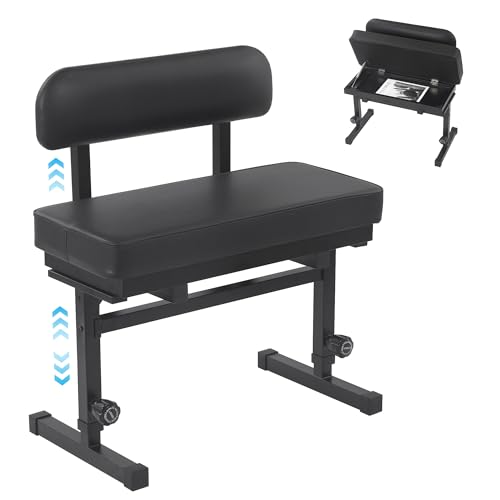
The HOMBYS Extra-Wide Duet Piano Bench takes a different approach to comfort. Instead of focusing only on a small musician stool, it gives you a broad seat that can hold two people or one player who wants more room. That extra space can help you shift position without feeling trapped in one spot. The cushioned backrest adds another layer of support for relaxed practice and shared lessons.
A storage compartment makes this bench especially handy for sheet music, lesson books, cables, and small accessories. I see it working well in a family music room where the piano area also serves as a teaching space. The wide frame may feel less nimble than a compact stool, and it needs enough room around the instrument. Still, for a plus-size player or duet partner, this could be the best piano bench for bad backs because it reduces cramped sitting and offers a more open posture.
Pros:
- Extra-wide seat gives one player room to change position
- Can accommodate two people for duets or lessons
- Back cushion offers added support for the torso
- Storage space keeps music and accessories close
- Adjustable height supports different players and instruments
- Strong choice for family rooms and teaching studios
Cons:
- Larger footprint needs more floor space
- May feel oversized for a small keyboard station
- Moving it can be harder than moving a compact stool
My Recommendation
I would choose the HOMBYS bench for a duet player, teacher, larger adult, or anyone who dislikes narrow seats. The extra width gives your hips and legs more freedom, while the storage compartment adds real daily value. It is not the best pick for a tiny apartment or a portable rig. For home use, however, it offers the kind of roomy support that many back-sensitive players appreciate. Its overall value is strongest when two people use the piano or when storage matters as much as seating.
Adjustable 600-Pound Piano Bench With Backrest

This adjustable piano bench is built around a high stated weight capacity and a supportive backrest. That makes it appealing to players who want a sturdier seat under them. A firm, stable base can help you feel less guarded when you shift your hands across the keyboard. Its adjustable design also lets you raise or lower the seat until your knees and elbows sit in a more natural line.
The storage feature adds convenience for home practice. You can keep method books, headphones, pedals, or loose sheet music nearby instead of placing them on the floor. I would inspect the hardware after assembly and check that the bench sits level before every long session. Weight capacity is only one part of comfort, but this model is a sensible option for users who want a robust frame and back support in the best piano bench for bad backs category.
Pros:
- High stated weight capacity supports a broad range of users
- Adjustable height helps improve playing alignment
- Backrest gives useful lumbar-area support
- Storage offers space for music and gear
- Padded surface is more comfortable than a bare wooden seat
- Solid choice for frequent home practice
Cons:
- May be heavier than a simple keyboard stool
- The large capacity does not guarantee a soft or plush feel
- Users must assemble and level the bench with care
My Recommendation
This bench is best for adults who place a high value on sturdiness and a generous weight rating. I would also consider it for a busy household where several people share one piano. The backrest and height adjustment can support a more relaxed setup, while the storage box keeps the area tidy. It may be more bench than a young beginner needs, but it gives larger users extra confidence. As always, confirm the seller’s current specifications and weight guidance before purchase.
Liquid Stands White Piano Bench With Backrest

The white Liquid Stands bench offers the same type of adjustable, back-supported seating in a brighter finish. That color can make a music corner feel lighter, especially when paired with a white digital piano or modern keyboard stand. The padded cushion gives your sitting bones a softer place to rest. The backrest can also remind you to avoid collapsing backward or leaning too far away from the keys.
For a bad back, I care more about fit than color, so measure the keyboard height and compare it with the bench range before ordering. A correct setup lets your shoulders stay loose and your wrists stay level without reaching upward. This bench is a good match for design-conscious players who still want practical adjustment. It can be the best piano bench for bad backs when clean style, moderate support, and home use all matter.
Pros:
- Adjustable height supports better alignment
- Backrest adds support without a bulky chair design
- White finish looks fresh in modern music rooms
- Padded seat helps reduce contact pressure
- Works with many digital and electric pianos
- Good fit for home studios and visible living areas
Cons:
- White upholstery may show dirt faster than black material
- Back support may not satisfy users seeking a tall office-chair back
- Color may not match traditional wooden pianos
My Recommendation
I recommend this version for home players who want a clean, modern look and adjustable support. It is especially suitable for a bright studio, apartment, or living room where the bench remains on display. Pick it if you like the Liquid Stands format but prefer white over black. Keep a soft cloth nearby to protect the light seat from marks. For value, it is most appealing when appearance and posture control carry equal weight.
Bailanoom Adjustable Piano Chair With Back Support

The Bailanoom adjustable piano chair has a traditional black musician-seat look with added back support. I like this style for players who want something between a flat bench and a full desk chair. It gives you a defined place to sit while keeping the controls simple. Height adjustment is important here because even a supportive chair can create back strain if it places your knees too high.
This chair may suit a person who practices at a digital piano, keyboard, or electronic organ. The back support can help during warmups, scales, and slow song work when you remain seated for a long time. I would avoid leaning hard into the backrest while playing, since a slight forward balance often helps the hands move freely. Overall, this is a practical contender for the best piano bench for bad backs for users who want a compact chair shape.
Pros:
- Compact chair design fits many keyboard setups
- Adjustable seat height improves instrument fit
- Back support helps during extended practice
- Black finish looks classic and easy to maintain
- Suitable for students, hobbyists, and home performers
- Less bulky than many wide storage benches
Cons:
- Compact seat may feel tight for larger users
- Backrest may limit how far you can move backward
- Not designed as a rolling office chair
My Recommendation
I would choose this Bailanoom chair for a player who wants a neat, compact seat with more support than a stool. It fits small rooms and works well for everyday digital-piano practice. It is not my first choice for duets or plus-size users who need a wide cushion. For a solo pianist with limited space, it offers a useful mix of height control, padding, and back support. It is worth checking current measurements before buying so the seat suits your body.
Adjustable Piano Bench With Back Support

This adjustable piano bench focuses on the features most back-sensitive players ask for: a padded seat, adjustable height, and a backrest. Its straightforward design makes it easy to understand without extra mechanisms or a large storage box. I find that simple furniture often works well in a practice room because there are fewer parts to distract from setup. The seat should let you sit tall while keeping your feet planted and your shoulders relaxed.
It can serve both a keyboard player and a pianist using a digital or electric piano. The back support is useful when you need a short rest between songs, but I would not use it as a reason to slump. Place the bench close enough that you do not reach forward to play. For many buyers, this model represents the best piano bench for bad backs when the goal is basic ergonomic support at a reasonable size.
Pros:
- Adjustable height supports a custom playing position
- Padded cushion improves comfort over long sessions
- Backrest gives the lower and mid-back a place to rest
- Simple design works with many keyboard stands
- Compact footprint suits home practice rooms
- Easy option for beginners and casual players
Cons:
- May offer fewer premium features than a hydraulic model
- Seat size may not suit every body type
- Backrest support depends on correct sitting distance
My Recommendation
This bench is best for the buyer who wants the core features without a large or ornate design. It makes sense for beginners, apartment musicians, and adults who need a supportive upgrade from a kitchen chair. I would pair it with a keyboard stand that also allows proper height adjustment. Its value comes from practical comfort rather than luxury extras. If the dimensions fit you, it is a sensible everyday choice and may be available at a competitive price.
CAHAYA Foldable Adjustable Piano Bench

The CAHAYA foldable bench stands out for players who need portability. It offers adjustable height and an adjustable backrest, which is a useful combination when different people share the seat. The foldable frame makes it easier to store in a closet, carry to lessons, or take to an outdoor performance. Its listed 200-kilogram capacity gives it a substantial stated load rating, though every user should follow the current product instructions.
Portable benches often trade some mass for convenience, so I would set this one on a level surface and lock every adjustment before playing. That check matters even more for someone with back pain, since a shifting seat can make the body tense. This model is a strong travel pick for teachers, gigging musicians, and families. It may be the best piano bench for bad backs for anyone who needs support in more than one location.
Pros:
- Foldable frame makes storage and transport easier
- Adjustable height suits kids and adults
- Adjustable backrest allows a more personal fit
- High stated capacity supports many users
- Useful for lessons, rehearsals, and outdoor performances
- Good choice for musicians who move equipment often
Cons:
- Foldable designs may feel less solid than heavy fixed benches
- Needs careful locking and setup before use
- Portable construction may not feel as refined as studio furniture
My Recommendation
I recommend CAHAYA for mobile musicians, traveling teachers, and homes where the bench must disappear after practice. The adjustable backrest is a notable advantage because it gives you more ways to tune the fit. It is also helpful for a family with both children and adults. Choose a fixed bench instead if you want maximum weight and a permanent furniture feel. For portability, adjustment, and broad use, this model offers strong value when available.
Augioth Hydraulic Adjustable Piano Bench

The Augioth hydraulic adjustable piano bench brings a chair-like adjustment method to the keyboard area. A hydraulic lever can make height changes quick, which helps when several players use the same instrument. The ergonomic stool shape is also appealing to musicians who want a cleaner setup than a large storage bench. I like fast adjustment because the correct height may change between a child’s lesson and an adult’s practice.
Hydraulic furniture should sit on a stable floor, and you should test the mechanism before settling into a long session. The most comfortable height still depends on your posture, distance from the keys, and foot support. This is a useful choice for studios, teachers, and shared family rooms. It could be the best piano bench for bad backs for users who value quick height changes and a compact, modern design.
Pros:
- Hydraulic adjustment makes height changes fast
- Ergonomic stool design suits many keyboard setups
- Useful when several people share one piano
- Compact shape saves space in a studio
- Black finish looks professional and easy to pair
- Simple adjustment can improve daily convenience
Cons:
- Hydraulic parts add a mechanism that may need care
- Stool format may not provide as much back support as a chair
- Users should check stability and lever operation often
My Recommendation
Choose Augioth if you want fast, smooth height changes and do not need a tall backrest. It is especially suited to teachers, shared studios, and musicians who switch between keyboards. It may not be ideal for someone who needs firm back contact throughout every song. I see it as a flexible studio stool rather than a full lumbar-support chair. Its value is highest when quick adjustment matters more than storage or a large back cushion.
Liquid Stands PU Leather Piano Bench

The PU leather Liquid Stands bench gives the familiar adjustable stool format a smoother, more polished surface. A padded seat can feel welcoming during practice, especially when you move from short drills to a full set of songs. The wipe-clean material also makes sense in homes where drinks, dust, or frequent use are concerns. Its adjustable height lets you bring the body closer to a sound playing position instead of forcing the arms to reach up.
This model is a good fit for a player who likes a neat, low-maintenance bench. PU leather can feel warmer than fabric in some rooms, and it does not provide the same texture as woven upholstery. I would still use a small cushion only if it does not raise you too high or change your balance. As a compact, padded option, it deserves consideration in any search for the best piano bench for bad backs.
Pros:
- PU leather surface is easy to wipe clean
- Adjustable height supports better alignment
- Padded seat improves comfort over hard stools
- Compact footprint works in small rooms
- Clean black finish matches many instruments
- Useful for regular home and studio practice
Cons:
- PU leather may feel warm during long sessions
- This version does not provide a full backrest
- Backless design may not suit users who need rear support
My Recommendation
I recommend this PU leather bench for players who prefer a backless seat and an easy-care finish. It works well when you already know how to maintain an upright playing posture and want freedom to move. It is less suitable for someone who needs a backrest to feel secure. The clean surface is useful in busy homes and teaching spaces. If you want compact seating with simple height control, this Liquid Stands model offers solid everyday value.
Best For Comparison
| Best for | Why |
|---|---|
| Best overall back support | Liquid Stands Adjustable Piano Bench combines height adjustment, padding, and a useful backrest in a familiar design. |
| Best for wide seating and duets | HOMBYS Extra-Wide Duet Bench gives one large player or two musicians more room, plus convenient storage. |
| Best for portable practice | CAHAYA Foldable Adjustable Bench offers height and backrest adjustment in a design that is easier to carry and store. |
How I Choose a Piano Bench for a Bad Back
A piano bench does not need to look medical to provide useful support. I start with fit. Your feet should rest firmly on the floor, your knees should remain comfortable, and your forearms should approach the keys without a sharp bend. If you sit too low, you may lift your shoulders. If you sit too high, you may press down with tense wrists.
Height adjustment is the first feature I check. A fixed bench can work if it matches your body and piano, but an adjustable model gives you more room to correct a poor setup. This matters when children and adults share one instrument. It also helps if you switch between a full-size piano, a digital keyboard, and a stand with a different height.
I also look at seat firmness. A very soft cushion may feel comfortable for five minutes, then allow your pelvis to sink and your spine to round. A very hard seat can create pressure and make you shift too often. The best middle ground is usually supportive padding that feels stable rather than a cushion that swallows your weight.
Backrests deserve careful thought. Some players feel better with light support behind the lower back. Others find that a backrest pushes them too far from the keys or limits movement. If you choose a bench with a backrest, sit close enough to the keyboard that you do not lean forward to reach it. The support should help you balance, not act like a crutch.
Width matters as well. A narrow stool may work for a small child or a compact room, but larger adults often benefit from a broad seat. Extra room lets you change leg position and avoid pressure on one spot. A wide duet bench can also make sense for teachers, parents, and students who share lessons.
Finally, I check stability. A bench should not rock, slide, or make you brace your muscles. Look for a firm base, secure adjustment hardware, and feet that sit evenly on the floor. If a bench arrives with loose bolts, tighten them before use. Recheck them after several sessions, especially on a foldable or frequently moved model.
Why Height Matters More Than Most Buyers Think
Many shoppers focus on padding first, but height often has a larger effect on comfort. Your piano bench and keyboard form one system. A comfortable seat at the wrong height can still lead to lifted shoulders, bent wrists, or a rounded back. Think of the bench as the foundation of your playing posture.
Start by sitting near the center of the keyboard. Keep both feet grounded if possible. Your elbows should feel free, and your shoulders should remain down rather than pulled toward your ears. Make small changes, since a one-inch adjustment can change how your hips, spine, and arms share the work.
A backrest can help you rest between passages, but do not force your spine against it while playing. Many pianists use a slight forward balance that keeps the hands light. If you feel pain, numbness, or weakness, stop and seek advice from a qualified health professional. A new bench can improve setup, but it cannot diagnose or treat a back condition.
Bench or Chair: Which Is Better for Back Comfort?
A piano bench keeps the playing area open. You can move your hips, turn slightly for different parts of the keyboard, and maintain a close relationship with the keys. A chair with a tall back may offer more support, but armrests, wheels, and deep cushions can limit movement. For many players, a supportive bench gives the right balance of freedom and structure.
Backrests work best when they are modest and do not force a fixed angle. A tall office chair may feel relaxing, yet it can encourage you to lean away from the piano. That position makes your arms reach forward. A keyboard bench with a small backrest often keeps the setup more focused.
There is no single answer for every body. A person with a serious back condition may need an individualized setup from a clinician or physical therapist. For general discomfort, I would first try correct height, a stable seat, close placement to the keys, and short breaks. Those basics often matter more than a thick cushion or a flashy design.
Simple Ways to Make Any Piano Bench More Comfortable
Place the bench so your knees point toward the keyboard and your feet do not tuck far underneath you. Keep the piano close enough that your elbows do not lock as you reach. Avoid twisting your torso to one side for long periods. If you use pedals, place them where you can reach them without sliding forward.
Take a short break every 20 to 30 minutes. Stand up, walk a little, and let your back change position. I prefer several short practice blocks over one long session that leaves the body stiff. This approach helps beginners and advanced players alike.
Keep the floor clear around the bench. A loose rug or uneven surface can make the seat rock. For a folding bench, open the legs fully and engage every lock. For an adjustable bench, turn or press the control until the mechanism feels secure. Never rely on the advertised weight limit as a substitute for checking the bench’s condition.
Do not add a thick pillow without checking your playing height again. A cushion can raise your hips enough to change your arm angle. If you need extra padding, choose a thin, firm pad and test it for a few sessions. Comfort should support balance, not make you sink.
What to Check Before Ordering Online
Measure the distance from the floor to the keyboard. Then compare that measurement with the bench’s height range. Product photos can make benches look larger or smaller than they are, so check the listed seat width and depth as well.
Read the adjustment details. Some benches use a threaded knob, while others use a lever or hydraulic lift. A lever may be faster, but a simple threaded system can feel more familiar and easier to inspect. If several people share the piano, quick adjustment has extra value.
Look at the return policy and assembly notes. A bench may appear comfortable in a photo but feel too narrow once you sit on it. A clear return option reduces risk. Save the packaging until you confirm the height, stability, and cushion suit your needs.
Also review the current listing for material, dimensions, capacity, and included parts. Online product pages can change, and marketplace inventory can vary. I treat the specifications as a starting point, then verify the details before purchase. This is especially important when a backrest, storage compartment, or folding mechanism affects your setup.
FAQs Of best piano bench for bad backs
Is a piano bench with a backrest better for a bad back?
It can help some players, but not everyone needs one. A backrest offers a place to rest, yet it should not force you to lean away from the keys. Correct height and stable posture matter just as much.