How Do You Tune A Headless Guitar: Easy Step-By-Step Guide
Introduction
For guitarists in the United States, a headless guitar tunes much like a standard electric guitar. The main difference is the location of the tuners. Instead of tuning machines on the headstock, a headless guitar usually has tuners built into the bridge or the lower end of the body.
To tune one, connect a chromatic tuner, pluck one string at a time, and turn that string’s tuner until the display shows the correct note and pitch. Most six-string headless guitars use standard tuning: E-A-D-G-B-E, from the lowest string to the highest.

What Makes a Headless Guitar Different?
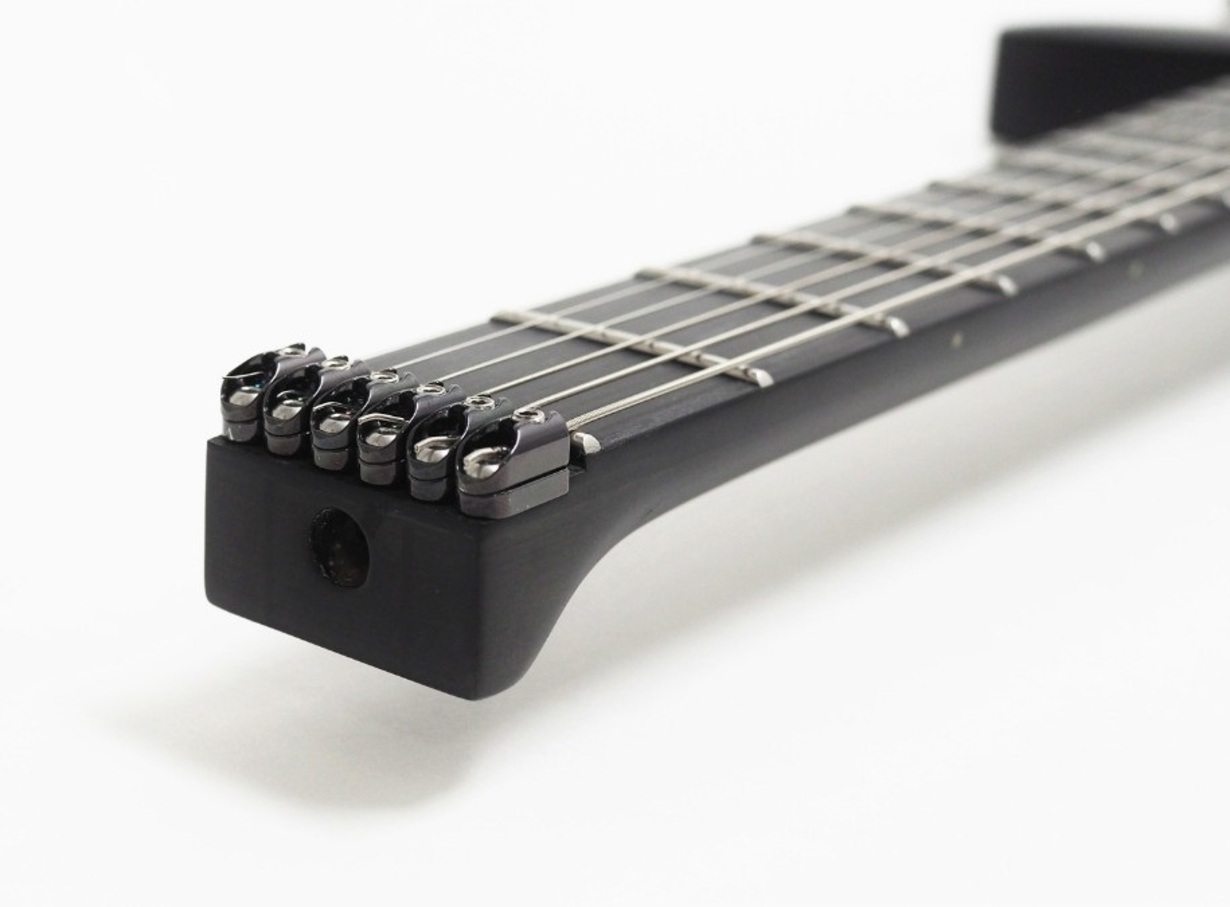
A headless guitar has no traditional headstock. The strings attach at the bridge and at a compact nut or string retainer near the top of the neck. The tuning machines sit at the bridge end of the instrument.
This design changes the tuning process, but not the notes you need. The same tuning systems work on most headless guitars:
- Standard tuning: E-A-D-G-B-E
- Drop D: D-A-D-G-B-E
- Half-step down: E♭-A♭-D♭-G♭-B♭-E♭
- Whole-step down: D-G-C-F-A-D
- Open tunings, such as Open G or Open D
The exact tuner design depends on the guitar. Some models use small thumbwheels. Others use knobs, hex keys, or fine-tuning screws. Some use double-ball strings, while others accept regular guitar strings.
A headless guitar may also use a locking nut, a fixed string clamp, or a special string retainer. These parts hold the strings in place. They do not change the basic tuning order.
Standard tuning note order
Tune the strings from the lowest-sounding string to the highest-sounding string:
| String position | Note | Common pitch |
|---|---|---|
| 6th string | E | Low E |
| 5th string | A | A |
| 4th string | D | D |
| 3rd string | G | G |
| 2nd string | B | B |
| 1st string | E | High E |
The string numbers follow normal guitar practice. The 6th string is the thickest string, and the 1st string is the thinnest.
What You Need Before You Start
You need only a few basic tools:
-
A chromatic tuner
A clip-on tuner, pedal tuner, or phone tuner can work. A chromatic tuner is better than a guitar-only tuner because it displays every note. -
A stable playing position
Hold the guitar as you normally would. Tuning while the guitar rests in an unusual position can change the string tension slightly. -
The correct string type
Check whether the guitar needs double-ball strings or standard single-ball strings. The wrong string type may not lock into the bridge or upper string retainer. -
The manufacturer’s setup instructions
Headless bridges are not all the same. The manual can show the correct direction for each tuner and explain how to use any locking parts. -
A quiet room
Background sound can confuse a microphone-based tuner. A pedal tuner or a direct connection gives a clearer signal.


Do not use a screwdriver, wrench, or hex key unless the guitar’s instructions identify it as a tuning or locking tool. Some adjustment screws control intonation or string height rather than pitch.
How to Tune a Headless Guitar Step by Step
1. Turn on a chromatic tuner
Set the tuner to chromatic mode if it has modes. Select a reference pitch of A=440 Hz unless your band, teacher, or music calls for a different reference.
Most guitarists in the United States use A=440 Hz for standard tuning. The reference setting matters less than matching the other instruments in the group.
2. Find the tuner for the string
Look at the bridge and identify the tuner connected to the string you want to tune. On many headless guitars, the tuners sit in a row. On others, they are arranged in two groups.
Do not assume that the tuner closest to one side controls the thickest or thinnest string. Trace the string from the bridge saddle to the tuning mechanism if the layout is unclear.
3. Tune the lowest string first
Pluck the 6th string, or low E string, with a normal attack. Let the note ring while you watch the tuner.
Turn the tuner in small amounts:
- If the pitch is too low, raise it slowly.
- If the pitch is too high, lower it slowly.
- Stop when the tuner reads E and the indicator is centered.
Use small turns near the target. Headless tuners can be sensitive, especially when they have fine-pitch adjustment screws.
4. Tune the remaining strings
Tune the other strings in this order:
- Low E
- A
- D
- G
- B
- High E
Pluck near the middle of the string. A hard attack can make the note sound sharp for a moment. A very soft attack may not give the tuner enough signal.
5. Stretch new strings
New strings often settle after installation. Gently pull each string away from the fretboard with moderate pressure, then retune it.
Do not yank the string. Excessive force can damage the string, bridge, or retainer. Repeat the stretch-and-tune cycle until the pitch stays close to the target.
6. Check the tuning again
After all six strings are tuned, play a simple chord such as E major or G major. Then check each open string again.
This second pass matters because changing one string can slightly change the neck’s total tension. The effect is usually small, but a new set of strings may need several passes.


How to Tune a Headless Guitar Without a Tuner
You can tune a headless guitar by ear, but a chromatic tuner is more accurate and faster. If you have no tuner, use a known reference note.
For standard tuning, you can tune by comparing fretted notes:
- The 5th fret of the 6th string matches the open 5th string.
- The 5th fret of the 5th string matches the open 4th string.
- The 5th fret of the 4th string matches the open 3rd string.
- The 4th fret of the 3rd string matches the open 2nd string.
- The 5th fret of the 2nd string matches the open 1st string.
Start with a known low E from a piano, tuning fork, another guitar, or a reliable recording. Then use the fret comparisons above.
This method tunes the strings relative to each other. It does not guarantee concert pitch unless the first reference note is correct. That is why a chromatic tuner remains the best choice for stage work, recording, and playing with other instruments.
How to Tune a Headless Guitar to Drop D
To tune a headless guitar to Drop D:
- Tune the guitar to standard tuning.
- Play the open 6th string.
- Lower the 6th string until the tuner reads D.
- Check the 4th string, which should also be D.
- Play a D power chord to confirm the sound.
Drop D changes only the lowest string:
D-A-D-G-B-E
Lowering the string reduces its tension. The neck may respond slightly, so check the other strings after making the change. For a temporary change, retuning is usually enough. For a permanent change, the guitar may benefit from a setup with a suitable string gauge.

How to Tune a Headless Guitar With Fine Tuners
Many headless guitars have fine tuners rather than full-size tuning machines. These tuners make small pitch changes well, but they may not have enough travel to install a badly slack or overly tight string.
A useful process is:
- Bring the new string close to pitch with the main tuning mechanism, if the bridge has one.
- Use the fine tuner for the final adjustment.
- Leave the fine-tuner screw near the middle of its travel when possible.
- If the screw reaches its limit, reset it before continuing.
If the fine tuner is fully tightened, turn it back several rotations. Then adjust the string with the main mechanism or by reseating the string, depending on the guitar’s design.
Do not force a fine tuner past its stop. A stuck or damaged tuner may need service.
How to Tune a Headless Guitar With Double-Ball Strings
Some headless guitars use double-ball strings. Each end of the string has a ball, so the string locks into both the bridge and the upper string retainer.


To replace and tune this type of string:
- Confirm the correct string length and gauge.
- Seat one ball end into the bridge.
- Run the string through the nut or retainer.
- Lock the other ball end into the upper fixture.
- Bring the string slowly up to pitch.
- Stretch and retune it several times.
Other headless guitars use standard single-ball strings. These guitars may have a clamp or special anchor that holds the plain end of the string. Always follow the guitar’s manual because forcing the wrong string design into the bridge can cause poor tuning stability or damage.
Why Does a Headless Guitar Go Out of Tune?
A headless guitar can go out of tune for several reasons. The most common causes are new strings, poor string seating, temperature changes, and incorrect use of the bridge tuners.
| Symptom | Likely cause | What to check |
|---|---|---|
| All strings drift sharp or flat | Temperature or new strings | Let the guitar adjust, then retune |
| One string will not stay in tune | Poor seating or damaged string | Check both string ends |
| Tuner reaches its limit | Fine tuner has no travel left | Reset the tuner position |
| Pitch changes after bending | String has not settled | Stretch the string and retune |
| Open note is correct but fretted notes are sharp | Intonation issue | Adjust intonation or seek a setup |
| Tuner shows the wrong note | String is tuned too far | Lower the pitch and approach again |
| Buzz or rattling occurs after retuning | Loose hardware or setup issue | Check screws and contact a repair tech |
Always tune upward toward the note when possible. If you pass the target, lower the string below the note and approach it again. This helps reduce slack in the tuner system.
Temperature also affects pitch. Moving from an air-conditioned room to a hot outdoor stage can make the guitar need another tuning pass. Give the instrument time to adjust before making a final check.

What to Do When the Tuner Shows the Wrong Note
A chromatic tuner may display a nearby note if the string is far from its target. For example, a low E string that is too tight may show F. Do not keep tightening it just because the display has a letter.
First, identify the target note. Then check whether the string is above or below that pitch. If the string is above the target, lower it until it falls below the note. Finally, raise it slowly to the center of the target.
This method reduces the chance of tuning a string one semitone or one whole step too high. It is especially useful when installing strings or changing from a low tuning back to standard tuning.
How Often Should You Tune a Headless Guitar?
Check tuning:
- Before every practice session
- Before every performance
- After changing strings
- After moving the guitar between different temperatures
- After changing to a different tuning
- After major string bends or heavy playing
A stable headless guitar should not need constant adjustment during normal use. However, “stable” does not mean permanently fixed. Strings stretch, climates change, and bridge parts can loosen over time.
If one string needs frequent correction while the others remain stable, inspect that string and its attachment points. If the problem continues with a fresh, correctly installed string, have the bridge and retainer checked by a qualified guitar technician.
Common Mistakes to Avoid
Tuning by string position instead of pitch
The layout of a headless bridge may look different from a normal guitar. Follow the string to its tuner rather than guessing from its location.
Turning the wrong adjustment
Some bridge screws set intonation, string height, or locking tension. Use only the control marked for tuning or identified in the manual.
Tuning new strings only once
New strings often need several tuning passes. Stretch them gently, retune, and repeat.


Using the wrong string type
A double-ball bridge may not accept a standard string. A standard-string bridge may require a specific anchor system. Confirm compatibility before installation.
Checking only open strings
A guitar can show correct open-string notes and still have an intonation problem. If fretted notes sound sharp or flat high on the neck, the issue may require setup work rather than more tuning.
Using excessive force
Never force a tuner, clamp, or string retainer. Stop if a part feels stuck. A small metal part can be costly to replace, and excessive force can damage the bridge.
When Should You Get Professional Help?
You can handle normal tuning, string changes, and gentle string stretching at home. Consider a qualified guitar technician when:
- A tuner spins without changing pitch.
- A string will not lock into place.
- The bridge makes a crack, snap, or grinding sound.
- The guitar cannot hold one string in tune after proper installation.
- Fretted notes remain badly out of tune.
- The string retainer or locking nut is damaged.
- You are unsure which screw controls tuning.
The technician should identify the exact bridge system before adjusting it. Headless guitars vary widely, so a generic setup method may not apply.

Frequently Asked Questions
Do headless guitars tune differently from regular guitars?
The notes are tuned the same way. The main difference is that the tuning machines are usually located at the bridge instead of the headstock.
Can I use a phone app to tune a headless guitar?
Yes. A chromatic phone tuner can work in a quiet room. For loud rehearsals or performances, a pedal tuner or direct instrument connection usually gives a more reliable signal.
Do headless guitars stay in tune better?
They can stay stable because the design removes the long headstock and often uses a secure bridge system. However, tuning stability still depends on string installation, bridge condition, temperature, and setup. A headless design does not eliminate all tuning problems.
Can I use normal guitar strings on a headless guitar?
Sometimes. Some headless guitars accept standard single-ball strings, while others require double-ball strings. Check the guitar’s manual or bridge specifications before buying strings.
Why does my headless guitar tune sharp when I fret a note?
That usually points to intonation, excessive finger pressure, string action, or a setup issue. First confirm that the open string is tuned correctly. If the problem remains across the neck, have the instrument inspected.
Conclusion
To tune a headless guitar, use a chromatic tuner and adjust the bridge-mounted tuner for each string. Tune to the correct notes, approach each pitch slowly, stretch new strings, and check the whole instrument twice.
The most important step is identifying the correct tuner and string system. If the guitar uses fine tuners, double-ball strings, or locking hardware, follow the manufacturer’s instructions before making adjustments. With the right method, tuning a headless guitar is just as simple as tuning a traditional electric guitar.

Senior Music Reviewer
Alex Carter is a seasoned music reviewer with over a decade of experience in the world of sound and instruments. Passionate about helping musicians and enthusiasts make informed choices, he brings sharp insights and in-depth knowledge to every review. From classical instruments to modern gear, Alex combines technical expertise with a love for music to deliver content that resonates with readers.
As a Senior Music Reviewer and expert author on Tuneluma.com, Alex is dedicated to sharing honest evaluations, practical advice, and thoughtful commentary to guide readers in their musical journey.