Use a capo on the second fret and play simple open chords with a gentle, steady strum.
Learning how do you play hey there delilah on guitar is a great first step for beginners who want to build chord changes, rhythm, and fingerstyle control. The Plain White T’s hit sounds intimate, but its core guitar part is simple once you understand the capo, chord pattern, and relaxed timing. This guide breaks down the song in a clear way so you can play it smoothly and make it sound musical, not rushed.

What You Need to Play “Hey There Delilah” on Guitar
To play Hey There Delilah on guitar, you need a guitar, a capo, and a basic set of open chords. The most common beginner arrangement uses a capo on the second fret. This lets you use easy chord shapes while matching the song’s familiar pitch.


You will mainly use these chords:
• D major
• F# minor
• B minor
• G major
• A major
The song is in a steady 4/4 time signature. That means each measure has four beats. The rhythm should feel calm and even, like a quiet conversation.
Recommended setup
Use these settings before you begin:
• Standard tuning: E A D G B E
• Capo: Second fret
• Pick: Thin or medium pick, if you use one
• Tempo: Start slowly at about 70 beats per minute
• Guitar tone: Clean and warm
The capo raises every note by one whole step. So, when you play a D chord shape, the sound is actually E major. This is why the capo helps the chord shapes sound like the recording.

The Chords for “Hey There Delilah”
The chord shapes are the main key to learning how do you play hey there delilah on guitar. Most of the chords are common open shapes, but F# minor and B minor may need extra practice because they often use a partial or full barre.
D major
Place your fingers like this:
• Open fourth string
• Index finger on the third string, second fret
• Ring finger on the second string, third fret
• Middle finger on the first string, second fret
Strum from the fourth string down. Avoid the low sixth and fifth strings.


F# minor
A beginner-friendly F# minor shape can be played as a partial barre:
• Index finger across the first and second strings at the second fret
• Middle finger on the third string, second fret
• Ring finger on the fourth string, fourth fret
Strum from the fourth string down. If this shape feels difficult, use a simplified F# minor by playing only the top four strings.
B minor
Use this compact B minor shape:
• Index finger across the first and second strings at the second fret
• Middle finger on the second string, third fret
• Ring finger on the fourth string, fourth fret
• Pinky on the third string, fourth fret
You do not need to play every string. Focus on the highest four strings until your hand becomes more comfortable.
G major
Try this common version:
• Middle finger on the fifth string, second fret
• Index finger on the sixth string, third fret
• Ring finger on the second string, third fret
• Pinky finger on the first string, third fret
You can also use a simpler G shape if the full version feels tense.
A major
Place three fingers on the second fret:
• Index finger on the fourth string
• Middle finger on the third string
• Ring finger on the second string
Strum from the fifth string down. Do not hit the low sixth string.
A useful practice method is to switch between two chords at a time. For example, move from D to F# minor for one minute. Then practice B minor to G. Short practice blocks usually work better than repeating the full song with weak chord changes.
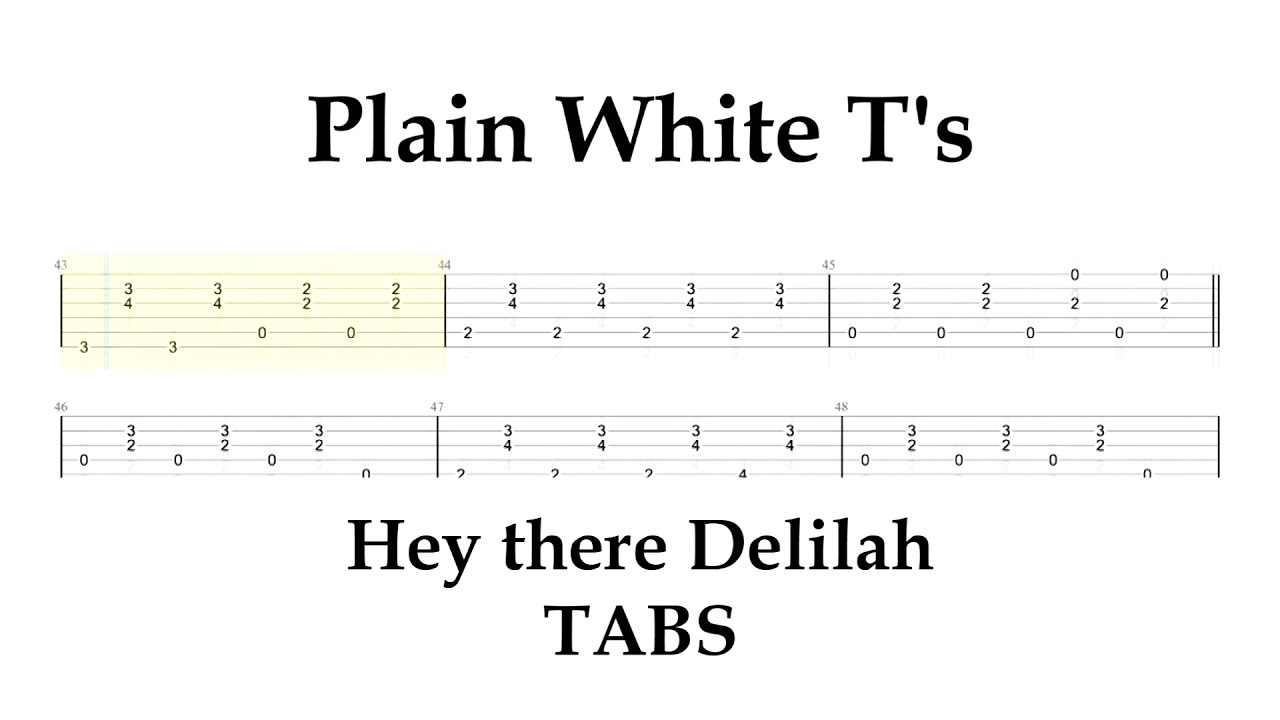
The Basic Chord Progression
The central chord movement in how do you play hey there delilah on guitar follows a simple pop progression. The exact arrangement may vary between live versions, studio charts, and simplified guitar tutorials, but this pattern will help you build a strong version:


Verse pattern
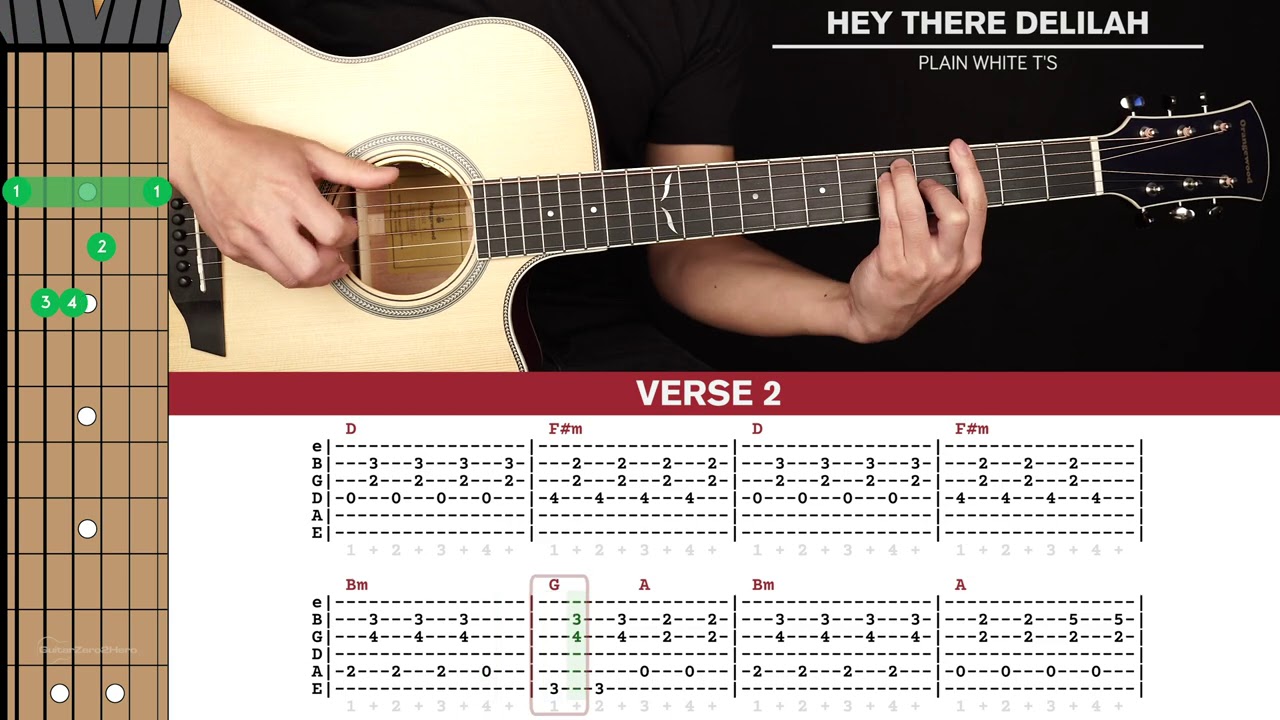
| D | F#m | D | F#m |
| Bm | A | G | A |
This pattern gives the verse its gentle forward motion. Let each chord ring for one full measure at first. Do not worry about singing yet. Your first goal is to change chords without stopping.
Chorus pattern
A common simplified chorus pattern is:
| D | Bm | G | A |
| D | Bm | G | A |
Some arrangements add small changes or passing chords. Those details can come later. The four-chord version is ideal for beginners because it keeps your left hand focused on clean shapes and your right hand focused on rhythm.
Bridge and ending
The bridge and ending may use the same chord family with a slightly different order. This is common in acoustic versions of the song. Once you know the verse and chorus, listen for where the vocal melody changes and mark those sections on a licensed chord chart.
Do not try to memorize the entire song in one sitting. Learn one section, repeat it, and then connect it to the next section. This approach makes how do you play hey there delilah on guitar feel manageable.

How to Strum the Song
The simplest way to play how do you play hey there delilah on guitar is with soft downstrokes. Begin by strumming once on beat one of each measure. Let the chord ring for the rest of the bar.
Count like this:
1, 2, 3, 4
Play one gentle downstroke on the “1.” This method helps you learn the chord timing before adding movement.
Beginner strumming pattern
When the chord changes feel easy, try:
D D U U D U
Count it as:


1 2 & & 4 &
Here, D means a downstroke and U means an upstroke. Keep your wrist loose. The movement should come from the wrist, not from your whole arm.
You can also use this slower pattern:
D D D D
Play one downstroke on each beat. This sounds plain, but it is an excellent way to improve timing. A steady simple rhythm sounds better than a complicated pattern played unevenly.
How hard should you strum?
Play softly during the verse. Increase your volume slightly during the chorus. Think of the song as a story that slowly opens up. The verse is a quiet room, while the chorus lets in more light.
One common mistake I see beginners make is strumming too hard when they miss a chord. Do not use force to hide mistakes. Slow down, relax your hand, and make each chord sound clear.

A Simple Fingerpicking Pattern
Fingerpicking can make how do you play hey there delilah on guitar sound closer to an intimate acoustic performance. You do not need complex classical technique. A basic repeating pattern is enough to start.
Use your right-hand thumb for the bass strings:
• Thumb plays the lowest note of the chord
• Index finger plays the third string
• Middle finger plays the second string
• Ring finger plays the first string
Try this pattern:
Bass, third string, second string, first string, second string, third string
Count it evenly as:
1 and 2 and 3 and 4 and


For a D chord, begin with the open fourth string. For A, begin with the open fifth string. For G, begin with the sixth or fifth string, depending on the shape. For B minor and F# minor, choose the lowest string included in your chord shape.
Keep the picking pattern steady. It should feel like a pendulum. If your fingers get confused, practice the right hand on one muted chord before adding chord changes.
Fingerpicking is not required to play the song well. A soft pick pattern can sound just as effective. Choose the technique that helps you stay relaxed and in time.
How to Practice the Chord Changes
Good chord changes are more important than speed. When learning how do you play hey there delilah on guitar, many players rush through the song before their fretting hand is ready. That often leads to buzzing strings, pauses, and uneven rhythm.
Use this practice plan:
- Form the D chord and check each string.
- Move to F# minor without strumming.
- Strum both chords four times each.
- Repeat the change for two minutes.
- Practice B minor to G in the same way.
- Add A after those changes feel smooth.
- Play the full verse at a slow speed.
Use a metronome if possible. Start at 60 to 70 beats per minute. Increase the speed only when you can play the pattern three times without stopping.
The silent chord change
A useful technique is the silent chord change. Strum the first chord, then stop the strings with your palm. Change to the next chord while the strings are quiet. This isolates the left-hand movement and helps you build muscle memory.
Watch for common problems
Pay attention to these issues:
• Muted strings caused by fingers lying too flat
• Buzzing notes caused by weak finger pressure
• Pauses caused by changing too late
• Tension caused by squeezing the neck too hard
• Missed beats caused by stopping the strumming hand
Your fretting hand does not need to press with maximum force. Place each finger close to the fret, then use only enough pressure to create a clean note.

How to Sing and Play at the Same Time
Singing while playing how do you play hey there delilah on guitar can feel much harder than playing either part alone. This is normal. Your hands follow one pattern while your voice follows another.
Start by mastering the guitar part. Then speak the song’s rhythm without singing the melody. You can quietly count the vocal phrases while keeping the chords steady.
Next, try this process:


• Play only one chord per measure
• Speak the words in rhythm
• Add the melody at a slow pace
• Return to the full strumming pattern
• Increase the tempo when both parts feel stable
Avoid using copyrighted lyrics in your practice notes. Instead, mark the first word or phrase of each section on your own licensed lyric sheet or official music source.
A helpful trick is to sing over a simpler rhythm. If the full D D U U D U pattern distracts you, use four soft downstrokes. Once your voice and hands work together, restore the original pattern.
The goal is not perfect complexity. The goal is to keep the beat moving while your voice feels natural.
Common Mistakes to Avoid
Several small mistakes can make how do you play hey there delilah on guitar feel harder than it should.
Skipping the capo
Without the capo, your chord shapes will not match the usual key of the song. You can still play the song in another key, but the result may sound lower than the recording.
Playing every string
Open chords often require you to avoid certain strings. For D and A, do not casually strike the lowest strings. Controlled strumming will make your playing sound cleaner.
Changing chords too late
Your fingers should begin moving just before the next measure. Practice the change silently so your hand arrives on time.
Using too much pressure
A tight hand slows you down. Shake out your fingers between practice rounds and keep your thumb relaxed behind the neck.
Ignoring the song’s dynamics
If every chord has the same volume, the song can sound flat. Keep the verse gentle and let the chorus rise naturally.
Learning from one arrangement only
Different guitar charts may show different chord names, capo positions, or strumming patterns. This does not always mean one chart is wrong. It may reflect a different key or a simplified arrangement.
How Long Does It Take to Learn?
Many beginners can learn the basic chords for how do you play hey there delilah on guitar within a few practice sessions. Playing the song smoothly while singing may take longer, especially if barre chords are new to you.
Your progress depends on:
• Previous guitar experience
• Practice time
• Chord strength
• Rhythm skills
• Comfort with singing
A focused 15-minute session can be very effective. Spend five minutes on chord shapes, five minutes on changes, and five minutes playing a section of the song.
Do not judge progress by how many times you play the entire song. Judge it by whether your chord changes are cleaner, your rhythm is steadier, and your hands feel less tense.
Frequently Asked Questions About How Do You Play Hey There Delilah on Guitar
What capo position is used for “Hey There Delilah”?
The most common beginner arrangement uses a capo on the second fret. With the capo there, you can use familiar shapes such as D, F# minor, B minor, G, and A.
What are the main chords in the song?
The main chords are D, F# minor, B minor, G, and A in the common capo arrangement. Some chord charts simplify the progression or use a different key, so always check the capo position before comparing shapes.
Is “Hey There Delilah” easy for beginners?
The song is beginner-friendly because it uses common open chords and a steady rhythm. F# minor and B minor may be challenging at first, but simplified versions can help you play the song while building strength.
What is the strumming pattern for the song?
A useful pattern is down, down, up, up, down, up. Beginners can start with four downstrokes per measure and add the upstrokes after the chord changes become comfortable.
Can you play the song without a capo?
Yes, but the chord shapes and key will change. The capo makes the common beginner chord arrangement easier and helps you play along with the familiar pitch.
Should you use a pick or fingerpick?
Both options work. A pick gives you a clear strumming sound, while fingerpicking creates a softer and more delicate texture.
Why do my F# minor and B minor chords sound muted?
Muted notes usually come from fingers touching nearby strings or from not pressing close enough to the fret. Adjust one finger at a time, check each string, and practice a smaller version of the chord first.
Conclusion
Learning how do you play hey there delilah on guitar starts with a capo on the second fret, five basic chord shapes, and a relaxed rhythm. Begin with simple downstrokes, practice the difficult chord changes in short loops, and add fingerpicking or singing only after the foundation feels steady.
Play slowly, listen closely, and let the song breathe. With regular practice, you can turn these simple chords into a warm acoustic performance. Keep your guitar nearby, work through one section today, and share your progress or questions in the comments.

Senior Music Reviewer
Alex Carter is a seasoned music reviewer with over a decade of experience in the world of sound and instruments. Passionate about helping musicians and enthusiasts make informed choices, he brings sharp insights and in-depth knowledge to every review. From classical instruments to modern gear, Alex combines technical expertise with a love for music to deliver content that resonates with readers.
As a Senior Music Reviewer and expert author on Tuneluma.com, Alex is dedicated to sharing honest evaluations, practical advice, and thoughtful commentary to guide readers in their musical journey.