How Do You Play Happy Birthday On A Piano: Easy Guide
You can play Happy Birthday on piano with a simple melody using only a few white keys.
Learning how do you play happy birthday on a piano is a great first step for any beginner. The tune uses a small group of notes, a steady beat, and simple chords, so you can play it for family and friends after a short practice session. This guide explains the notes, rhythm, fingering, chords, and common mistakes in a clear way.
What You Need Before You Start
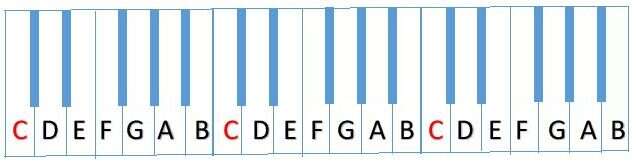
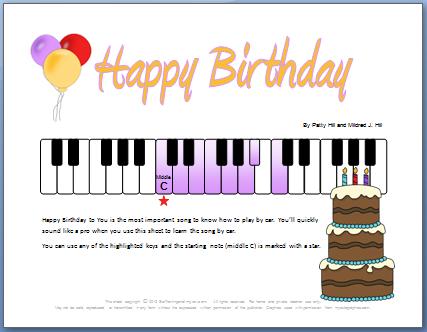
Before learning how do you play happy birthday on a piano, find Middle C. Middle C is the white key near the center of most pianos and keyboards. It sits just to the left of a group of two black keys.
For this lesson, we will play in the key of C major. This key uses only white keys, which makes it easy for new players.
You will use these notes:
• C
• D
• E
• F
• G
• A
• B
The letter after a note shows a higher or lower version of that note. For example, G5 is higher than G4. If your keyboard does not show octave numbers, use the G above Middle C for most of the song.
A relaxed hand position also helps. Place your right thumb on Middle C, then let your other fingers rest on D, E, F, and G. You will move your hand slightly as the melody rises.
Happy Birthday Piano Notes
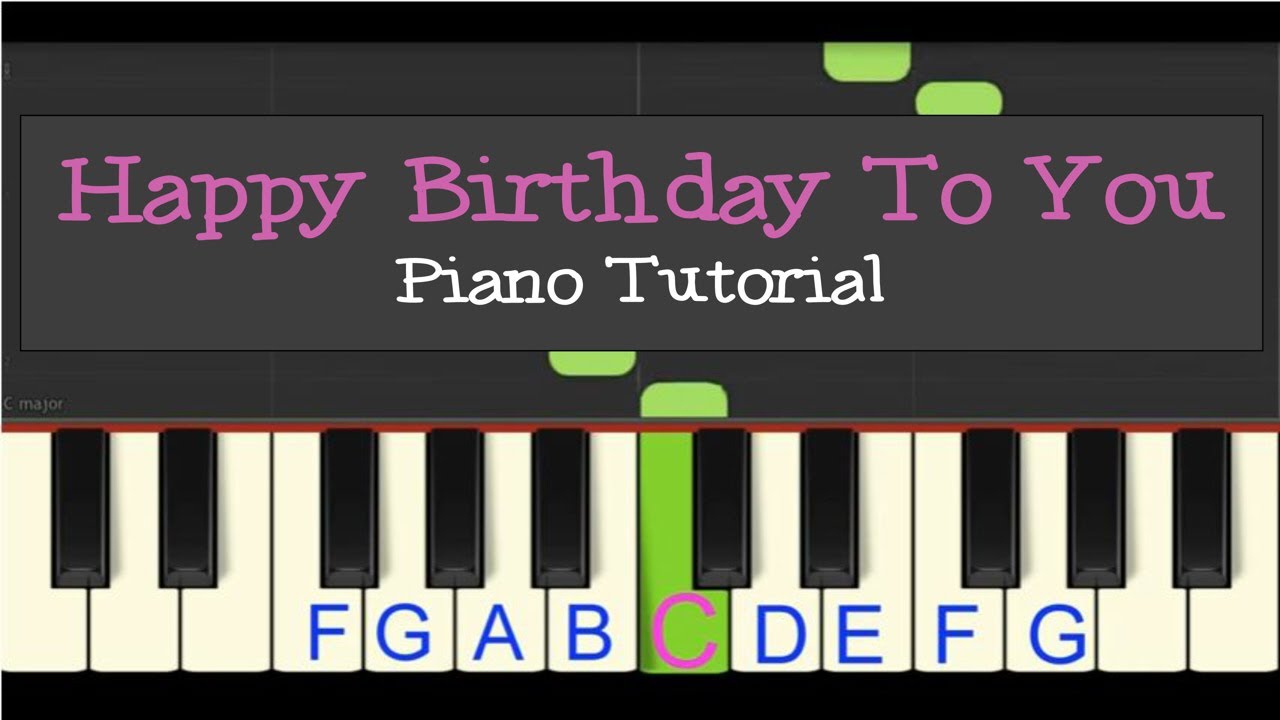
The easiest way to understand how do you play happy birthday on a piano is to learn the melody in short phrases. Do not try to play the whole song at once. Learn one line, then repeat it until it feels natural.
Here are the basic right-hand notes in C major:
First phrase
“Happy birthday to you”
G G A G C B
Second phrase
“Happy birthday to you”
G G A G D C
Third phrase
“Happy birthday dear [name]”
G G G E C B A
Fourth phrase
“Happy birthday to you”
F F E C D C
The final note is usually held a little longer. This gives the song a clear ending.
Here is the full melody in one line:
G G A G C B | G G A G D C | G G G E C B A | F F E C D C
The vertical lines separate the song’s main phrases. They are not piano keys. They simply help you read the tune.
If you are learning how do you play happy birthday on a piano by ear, sing each line slowly while finding the notes. The words act like a map. The first two words, “Happy birthday,” begin with two G notes in this version.

How to Play the Rhythm
Knowing how do you play happy birthday on a piano involves more than finding the right keys. You also need the correct rhythm. The song begins with a short pickup, which means the first notes come just before the main beat.
Count the opening like this:
“Three, happy birthday to you”
The word “Happy” starts before the strongest beat. This small pickup gives the song its familiar feel.
Use this simple rhythm guide:
• G: short
• G: short
• A: slightly longer
• G: medium
• C: longer
• B: longer
The exact rhythm can change slightly when people sing the song. That is normal. Keep the beat steady and let the words guide your timing.
A metronome set between 70 and 90 beats per minute can help. Start near 70 beats per minute if you are new to piano. Speed matters less than playing each phrase clearly.
One common beginner mistake is rushing the two G notes at the start. Tap your foot or count quietly to keep those notes even. Think of the beat as a gentle walking pace, not a race.
Easy Right-Hand Fingering
Good fingering makes how do you play happy birthday on a piano easier and more comfortable. You do not need perfect fingering at first, but a basic plan prevents awkward hand movements.
Try this fingering for the first phrase:
• G with finger 1 or thumb
• G with finger 1
• A with finger 2
• G with finger 1
• C with finger 5
• B with finger 4
This fingering works well if your hand begins near G. You can also use finger 3 on G if that feels more natural.
For the second phrase, move your hand slightly to the right:
• G with finger 1
• G with finger 1
• A with finger 2
• G with finger 1
• D with finger 5
• C with finger 4
There is no single correct fingering for every hand. Small hands may need to move more. Larger hands may use fewer hand shifts.
Keep your wrist loose and your fingers curved. Press the keys from the fingers rather than lifting your whole arm. If your hand feels tense, stop, shake it gently, and begin again more slowly.
Add Simple Piano Chords
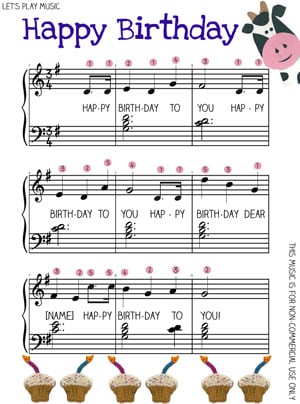
Once you can play how do you play happy birthday on a piano with the right hand, add simple left-hand chords. Chords make the song sound fuller, but they are not required for the melody.
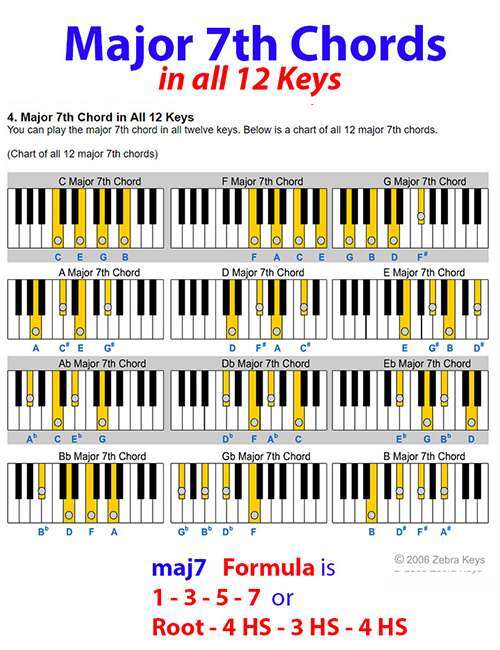
The three most useful chords in C major are:
• C major: C, E, G
• F major: F, A, C
• G7: G, B, D, F
You can use this simple chord pattern:
| Song phrase | Suggested chord |
|---|---|
| Happy birthday to you | C |
| Happy birthday to you | G7, then C |
| Happy birthday dear [name] | C, then F |
| Happy birthday to you | C, G7, then C |
For a very easy version, play only the lowest note of each chord with your left hand:
• C chord: play C
• F chord: play F
• G7 chord: play G
This creates a bass line without making the song difficult.
After that feels comfortable, play the full chord once at the start of each phrase. You can also play a soft chord on each strong beat. Avoid playing too loudly with the left hand, because the melody should remain clear.
When learning how do you play happy birthday on a piano, many players add chords too soon. First make the melody smooth. Then add harmony as a second layer.
A Simple Practice Plan
A short practice plan can make how do you play happy birthday on a piano feel much less confusing. Practice for five to ten minutes at a time. Short sessions often work better than one long session with tired hands.
Follow these steps:
- Find Middle C and locate the nearby notes.
- Practice the first phrase five times.
- Practice the second phrase five times.
- Learn the third and fourth phrases separately.
- Join the first two phrases.
- Join the final two phrases.
- Play the entire melody slowly.
- Add left-hand bass notes or chords.
- Sing the words while you play.
- Increase the speed only when the notes feel secure.
A useful technique is “slow practice.” Play each note with care, even if the song sounds very slow. Your fingers learn the path through repetition. Speed should come later.
Another helpful method is to practice without looking at your hands for every note. Look down when needed, but also learn the shape of the keys. This builds confidence and helps you stay connected with the person singing.
If you make a mistake, keep the beat moving. Most listeners notice rhythm and confidence more than one wrong note. Simply return to the next phrase and continue.