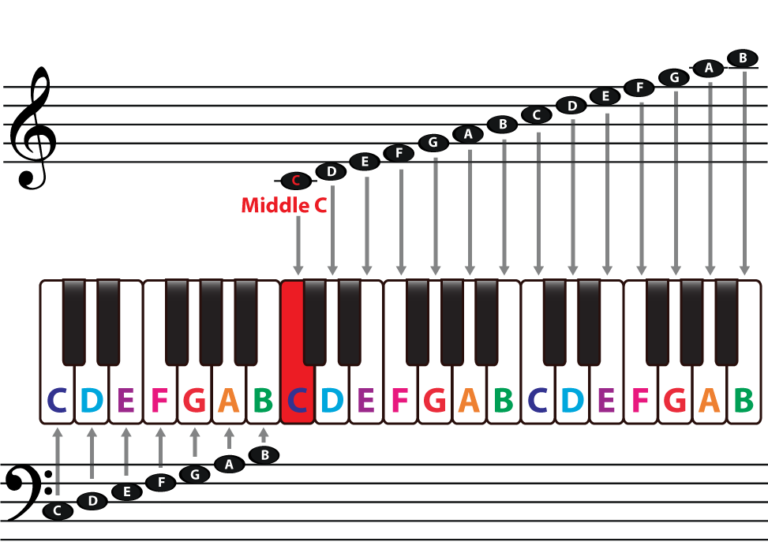
If you want to play “How Did It End?” by Taylor Swift on piano, start with a simplified chord pattern built around the familiar I–V–vi–IV progression. In the key of C, that pattern is:
C – G – Am – F
This version is useful for beginners, singers, and players who want to learn the song without reading a full score. The studio recording may use added tones, passing chords, bass movement, and chord inversions. So, treat the pattern below as a practical starting point rather than a complete note-for-note transcription.
This guide uses American chord names and standard U.S. piano notation. It also explains how to make the arrangement sound closer to the recording.

The basic How Did It End piano chords
The easiest way to begin is to learn four chords:
| Chord | Right-hand notes | Left-hand root |
|---|---|---|
| C major | C–E–G | C |
| G major | G–B–D | G |
| A minor | A–C–E | A |
| F major | F–A–C | F |
Play each chord for four beats. Then move to the next chord:
C | G | Am | F
This pattern gives you a simple harmonic base for much of the song. It is not a claim that every bar in the original recording uses these exact shapes. Instead, it is a beginner-friendly arrangement that keeps the main emotional movement intact.
The Roman numeral version is:
I | V | vi | IV
Roman numerals help you move the song to another key. In the key of C:
- I = C
- V = G
- vi = Am
- IV = F
How to play the chords
Start with your left hand. Play one bass note for each chord:
- C chord: play C
- G chord: play G
- Am chord: play A
- F chord: play F
Then add the right hand. Play the three notes of each chord together.
A simple four-beat pattern is:
- Left-hand bass note on beat one
- Right-hand chord on beat one
- Right-hand chord again on beat three
- Change chords at the next measure
Count:
One, two, three, four
Keep the motion soft. This song works better with control and space than with heavy accents.

A more natural piano arrangement
Once the basic chords feel easy, use chord inversions. An inversion keeps the same chord but changes the order of its notes. This reduces hand movement and creates a smoother sound.
Try these right-hand shapes:
| Chord | Suggested shape |
|---|---|
| C | C–E–G |
| G | B–D–G |
| Am | A–C–E |
| F | A–C–F |
Notice that the notes stay close together. Your hand does not need to jump across the keyboard after every chord.
This approach can make the progression sound more connected:
C → G/B → Am → F
The symbol G/B means “G chord with B in the bass.” The right hand plays a G chord, while the left hand plays B. This creates a gentle step down in the bass:
C → B → A → F
You can also try this left-hand line:
C – B – A – F
Use it only if it sounds comfortable with your arrangement. Some versions of a song may use different bass notes, so listen carefully before treating this as the exact recording pattern.
Add seventh chords for a softer sound
If plain triads sound too bright, add one extra note:
- Cmaj7: C–E–G–B
- G7: G–B–D–F
- Am7: A–C–E–G
- Fmaj7: F–A–C–E
These chords have a more open and reflective color. Use them lightly. Too many added notes can make a beginner arrangement sound crowded.

A beginner rhythm for How Did It End
The safest rhythm is a slow broken-chord pattern. Instead of pressing all three notes at once, play them one at a time.
For each measure, try:
Bass – chord – middle note – chord
For a C chord, that could be:
- Left hand: C
- Right hand: C and G together
- Right hand: E
- Right hand: C and G together
Count:
One – two – three – four
This pattern gives the song a steady pulse without making it sound mechanical.
Another option is to play the notes as an arpeggio:
Low note – high note – middle note – high note
For C major, you might play:
C – G – E – G
For A minor:
A – E – C – E
Use the sustain pedal with care. Press it when the chord changes, then release and press it again. If you hold the pedal through every chord, the notes may blur together.
A simple practice loop
Practice the four-chord loop in this order:
- C for four beats
- G for four beats
- Am for four beats
- F for four beats
- Repeat
Begin at a slow pace. Accuracy matters more than speed. When your hands can change chords without stopping, add the melody or a vocal line.

How to transpose the chords
You may need another key if the C-major version does not fit your voice. The chord pattern stays the same, but every chord moves by the same number of half steps.
Here are common versions of the I–V–vi–IV pattern:
| Key | Chord progression |
|---|---|
| C major | C–G–Am–F |
| D major | D–A–Bm–G |
| E major | E–B–C#m–A |
| F major | F–C–Dm–Bb |
| G major | G–D–Em–C |
| A major | A–E–F#m–D |
For example, if C feels too low, try D:
C–G–Am–F → D–A–Bm–G
If you use a digital piano or keyboard, a transpose button can move the sound without changing your finger shapes. However, learning the actual new chords is better for building piano skill.
How to choose the right key
Choose a key based on the highest and lowest notes you need to sing. If the chorus feels strained, move the song down. If the verse sits too low, move it up.
A singer does not need to use the original key. The best key is the one that lets the melody sound natural without forcing the voice.

How to make the arrangement sound closer to the recording
A basic chord chart gives you the harmony, but the recording’s character comes from more than chord names. It also comes from timing, dynamics, voicing, pedal use, and pauses.
Try these changes:
Use soft dynamics
Start quietly. Let the arrangement grow only at important emotional points. Avoid hitting every chord with the same force.
Keep the left hand simple
A single bass note often sounds better than large low chords. Low notes can become muddy when played too close together.
Use close voicings
Keep the right-hand chords in the middle area of the keyboard. Large jumps can interrupt the smooth mood of the song.
Leave space
Do not fill every beat. A short pause can make the next chord feel more expressive.
Add movement gradually
Begin with blocked chords. Then add inversions. After that, try broken chords or a light octave bass. Build the arrangement one layer at a time.

Common mistakes when learning the chords
The most common problem is treating a simplified chord chart as a complete transcription. A beginner chart may show the main harmony but leave out passing chords, suspended notes, inversions, or changes in rhythm.
Watch for these issues:
- The song sounds too bright: Use softer playing, lower octaves, or seventh chords.
- The chords sound muddy: Release the sustain pedal more often.
- The changes feel rushed: Practice each chord change without the rhythm first.
- The arrangement feels empty: Add a broken-chord pattern with the right hand.
- The song does not match a tutorial: Check the key and tuning. The tutorial may use a transposed version.
- The vocal line does not fit: Move the entire progression to another key.
- The left hand feels difficult: Play only root notes until the right hand is secure.
Do not rely on chord names alone if you need an exact performance. For the precise rhythm, voicing, and arrangement, use authorized sheet music or a licensed piano transcription.

Chord symbols and terms explained
A few symbols may appear in piano arrangements for “How Did It End?”:
- C: C major
- Am: A minor
- Fmaj7: F major seventh
- G7: G dominant seventh
- G/B: G major with B as the bass note
- sus4: A suspended chord that replaces the third with the fourth
- slash chord: A chord with a specified bass note after the slash
- N.C.: No chord; the instrument pauses or plays without a clear chord
These symbols describe harmony, not always the exact rhythm. Two arrangements can use the same chord names but sound very different because they use different patterns and inversions.

Is the original song in the key of C?
Many online arrangements place the song in an easier key, such as C, even when the recording uses a different key or more detailed harmony. A chart in C may be a transposed teaching version.
The reliable way to check a chart is to compare:
- The first chord
- The tonal center, or chord that feels like “home”
- The chorus progression
- The bass movement
- The melody’s highest and lowest notes
If you need an exact key, check an authorized score or a licensed music source. Online chord pages can vary in accuracy, especially when users submit simplified versions.
Can beginners play How Did It End on piano?
Yes. Beginners can start with the four-chord version:
C–G–Am–F
You do not need to play the full studio arrangement at first. Learn the chord shapes, keep a steady count, and use a slow rhythm.
After that, add inversions and a broken-chord pattern. The goal is not to copy every detail at once. It is to make each new layer feel comfortable before adding another one.
A good sign of progress is being able to repeat the chord loop several times without stopping, losing the beat, or looking down for every chord.

Frequently asked questions
What are the easiest How Did It End piano chords?
A common simplified set is C, G, Am, and F. These chords create an I–V–vi–IV pattern in the key of C. They are a useful starting point, but they may not represent every chord in the original recording.
Can I play the song with only my right hand?
Yes. Play the chord shapes with your right hand and leave out the left hand at first. Once the chord changes feel secure, add single bass notes with your left hand.
What if C–G–Am–F does not sound like the recording?
The arrangement may be in another key or may use different inversions and passing chords. Check the key, try a licensed transcription, or transpose the progression until it matches the recording.
Should I use the sustain pedal?
Use it when the chord changes, but release it before the next chord becomes muddy. Beginners often get a clearer sound by using less pedal than they expect.
How can I sing while playing the chords?
Practice the chord loop until it feels automatic. Then hum the melody without words. Add the lyrics only after your hands can maintain the beat.
Final take
The easiest way to learn “How Did It End?” on piano is to begin with:
C – G – Am – F
Play the chords slowly, use simple inversions, and keep the left hand light. When the basic version feels steady, add seventh chords, bass movement, broken chords, and careful pedal changes.
For a precise performance, use authorized sheet music. For casual playing, singing, or songwriting practice, the simplified progression is enough to get started.

Senior Music Reviewer
Alex Carter is a seasoned music reviewer with over a decade of experience in the world of sound and instruments. Passionate about helping musicians and enthusiasts make informed choices, he brings sharp insights and in-depth knowledge to every review. From classical instruments to modern gear, Alex combines technical expertise with a love for music to deliver content that resonates with readers.
As a Senior Music Reviewer and expert author on Tuneluma.com, Alex is dedicated to sharing honest evaluations, practical advice, and thoughtful commentary to guide readers in their musical journey.