Best Condenser Mic For Drums: Top Picks For Every Kit
The best condenser mic for drums balances fast detail, strong low end, and clean overhead sound without harsh cymbals.
You know the moment: the drummer hits hard, the cymbals splash, and your recording turns into a bright wall of noise. A good condenser mic can fix that by capturing stick detail, room tone, and drum attack with far more life. I compared these options for home studios, live rooms, podcast-style setups, and full drum kits. This guide will help you find the best condenser mic for drums based on placement, pickup pattern, power needs, durability, and value.
Phenyx Pro PDM35 Overhead Mic

The Phenyx Pro PDM35 is a small pencil condenser made for overhead work, hi-hat, percussion, and strings. Its cardioid pattern helps focus on the kit while reducing some sound from the rear. The slim body also makes it easy to place above a cymbal or between tight stands. For many home studios, it offers the clean, quick response expected from an affordable drum condenser.
I like this type of mic when I want cymbal detail without placing a large mic in the drummer’s way. It uses an XLR connection, so you need an audio interface or mixer with phantom power. The wide response range gives you room to shape the sound later, but placement still matters more than any number on the box. Angle it slightly away from the cymbal edge if the top end sounds sharp.
Pros:
- Cardioid pickup helps control room spill
- Small pencil design fits tight overhead spaces
- Good choice for hi-hat and percussion detail
- XLR output works with common studio mixers
- Condenser response captures quick stick attack
- Useful for home recording and small live setups
Cons:
- Requires phantom power and an XLR cable
- May sound bright if aimed directly at cymbal edges
- Not a complete close-mic solution for a full kit
My Recommendation
I recommend the PDM35 for beginners, home recordists, and drummers who need a flexible overhead mic at a modest cost. It is especially useful when you want one mic for cymbals, hand percussion, acoustic guitar, and room detail. As a contender for the best condenser mic for drums, it stands out for its small size and broad use. Its value is strongest when you already own a kick and snare mic.
AKG P170 Instrument Microphone

The AKG P170 is a compact small-diaphragm condenser with a reputation for clear instrument recording. It suits drum overheads, hi-hats, acoustic instruments, and percussion. Its compact shape makes stand placement simple, even in a crowded drum booth. The small diaphragm reacts quickly, so it can reveal the snap of a stick and the fine wash of a cymbal.
In my view, the P170 is a strong pick for people who want a more refined studio sound without moving into high-end pricing. It can help preserve stereo balance when used as a matched pair, though one mic also works well as a focused overhead. Like other studio condensers, it needs phantom power. Keep the capsule away from direct impact and use a shock mount or secure clip when possible.
Pros:
- Clear small-diaphragm response for overhead use
- Fast transient capture suits drums and percussion
- Compact body is easy to position
- Useful for hi-hat, acoustic guitar, and strings
- Strong choice for stereo pair recording
- Established brand with broad studio use
Cons:
- Needs phantom power from a mixer or interface
- Bright rooms may add too much cymbal energy
- One microphone does not provide full kit coverage
My Recommendation
I would choose the AKG P170 for a home engineer who wants a dependable overhead or hi-hat microphone with a clean, focused sound. It works well for pop, rock, worship, jazz, and acoustic sessions. If you plan to buy two microphones later, the P170 is an easy model to build around. It may be the best condenser mic for drums for detail-focused users who value a proven studio design.
Phenyx Pro PDM36 Boundary Kick Mic

The Phenyx Pro PDM36 takes a different approach from a pencil overhead mic. It is a boundary-style condenser designed for kick drum use and features a supercardioid pickup pattern. You can place it inside or near the kick drum, depending on the tone and access available. Its low profile keeps the mic out of the way and reduces the need for a tall stand.
A two-position EQ switch gives you a quick way to shape the kick before it reaches your recorder. That can help when you need more focus or a different balance between attack and body. The metal construction is practical for an instrument that faces vibration and accidental bumps. Still, you should check gain levels carefully because kick drums can produce strong low-frequency energy.
Pros:
- Purpose-built design for kick drum recording
- Low-profile boundary form saves stage space
- Supercardioid pattern helps limit nearby bleed
- Two-position EQ switch offers fast tonal control
- Rugged metal body suits repeated use
- XLR connection fits standard audio systems
Cons:
- Needs phantom power to operate
- Less useful than an overhead mic for cymbals
- Placement can change the kick tone quite a bit
My Recommendation
The PDM36 is best for drummers, small studios, and live engineers who want a dedicated condenser kick mic. It makes sense when your kick lacks focus and you need a clean, low-profile solution. I would not buy it as your only drum microphone, but it can be a smart part of a larger setup. For users who want kick attack and simple EQ control, it is a serious best condenser mic for drums option.
Shure Beta 91A Kick Drum Mic

The Shure Beta 91A is a professional boundary condenser made specifically for kick drums. Its half-cardioid pattern is designed for placement inside the kick, where it can capture punch, low-end weight, and beater definition. The flat body sits on the shell or floor of the drum, so you do not need a boom stand inside the front head. This design has become common in live sound and studio work.
The Beta 91A is a focused tool, not a general-purpose condenser. It works best when the kick drum has a clear goal, such as a sharp modern attack or a tight low-end pulse. You still need to manage phase if you combine it with an outside kick mic. Shure’s established build quality also makes it a practical choice for touring rigs, rental kits, and busy studios.
Pros:
- Designed specifically for kick drum recording
- Half-cardioid pattern suits internal kick placement
- Strong punch and beater definition
- Low-profile body avoids stand clutter
- Reliable choice for studio and live sound
- Works well with a second outside kick mic
Cons:
- Higher price than many entry-level options
- Limited use outside kick and low percussion
- Requires careful phase checks with another kick mic
My Recommendation
I recommend the Beta 91A to serious engineers, touring musicians, and anyone who records kick drums often. It is a strong choice when you need repeatable results and a clear attack in a dense mix. It is not the best value for a beginner who only records drums once in a while. However, among dedicated kick options, this may be the best condenser mic for drums when reliability and professional workflow matter most.
Behringer BA 19A Boundary Mic

The Behringer BA 19A is a boundary condenser aimed at kick drums and other instruments. Its flat shape makes it easy to place inside a kick or close to a sound source. The design reduces stand problems and gives you a repeatable starting point. It is also an attractive option for musicians who need a dedicated kick mic without a premium price.
This microphone can help produce a direct kick sound with useful attack. It works well for rehearsal rooms, project studios, and smaller live systems where budget matters. As with any boundary microphone, the surface and position can affect the final tone. I suggest moving it in small steps while monitoring through headphones instead of relying on a fixed “correct” location.
Pros:
- Affordable way to add a kick condenser
- Flat boundary design needs little stand space
- Useful for kick drums and low instruments
- Simple XLR studio connection
- Good fit for project studios and rehearsal rooms
- Easy to reposition during sound check
Cons:
- Requires phantom power
- May need EQ in a busy or boomy room
- Not designed as a full-kit overhead microphone
My Recommendation
The BA 19A is best for budget-minded drummers, new engineers, and small venues that want more kick control. It gives you a practical entry point into condenser kick recording without a large investment. Pair it with a dynamic snare mic and one or two overheads for a useful starter kit. It can serve as the best condenser mic for drums for buyers who want low cost and simple placement.
CAD C98 Gooseneck Drum Mic

The CAD C98 uses a gooseneck design that helps it sit close to a drum without a tall stand. Its cardioid pattern focuses on the target drum and can reduce some sound from behind. This makes it useful for toms, snare, and other close-mic jobs where floor space is limited. The flexible neck also makes small placement changes fast during setup.
I see the C98 as a practical stage and rehearsal microphone. It can help keep a drum kit neat, especially when several stands would crowd the drummer. Close placement may produce a stronger proximity effect, so listen for excess low end. The best result comes from aiming toward the area between the head center and rim, then adjusting by ear.
Pros:
- Gooseneck allows quick close-mic positioning
- Cardioid pattern helps focus on each drum
- Reduces floor clutter around a kit
- Useful for toms, snare, and percussion
- Good fit for live performance setups
- Fast to adjust during sound check
Cons:
- Close placement may create extra bass
- Needs a suitable mounting method or stand
- One mic covers only one focused area at a time
My Recommendation
I recommend the C98 for live drummers, compact stages, and engineers who dislike a forest of microphone stands. It is also useful for school programs and rehearsal spaces where fast setup matters. Choose it when mounting flexibility matters more than wide room capture. It is not my first pick for stereo overheads, but it is a useful best condenser mic for drums choice for close drum work.
LyxPro SDPC-2 Stereo Pencil Pair

The LyxPro SDPC-2 includes two pencil condensers for stereo recording. A pair gives you much more control over overhead width than a single microphone. The set includes three capsules, which can help you choose a response that fits drums, vocals, or acoustic instruments. For a new studio, this kit offers several ways to explore stereo placement.
Use the microphones as a spaced pair, X/Y pair, or another stereo arrangement supported by your room and stands. X/Y placement can reduce phase trouble because the capsules sit close together, while a spaced pair can create a wider image. The right choice depends on your room, drum tuning, and music style. Keep both microphones at similar heights when you want an even image across the kit.
Pros:
- Two microphones provide true stereo overhead options
- Three capsules add useful tonal flexibility
- Pencil bodies fit common shock mounts and clips
- Can record drums, guitar, vocals, and percussion
- Supports several stereo placement methods
- Strong value for a growing home studio
Cons:
- Requires two input channels and phantom power
- Room reflections can become more noticeable
- Setup takes more time than using one overhead
My Recommendation
The SDPC-2 is best for home producers, stereo overhead beginners, and musicians who record more than drums. I like it for users who want to learn microphone placement instead of relying on a single fixed sound. It can deliver a wide kit image when the room is controlled and the pair is placed with care. For flexible stereo recording, this set may be the best condenser mic for drums package in its price class.
Behringer C-2 Stereo Condenser Pair

The Behringer C-2 is a matched-style stereo pair made for instruments, overheads, and live sound. Two small condensers let you capture the left and right sides of a drum kit. Their compact bodies are easy to mount above cymbals or use in an X/Y pattern. They also work for choirs, acoustic guitar, piano, and room ambience.
The C-2 is appealing because it gives beginners a full stereo starting point at a low cost. You should not expect the same finish as a high-priced studio pair, but careful placement can still produce a useful track. Aim for balance rather than extreme width, since a narrow stereo image often translates better to phones and small speakers. A clean preamp and controlled room will make these microphones sound more polished.
Pros:
- Affordable stereo pair for overhead recording
- Compact design works well above drum kits
- Useful for X/Y and spaced-pair techniques
- Can record choirs and acoustic instruments too
- Good starting kit for new producers
- Easy to replace or add to a larger setup
Cons:
- Needs two mixer or interface inputs
- Bright cymbals may require careful aiming
- Budget construction may not suit heavy touring
My Recommendation
I would pick the C-2 for beginners who want stereo drum overheads without spending much. It is also a sensible backup pair for live engineers and churches. The microphones reward patient setup, especially in a room with soft surfaces and limited echo. If your budget is tight, the C-2 deserves consideration as the best condenser mic for drums for basic stereo coverage.
W IN-MIX 7-Piece Drum Mic Kit

The W IN-MIX kit is a seven-piece wired drum microphone set built around a full-kit approach. It includes microphones for kick, snare, toms, and cymbals, along with clips and holders. This is different from buying one condenser overhead because it gives you many close-mic positions at once. The kit may appeal to bands that want a complete setup for rehearsal, live shows, or demos.
Although the kit centers on dynamic drum microphones rather than a single premium condenser, a complete package can save time and money. Close mics give you direct control over each drum, while overheads or room mics add air and cymbal detail. You will need enough mixer channels, cables, and stands or clips to use every microphone. Check the included parts when the kit arrives, since full-kit accessories vary by package.
Pros:
- Seven-piece setup covers a complete drum kit
- Includes clips and holders for faster installation
- Useful for live shows and rehearsal recording
- Separate close mics offer strong mix control
- Good option for bands buying a first kit
- Can also serve vocals and other instruments
Cons:
- Not a dedicated condenser overhead solution
- Needs many mixer inputs and XLR cables
- Full-kit placement takes more setup time
My Recommendation
I recommend this kit for a band that needs broad drum coverage now rather than one specialty microphone. It is best for demos, local gigs, rehearsal rooms, and users who want separate control over kick, snare, and toms. Add a quality condenser pair later if you need more room and cymbal detail. As a complete starter system, it can support a best condenser mic for drums setup even though it is mainly a dynamic kit.
Depusheng 7-Piece Drum Mic Set

The Depusheng seven-piece set combines five dynamic percussion microphones with two condenser microphones. That mix gives you close coverage for drums and added detail for cymbals or room sound. It is designed for instrument recording and music production, so it suits users building a first multi-mic setup. The package approach can be easier than collecting each microphone one by one.
The two condensers are important because they can add openness to a kit that sounds too dry with close mics alone. Place them as overheads, then use the dynamic microphones on kick, snare, and toms. Watch for phase issues when several microphones hear the same drum. I suggest recording a short test, flipping polarity where needed, and checking the kit in mono before committing to a take.
Pros:
- Combines dynamic and condenser microphones
- Seven microphones cover many drum positions
- Useful for overheads, kick, snare, and toms
- Good package for home music production
- Lets beginners learn multi-mic recording
- May cost less than buying separate microphones
Cons:
- Requires many inputs, cables, and stands
- More microphones create more phase challenges
- Included condensers may not replace a premium stereo pair
My Recommendation
The Depusheng set is best for beginners who want to experiment with a complete drum recording system. It suits home studios, school music rooms, and bands making demos on a limited budget. I like its mix of close control and overhead detail more than a kit with dynamics alone. If you need a broad and affordable path toward the best condenser mic for drums sound, this package is worth a close look.
How to Choose the Best Condenser Mic for Drums
Choosing a drum microphone starts with the job, not the brand name. A kick drum needs a different tool from a cymbal or room. Before you buy, decide whether you need an overhead, a kick mic, a close drum mic, or a full set. This one step prevents most poor buying choices.
Overhead or Kick Drum Placement
Small-diaphragm condensers often work well as overheads because they capture quick changes in cymbals and drum attack. A boundary condenser can work well inside a kick because its low body stays out of the way. A gooseneck mic can solve close-placement problems around toms and snare. The best condenser mic for drums depends on where you plan to put it.
Polar Pattern
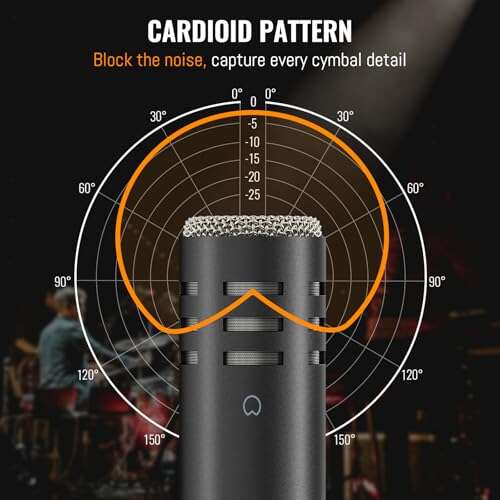
A cardioid pattern mainly hears sound from the front. This can reduce some rear-room noise and help focus the microphone. Supercardioid patterns can offer tighter pickup, but they may hear more sound from a rear angle. Half-cardioid boundary designs behave differently because they use a nearby surface to support their pickup pattern.
Phantom Power and Connections
Most XLR condenser microphones need 48-volt phantom power. Check that your interface, mixer, or preamp supplies it before you buy. Do not connect a condenser to a simple passive adapter and expect it to work. A balanced XLR cable also helps reduce noise over longer runs.
Room Sound Matters
A condenser mic hears detail, including bad room reflections. Hard walls can make cymbals sound sharp and distant. Rugs, curtains, thick furniture, and acoustic panels can calm the room. I would improve the recording space before spending extra money on a more costly microphone.
Frequency Response
Drums cover a wide range. The kick carries deep energy, the snare brings midrange crack, and cymbals reach into the high range. A mic with a wide response can capture the full kit, but a wide response does not always mean a better recording. The best choice has a useful balance for your drummer, room, and music style.
Durability
Drum sessions involve vibration, sticks, stands, cables, and fast setup. A strong metal body can offer more peace of mind than a fragile shell. Still, no condenser should sit where a stick can hit it. Use clips, shock mounts, and stands that lock firmly.
One Mic or Several?
One overhead can create a natural sound with less phase trouble. A stereo pair can give you width and better cymbal placement. A full kit lets you control each drum but needs more inputs and more time. Beginners often get better results from two well-placed overheads than from seven poorly placed microphones.
Drum Condenser Mic Placement Tips
Start with the microphone above the kit, aimed between the snare and kick. This gives you a balanced first test. Move the mic higher for more room and lower for a closer, punchier sound. Small changes can matter more than a large EQ boost.
For a stereo pair, keep the snare near the center of both microphone paths. This helps the snare stay centered in the mix. X/Y placement is a safe starting point in a small room because the capsules sit close together. Spaced placement can sound wider, but check the mix in mono for phase loss.
For a kick boundary mic, begin near the beater path if you want attack. Move it farther from the beater for more body and less click. Every kick shell, head, port, and tuning choice changes the result. I always ask the drummer to play the loudest part of the song during sound check.
For hi-hat, avoid aiming directly at the edge. Pointing slightly across the cymbal can reduce harsh air noise. Keep enough distance to avoid accidental hits. A small condenser can hear more cymbal than you expect, so use headphones and adjust before recording.
How I Judge the Best Condenser Mic for Drums
I look at sound, placement, build, connection type, and the real cost of using the microphone. A low price loses its appeal if the mic needs extra hardware you do not own. I also consider whether the mic solves a clear problem. A dedicated kick condenser should improve kick work, while an overhead pair should make stereo capture easier.
I pay close attention to practical details. Does the microphone fit around a drum kit? Does it need a special mount? Can a beginner understand the placement process? Does it work with common interfaces? These questions matter because a microphone only helps when you can set it up correctly.
I also avoid judging a microphone by frequency charts alone. Charts show design goals, but a real drum kit has room reflections, player dynamics, tuning, and cymbal balance. I trust a clean test recording more than a bold marketing phrase. That is why this list includes overhead condensers, boundary kick mics, close drum microphones, and complete kits.
Best Uses for Each Microphone
| Best for | Why |
|---|---|
| Overhead stereo recording | AKG P170, LyxPro SDPC-2, and Behringer C-2 provide clear cymbal detail and stereo width. |
| Dedicated kick drum capture | Shure Beta 91A, Phenyx Pro PDM36, and Behringer BA 19A offer low-profile kick placement. |
| Complete beginner drum setup | Depusheng and W IN-MIX kits provide several microphones for close control across a full kit. |
Common Drum Recording Mistakes
Placing the Mic Too Close
Close placement can sound exciting at first, but it may create too much bass or harsh attack. Give the microphone space to hear the drum as a whole. Move it a few inches at a time. Your headphones will reveal the change quickly.
Ignoring Phase
When two or more microphones hear the same drum, their wave patterns can work together or cancel each other. This can make the kit sound thin. Check the snare and kick in mono. If the low end drops, try changing distance, angle, or polarity.
Recording Too Loud
Condenser microphones can capture loud drums with great detail, but your preamp still needs headroom. Set levels during the loudest section. Leave room for unexpected hits. A clean, slightly lower signal is safer than a clipped take.
Using Too Much EQ
EQ should polish a good recording, not rescue poor placement. First, move the mic. Then adjust the drum tuning or room. A small cut often sounds more natural than a large boost. This approach keeps the kit open and less tiring.
Forgetting the Room
Overheads capture cymbals and room reflections together. If the room sounds bad, the microphone cannot remove that sound later. Use soft materials to reduce sharp reflections. Also listen near the drum kit before you set up the stands.
FAQs Of best condenser mic for drums
Can I use a condenser mic for drum overheads?
Yes. Condenser microphones work very well as drum overheads because they capture cymbal detail, stick attack, and room sound. Small-diaphragm models are common, but some large-diaphragm models can also work.
Does a condenser mic need phantom power?
Most XLR condenser microphones need 48-volt phantom power. Your audio interface, mixer, or microphone preamp must provide it. Check the product manual before connecting the mic.
Should I use one overhead or two?
One overhead is simple and can sound natural. Two microphones provide stereo width and more control. Use one if you have limited inputs or a difficult room, and use two when you want a wider kit image.
Can a condenser microphone record a kick drum?
Yes, but choose a model designed for high sound pressure and low-frequency work. Boundary condensers such as the Beta 91A style are made for kick placement. Always set the input gain with the loudest playing section.
What is the best condenser mic for drums in a home studio?
For overheads, I would start with the AKG P170 or a stereo pair such as the LyxPro SDPC-2. For kick, the Phenyx Pro PDM36 offers useful placement and EQ control. Your room and recording goal should guide the final choice.
Final Verdict: Which Should You Buy?
For dedicated kick work, I would choose the Shure Beta 91A. For affordable overhead detail, the AKG P170 is my top single-mic pick, while the LyxPro SDPC-2 leads for stereo value.
The best condenser mic for drums is the one that fits your kit, room, inputs, and budget. Start with smart placement, then upgrade as your recording needs grow.

Senior Music Reviewer
Alex Carter is a seasoned music reviewer with over a decade of experience in the world of sound and instruments. Passionate about helping musicians and enthusiasts make informed choices, he brings sharp insights and in-depth knowledge to every review. From classical instruments to modern gear, Alex combines technical expertise with a love for music to deliver content that resonates with readers.
As a Senior Music Reviewer and expert author on Tuneluma.com, Alex is dedicated to sharing honest evaluations, practical advice, and thoughtful commentary to guide readers in their musical journey.