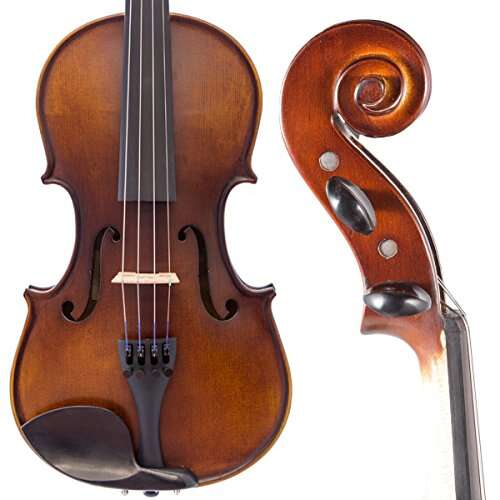
In the United States, the violin is best known as the small, high-pitched string instrument used in school orchestras, symphony orchestras, bluegrass bands, country music, jazz groups, and many other settings. A violin is a bowed string instrument, also called a chordophone.
A player makes sound by drawing a bow across the violin’s strings. The strings vibrate, and the wooden body makes those vibrations louder. A violin has four strings, no frets, and a hollow body with a curved bridge.
The violin belongs to the same family as the viola, cello, and double bass. Its smaller size and higher range help it carry bright melodies above the other instruments.


The Short Answer: A Violin Is a Bowed String Instrument
A violin is a string instrument because its sound begins with vibrating strings. It is a bowed instrument because players usually use a bow to make the strings vibrate. It is also a chordophone, the formal music classification for instruments that produce sound through vibrating strings.
The main ways to describe a violin are:
| Classification | What it means |
|---|---|
| Instrument family | String |
| Sound method | Bowed, though it can also be plucked |
| Formal category | Chordophone |
| Body type | Hollow wooden body |
| Playing style | Held under the chin and played with a bow or fingers |
| Typical range | High, bright, and flexible |
| Number of strings | Four |
The violin can also be called a bowed lute. This term describes an instrument with a neck and strings that run along the length of its body, played with a bow.
The word fiddle often refers to the same physical instrument. In common US usage, “violin” may suggest classical music, while “fiddle” may suggest folk, bluegrass, country, or old-time music. The setup and playing style may differ, but the basic instrument is the same.
The violin is not a wind instrument because it does not need air blown through a tube. It is not a percussion instrument because its main sound does not come from striking its body. The bow creates friction against the strings, but the sound comes from string vibration and the violin’s resonating body.

How a Violin Produces Sound
A violin produces sound when the bow causes one or more strings to vibrate. The bow is covered with horsehair, which is treated with rosin to create enough grip on the strings.
The sound then travels through several parts:
- The bow grips and moves the string.
- The vibrating string transfers energy to the bridge.
- The bridge passes that energy to the violin’s top plate.
- The wooden body vibrates and moves air.
- The sound exits mainly through the violin’s f-shaped openings, called sound holes.
The strings alone are quiet. The hollow body acts as an acoustic resonator. It increases the volume and shapes the tone, much like the body of an acoustic guitar helps project the sound of its strings.
A small wooden part called the sound post stands inside the violin between the top and back plates. It helps transfer vibration and supports the structure. Another internal brace, called the bass bar, supports the top plate and affects the instrument’s response and tone.
The violin’s main parts
- Strings: Four strings that create the basic pitches.
- Pegbox: Holds the tuning pegs.
- Scroll: The carved decoration at the top of the neck.
- Neck: Connects the body to the pegbox.
- Fingerboard: The black surface where the player presses the strings.
- Bridge: Holds the strings above the body and transfers vibration.
- Tailpiece: Anchors the strings near the bottom of the instrument.
- Chin rest: Supports the player’s jaw and helps with comfort.
- F-holes: Openings that allow the body to vibrate and project sound.
- Sound post and bass bar: Internal parts that support the body and guide vibration.
Unlike a guitar, a violin usually has no frets. The player must place each finger in the correct position. This design gives the player control over pitch, slides, vibrato, and subtle changes in tone.


What Family Does the Violin Belong To?
The violin belongs to the string family, also called the string section in an orchestra. Other orchestral string instruments include the viola, cello, and double bass.
The violin is the smallest standard member of this group. Smaller string instruments usually produce higher notes, while larger instruments produce lower notes. This is not a strict rule for every instrument, but it explains the basic relationship between the violin, viola, cello, and bass.
Violin family comparison
| Instrument | Size compared with violin | Usual range | Common playing position |
|---|---|---|---|
| Violin | Smallest | Highest | Under the chin |
| Viola | Larger | Lower and darker | Under the chin |
| Cello | Much larger | Low to middle | Between the knees |
| Double bass | Largest | Lowest | Standing or on a tall stool |
In a standard US symphony orchestra, violins are divided into two sections:
- First violins often play the highest parts and many main melodies.
- Second violins often play harmony, rhythm, or supporting lines.
Both sections use the same type of instrument. The difference is the musical part they play.
The violin also appears outside the orchestra. It is common in bluegrass, country, folk, Irish traditional music, jazz, rock, pop, film music, and musical theater. An electric violin can connect to an amplifier or effects system, but it remains a string instrument because vibrating strings still create the basic sound.

What Are the Violin’s Strings and Notes?
A standard violin has four strings. From lowest to highest, they are:
| String | Open-string pitch | Common note name |
|---|---|---|
| G string | G3 | Lowest |
| D string | D4 | |
| A string | A4 | |
| E string | E5 | Highest |
The strings are tuned in perfect fifths. This means each open string is five scale steps above the one before it in the musical system.
The A string is commonly tuned to 440 hertz in modern concert practice, although orchestras and ensembles may use a different tuning standard. The other strings are then tuned in relation to it.
A violinist changes pitch by pressing a string against the fingerboard. Because the fingerboard has no frets, the player can make very small pitch adjustments. This allows techniques such as:
- Vibrato: A gentle variation in pitch that adds warmth and expression.
- Glissando: A smooth slide from one pitch to another.
- Double stops: Playing two strings at once.
- Triple and quadruple stops: Playing several strings together, often by rolling the bow across them.
- Harmonics: Lightly touching a string to produce a high, ringing tone.
The violin’s range varies by player, instrument, and music. A beginner may use a smaller range, while an advanced player can reach well above the open E string. Exact range claims should therefore be treated as approximate rather than fixed.

Is a Violin Played With a Bow or With the Fingers?
A violin is mainly played with a bow, but players also use their fingers to pluck the strings. Bowing is called arco, while plucking is called pizzicato.
Bowing
During normal bowing, the player places the bow hair on a string and moves it across the string. Changes in bow speed, pressure, and contact point affect the sound.


A player can create different effects by changing:
- Which string is played
- How fast the bow moves
- How firmly the bow contacts the string
- Where the bow touches the string
- The direction of the bow
- The distance between the bow and the bridge
Plucking
In pizzicato, the player pulls and releases a string with a finger. This creates a shorter, sharper sound. Plucking is common in classical music, folk music, jazz, and popular music.
Some violinists also use special techniques such as col legno, in which the wood of the bow contacts the string. This is an extended technique and is not the normal method of producing violin sound.
The instrument’s classification does not change when the technique changes. A violin remains a string instrument whether it is bowed, plucked, or connected to an electronic pickup.

How Is a Violin Different From a Viola?
A violin and viola have a similar shape and are played under the chin, but they are different instruments. The viola is larger and has a lower, darker sound.
The violin’s four strings are tuned G, D, A, and E. The viola’s strings are tuned C, G, D, and A. The viola replaces the violin’s high E string with a lower C string.
The two instruments also use different clefs in written music. Violin parts normally use the treble clef. Viola parts normally use the alto clef.
Size is not the only difference. A viola has a longer vibrating string length and a deeper tone. Some players move between violin and viola, but the left-hand spacing and bow technique require adjustment.
A violin is the better term when describing the smaller, higher instrument. Calling a viola a violin is not technically correct, even though the instruments belong to the same family.

Violin, Fiddle, and Electric Violin: Are They the Same Type?
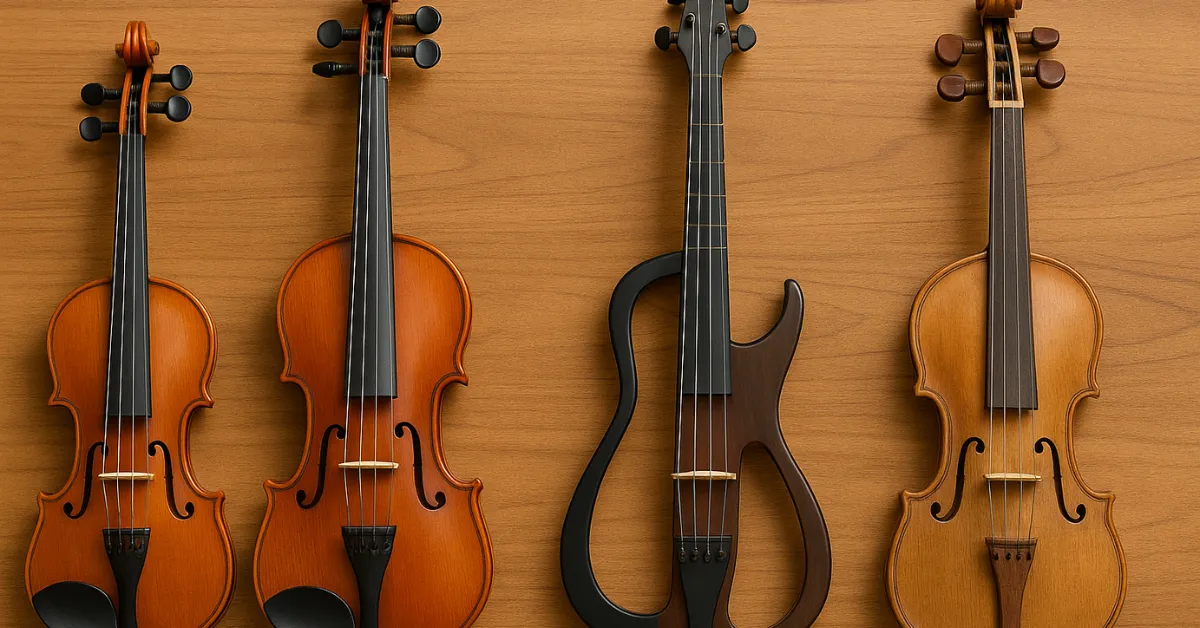
A fiddle is usually a violin used in a folk or traditional style. In most cases, the instrument’s physical parts are the same. The difference is more about music, setup, technique, and cultural use than about instrument category.
A classical violin may use a particular bridge shape, string type, bow style, and playing posture. A bluegrass fiddle may use a different setup to support fast playing, rhythmic patterns, or a flatter bridge.
An electric violin uses a pickup to convert string vibration into an electrical signal. It may have a hollow or solid body and often needs an amplifier. Even so, it remains a bowed string instrument.
These terms describe related but distinct ideas:


- Violin: The instrument itself.
- Fiddle: A violin used in many folk, country, bluegrass, or traditional styles.
- Electric violin: A violin designed or adapted for amplified sound.
- String quartet violin: A violin used in a chamber group with two violins, viola, and cello.
- Orchestral violin: A violin used as part of a symphony orchestra or similar ensemble.

Common Mistakes About Violin Classification
Several simple misunderstandings can make the violin’s classification seem less clear.
“The violin is a percussion instrument because the bow rubs the strings.”
The bow does create friction, but friction is only the way the string starts vibrating. The violin is classified by its vibrating strings, so it belongs to the string family.
“The violin is a wind instrument because sound moves through the air.”
All acoustic instruments move air to create sound that listeners can hear. A wind instrument is defined by an air column or vibrating air, not simply by the fact that sound travels through air.
“The violin has only one string.”
A violin has four strings. A player may focus on one string at a time, but the instrument can also play two or more strings together.
“A violin and a fiddle are different instruments.”
They can have different setups and musical traditions, but the terms often refer to the same basic instrument.
“The bow makes the sound by hitting the violin.”
The bow normally does not strike the instrument’s body. It moves across the strings and grips them through friction. The vibrating strings then transfer energy to the bridge and wooden body.

Key Takeaways
- A violin is a bowed string instrument.
- Its formal category is chordophone.
- It belongs to the orchestral string family.
- A standard violin has four strings: G, D, A, and E.
- The strings vibrate when played with a bow or plucked with a finger.
- The hollow wooden body amplifies and shapes the string sound.
- A fiddle is usually a violin played in a folk or traditional style.
- An electric violin is still a string instrument, even when amplification is used.
Frequently Asked Questions
Is a violin a string or woodwind instrument?
A violin is a string instrument, not a woodwind instrument. Its sound begins with vibrating strings rather than air vibrating inside a tube.
Is a violin a chordophone?
Yes. A violin is a chordophone because its main sound comes from vibrating strings. It is more specifically a bowed lute.
Is a violin a percussion instrument?
No. The violin is not normally classified as percussion. The bow uses friction to start the strings moving, but the strings and resonating body produce the sound.
How many strings does a violin have?
A standard violin has four strings. They are tuned from low to high to G, D, A, and E.
What is the difference between a violin and a fiddle?
A fiddle is usually a violin used for folk, bluegrass, country, or traditional music. The physical instrument may be almost identical, although the setup and playing technique can differ.
Conclusion
A violin is a four-stringed, bowed chordophone in the string family. Its bow makes the strings vibrate, while the hollow wooden body amplifies and colors the sound. Because it has no frets, the player controls pitch with careful finger placement.
The violin’s design lets it work in many settings, from a US school orchestra to a bluegrass jam, chamber ensemble, film score, or amplified stage performance. Its role may change, but its basic classification stays the same: a bowed string instrument.



Senior Music Reviewer
Alex Carter is a seasoned music reviewer with over a decade of experience in the world of sound and instruments. Passionate about helping musicians and enthusiasts make informed choices, he brings sharp insights and in-depth knowledge to every review. From classical instruments to modern gear, Alex combines technical expertise with a love for music to deliver content that resonates with readers.
As a Senior Music Reviewer and expert author on Tuneluma.com, Alex is dedicated to sharing honest evaluations, practical advice, and thoughtful commentary to guide readers in their musical journey.