Introduction
In the United States, a used violin can cost about $100 to more than $100,000, but most buyers need far less than that range suggests. A dependable used violin for a beginner often costs $250 to $800. A better student or intermediate instrument usually falls between $800 and $3,000. Professional and rare violins may cost $3,000 to $100,000 or more.
The price depends on the violin’s condition, age, maker, sound, size, repairs, and included accessories. A low price is not always a bargain. A damaged violin may need several hundred dollars in work before it can play well.
This guide explains typical U.S. prices, hidden costs, safe buying steps, and the signs of a good used violin.

Used violin prices at a glance
The table below gives broad U.S. retail and private-sale ranges. These are practical estimates, not fixed price rules. Local demand, brand, condition, and the quality of the setup can move the price up or down.
| Used violin type | Typical U.S. price | Best fit |
|---|---|---|
| Basic beginner violin | $100–$300 | Young beginners and short-term use |
| Reliable student violin | $250–$800 | Most new players |
| Better student violin | $800–$1,500 | Players who want better tone and build quality |
| Intermediate violin | $1,000–$3,000 | Advancing students |
| Advanced or professional violin | $3,000–$15,000+ | Serious players and professionals |
| Vintage or collectible violin | $2,000–$25,000+ | Buyers who value age, maker, or history |
| Rare Italian or important antique violin | $25,000–$100,000+ | Collectors and professional musicians |
These groups overlap. A $500 violin from a respected workshop may be a better instrument than a $1,500 violin with poor repairs. The label inside the violin does not prove who made it or what it is worth.
For many beginners in the United States, a realistic starting budget is $400 to $900 for a complete, properly set-up outfit. That outfit may include the violin, bow, case, and rosin.
What determines the price of a used violin?
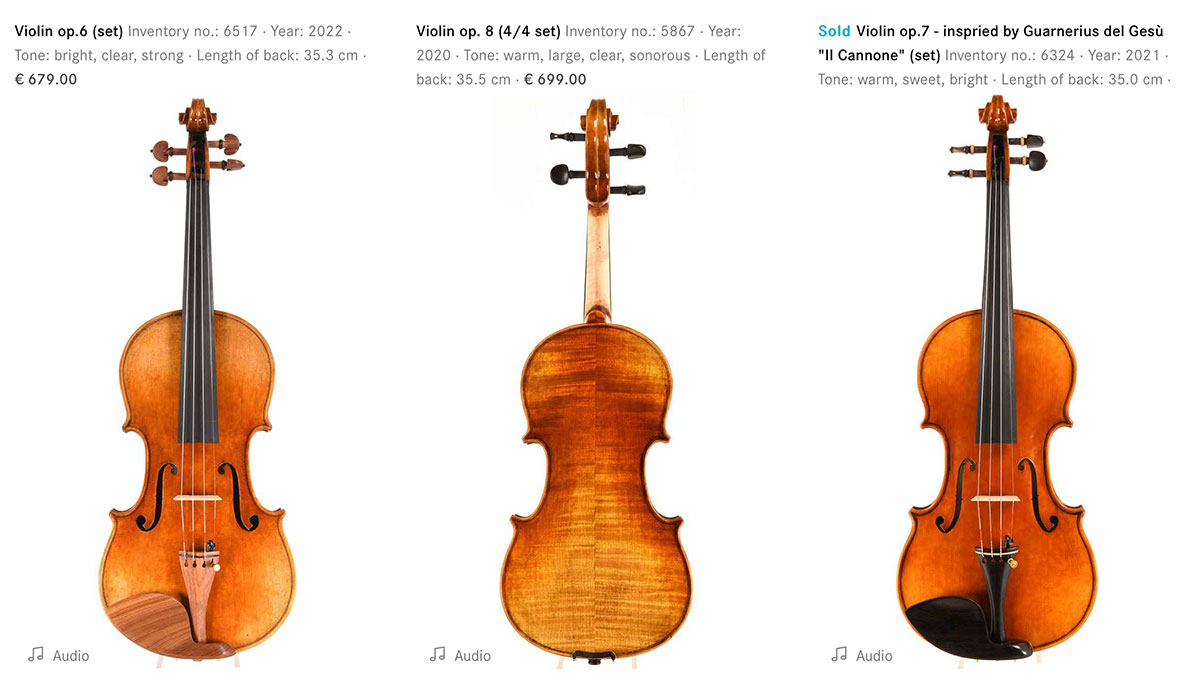
A used violin’s value comes from several factors working together. The most important are condition, playability, maker, sound, and proof of history.
Condition and repairs
Condition can make a larger difference than age. A clean violin with no open seams, cracks, or major repairs is usually worth more than an older violin with structural problems.
Common repair concerns include:
- Cracks in the top, back, or sound post area
- Open seams around the body
- A loose or badly fitted neck
- A warped fingerboard
- A damaged bridge
- A sound post that has fallen or fits poorly
- Pegs that slip or are hard to turn
- Missing purfling, which is the decorative inlay near the edge
- Severe varnish damage
- Signs of water, heat, or mold exposure
Some repairs are minor. Others require a trained violin repairer and can cost hundreds or thousands of dollars.
Setup and playability
A violin needs proper setup before its quality can be judged. Setup includes fitting the bridge, shaping the nut, adjusting the pegs, placing the sound post, and checking the strings and fingerboard.
A good setup affects:
- How easily the violin responds
– Whether the notes sound clear - How comfortable the neck feels
- How well the violin stays in tune
- Whether the bow can draw an even sound
Two identical violins can feel very different if one has a careful setup and the other does not.
Maker and workshop
A known maker or respected workshop can raise a violin’s value. This is especially true when the violin has reliable documents and a clear ownership history.
However, a printed label is not enough. Many older violins carry labels that imitate famous makers. A label may describe a model, a workshop, or a copied name rather than the person who built the instrument.
For valuable violins, buyers should rely on a qualified appraisal, not the label alone.
Tone and response
Players also pay for sound. A violin that has a clear, balanced tone and responds easily may be worth more than one with a louder but harsh sound.
Tone is personal. A violin that suits one player may not suit another. Try the instrument with a teacher or experienced player when possible.
Age and origin
Age can add value, but age alone does not make a violin expensive. Many mass-produced violins from the early 20th century sell for modest prices. Some newer instruments may cost more because they were made by a respected contemporary maker.
Origin matters when it is documented. Claims such as “old Italian,” “German,” or “French” need evidence. A seller should not receive a high price based only on an uncertain description.

How much should a beginner spend on a used violin?
Most beginners should plan to spend $250 to $800 for a used violin that is ready to play. A complete outfit may cost more once the bow, case, strings, and setup are included.
A very low-cost violin can work for a child who is trying an instrument for the first time. Yet the cheapest options often have rough bridges, poor strings, stiff pegs, and weak bows. These problems can make learning harder.
A reasonable budget guide looks like this:
- $100–$250: Basic used outfit; inspect carefully before buying.
- $250–$500: Often enough for a functional student violin from a known student line.
- $500–$900: More likely to include better setup, strings, case, and bow.
- $900–$1,500: May offer better tone and room for progress.
- More than $1,500: Consider an experienced teacher’s advice before buying.
For a child, size is also important. Common fractional sizes include 1/16, 1/10, 1/8, 1/4, 1/2, and 3/4. Most adults use a 4/4 violin. A child should be measured by a teacher or violin shop, since the wrong size can cause strain and poor technique.
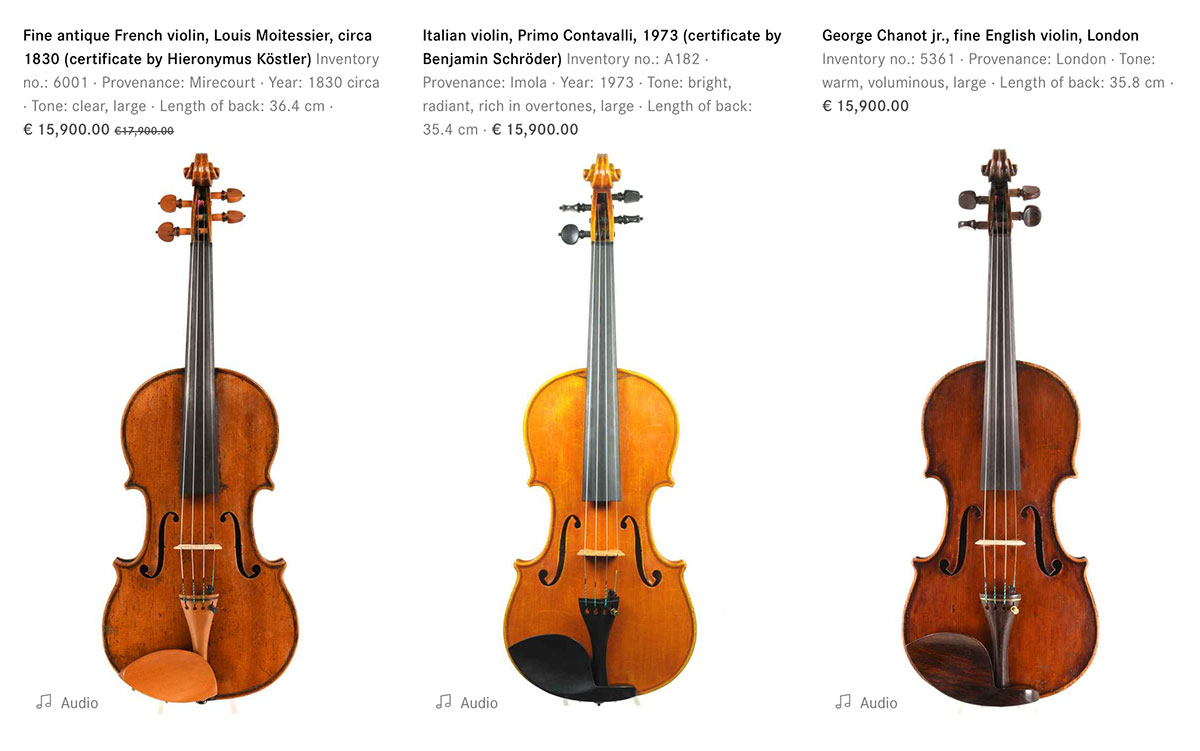
Used violin prices by playing level
Beginner violins: $100 to $800
Beginner violins are made for students who are learning posture, bow control, finger placement, and basic reading. A good student violin should be comfortable, stable, and easy enough to play.
At this level, setup matters more than decoration. A plain violin with good pegs and a well-cut bridge is often a better choice than a shiny violin with poor construction.
Intermediate violins: $800 to $3,000
Intermediate instruments often provide more color, projection, and response. They may help a student handle harder music with less effort.
This price group includes many workshop-made violins, older student instruments, and some modern handmade violins. The best choice depends on the player’s needs and the instrument’s individual sound.
Advanced and professional violins: $3,000 to $15,000 or more
Professional players may look for a specific tone, strong projection, quick response, and balance across the strings. These violins may come from established makers or respected workshops.
At this level, the buyer should test several instruments. A higher price does not guarantee that the sound will suit the player.
Vintage, antique, and collectible violins
Vintage violins can sell for a few thousand dollars or much more. Their value may depend on the maker, condition, age, provenance, published references, and past sales.
A violin described as “antique” is not automatically rare. A genuine high-value instrument should have supporting evidence from a reputable dealer or appraiser.

Hidden costs when buying a used violin
The purchase price is only part of the budget. A violin that looks inexpensive may need immediate work.
Common additional costs in the United States
| Item | Typical cost range |
|---|---|
| Basic setup | $75–$200 |
| Better setup or adjustment | $150–$400+ |
| New student strings | $30–$100+ |
| New bridge | $50–$150+ |
| Peg fitting or repair | $50–$200+ |
| Sound post adjustment | $30–$100+ |
| Beginner bow | $50–$300 |
| Better student bow | $300–$1,000+ |
| Violin case | $50–$300+ |
| Appraisal | $75–$250+ |
| Major crack or structural repair | $200–several thousand dollars |
Prices vary by region, repair shop, materials, and instrument value. A luthier is a specialist who makes or repairs string instruments.
A useful calculation is:
True cost = purchase price + immediate repairs + required accessories
For example, a $200 violin that needs a $250 setup, $80 in strings, and a $100 bridge has a real starting cost of about $630. A $500 violin that is already set up may be the better value.

How to inspect a used violin before buying
Inspect the violin in good light. If you do not know what to look for, bring a teacher, luthier, or experienced player.
1. Check the body for cracks
Look at the top, back, ribs, and areas near the sound post and end button. Small repaired cracks may be acceptable. Unrepaired cracks can become costly problems.
Do not assume that every repair is bad. A professional repair can preserve an instrument. The key questions are whether the repair was done well and whether the price reflects it.
2. Check the seams
Look around the edges for gaps between the top, back, and ribs. A small open seam may be a routine repair. A large gap or several open areas need professional attention.
Do not use household glue. It can make future repair much harder.
3. Examine the bridge and fingerboard
The bridge should stand straight and fit the top correctly. The fingerboard should look smooth and properly shaped. Deep grooves, warping, or excessive wear may require repair or replacement.
4. Test the pegs
Turn each peg slowly. The pegs should hold the strings but still move without excessive force. Slipping pegs can make tuning frustrating, especially for a beginner.
5. Look at the sound post
The sound post is the small wooden post inside the violin. It should stand in the correct position and fit properly. Do not try to move it yourself with a household tool.
If the sound post has fallen, take the violin to a violin shop.
6. Play every string
Listen for buzzing, rattling, weak notes, and sudden changes in volume. Test both open strings and fingered notes. A teacher can often hear problems that a beginner misses.
7. Compare the outfit
Check the bow for a straight stick, usable hair, and a working frog and screw. Examine the case for broken latches and moisture damage. Replace a poor bow when possible; the bow has a major effect on sound and control.

Where to buy a used violin in the United States
The safest buying option depends on your budget and skill level.
Violin shops and luthiers
A specialist shop usually costs more than a private seller, but it may provide setup, trial periods, repair support, and a return policy. This can reduce risk for beginners.
Ask whether the price includes:
- A recent setup
- New or usable strings
- A trial period
- Return conditions
- A written appraisal
- Repair history
- A case and bow
School music stores
Music stores may offer student instruments and rental programs. A rental can be useful for a child who may need a larger size later.
Check the rental agreement for insurance, maintenance fees, ownership terms, and upgrade rules.
Private sellers and online marketplaces
Private sales can offer lower prices, but they also carry more risk. Photos may hide cracks, warped parts, or poor setup. Shipping can also damage a violin if the case is weak or the instrument is not secured.
Before paying, ask for clear photos of:
- The full front and back
- The scroll and pegbox
- The bridge
- The fingerboard
- The label
- Any cracks or repairs
- The case and bow
Avoid sending money through a payment method that offers no buyer protection. Be cautious when a seller pressures you to pay quickly or refuses an in-person trial.

Is an old violin better than a new violin?
No. An old violin is not automatically better than a new one.
Older instruments may have mature wood, interesting workmanship, or a documented history. They may also have wear, repairs, weak fittings, or structural problems. New instruments can offer predictable construction, fresh parts, and easier access to service.
The better question is:
Which violin sounds good, feels comfortable, and has a condition that matches the price?
For a beginner, a well-set-up modern student violin may be a smarter purchase than an old violin with uncertain repairs.

Used violin buying mistakes to avoid
The most common mistake is buying by appearance or label instead of playability and condition.
Avoid these errors:
- Assuming a high price proves high quality
- Buying an instrument only because it looks old
- Trusting an unverified label
- Ignoring open cracks or seams
- Forgetting the cost of a bow and case
- Buying the wrong size for a child
- Judging sound from a phone recording
- Skipping a teacher’s or luthier’s opinion
- Using household glue or tools for repairs
- Paying a large amount without a return option or documentation
A violin should also be stored safely. Keep it away from extreme heat, direct sunlight, damp areas, and rapid temperature changes. Do not leave it in a hot car.

How to get the best value from a used violin
Start with the player, not the price. Decide whether the violin is for a child, a beginner, an advancing student, or a professional.
Then use this process:
- Set a total budget, including repairs and accessories.
- Choose the correct violin size.
- Try several instruments in the same price range.
- Ask for the repair and ownership history.
- Have a teacher or luthier inspect the best option.
- Confirm the setup, return policy, and included accessories.
- Compare the complete cost, not only the sticker price.
The best value is usually a playable instrument with known condition and reasonable support after the sale. A slightly higher price can be worthwhile when it prevents immediate repairs.

Key takeaways
- A used violin in the United States can cost $100 to more than $100,000.
- Most beginners should budget $250 to $800 for the violin or about $400 to $900 for a complete outfit.
- Intermediate violins often cost $800 to $3,000.
- Professional, antique, and collectible violins can cost much more.
- Setup and repair costs can change the real price quickly.
- Condition, playability, maker, and documentation matter more than age alone.
- A teacher or luthier can help prevent an expensive mistake.
Frequently asked questions
Is $100 enough to buy a used violin?
Sometimes, but expect compromises. A $100 violin may need setup work, new strings, or a better bow. It can be suitable for a short trial period if a qualified player confirms that it is structurally sound.
Is $500 a good budget for a used violin?
Yes. A $500 budget can often buy a usable student violin, especially through a shop or school music program. Make sure the price includes a functional bow, case, and recent setup.
How much is a used 4/4 violin worth?
A used full-size violin may be worth anywhere from $100 to many thousands of dollars. The size alone does not determine value. Maker, condition, sound, repairs, and documentation are more important.
How can I tell if my old violin is valuable?
Look for a professional appraisal rather than relying on the label. A qualified appraiser will examine construction, condition, authenticity, provenance, and comparable market evidence.
Should I buy a used violin online?
Online buying can work when the seller offers clear condition details, buyer protection, and a return period. For a first violin or a purchase above the beginner range, an in-person trial is safer.
Conclusion
For most U.S. beginners, a dependable used violin costs about $250 to $800, with a complete outfit often reaching $400 to $900. Intermediate players may spend $800 to $3,000, while professional and collectible instruments can cost far more.
Before buying, inspect the violin, bow, case, and setup as one package. If the price seems unusually low, find out why. A short inspection by a teacher or luthier can save much more than it costs.

Senior Music Reviewer
Alex Carter is a seasoned music reviewer with over a decade of experience in the world of sound and instruments. Passionate about helping musicians and enthusiasts make informed choices, he brings sharp insights and in-depth knowledge to every review. From classical instruments to modern gear, Alex combines technical expertise with a love for music to deliver content that resonates with readers.
As a Senior Music Reviewer and expert author on Tuneluma.com, Alex is dedicated to sharing honest evaluations, practical advice, and thoughtful commentary to guide readers in their musical journey.