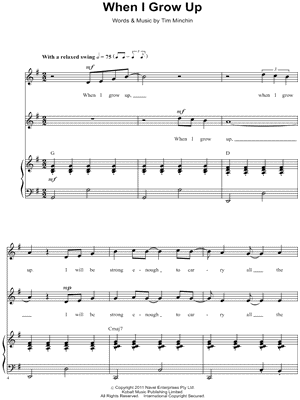
When I Grow Up Piano Sheet Music: Easy Playing Guide
Introduction
If you are in the United States and need “When I Grow Up” piano sheet music, you are most likely looking for the song from Matilda the Musical, written by Tim Minchin. The best choice depends on your skill level, the version you want, and whether you need piano solo, piano-vocal, or accompaniment music.
You can usually find licensed arrangements through established sheet music stores, digital music platforms, or official musical-theater publishers. Before you buy, check the song credit, arrangement level, page count, and whether the music includes melody, lyrics, or only piano parts.

What Is “When I Grow Up”?
“When I Grow Up” is a song from Matilda the Musical, based on Roald Dahl’s novel Matilda. Tim Minchin wrote the music and lyrics for the stage musical.
The song appears in more than one form:
- Stage-musical version: Written for the original theater production.
- Film version: Used in the 2022 film adaptation, with possible changes in arrangement, key, timing, and orchestration.
- Piano solo arrangement: Designed for one pianist.
- Piano-vocal arrangement: Includes the vocal melody and lyrics above or near the piano part.
- Easy piano arrangement: Uses simpler rhythms, chords, and hand positions.
- Full vocal score: Intended for singers, rehearsals, or theatrical performance.
These versions may sound similar but are not always interchangeable. If you are preparing for a recital, audition, school performance, or sing-along, choose the edition that matches your purpose.
Where to Find Legal “When I Grow Up” Sheet Music
The safest way to get the music is to use a licensed publisher or a reputable sheet music seller. Search by the full title and composer rather than by title alone.
Useful places to check include:
- Official publisher catalogs
- Licensed digital sheet music services
- Established US sheet music retailers
- School or public library music collections
- Authorized musical-theater score publishers
- Used music stores that sell printed editions
Search using terms such as:
- “When I Grow Up” Tim Minchin piano sheet music
- “When I Grow Up” Matilda easy piano
- “When I Grow Up” piano vocal score
- “When I Grow Up” Matilda musical sheet music
- “When I Grow Up” piano accompaniment
A legal listing should clearly show the composer, the musical or film source, the arrangement type, and the permitted use. A preview is also useful because it lets you check the key, difficulty, and layout before you pay.
Be cautious with websites that offer complete scans or downloads at no cost without identifying a publisher or license. Copyrighted musical-theater songs are generally not free to copy or distribute in the United States.

Which Arrangement Should You Choose?
The right arrangement depends on your playing level and goal. Use the table below as a quick guide.
| Your goal | Best format | What to look for |
|---|---|---|
| Learn the song as a beginner | Easy piano | Large notation, simple chords, limited hand movement |
| Play and sing | Piano-vocal | Melody line, lyrics, and supportive piano part |
| Perform alone | Piano solo | A complete piano texture without a singer |
| Rehearse a vocalist | Piano accompaniment | Clear rhythm and room for the singer |
| Match the stage show | Vocal score or show collection | Original theatrical context and related songs |
| Match a movie performance | Film songbook or film arrangement | Key and structure linked to the movie version |
For beginners
An easy piano version is usually the most practical starting point. It may simplify the left-hand pattern, reduce large chords, and remove some inner notes.
That makes the piece easier to learn, but it may not sound exactly like the recording. Simplification is not a flaw. It is a way to keep the main melody and rhythm while reducing technical demands.
For intermediate players
An intermediate arrangement may include fuller chords, moving bass notes, syncopation, and more changes between sections. This can create a stronger musical effect without requiring advanced concert technique.
Look for a version that includes chord symbols if you want to create your own accompaniment style.
For singers
Choose piano-vocal sheet music if you plan to sing. The vocal line will show the melody and words, while the piano part supports the singer.
Check the key before buying. A song may be easy to play but uncomfortable to sing if the melody sits too high or too low for your voice.
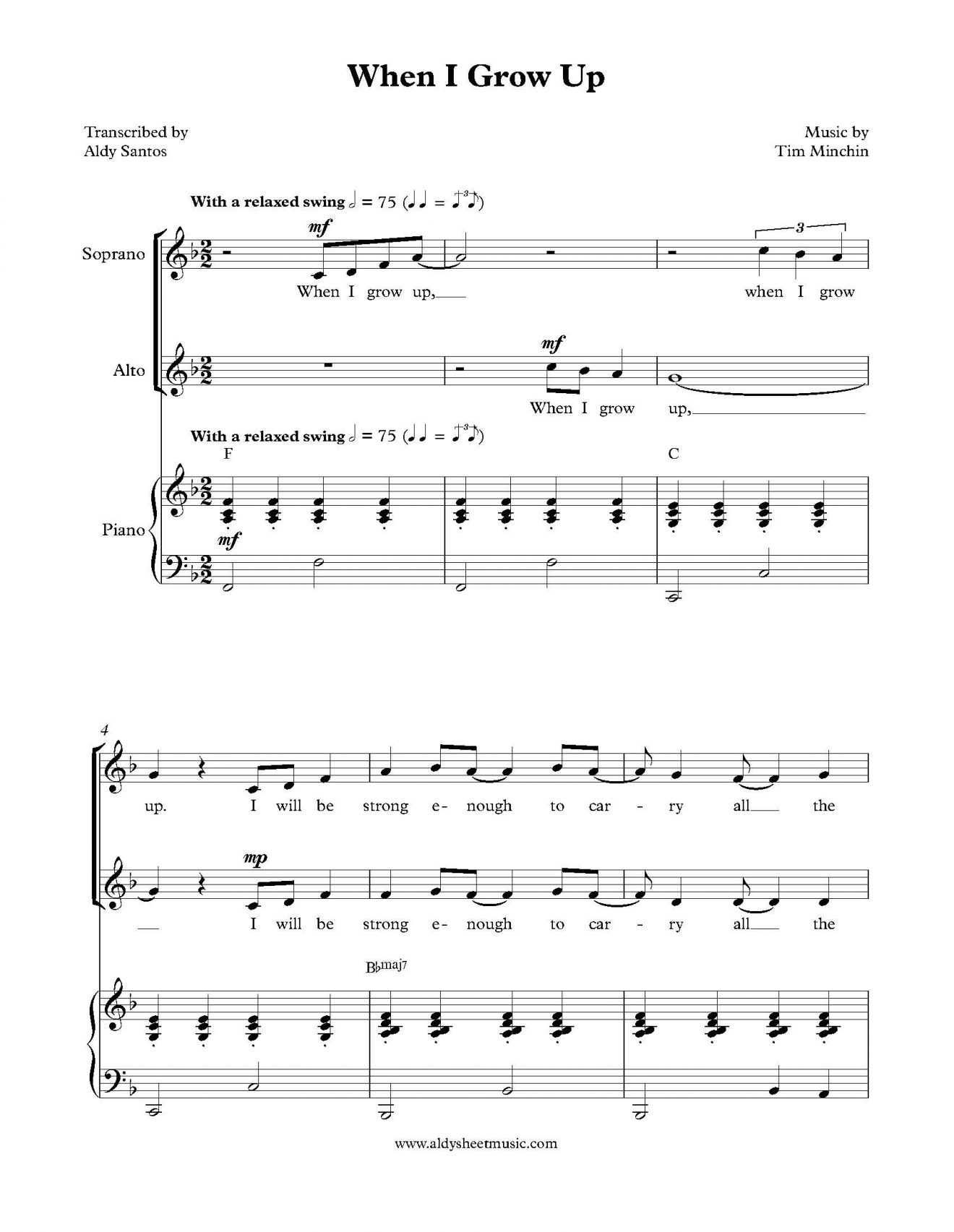
How to Tell if the Sheet Music Matches the Version You Want
Several details can help you compare editions.
Check the composer credit
The listing should identify Tim Minchin as the songwriter or composer. It should also identify Matilda the Musical if that is the source.
A title-only search may return unrelated songs with the same or similar name. Read the full product description before downloading or ordering.
Check the key
The key affects both the sound and the vocal range. Two arrangements can use different keys while keeping the same melody.
If you are playing alone, almost any comfortable key may work. If you are accompanying a singer, ask which key suits that singer best.
Check the song form
Compare the listed sections with the version you know. Useful labels may include:
- Intro
- Verse
- Chorus
- Bridge
- Interlude
- Outro
Movie and stage arrangements can differ in length or order. A score that includes only selected sections may not work for a full performance.
Check the skill rating
Skill labels are not fully standardized. One publisher’s “easy” piece may be more demanding than another publisher’s “beginner” piece.
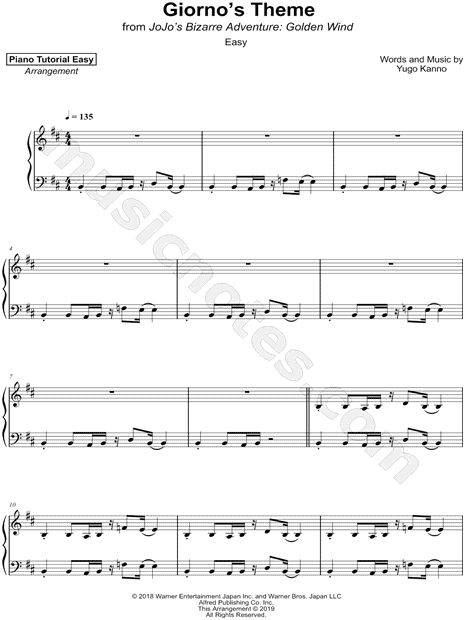
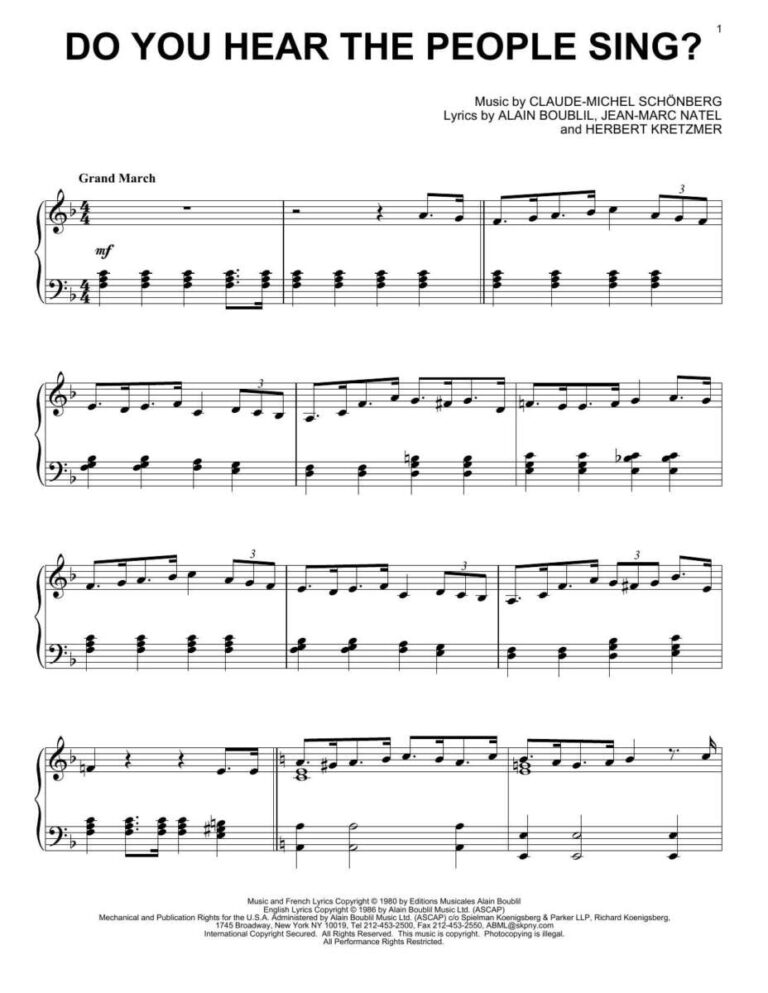
Preview the first page if possible. Look at:
- Number of sharps or flats
- Chord size
- Left-hand movement
- Rhythm complexity
- Page turns
- Octaves and large stretches
- Use of pedal markings
A short preview often tells you more than a broad label such as “intermediate.”
How to Learn “When I Grow Up” on Piano
Start with the structure, not the speed. The song has a clear theatrical feel, so learning the sections first can make the music easier to remember.
1. Confirm the edition and key
Write down the version you are using. Do not switch between a stage score, a movie arrangement, and an online tutorial during the first practice sessions.
If the key feels uncomfortable, you can later transpose the piece or choose another edition.
2. Clap the rhythm
Before playing, clap or tap the main rhythm. This helps you spot syncopation and rests.
Count slowly. If the score uses a time signature such as 4/4, count four steady beats in each measure. Keep the beat even, even when the melody moves in a less regular pattern.
3. Learn the right hand
Practice the melody alone. Play slowly enough that you can keep the rhythm without stopping.
Mark repeated ideas with a pencil. The melody often becomes easier once you recognize which phrases return.
4. Practice the left hand separately
The left hand may use bass notes, broken chords, or repeated patterns. Practice it alone until the movement feels familiar.
Do not rush this step. A steady left hand gives the song its foundation and makes the melody sound more secure.
5. Combine one small section at a time
Join the hands in two- to four-measure sections. Repeat each section several times before moving on.
When a mistake occurs, stop and identify its cause. It may come from a difficult chord, a skipped beat, or a hand movement that needs a better fingering.
6. Add dynamics and pedal
Once the notes are reliable, add expression. The song benefits from contrast between lighter and fuller sections.
Use the sustain pedal with care. Change it when the harmony changes, unless the score gives different instructions. Too much pedal can blur the rhythm and make the music sound muddy.
7. Increase the tempo gradually
Use a metronome if your rhythm changes when you play faster. Begin at a pace where you can play without repeated errors.
Increase the tempo in small steps. If the piece becomes uneven, return to the last comfortable speed.

Common Problems and Simple Fixes
The arrangement feels too hard
Try an easier edition or reduce the texture temporarily. Play only the melody and basic bass notes first.
You can also remove extra chord tones while learning. Restore them after the rhythm and hand movements become secure.
The rhythm does not sound right
Count aloud and practice with a metronome. Many rhythm problems come from starting too quickly or treating rests as optional.
Record a short practice section and listen back. This can reveal uneven beats that are hard to notice while playing.
The chords are too large
Do not force your hand to stretch. Play fewer notes or use a different inversion when the arrangement allows it.
If you feel pain, numbness, or persistent tingling, stop playing and seek advice from a qualified medical professional or piano teacher. Normal effort is different from pain.
The song does not match the recording
You may have a different arrangement, key, or version. Compare the title page and publisher information.
The stage and film versions can also use different pacing or accompaniment details. Decide which recording you want to match before changing the score.
The singer cannot reach the melody
Transpose the song or use a version in another key. A piano player can often move the music to a more suitable range, but the new key may change the difficulty.
If you are accompanying someone else, choose the singer’s comfort over the original recorded key.
Can You Print or Share a Digital Copy?
A purchased digital score is normally licensed for personal use under the seller’s terms. That does not automatically allow you to email copies to friends, post scans online, or upload pages to a social platform.
For a school, church, theater, or public performance, check the applicable license rules. Sheet music rights and performance rights are separate issues.
A legal purchase may permit you to print a certain number of copies for personal use, but the exact permission depends on the publisher and seller. Read the license shown at checkout or in the downloaded file.
Do not assume that a free PDF is legal because it appears in a search result. If the source does not identify the copyright owner, publisher, or license, use a different source.
Piano Sheet Music Buying Checklist
Before you purchase “When I Grow Up” piano sheet music, confirm these points:
- The song is by Tim Minchin.
- The listing connects the song to Matilda the Musical.
- The format matches your goal.
- The difficulty suits your current ability.
- The key works for the singer, if applicable.
- The arrangement matches the stage or film version you want.
- A preview shows readable notation.
- The seller identifies a publisher or licensing basis.
- The price and download terms are clear.
- Printing and personal-use rules are stated.
This checklist can prevent the most common mistake: buying a technically correct song in the wrong format.

Key Takeaways
- “When I Grow Up” is best known as a song from Matilda the Musical, with music and lyrics by Tim Minchin.
- Choose between piano solo, piano-vocal, easy piano, and full vocal-score formats.
- Check the key, difficulty, song length, and version before buying.
- Use licensed sheet music instead of unauthorized scans.
- Learn the song by practicing rhythm, melody, left hand, and sections in stages.
- If the music does not match the recording, check whether you have a stage or film arrangement.
FAQs
Is “When I Grow Up” available as easy piano sheet music?
Licensed easy piano arrangements may be available, depending on the current catalog. Look for a listing that clearly says “easy piano” or gives a beginner or elementary difficulty level. Preview the notation before buying because difficulty labels vary by publisher.
Who wrote “When I Grow Up”?
Tim Minchin wrote the music and lyrics for “When I Grow Up” from Matilda the Musical. Always check the composer credit when comparing sheet music listings.
Can I use piano-vocal sheet music to play a piano solo?
Yes, but the piano part may be designed to support a singer rather than provide a complete solo arrangement. A piano solo edition will usually give you a fuller texture for playing without vocals.
Is the movie version the same as the stage version?
Not always. The film may use different timing, orchestration, edits, or arrangement details. If you want to match a specific recording, choose sheet music made for that version or compare the preview with the recording.
Can I change the key?
Usually, yes. You can transpose the music yourself, use a digital tool that supports transposition, or buy an edition in another key. Make sure the new key remains comfortable for the singer and manageable for the pianist.
How long does it take to learn the song?
The time varies with your experience, arrangement, and practice schedule. A beginner may need several weeks for a polished performance, while an experienced pianist may learn a simple version much faster. Short, regular practice is usually more useful than one long session.
Conclusion
The best “When I Grow Up” piano sheet music is the edition that matches your version, skill level, and performance goal. Start with a licensed source, confirm that it is the Tim Minchin song from Matilda the Musical, and compare the key, format, and difficulty before purchasing.
For a first attempt, an easy piano arrangement can build confidence. For singing or rehearsal, choose piano-vocal music. For a solo performance, select a fuller piano arrangement and learn it in small sections with steady rhythm.

Senior Music Reviewer
Alex Carter is a seasoned music reviewer with over a decade of experience in the world of sound and instruments. Passionate about helping musicians and enthusiasts make informed choices, he brings sharp insights and in-depth knowledge to every review. From classical instruments to modern gear, Alex combines technical expertise with a love for music to deliver content that resonates with readers.
As a Senior Music Reviewer and expert author on Tuneluma.com, Alex is dedicated to sharing honest evaluations, practical advice, and thoughtful commentary to guide readers in their musical journey.