Stevie Wonder learned piano largely by ear, through early practice, musical exploration, and constant listening. Born in Saginaw, Michigan, and raised in Detroit, Wonder began playing instruments as a young child. He explored the piano, harmonica, drums, and organ before becoming a professional musician.
There is no strong public evidence that one famous piano teacher trained him. Instead, available biographies and interviews point to a mix of self-directed learning, family support, church music, school, and hands-on work with professional musicians.
Stevie Wonder Learned Piano by Ear
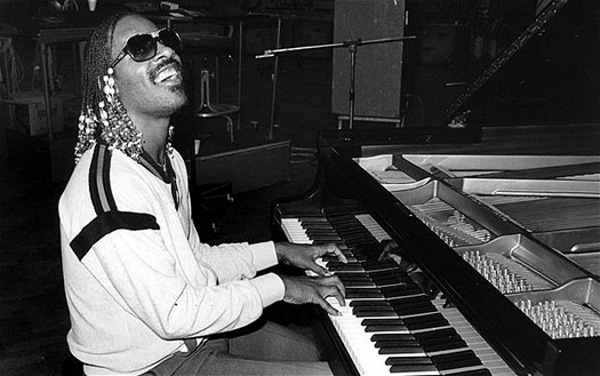
Stevie Wonder appears to have learned much of his early piano playing by listening and copying what he heard. Learning “by ear” means finding notes, chords, and melodies without first relying on written sheet music.
This approach often begins with a simple process:
- Hear a melody.
- Find the first note on the piano.
- Search for the next notes.
- Repeat the pattern until the tune becomes familiar.
- Practice it until the hands remember the shape.
Wonder had a strong musical ear from a very young age. He listened closely to records, radio performances, church music, and the musicians around him. That skill helped him play melodies before he had extensive knowledge of formal music theory.
Learning by ear does not mean learning without discipline. A player still needs to develop:
- Finger control
- Rhythm
- Chord knowledge
- Musical memory
- Coordination between both hands
- The ability to repeat and vary musical ideas
Wonder’s later work shows that his ear-based foundation grew into a much broader musical system. He became known not only as a pianist but also as a composer, singer, arranger, harmonica player, drummer, and keyboard innovator.
Was Stevie Wonder completely self-taught?
Not in the simplest sense. Many profiles describe him as self-taught or largely self-taught, but that phrase can hide the full picture.
Wonder did not learn in isolation. His mother supported his musical development, and he grew up around church and community music. He also attended the Michigan School for the Blind, where he received an education that included music. Later, Motown musicians, producers, and other performers shaped his professional skills.
The most accurate answer is that Stevie Wonder developed his early piano ability through self-directed listening and practice, then expanded it through education, performance, and collaboration.

His Family and Community Helped Build His Musical Foundation
Stevie Wonder was born Stevland Hardaway Judkins on May 13, 1950. He was born prematurely and became blind as an infant. His family later moved to Detroit, where he grew up in a city with a strong church, gospel, soul, and rhythm-and-blues tradition.
His mother, Lula Mae Hardaway, encouraged his interest in music. Family support mattered because a young musician needs access to instruments, time to practice, and adults who take the talent seriously.
Church music also formed part of the environment around Wonder. Gospel music often uses strong rhythm, repeated chord patterns, call-and-response singing, and expressive keyboard playing. These features can help a child understand musical structure even before learning formal terms such as “dominant chord” or “modulation.”
This background likely gave Wonder several useful skills:
- A feel for steady rhythm
- Comfort with repeated chord progressions
- Strong melodic memory
- An understanding of musical emotion
- The confidence to perform for other people
It would be inaccurate to claim that church alone taught him piano. Public biographies do not establish a single, complete lesson-by-lesson account of his childhood training. Church was one part of a wider musical setting that included home, school, radio, records, and live performance.
Blindness Changed the Way He Used Musical Information
Stevie Wonder’s blindness affected how he accessed music, but it did not create his musical ability. He used sound, touch, memory, and physical patterns to learn and perform.
A sighted beginner may watch a teacher’s fingers or read printed notes from a page. A blind musician may depend more heavily on:
- Listening to a model performance
- Memorizing musical patterns
- Feeling the distance between keys
- Using tactile landmarks on the keyboard
- Repeating passages until they become automatic
- Learning music through Braille or verbal instruction when needed
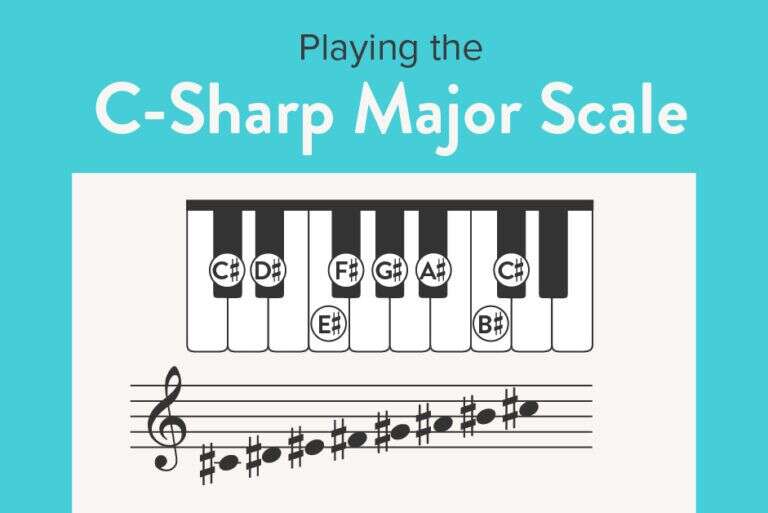
The black keys on a piano also provide tactile reference points. Their groups of two and three help a player locate nearby white keys without looking. This does not make piano easy, but it offers a physical map of the keyboard.
Wonder’s learning method was therefore not simply “he could play because he was blind.” That would be a misleading myth. His ability came from musical curiosity, practice, memory, rhythm, listening, and access to instruments and teachers. Blindness meant that he developed some skills through different routes.
Did Stevie Wonder read sheet music?
Public accounts often describe Wonder as a strong ear-based musician, but that does not prove he could not read music. Blind musicians can read Braille music, learn from recordings, receive verbal instruction, or use several methods together.
Braille music can represent notes, rhythms, dynamics, and other musical details. However, a performer cannot read a full piano score with both hands in the same visual way a sighted player can. The musician may need to study each part, memorize sections, and combine them through practice.
For Wonder, listening and memory were clearly important. Still, it is safer to avoid the absolute claim that he “never used music notation.” The public record does not support that conclusion.

School and Early Performance Turned Skill Into Musicianship
Stevie Wonder attended the Michigan School for the Blind in Lansing. The school helped provide education and a setting where he could develop his musical abilities.
A school environment can add structure to early talent. It may provide:
- Regular practice time
- Access to instruments
- Music classes
- Performance opportunities
- Contact with other musicians
- Instruction adapted for blind students
Wonder also performed publicly while he was still a child. His early stage experience helped him learn skills that practice alone cannot provide. Performing teaches a musician how to keep time, recover from mistakes, listen to other players, and communicate with an audience.
His talent reached Motown while he was still young. Ronnie White of the Miracles reportedly heard him perform and helped introduce him to Berry Gordy, the founder of Motown. Wonder then auditioned for the label and became known as Little Stevie Wonder.
His 1963 live recording, The 12-Year-Old Genius, helped establish him as a remarkable young performer. By that point, his keyboard playing was no longer only a private childhood activity. It had become part of a professional musical identity.
Why early performance mattered
A child can learn notes at home but still struggle to play with a band. Wonder’s early work exposed him to real musical demands:
- Matching a drummer’s pulse
- Following a singer
- Starting and ending songs on cue
- Changing keys
- Playing for a crowd
- Adjusting to new instruments and arrangements
These experiences helped him move from copying sounds to making musical decisions. That shift is central to understanding how he became a complete musician.

Motown Helped Expand His Piano and Keyboard Skills
Motown gave Stevie Wonder access to studios, arrangers, producers, songwriters, and experienced players. This professional setting helped him develop beyond the skills of a gifted child performer.
At Motown, Wonder learned through work as much as through formal instruction. Recording sessions require close listening and repeated refinement. A musician may need to change a part, alter a rhythm, shorten a phrase, or find a new chord to fit the singer and arrangement.
Wonder also broadened his keyboard work. He used acoustic piano, electric piano, organ, synthesizers, and other keyboard instruments. Each instrument responds differently:
| Instrument | What it adds |
|---|---|
| Acoustic piano | Natural hammer action, wide dynamics, and clear note attack |
| Electric piano | A softer or more sustained tone suited to soul and pop arrangements |
| Organ | Sustained notes, layered chords, and control through changes in volume |
| Synthesizer | New tones, bass sounds, leads, and electronic textures |
The keyboard became more than a tool for playing chords. Wonder used it to write songs, build arrangements, create bass lines, shape grooves, and explore new sounds.
His later albums, including Innervisions, Songs in the Key of Life, and Talking Book, show how far his musicianship developed. These recordings include complex harmony, layered rhythm, unusual song structures, and detailed keyboard parts.
Did Stevie Wonder have piano lessons?
The public record does not identify one definitive piano teacher who taught Wonder from the beginning. Some accounts use “self-taught” to describe his early learning, while others emphasize school and musical guidance.
Both descriptions can be partly true. A musician may learn melodies and basic technique alone, then receive instruction or guidance later. Professional collaborators can also teach through rehearsal, correction, and example without serving as a traditional private teacher.
The strongest answer is this: Stevie Wonder’s early piano development was mainly self-directed and ear-based, but his musicianship grew through family support, school, church, professional colleagues, and years of performance.
What Aspiring Pianists Can Learn From Stevie Wonder’s Method
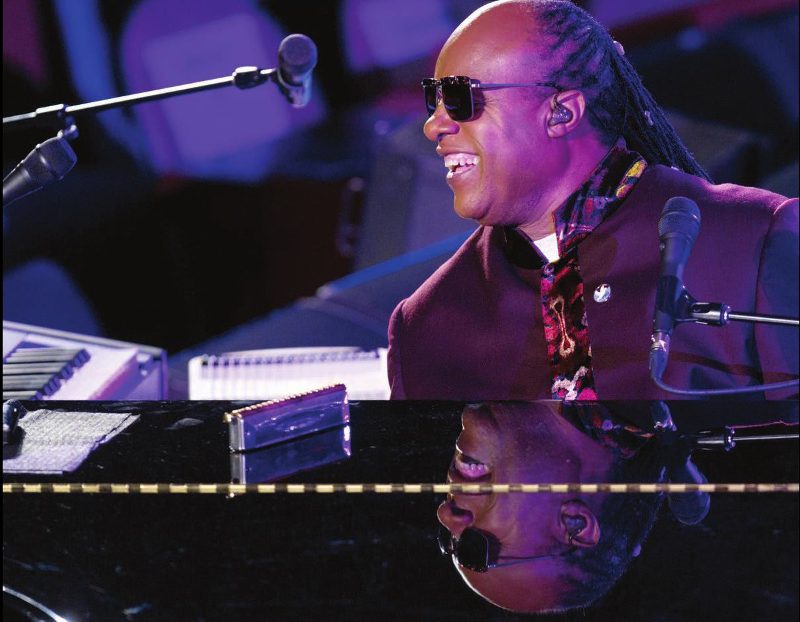
Stevie Wonder’s path suggests that beginners can build real musical ability without waiting to master every rule first. A practical version of his approach combines ear training with basic technique.
Try this sequence:
-
Choose a short song.
Start with a melody of four to eight notes. -
Find the melody by ear.
Sing one phrase, then locate the notes on the keyboard. -
Use the black keys as landmarks.
Feel the groups of two and three black keys to orient your hand. -
Add simple bass notes.
Play the root note of each chord with the left hand. -
Learn common chords.
Begin with C, F, G, and A minor in the key of C. -
Practice rhythm separately.
Clap or tap the beat before trying to play the pattern. -
Record your practice.
Listen for uneven timing, missed notes, and unclear chord changes. -
Study notation after the sound is familiar.
Sheet music can help explain what your ear has already found.
This method works because it links sound, touch, and theory. If a player learns only by copying, progress may slow when the song changes key. If a player learns only from notation, the performance may lack natural rhythm and expression.
A simple example
Suppose a beginner wants to learn a basic version of “Happy Birthday.” The player can first sing the opening phrase, find its notes, and repeat them. Next, the player can add a simple left-hand pattern using the song’s main chords.
After that, the player can write down the notes or compare them with a beginner arrangement. This order keeps the ear involved while still building reading skills.
What to do when learning by ear feels difficult
Learning by ear can feel slow at first. That is normal. Use shorter phrases and reduce the speed of the recording.
If a note is hard to find:
- Sing it first.
- Check whether the next note moves up or down.
- Search near the previous note.
- Slow the recording.
- Practice with one hand.
- Confirm the key before adding chords.
Do not judge progress only by speed. Hearing a melody correctly, even at a slow pace, is a useful sign of success.

Common Myths About How Stevie Wonder Learned Piano
Several simple claims about Wonder’s childhood are repeated so often that they can sound certain. The evidence calls for more care.
Myth: He learned piano only because he was blind
Blindness changed his access to visual information, but it did not automatically produce extraordinary musical skill. Wonder needed practice, musical exposure, support, and performance experience.
Myth: He never received any music education
Wonder attended the Michigan School for the Blind and developed within educational and professional music settings. Calling him “self-taught” should not erase those parts of his development.
Myth: He learned from one secret teacher
No widely established source identifies one person as the sole piano teacher responsible for his ability. His development appears to have come from many influences.
Myth: Playing by ear means he did not understand music
Ear training and music theory are not opposites. A musician can hear a chord, understand its function, and later describe it with theory. Wonder’s compositions show a deep command of harmony, rhythm, form, and arrangement.
Myth: A beginner should copy his path exactly
Wonder was an exceptional child with unusual musical ability and an uncommon career path. His method offers useful ideas, but it is not a promise that every learner will progress at the same rate.

Frequently Asked Questions
How old was Stevie Wonder when he started playing piano?
He began playing instruments as a young child, often reported as around age four. Accounts commonly include piano, harmonica, drums, and organ among the instruments he explored.
Did Stevie Wonder learn piano from his mother?
His mother, Lula Mae Hardaway, supported his musical development, but reliable public sources do not establish that she served as his sole or formal piano teacher. His learning came from several sources.
Did Stevie Wonder use Braille music?
Blind musicians can use Braille music, verbal instruction, recordings, and memorization. Public accounts emphasize Wonder’s ear and memory, but they do not justify the claim that he never used Braille music or notation.
What made Stevie Wonder such a strong pianist?
His ability came from several skills working together: a strong ear, musical memory, rhythm, improvisation, keyboard technique, songwriting, and years of performance. His professional work also exposed him to skilled musicians and producers.
Can someone learn piano by ear like Stevie Wonder?
Yes, most beginners can develop basic ear skills. Start with short melodies, sing before playing, use slow recordings, and combine ear training with chords, rhythm practice, and music reading.
Final Answer
Stevie Wonder learned piano through a blend of playing by ear, constant listening, childhood experimentation, family support, school, church and community music, and early professional performance. He was largely self-directed in his early years, but “self-taught” does not mean completely isolated from instruction or musical influence.
His story is best understood as a long process: first finding sounds, then remembering them, then performing them, and finally transforming them into original songs and arrangements.
For a learner who wants to apply the same basic idea, the next step is simple: choose a short melody, sing it, find it on the keyboard, and practice it slowly with both hands. Combine that ear work with formal lessons or clear study materials so musical instinct and technique grow together.
Sources and Research Basis
- Encyclopaedia Britannica: Stevie Wonder
- Library of Congress: Stevie Wonder
- National Visionary Leadership Project: Stevie Wonder interview materials
- Rock & Roll Hall of Fame: Stevie Wonder
- Michigan School for the Blind historical information

Senior Music Reviewer
Alex Carter is a seasoned music reviewer with over a decade of experience in the world of sound and instruments. Passionate about helping musicians and enthusiasts make informed choices, he brings sharp insights and in-depth knowledge to every review. From classical instruments to modern gear, Alex combines technical expertise with a love for music to deliver content that resonates with readers.
As a Senior Music Reviewer and expert author on Tuneluma.com, Alex is dedicated to sharing honest evaluations, practical advice, and thoughtful commentary to guide readers in their musical journey.