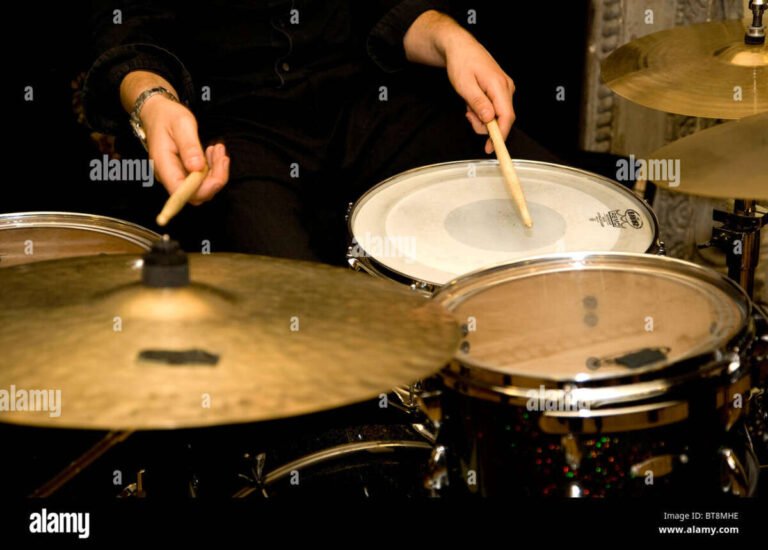
Drum sticks come in many sizes, shapes, and materials. In the United States, the most common choices are 7A, 5A, 5B, and 2B sticks, plus brushes, rods, mallets, marching sticks, and specialty models.
The best drum stick depends on your music, drum set, hand size, volume, and playing style. A light 7A can suit soft jazz. A 5A is a flexible choice for many rock, pop, and worship players. A thick 2B can provide more power for loud rock or heavy metal.
This guide explains the different types of drum sticks, what each one does, and how to choose the right pair.


The Main Types of Drum Sticks
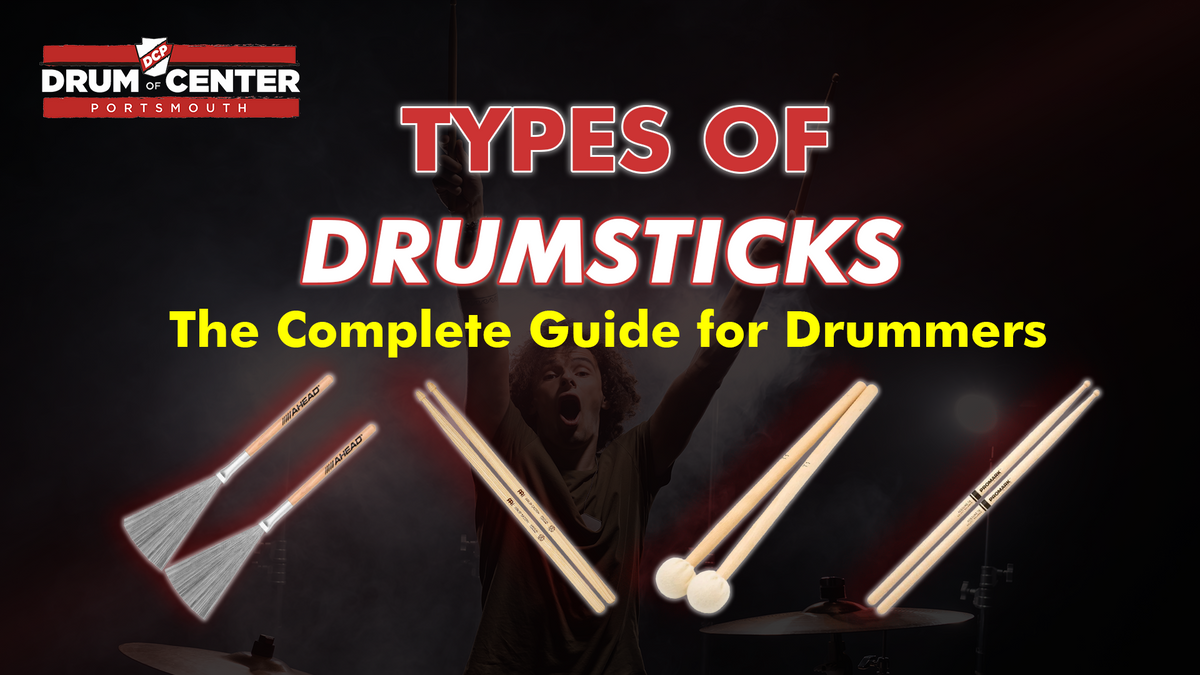
The main types of drum sticks include standard wood sticks, marching sticks, brushes, rods, mallets, and specialty sticks. Each type creates a different sound and feel.
| Drum stick type | Main use | Sound and feel |
|---|---|---|
| Standard wood sticks | Drum set, rock, pop, jazz | Clear attack and balanced rebound |
| Marching sticks | Marching snare and drum corps | Heavy, strong, and powerful |
| Brushes | Jazz, ballads, acoustic music | Soft sweep and light tap |
| Rods or rutes | Low-volume playing | Softer attack with some stick feel |
| Mallets | Toms, cymbals, concert percussion | Round, warm, or sustained sound |
| Specialty sticks | Hybrid sounds and specific styles | Varies by design |
These categories can overlap. For example, a drummer may use a standard stick for a backbeat, brushes for a quiet verse, and mallets for a long tom roll in the same performance.
Standard drum sticks
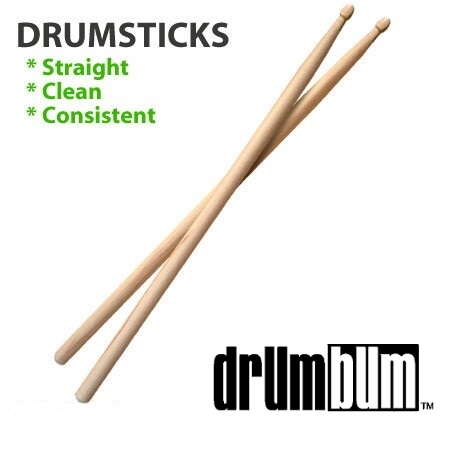
Standard drum sticks are the familiar matched pair used on most drum sets. They usually have a wooden shaft, a shaped shoulder, and a tip made from wood, nylon, or another material.
They differ in:
- Length
- Diameter
- Weight
- Taper
- Tip shape
- Tip material
- Balance
The size label gives a useful starting point, but it does not tell the whole story. Two 5A sticks from different brands may feel different because of their wood, taper, length, or manufacturing choices.
Marching drum sticks
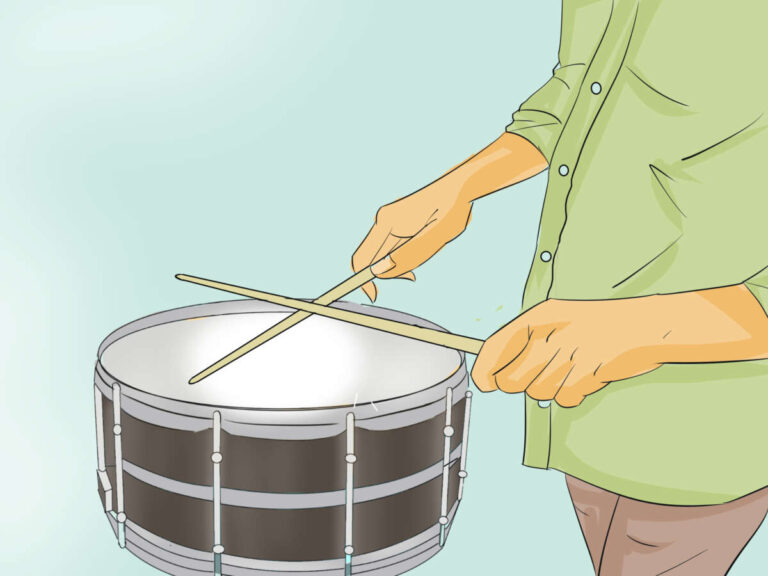
Marching sticks are built for strong projection and repeated rimshots on marching snares. They are often thicker and heavier than drum set sticks.
A marching stick may feel too large for a small drum set. However, it can work well for players who need more weight, durability, or volume. Marching sticks are not the same as ordinary 2B sticks, even though both may feel heavy.
Brushes
Drum brushes use many thin wires or plastic strands instead of one solid shaft. The player can sweep them across a snare head or use them for soft taps.
Brushes are common in:
- Jazz
- Blues
- Ballads
- Acoustic folk music
- Low-volume restaurant or club gigs
Wire brushes give a crisp, airy sweep. Nylon brushes often feel softer and may produce less metallic sound. Retractable brushes protect the wires inside the handle when not in use.
Rods and rutes
Rods, also called rutes, use several thin wood dowels or plastic rods bound together. They make less sound than solid sticks but more attack than brushes.


Rods can help when a full drum set is too loud. They are useful for acoustic rehearsals, small venues, worship settings, and quiet practice. They still create sharp peaks when struck hard, so they are not silent.
Mallets
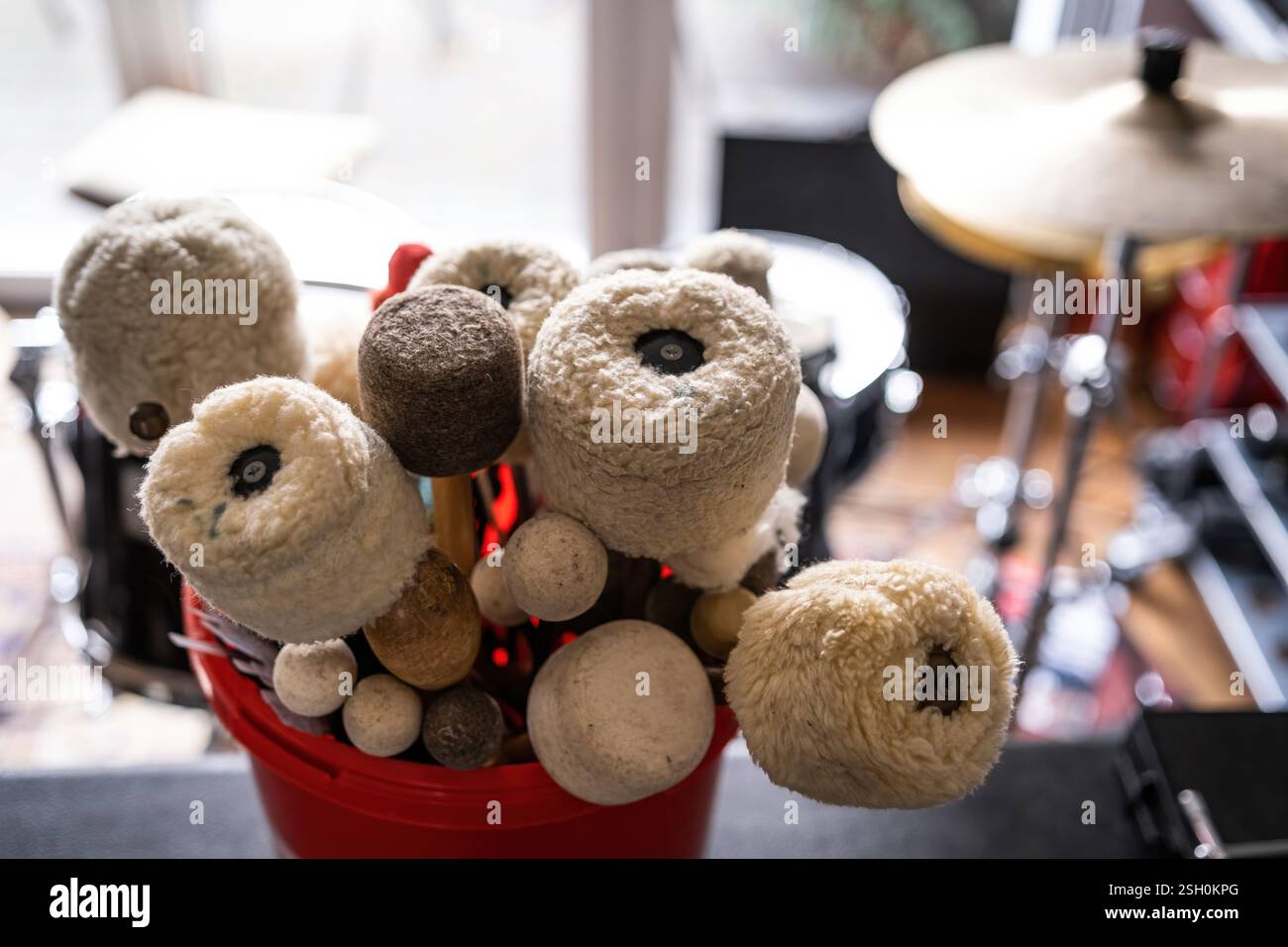
Drum mallets have a padded, felt, yarn, rubber, or wooden head. They are often used on concert percussion, timpani, cymbals, and drum set toms.
Soft mallets can make toms sound deep and smooth. Hard mallets give more attack and volume. Some drum set mallets have one stick end and one padded end, which lets the player switch sounds quickly.

Drum Stick Sizes: 7A, 5A, 5B, and 2B
The most common drum stick sizes are 7A, 5A, 5B, and 2B. In general, the number describes the size family, while the letter reflects the original design category. Modern labels are not perfectly standardized, so check the maker’s measurements when exact size matters.
7A drum sticks
7A sticks are thin and light. They suit players who want a fast response and lower volume.
They work well for:
- Jazz
- Light pop
- Soft rock
- Beginners with small hands
- Low-volume practice
A 7A can feel easy to control, but it may bend or break sooner when used for loud rimshots or hard cymbal work.
5A drum sticks
5A is one of the most versatile drum stick sizes. It offers a useful balance between speed, control, volume, and durability.
A 5A can fit:
- Rock
- Pop
- Country
- Worship music
- School band
- General drum set playing
Many new drummers start with 5A sticks because they are not too light or too heavy. Still, a 5A from one brand can feel unlike a 5A from another brand.
5B drum sticks
5B sticks are thicker and heavier than 5A sticks. They can produce more volume and may feel more stable during strong strokes.
They are often used for:
- Hard rock
- Heavy pop
- Loud rehearsal rooms
- Players who prefer a larger grip
- Strong rimshot playing
The added mass can reduce the effort needed to produce volume. It can also cause more fatigue if the player grips too tightly.
2B drum sticks
2B sticks are among the larger common drum set sizes. They suit loud playing and players who like a thick, heavy stick.


They may work for:
- Heavy rock
- Metal
- Outdoor performance
- Practice on larger drums
- Players who need extra durability
A 2B is not automatically better for beginners. Its extra weight can make poor technique harder on the hands and wrists.
A simple size comparison
| Size | General feel | Common use |
|---|---|---|
| 7A | Thin and light | Jazz and quiet playing |
| 5A | Medium and balanced | General drum set use |
| 5B | Medium-heavy | Rock and louder music |
| 2B | Thick and heavy | Heavy rock and strong playing |
The label is only a guide. Compare the actual diameter and length if you want a close match between brands.
Drum Stick Tips and Their Sounds
The tip is the part of the stick that hits the drum head or cymbal. Its shape changes the size, clarity, and tone of the sound.
Acorn tips
An acorn tip has a rounded shape that creates a broad contact area. It can produce a full sound on drums and a rich tone on cymbals.
Because the contact area changes with the angle of the stick, acorn tips can offer varied sounds. They may feel less exact than small barrel tips.
Barrel tips
Barrel tips have a broad, flat striking area. They can produce a strong, clear sound with a large contact point.
They are useful when a player wants:
- Strong cymbal definition
- Consistent drum attacks
- A powerful sound
- A stable feel during repeated strokes
Teardrop tips
Teardrop tips combine a narrower point with a wider lower section. They can produce both focused and warm sounds.
The player can change the sound by adjusting the angle of contact. This makes teardrop tips useful for players who want flexibility.
Round or ball tips
Round tips create a small and consistent contact point. They can produce a clear, focused cymbal sound.
They are often favored for precise patterns, jazz playing, and cymbal work. The small contact area may sound less broad than an acorn or barrel tip.
Oval tips
Oval tips create a sound between a round tip and a larger shaped tip. They offer a mix of clarity and warmth.
They are a practical option for players who want one pair for several styles.


Wood Tips vs. Nylon Tips
Wood and nylon are the two most common drum stick tip materials. Neither is best for every player.
Wood tips
Wood tips produce a warm, natural sound on cymbals and drums. They are common in jazz, rock, pop, and general drum set playing.
The main limitation is wear. Repeated cymbal strikes can chip the tip or cause the wood to split. A damaged tip can create uneven sound and may mark a drum head.
Nylon tips
Nylon tips are made from a hard synthetic material. They often produce a brighter, sharper sound on cymbals.
They can be useful for:
- Clear cymbal patterns
- Live playing
- Bright rock sounds
- Players who want consistent tip shape
Nylon tips can still break or loosen. Inspect the joint between the nylon tip and the wood shaft. Stop using a stick if the tip is loose, cracked, or unstable.
Which tip should you choose?
Choose wood tips if you want a warmer and more traditional sound. Choose nylon tips if you want a brighter cymbal tone and a tip that does not chip like wood.
The final sound also depends on the cymbal, stick angle, force, room, and recording setup. A tip alone does not define the full tone.

Drum Stick Materials
Most drum sticks use hickory, maple, or oak. Each wood changes the weight, feel, and response.
Hickory drum sticks
Hickory is a common choice for drum sticks in the United States. It offers a useful balance of weight, flexibility, shock absorption, and durability.
Many players choose hickory for general drum set work because it feels stable without being overly heavy.
Maple drum sticks
Maple is lighter than many other woods at the same size. A large maple stick can feel light and fast in the hand.
Maple sticks may suit players who want:


- Quick movement
- A larger diameter without much weight
- Light jazz or orchestral playing
- Reduced hand fatigue
The trade-off is that maple may not withstand hard rimshots as well as a heavier, denser wood.
Oak drum sticks
Oak is dense and heavy. Oak sticks can feel powerful and durable, but they may transmit more shock to the hands if the player grips tightly or uses poor technique.
They can suit loud players who want a solid, weighty feel.
Carbon fiber and synthetic sticks
Some manufacturers make sticks from carbon fiber, plastic, or other synthetic materials. These models may offer a different balance or longer service life.
However, a synthetic stick is not automatically safer or more durable in every situation. The stick still needs to match the drum, cymbal, playing force, and technique. Some synthetic designs may also produce a different sound on cymbals.

Specialty Drum Sticks
Specialty sticks combine features from more than one percussion tool. They help a drummer move between sounds without changing instruments.
Multi-purpose drum sticks
A multi-purpose stick may have a standard tip on one end and a brush, mallet, or textured surface on the other. This lets the player create quick changes in tone.
These sticks can work well for acoustic sets and songs that move between soft and loud sections.
Felt-tip sticks
Felt-tip sticks create a softer attack than standard wood or nylon tips. They can work on cymbals, toms, and some percussion instruments.
They are useful when a player wants a darker sound or a smooth swell.
Rattan and bundled sticks
Some sticks use flexible rattan or bundled materials. They produce a softer, more textured sound than standard sticks.
They can be useful for light grooves, acoustic music, and sound effects.
Timbale sticks
Timbale sticks are often thin and may have no large tip. They are designed for the bright, sharp sound of metal timbales.
A timbale stick can also create a different attack on a drum set, but it may not provide the weight or rebound that a standard drum stick offers.


Concert snare sticks
Concert snare sticks often have a controlled feel and a smaller or carefully shaped tip. They are made for clarity, balance, and detail rather than maximum volume.
They may be used in concert band, orchestra, and school percussion programs.

How to Choose the Right Drum Sticks
Choose drum sticks by matching the stick to your music, volume, hands, and drums. Start with a medium model unless you already know that you need something lighter or heavier.
Step 1: Match the stick to your music
Use this as a starting point:
- Jazz and soft playing: 7A, jazz sticks, brushes, or light maple sticks
- General drum set playing: 5A
- Rock and louder pop: 5B
- Heavy rock and metal: 5B, 2B, or a strong marching-style stick
- Marching snare: marching sticks
- Low-volume acoustic sets: brushes or rods
- Toms and cymbal swells: mallets
These are starting points, not strict rules. Famous players often use sizes that differ from the usual style recommendation.
Step 2: Consider your hand size
A thick stick may feel secure in a large hand but tiring in a small hand. A thin stick may feel quick but unstable if your grip is very strong.
The stick should sit in your fingers without forcing your hand open. You should be able to control the rebound with a relaxed grip.
Step 3: Consider the volume
A larger or heavier stick can produce more volume with less effort. But volume should come from sound control and technique, not only from adding weight.
If a room has strict sound limits, choose brushes, rods, lighter sticks, or electronic practice tools instead of simply playing a heavy stick more softly.
Step 4: Check the drum and cymbal setup
Large drums and thick cymbals may feel better with a medium or heavy stick. Small drums and thin cymbals may respond better to a lighter stick.
Be careful with very heavy sticks on fragile or thin cymbals. No stick can prevent damage caused by forceful playing, poor striking angles, or a cymbal that is already cracked.
Step 5: Test the feel
If possible, hold several pairs before buying. Check:
- Grip comfort
- Balance
- Rebound
- Weight
- Tip shape
- Length
- Shaft smoothness
Tap a pad or snare with relaxed hands. The right stick should feel controlled, not like it is pulling your wrist down.
Stick Length, Diameter, Taper, and Balance
Size labels do not explain every part of a drum stick. Length, diameter, taper, and balance can change the feel as much as the basic size.
Length
A longer stick gives more reach and leverage. It may help players who sit farther from the kit or want more power from the back of the stick.
A shorter stick can feel quicker and easier to control in a compact setup.
Diameter
Diameter affects grip, weight, and durability. A thicker stick usually feels stronger and can produce more volume. A thinner stick often feels quicker and lighter.
Small changes in diameter can make a clear difference during a long rehearsal.
Taper
The taper is the part of the stick that narrows toward the tip.
- A long taper often feels quick and flexible.
- A short taper often feels more solid and powerful.
- A medium taper offers a balance of rebound and strength.
Taper also affects where the stick balances in your hand.
Balance
A front-heavy stick can feel powerful on the drum. A rear-balanced stick may feel faster and easier for quick patterns.
Balance is personal. Two sticks with the same length and diameter can still feel different because of their weight distribution.
Common Mistakes When Choosing Drum Sticks
Many players choose sticks by size label alone. That can lead to a poor match.
Mistake 1: Choosing the heaviest stick for more volume
A heavy stick can increase volume, but it can also increase fatigue and cymbal wear. Try improving stroke technique and playing angle before moving to a much larger stick.
Mistake 2: Assuming a 5A is identical across brands
Size labels are not fully uniform. Compare the maker’s measurements and hold the stick when possible.
Mistake 3: Ignoring the tip
A wood acorn tip and a nylon barrel tip can sound very different, even when the shafts have the same size label.
Mistake 4: Playing through damaged sticks
Replace a stick when it has a deep crack, a badly chipped tip, severe splintering, or a loose nylon tip. A damaged stick can sound uneven and may fail during a performance.
Mistake 5: Using drum sticks for the wrong instrument
Do not use heavy drum sticks on delicate percussion unless the instrument’s maker allows it. Use the stick or mallet designed for that instrument.
Mistake 6: Gripping too tightly
A tight grip reduces rebound and can increase hand stress. Let the stick move while keeping enough control to guide it.
If you have ongoing hand, wrist, elbow, or shoulder pain, stop and seek advice from a qualified health professional. Persistent pain is not a normal part of learning drums.

How Long Do Drum Sticks Last?
Drum stick life depends on wood, playing force, rimshots, cymbal edges, rehearsal time, and stick quality. There is no universal replacement schedule.
Inspect your sticks before each session. Replace them when you see:
- Cracks
- Deep dents
- Large chips
- Splinters
- A loose tip
- A badly worn shoulder
- A bent or uneven shaft
Keep spare pairs in your stick bag. Store them away from extreme heat and moisture. Do not sand a badly damaged stick and continue using it for hard playing; sanding can change its balance and may leave a weak spot.

Best Starting Drum Stick for Different Players
A practical starting point depends on the player’s goal.
| Player or setting | Good starting choice | Why |
|---|---|---|
| New drum set player | 5A hickory | Balanced size and broad use |
| Small hands or soft playing | 7A or light 5A | Easier control and lower weight |
| Rock player | 5A or 5B | Good attack and volume |
| Heavy rock player | 5B or 2B | More mass and strong projection |
| Jazz player | 7A, jazz stick, or maple model | Fast response and lighter feel |
| Marching snare player | Marching stick | Built for strong rimshots |
| Acoustic or quiet player | Brushes or rods | Lower attack than solid sticks |
| Tom sound effects | Soft mallets | Warm attack and longer sound |
When unsure, begin with 5A hickory and compare it with a lighter 7A and heavier 5B. That three-stick test can quickly show which direction feels right.

Frequently Asked Questions
What is the most common drum stick size?
The 5A is one of the most common general-purpose drum stick sizes. It offers a middle ground between speed, control, volume, and durability.
Are thicker drum sticks better?
Thicker sticks are not automatically better. They can offer more volume and durability, but they may feel heavy and cause fatigue if they do not suit your hands or technique.
Are 5A or 5B sticks better for beginners?
Both can work. A 5A is usually easier for general playing because it is lighter. A 5B may suit a beginner who wants a larger grip or plays loud rock.
Do nylon-tip drum sticks last longer?
Nylon tips resist the chipping that affects wood tips, but the whole stick can still break. The nylon tip can also loosen, so inspect it regularly.
Can I use drum sticks on electronic drums?
Yes, most electronic drum pads are designed for standard drum sticks. Avoid excessively heavy sticks if the module or pad maker warns against them, and inspect the pad surface for wear.
Why do my drum sticks break so fast?
Common causes include hard rimshots, striking the edge of a cymbal, using a stick that is too light, gripping too tightly, or playing with poor angles. A cracked cymbal can also damage sticks quickly.
Should I buy matched drum sticks?
Yes. Matched sticks have similar weight, length, and balance. They make the kit feel more consistent, especially during repeated strokes and rolls.

Key Takeaways
- 7A sticks are light and suit jazz or quiet playing.
- 5A sticks are a flexible choice for most drum set players.
- 5B sticks offer more weight for rock and louder music.
- 2B sticks suit players who want a thick, heavy feel.
- Brushes create soft sweeps and taps.
- Rods create less volume than solid sticks but more attack than brushes.
- Mallets create warm, soft, or sustained sounds.
- Wood tips sound warm; nylon tips often sound brighter.
- Hickory balances strength and feel, maple feels light, and oak feels dense and heavy.
- Choose by feel, sound, volume, and technique—not by the size label alone.
Conclusion
The different types of drum sticks exist because drummers need different sounds, levels of volume, and levels of control. Standard 5A sticks are a strong starting point for many players, but 7A, 5B, and 2B sizes can suit different hands and styles.
For softer music, try brushes, rods, or light sticks. For marching and heavy playing, choose a stick built for strength and projection. Test the length, diameter, tip, material, and balance before settling on one model.
Start with a pair that feels comfortable in your hands. Then keep one lighter option, one heavier option, and one specialty option in your stick bag as your playing grows.
Sources and Further Reading
- Vic Firth drum stick guide
- Zildjian drum sticks and accessories
- ProMark drum sticks
- American Drum Manufacturers Association
- Yamaha Percussion resources

Senior Music Reviewer
Alex Carter is a seasoned music reviewer with over a decade of experience in the world of sound and instruments. Passionate about helping musicians and enthusiasts make informed choices, he brings sharp insights and in-depth knowledge to every review. From classical instruments to modern gear, Alex combines technical expertise with a love for music to deliver content that resonates with readers.
As a Senior Music Reviewer and expert author on Tuneluma.com, Alex is dedicated to sharing honest evaluations, practical advice, and thoughtful commentary to guide readers in their musical journey.